Key Moments
Understand & Improve Memory Using Science-Based Tools
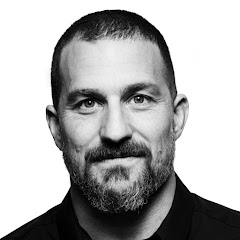 Andrew Huberman
Want to know something specific about what's covered?
We've already dissected every moment. Ask and we will deliver (with timestamps).
Key Moments
Enhance memory with 3 key tools: stress hormones, exercise & mental snapshots. Optimizing timing is crucial.
Key Insights
Memory formation is strengthened by a specific neurochemical state, primarily adrenaline, triggered by emotional intensity or specific actions, not just the emotion itself.
The timing of neurochemical release is critical; spiking adrenaline *after* learning significantly enhances memory retention compared to before or during learning.
Exercise, particularly cardiovascular and load-bearing, releases hormones like osteocalcin that benefit hippocampal function and memory.
Mental 'snapshots' or taking actual photographs of visual information can improve visual memory but may reduce auditory memory recall.
Deliberate cold exposure (ice baths, cold showers) is a non-pharmacological method to induce adrenaline release and enhance memory.
Daily meditation, even for short durations, can improve attention and memory, but should ideally be practiced earlier in the day to avoid sleep disruption.
THE NEURAL BASIS OF MEMORY AND REPETITION
Memory is fundamentally a bias in neural circuit activation, making specific sequences of neurons more likely to fire again. While repetition has long been known to solidify memories, as demonstrated by Ebbinghaus's learning curves, it's the strengthening of connections between existing neurons through co-activation that forms memories. Donald Hebb's postulate highlights that neurons firing together strengthen their connections. This process can occur through consistent repetition or, more powerfully, through a single, highly intense activation.
THE CRITICAL ROLE OF EMOTION AND NEUROCHEMICALS
Emotionally charged experiences are more memorable, but the underlying mechanism is not the emotion itself, but the resulting neurochemical state. Adrenaline (epinephrine) and cortisol, released during heightened emotional states or stress, significantly enhance memory consolidation. Research by McGaugh and Cahill demonstrated that even mundane information is better remembered if subjects experience an adrenaline surge shortly after learning. This highlights that the neurochemical response, particularly adrenaline, is the key driver for rapid memory formation.
OPTIMIZING THE TIMING OF ADRENALINE RELEASE FOR MEMORY
Contrary to common practice, the most effective time to trigger adrenaline release for memory enhancement is not before or during learning, but *after* the learning event. Studies show that administering substances that increase adrenaline or engaging in activities like cold exposure shortly after acquiring information significantly improves retention. This implies that the post-learning neurochemical surge 'stamps down' the newly acquired information, reducing the need for extensive repetition.
BEHAVIORAL PROTOCOLS FOR MEMORY ENHANCEMENT
Several non-pharmacological methods can effectively spike adrenaline and enhance memory. Deliberate cold exposure, such as ice baths or cold showers, is a potent method. Exercise, especially cardiovascular and load-bearing types, also plays a crucial role by releasing hormones like osteocalcin from bones, which positively impacts the hippocampus. Furthermore, taking 'mental snapshots' or actual photographs of visual information can bolster visual memory recall, though it may reduce auditory memory.
THE IMPACT OF EXERCISE AND VISUALIZATION ON MEMORY
Cardiovascular exercise has been linked to increased neurogenesis in the dentate gyrus, a part of the hippocampus crucial for memory formation. Beyond neurogenesis, exercise also stimulates the release of osteocalcin, a hormone that travels to the brain and supports hippocampal function. For optimal memory benefits, exercise should ideally be performed either a few hours before learning (to improve overall hippocampal function) or immediately after learning if the exercise is intense enough to significantly spike adrenaline.
MEDITATION AND MENTAL SNAPSHOTS FOR COGNITIVE SHARPENING
Daily meditation, even for short durations like 13 minutes, has been shown to significantly improve attention, memory, mood, and emotional regulation. However, the timing is crucial; practicing meditation too late in the day can interfere with sleep due to its attention-enhancing effects. The practice of taking 'mental snapshots'—deliberately pausing to 'capture' a visual scene—can also significantly enhance visual memory, acting as a powerful tool for leveraging our visual system for better recall.
UNDERSTANDING DEJA VU AND THE LIMITATIONS OF PHOTOGRAPHIC MEMORY
The phenomenon of déjà vu, the uncanny feeling of having experienced something before, is understood as a normal hippocampal function where neural patterns are activated in a way that mimics past encoding. While 'photographic memory' sounds desirable, true photographic memory can sometimes impair auditory memory and procedural learning. Instead, leveraging tools like mental snapshots or deliberate cold exposure offers more practical and balanced benefits for overall memory enhancement regardless of innate abilities.
Mentioned in This Episode
●Supplements
●Software & Apps
●Companies
●Organizations
●Books
●Drugs & Medications
●Studies Cited
●Concepts
●People Referenced
Optimizing Memory & Learning: Key Protocols
Practical takeaways from this episode
Do This
Avoid This
Common Questions
Memories form as a consequence of specific chains of neurons (neural circuits) being activated. Each memory is essentially a bias in the likelihood that this specific chain of neurons will be activated again. Repeated activation strengthens these connections, and intense, single activations can also lay down memories.
Topics
Mentioned in this video
A corticosteroid hormone released from the adrenal glands, involved in stress response and long-term memory effects, capable of crossing the blood-brain barrier.
A brain structure involved in threat detection and correlating novel environmental events with emotional states, playing a key role in memory strengthening through 'and gates'.
A neuromodulator released alongside epinephrine from the locus coeruleus, contributing to alertness and memory consolidation.
A hormone released from bones, particularly responsive to load-bearing exercise, that travels to the brain to enhance hippocampal function and memory, and is also involved in bone growth and hormone regulation.
A molecule that accumulates in the brain and body with wakefulness, responsible for feelings of sleepiness and fatigue, and whose effects are blocked by caffeine.
A brain area literally a face recognition and template matching area, responsible for the astonishing ability of 'super recognizers' to recognize faces.
A cognitive test measuring selective attention and processing speed, used in Wendy Suzuki's meditation study. It evaluates interference in response to stimuli.
A non-sleep deep rest (NSDR) protocol that induces deep relaxation with very low attention, helping to reduce sympathetic nervous system activity.
A Cell Press journal where the review 'Mechanisms of Memory Under Stress' was published in May 2022, detailing historical and scientific perspectives on memory and stress.
A brain area in the back of the brain that'sprinklers the rest of the brain with neuromodulators like epinephrine and norepinephrine, inducing alertness.
A brain structure named for its seahorse-like shape, crucial for forming explicit declarative and procedural memories.
An institution where Mark Mayford conducts research on deja vu and memory mechanisms.
An incredibly high-tier journal known for its stringent peer review, where papers on deja vu mechanisms were published.
The institution where John Ratey, author of 'Spark,' is a professor, known for his work on brain plasticity and exercise.
The institution where Nobel laureate Susumu Tonegawa conducts research on immunology and neuroscience, including memory, learning, and deja vu.
An incredibly high-tier journal known for its stringent peer review, where papers on deja vu mechanisms were published.
A renowned institution where Bruce McEwen conducted significant research on chronic stress and its impact on learning and memory.
An organization that provides a free non-sleep deep rest (NSDR) script online.
Shared the Nobel Prize in 1906 for demonstrating that neurons are independent cells connected by synapses.
Credited with developing the scientific method, he observed in the 1600s that memory is assisted by strong emotional impressions.
A colleague of Andrew Huberman at Stanford, mentioned for his description of the hippocampus. Renowned for his work on stress and neurobiology.
Professor of neurobiology and ophthalmology at Stanford School of Medicine and host of the Huberman Lab Podcast. He discusses science-based tools for improving memory.
A Canadian psychologist who, in the early to mid-1920s, proposed Hebb's Postulate, stating that neurons firing together strengthen their connections.
A professor from New York University whose lab studies how exercise enhances learning, memory, and cognition, and also how daily meditation impacts these functions.
A researcher at Scripps Institute and UC San Diego, known for his beautiful work on the notion of deja vu and how different neural firing patterns can evoke the same behavior/memory.
Mentioned as possibly having experienced absent seizures, though not neurologically confirmed.
A researcher from Rockefeller University whose work showed that chronic stress and chronically elevated epinephrine actually inhibit learning and memory.
A German psychologist who developed the first learning curves in the late 1800s, quantifying the role of repetition in memory.
A researcher who collaborated with James McGaugh on human experiments demonstrating how stress and neurochemicals improve memory, particularly in humans.
Nobel Prize recipient from Columbia Medical School, known for his work on learning and memory and an avid swimmer who credits exercise for his cognitive sharpness.
Shared the Nobel Prize in 1906 for demonstrating that neurons are independent cells connected by synapses.
A researcher whose work over several decades, often with Larry Cahill, established the role of emotional arousal and specific neurochemicals in memory enhancement.
A colleague of Andrew Huberman from the Stanford biology department, referenced for his protocols on using cold exposure for health and performance.
A Nobel Prize laureate from MIT who has done wonderful work on immunology and studies memory, learning, and deja vu, particularly on neural firing patterns in the hippocampus.
A prescription drug, mentioned as a stimulant that some individuals are prescribed to increase alertness and focus, but generally cautioned against for non-prescribed use due to addictive potential.
A drug used in experiments to reduce the effects of adrenaline, blocking learning and memory enhancement.
A drug used in experiments to reduce the effects of adrenaline, blocking learning and memory enhancement.
A neurotransmitter and hormone released in the brain and body, crucial for memory formation, especially when spiked after learning.
A prescription drug, mentioned as a stimulant that some individuals are prescribed to increase alertness and focus, but generally cautioned against for non-prescribed use due to addictive potential.
A prescription drug, mentioned as a stimulant that some individuals are prescribed to increase alertness and focus, but generally cautioned against for non-prescribed use due to addictive potential.
A nootropic ingredient used in Thesis blends and discussed as a compound that can increase epinephrine and adrenaline, potentially enhancing memory.
A nootropic ingredient used in Thesis blends, mentioned for its potential to enhance learning and memory.
A supplement company partnered with Huberman Lab Podcast, offering single-ingredient, high-quality supplements discussed on the podcast.
A professor at Harvard Medical School and author of 'Spark,' an early book on brain plasticity and the relationship between exercise and brain function.
An excellent Cell Press journal where two papers were published, demonstrating how brief naps after learning can enhance the rate of learning and memory.
A book by John Ratey, considered one of the early academic works to discuss brain plasticity and the connection between exercise, movement, and brain function.
A research paper demonstrating that volitionally taking photographs (or mental snapshots) enhances visual memory but degrades auditory memory, regardless of whether the photos are reviewed.
A paper by Wendy Suzuki's lab showing that 13 minutes of daily meditation for at least eight weeks significantly improves attention, memory, mood, and emotional regulation in non-experienced meditators.
A company that makes smart mattress covers with cooling, heating, and sleep tracking features. Mentioned as a sponsor and personal product used by the host.
A personalized nutrition platform that analyzes blood and DNA data to provide insights and recommendations for health goals.
More from Andrew Huberman
View all 392 summaries 33 min
Essentials: The Science of Eating for Health, Fat Loss & Lean Muscle | Dr. Layne Norton
 171 min
Science of Attraction, Compatibility & Romance | Dr. Paul Eastwick
 33 min
Improve Flexibility with Research-Supported Stretching Protocols | Huberman Lab Essentials
 176 min
The Mental Frame & Specific Daily Actions to Succeed | Andy Stumpf
Ask anything from this episode.
Save it, chat with it, and connect it to Claude or ChatGPT. Get cited answers from the actual content — and build your own knowledge base of every podcast and video you care about.
Get Started Free