Key Moments
Q&A with Tim — The Art of Male Friendship, Reinvention in The Age of AI, & More
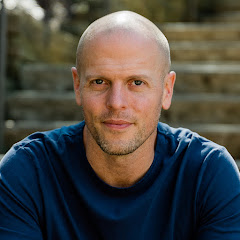 Tim Ferriss
Want to know something specific about what's covered?
We've already dissected every moment. Ask and we will deliver (with timestamps).
Key Moments
Tim Ferriss advocates for prioritizing foundational skills like communication and negotiation, while embracing AI as a tool, rather than a replacement, for human connection and deep learning.
Key Insights
AI is not merely another tool but a paradigm shift, making 5-year predictions seem unserious, necessitating a focus on constant learning and foundational skills like asking questions, written/verbal communication, and negotiation.
Language learning provides significant cognitive benefits and expands one's experience of reality, offering a higher resolution of perception, and can be achieved conversationally in 8-12 weeks.
For male friendship, shared activities and projects are crucial, as direct face-to-face conversation can sometimes feel threatening, while women are often more adept at verbal social elements.
A "mini-retirement" of 3-4 weeks or more is recommended for those who feel they've outgrown their current life, forcing a critical look at systems and policies before departure, similar to Tim's podcast sabbatical.
Daily exercise, particularly interval training like the Norwegian 4x4, is the most important intervention for preventing cognitive decline, offering benefits that can extend years beyond the training period.
When facing overwhelm, a simple yet effective strategy is to meditate twice a day for 15 minutes, followed by scheduling a mini-retirement to gain perspective and address systemic issues.
Navigating the AI era with enduring skills
Tim Ferriss acknowledges that AI represents a fundamental shift, making long-term predictions difficult. He emphasizes that while AI is a powerful tool, foundational human skills will remain critical for usefulness, health, and resilience. He identifies four key meta-skills: learning (specifically metalearning, or learning how to learn, by asking questions), written communication, verbal communication, and negotiation. He advocates for analog methods, like using pen and paper, to enhance focus and nonlinear thinking, countering the distractions of digital environments. These skills are timeless and transferable across disciplines, providing a robust foundation for navigating an unpredictable future. He also stresses the enduring importance of real-life human relationships for mental and spiritual health, suggesting that the more things change, the more certain fundamental needs remain constant.
Reinvention beyond the 'stuck' phase
Addressing the feeling of being stuck in a "driven, hyper-optimized logical phase," Ferriss suggests self-examination, as one might not be truly stuck but rather facing underlying issues. He references his own decades-long journey of addressing childhood trauma as a necessary step for his transformation. For those seeking change, he recommends tools like Anthony De Mello's "Awareness" and Internal Family Systems (IFS), while cautioning against getting "stuck" in the process of self-work itself. He highlights that external validation, whether through financial success or self-help achievements, can be detrimental in excess. The core idea is that true change often requires confronting and metabolizing past experiences rather than merely optimizing current behaviors. This introspective approach is presented as a pathway to a more grounded, relationship-focused existence, moving beyond a purely external measure of success.
Evaluating major life pivots
When considering significant life or career changes, especially later in life when responsibilities increase, Ferriss advises against impulsive escape. He points to Derek Sivers' concept of 'There are always more than two options,' encouraging a broader exploration of possibilities beyond a simple binary choice. This involves listing all potential pathways, including incremental changes or parallel ventures. He also suggests a thought exercise inspired by Chris Voss: comparing one's own problems to those of close friends to gain perspective. For testing significant pivots, he remains a fan of 2-4 week experiments, suggesting they can be conducted during off-hours. The principle is to scale up an activity in a limited way to test its long-term viability and enjoyment, distinguishing between enjoying something as a hobby versus a full-time obligation.
The unique nature of male friendship
Ferriss addresses the challenge of building male friendships for those in their thirties without established friend groups. He contrasts the ease with which women often build emotional closeness face-to-face with the different bonding mechanisms men tend to employ. His observation, particularly around campfires, suggests that men often connect more readily through shared activities where direct eye contact is minimized, reducing perceived threat. The key recommendation is to find activities – such as hiking, rock climbing, or collaborative projects – that inherently involve partnership or teamwork. These shared experiences allow for indirect communication and bonding, fostering deeper connections without the pressure of intense verbal introspection. The success of his own male friendships, both long-standing and new, is attributed to these shared endeavors.
Prioritizing skills for the coming decade
In preparation for the next decade, particularly in the context of AI, Ferriss stresses the enduring value of meta-skills. He emphasizes learning, asking questions, written and verbal communication, and negotiation as crucial for remaining useful, healthy, and financially resilient. He notes that while the technological landscape will change rapidly, the necessity of deep human connection and effective communication will not diminish. His approach to learning, outlined in the 'meta-learning' section of 'The 4-Hour Chef,' breaks down complex skills into constituent parts, with asking questions being fundamental to both external inquiry and self-reflection. He also advocates for offline work, using pen and paper, to enhance focus and non-linear thought processes, and suggests practical ways to improve communication skills, such as joining a local Toastmasters or studying negotiation frameworks.
Podcast evolution and staying in blue oceans
After a four-month sabbatical, Ferriss implemented new rules for his podcast, focusing on 'living legends' (older guests with unique insights) and avoiding book-launching episodes that contribute to podcast saturation. He also emphasized experiments, such as co-hosting or developing niche content like guided meditations and specific kitchen projects. This approach, a '90/10 split' favoring lesser-known but impactful guests alongside occasional household names, is driven by enjoyment, which he believes is essential for long-term endurance and outlasting trends. His advice for others seeking to stay in 'blue oceans' involves strategic thinking, as outlined in 'Blue Ocean Strategy,' and utilizing fear-setting exercises to stress-test decisions and evaluate the costs of inaction.
Language learning in the age of AI
Ferriss discusses the evolving landscape of language learning, highlighting its significant cognitive and longevity benefits, with conversational fluency achievable in as little as 8-12 weeks. He posits that learning a language fundamentally expands one's perception of reality, providing higher resolution and a richer experience, akin to seeing the world in HD rather than black and white. While AI tools like Instagram's autodubbing and personalized content aggregation (e.g., Duolingo's approach) are valuable, he believes that foundational analog methods remain effective. He advocates for structured learning, such as the Michelle Thomas method or using phrasebooks and watching familiar movies with target-language subtitles, to build a base understanding before relying solely on AI. The core purpose of language learning, he argues, is to broaden one's world and enhance the human experience, not simply to facilitate communication.
Preventing cognitive decline and investing in health
Addressing the significant fear of cognitive decline, particularly Alzheimer's, Ferriss identifies consistent exercise as the single most important intervention. He cites studies showing substantial long-term benefits from specific interval training protocols. While acknowledging the complexity of Alzheimer's, he leans towards vascular dementia and mitochondrial dysfunction as key factors, focusing on improving insulin sensitivity and mitochondrial health through exercise, intermittent fasting, and targeted supplements like Urolithin A. Beyond exercise, he emphasizes prioritizing health through regular massage and manual therapy, finding ease in travel, and investing heavily in healthcare for himself and loved ones, viewing it as a crucial safety net and peace-of-mind generator. He mentions his involvement with Neco Health, aiming to make preventative care more accessible, and highlights the importance of sunlight exposure and managing sleep hygiene.
Mentioned in This Episode
●Supplements
●Products
●Software & Apps
●Companies
●Organizations
●Books
●Concepts
●People Referenced
Personal Growth and Reinvention Strategies
Practical takeaways from this episode
Do This
Avoid This
Common Questions
The speaker suggests first examining if you are truly 'stuck.' He recommends tools like Anthony de Mello's 'Awareness' and IFS (Internal Family Systems) for introspection. However, he cautions against getting stuck in 'doing the work' itself, emphasizing that an obsession with the self, regardless of validation, can be detrimental.
Topics
Mentioned in this video
A TV show the speaker watches nightly with his partner, describing it as wholesome, positive, and a 'feel-good pallet cleanser.' Buying the full series was his best purchase under $100.
A movie the speaker has seen many times and uses for background ambiance while writing, also used as an example for language learning subtitles.
A movie the speaker has seen hundreds of times and plays nightly while writing.
The podcast hosted by Tim Ferriss, featuring Q&A sessions and interviews on various self-improvement and business topics.
A movie the speaker has seen many times and uses for background ambiance while writing, also used as an example for language learning subtitles.
A TV series mentioned as an example of content designed to hijack free will and turn individuals into 'puppets of the machine.'
A streaming service mentioned in the context of watching movies for language learning, with subtitles.
Implied through the discussion of AI and its advancements, which are often powered by Nvidia's technology.
A language learning platform that the speaker believes is ahead of the game in integrating AI, and whose Spanish podcast was highly successful.
Mentioned in the context of Amazon Prime for watching movies for language learning.
A company that has developed a one-day protocol for accelerated TMS (sTMS) treatment, which the speaker found remarkably effective for anxiety and depression.
A startup co-founded by Daniel Ek that is expanding to the US and aims to make world-class preventative healthcare available to millions.
Mentioned in the context of a TV show, 'Parks and Recreation,' which the speaker watches, and the desire not to be subjected to doom-scrolling content, which can be found on Apple devices.
Mentioned indirectly as one of the companies developing AI language models like ChatGPT.
Implied through the discussion of AI and its potential impact on various fields, including language learning.
A company the speaker has invested in, working on injectable Klotho for humans as a potential therapeutic for cognitive decline.
Mentioned as an example of a company whose platforms, like social media, can be designed to hijack free will.
Daniel Ek, co-founder and CEO of Spotify, co-founded Neco Health, a startup focused on preventative healthcare.
Implied through the mention of ChatGPT, a product of OpenAI.
The URL where show notes for the podcast episodes can be found.
An AI language model the speaker uses to inquire about Mandarin Chinese learning resources.
The website where show notes for the podcast episodes can be found.
A treatment protocol used for generalized anxiety disorder and OCD, with accelerated versions (sTMS and the 1D protocol) showing high remission rates.
A type of interval training that has shown significant benefits for cognitive health, with three times per week for six months providing approximately five years of benefits.
Used by the speaker as part of his comprehensive approach to preventing cognitive decline, citing heat shock proteins.
An AI language model the speaker uses to inquire about Mandarin Chinese learning resources, similar to the Duolingo Spanish podcast.
A program that expedites airport security screening, mentioned as a luxury that improves the ease of travel.
Author of the book 'Awareness', which the speaker finds beneficial for introspection and internal validation.
Creator of 'Meditation Mondays' and the 'Way app,' whose guided meditations are recommended by the speaker.
The host of the podcast, discussing his personal journey, strategies, and recommendations across various life domains.
An Irish polyglot and resource for language learning, mentioned in the context of AI's impact on language acquisition.
Co-founder and longtime CEO of Spotify, who co-founded Neco Health, a startup expanding to the US focused on preventative healthcare.
An author whose podcast episodes the speaker enjoys.
An 80-year-old interviewee mentioned as a 'living legend,' part of the podcast's initiative to feature older individuals.
Mentioned in the context of 'greasing the groove' for strength training, specifically for doing 10 sets of 2 pull-ups with short rests.
An author whose podcast episodes the speaker enjoys.
Mentioned as a researcher in intermittent fasting, whose approach the speaker follows.
Philosopher whose quote, 'The limits of our language are the limits of our world,' is used to emphasize the importance of language learning.
A 72-year-old interviewee, mentioned as part of the 'living legends' series on the podcast.
An individual who has not been on many podcasts, mentioned as an example of someone the speaker enjoys interviewing.
A 74-year-old interviewee and heir apparent to Dr. Seuss, highlighted for her story and as an example of a 'living legend' featured on the podcast.
Dr. Jonathan Downer is involved with AMA Health and their one-day TMS protocol.
Founder of Internal Family Systems (IFS), with whom the speaker had a live session on his podcast.
Dr. Tommy Wood, with whom the speaker had a conversation about exercise and cognitive health specifics, including the Norwegian 4x4 interval training.
An author whose podcast episodes the speaker enjoys.
An author whose podcast episode the speaker highly recommends.
Co-author of 'Getting to Yes,' interviewed by the speaker on the podcast, representing expertise in negotiation.
Italian actor and director whose film 'Life Is Beautiful' is mentioned as an example of content that can be used for language learning.
Author of a blog post titled 'There are always more than two options,' which offers a framework for evaluating life choices beyond binary decisions.
A researcher whose work on intermittent fasting, recommending at least 16 hours of fasting to deplete liver glycogen and switch to ketone production, is referenced.
Founding editor of Wired magazine, who believes in writing to understand one's own thoughts, a concept the speaker finds relevant to communication skills.
An 84-year-old interviewee featured for his 'living legend' status, aligning with the podcast's new rule to interview older individuals with high-level operating capabilities.
A researcher whose work on youth mental health and phone use in schools is recommended by the speaker. Haidt has influenced legislation restricting phone use in schools.
An author whose podcast episodes the speaker enjoys.
A book mentioned for its 'metalearning' section, which the speaker finds valuable for breaking down learning into constituent building blocks.
A book that had a significant impact on the speaker regarding negotiation skills.
A book on improving written communication skills, recommended by the speaker.
A book recommended for its insights on navigating competitive landscapes and finding uncontested market space, particularly relevant in the face of accelerating change.
A book by Timothy Ferriss that the speaker references for concepts like mini-retirements and testing business ideas through after-hours experiments.
A book by Anthony de Mello that the speaker rereads annually for its frameworks that encourage introspection and internal validation.
A book on negotiation, one of whose co-authors was interviewed by the speaker.
A training protocol that involves a 5-second up, 5-second down cadence to failure, used by the speaker at the end of weightlifting workouts.
A type of exercise that contributes to mitochondrial health and is relevant for preventing cognitive decline.
A dietary practice emphasized by the speaker for liver glycogen depletion and ketone production, crucial for overall health and cognitive function.
An exercise recommended for stress-testing fears and understanding the costs of inaction, popularized by the speaker's TED talk.
A protein that the speaker believes is involved in cognitive health, with research into injectable forms and its natural production stimulated by exercise.
A language learning method that the speaker highly recommends for acquiring language fundamentals quickly, praising its effectiveness for French, Spanish, Italian, and Korean.
A healthcare service that provides peace of mind and accessibility, considered a worthwhile luxury upgrade.
The speaker is currently brushing up on Mandarin Chinese and uses AI tools to find equivalent resources to the Duolingo Spanish podcast.
A streaming service mentioned in the context of watching movies for language learning, with subtitles.
While not explicitly mentioned, the 'screens at 18 inches' reference likely alludes to modern digital devices, potentially including high-end ones like the Apple Vision Pro, which contribute to lack of tiredness.
Mentioned for the word 'saji,' similar to Japanese 'nutskashi,' highlighting linguistic nuances.
Used as an example of a location where specific knowledge of trees can enhance the experience of reality.
Mentioned as a language the speaker is learning, with Italian movies suggested for practice.
Mentioned as a country where Neco Health has a presence, alongside the UK and Sweden.
Mentioned as a hypothetical option for a friend to move to and become a tour guide, illustrating alternative choices beyond a binary decision.
Mentioned for specific words like 'saji' and 'Maywaku' that broaden linguistic and experiential understanding.
A country where Neco Health is already established, with expansion plans to the US.
One of the languages for which the Michelle Thomas Method is available and highly recommended.
A country where Neco Health is already established, with expansion plans to the US.
A privacy coin mentioned as an example of 'private money' that is interesting, though the speaker warns about the risks of investing in crypto.
The American Psychiatric Association, whose DSM criteria are implicitly referenced when discussing generalized anxiety disorder and OCD.
The publication where an announcement about the speaker's involvement with Neco Health was made.
More from Tim Ferriss
View all 703 summaries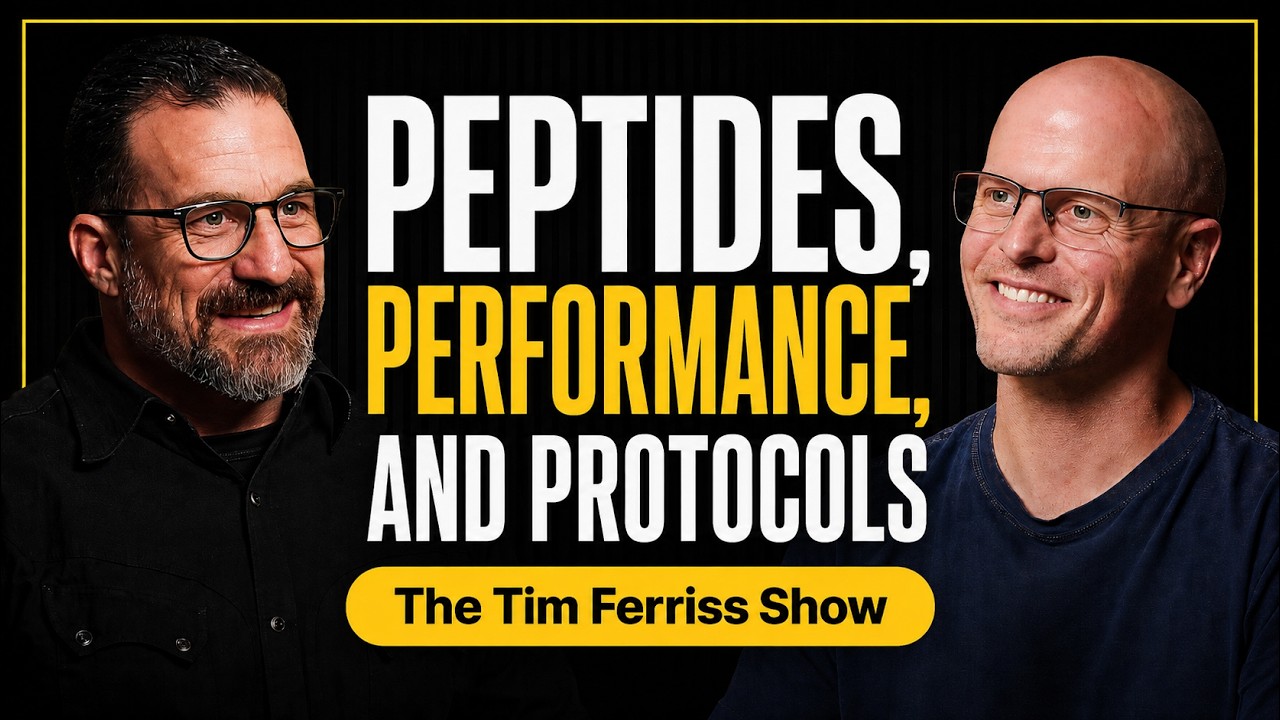 125 min
Dr. Andrew Huberman — Peptides, Performance, and Protocols
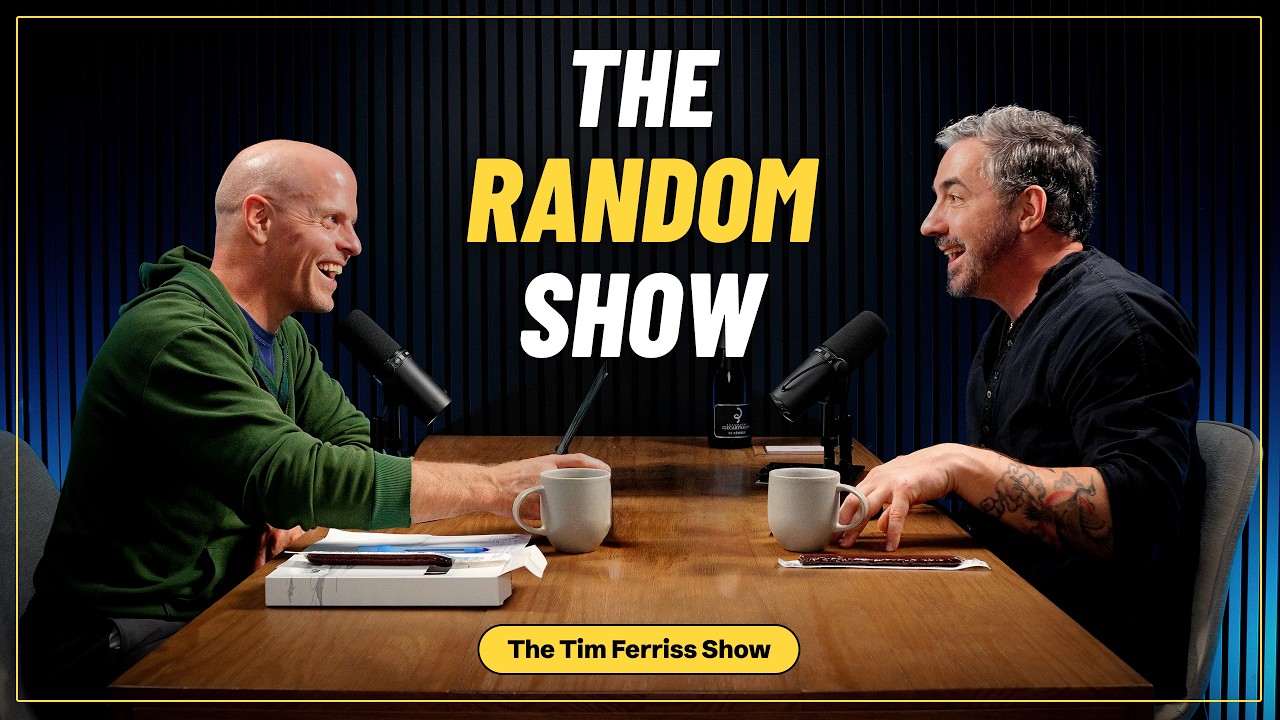 112 min
The Random Show! Mortality, AI, Supplements, Rock Climbing, & More
 88 min
The Legendary Hollywood Power Broker — Guy Oseary on 36 Years of Managing Madonna, 26 IPOs, and More
 77 min
The Many Benefits of Coca — The “Divine Leaf” with 8,000+ Years of Use
Ask anything from this episode.
Save it, chat with it, and connect it to Claude or ChatGPT. Get cited answers from the actual content — and build your own knowledge base of every podcast and video you care about.
Get Started Free