Key Moments
Hamilton Morris — Psychedelics, Smart Drugs, and More
 Tim Ferriss
Want to know something specific about what's covered?
We've already dissected every moment. Ask and we will deliver (with timestamps).
Key Moments
Hamilton Morris discusses psychedelics, chemistry, and consciousness, highlighting Alexander Shulgin and practical applications.
Key Insights
Alexander Shulgin revolutionized psychedelic chemistry through self-experimentation and open publication.
Understanding the dose is crucial for safe and effective psychedelic use, with synthesis offering more control than plant-based sources.
Subjective experience, validated by rigorous testing, is a key scientific tool, akin to Goethe's approach to color perception.
Psychedelics can offer tangible benefits, including increased appreciation for life and a potential to disrupt addictive behaviors.
Cultural frameworks for psychedelic use are often misunderstood, with a need to balance tradition with modern scientific inquiry and safety.
Nootropics' effectiveness is challenging to ascertain due to self-assessment biases, with nicotine and caffeine remaining practical aids.
THE LEGACY OF ALEXANDER SHULGIN
The conversation begins by honoring Alexander Shulgin, a chemist who synthesized numerous novel psychedelic compounds. Shulgin's unique approach combined rigorous scientific inquiry with personal experience, meticulously documenting his findings. His work, published in prestigious journals, laid the groundwork for understanding numerous psychoactive substances, notably reintroducing MDMA as a therapeutic tool and creating countless derivatives. Shulgin's legacy emphasizes the profound value of direct experience in scientific exploration, challenging the limitations of purely in-vitro or animal testing.
NAVIGATING THE CHEMISTRY OF CONSCIOUSNESS
Hamilton Morris stresses the importance of basic chemical literacy, recommending accessible resources like "Organic Chemistry as a Second Language" and Khan Academy for those interested. He advocates for practical, hands-on learning, suggesting safe chemical extractions from plants as a way to build foundational understanding. This practical approach, he believes, makes abstract scientific concepts more tangible and engaging, especially for individuals without a formal chemistry background, encouraging a deeper appreciation for the molecular basis of experience.
EARLY ENCOUNTERS AND CULTURAL MISCONCEPTIONS
Morris recounts his early fascination with consciousness-altering substances, beginning with awareness of DMT as a child and a memorable encounter regarding LSD. His first significant psychedelic experience with Salvia divinorum at age 14 was profound, revealing the limitations of descriptions and the necessity of direct experience. He notes the cultural marginalization of such substances, partly due to a lack of established frameworks for understanding or integrating their effects, leading to their perception as purely recreational or dangerous.
THE NUANCES OF PSYCHEDELIC EXPERIENCE AND VALIDITY
The discussion delves into the value of subjective experience, drawing parallels with Goethe's approach to color. Morris highlights how psychedelics can evoke powerful positive emotions like love and gratitude, offering a deeper appreciation for physical reality. He contrasts this with the potential for dogmatic or overly simplistic interpretations, particularly within some shamanic traditions, advocating instead for an open, experimental approach that prioritizes safety and individual exploration over rigid adherence to tradition.
RISK MITIGATION AND THE PRECISION OF DOSING
A crucial aspect of psychedelic use is risk mitigation, primarily achieved through careful dosing. Morris explains Shulgin's method of starting with extremely low doses and gradually escalating, a principle applicable even to highly toxic substances. He criticizes the lack of dose awareness in contemporary psychedelic use, especially with LSD and psilocybin mushrooms, where potency can vary significantly. This uncertainty, he argues, undermines the potential for learning from the experience and navigating it safely.
EXPLORING BEYOND TRADITIONAL FRAMEWORKS
While acknowledging the value of indigenous traditions, Morris expresses reservations about rigid adherence. He notes that even plants like DMT can be synthesized, and derivatives offer different experiential qualities, suggesting a need for experimentation rather than a one-size-fits-all approach. For example, different tryptamine derivatives can lend themselves to various aspects of experience, from personal introspection to more universal feelings, challenging the notion of a single 'correct' way to engage with these substances.
THE POTENTIAL OF IBOGAINE AND NEUROLOGICAL APPLICATIONS
Ibogaine, an alkaloid from a Central West African plant, is highlighted for its potential in treating addiction to opioids, alcohol, and methamphetamine. Beyond addiction, research suggests ibogaine may stimulate glial-derived neurotrophic factor (GDNF), crucial for regenerating neurons, potentially aiding conditions like Parkinson's disease. While acknowledging its cardiotoxicity and the need for more research due to its Schedule I status in the US, its therapeutic promise is significant.
SUSTAINABILITY AND THE CASE FOR SYNTHESIS
The environmental impact of sourcing psychedelics necessitates a discussion on synthesis versus plant extraction. Morris acknowledges synthesis as generally more sustainable, especially for compounds like 5-MeO-DMT, easily made from melatonin. He emphasizes the importance of conserving plant genetic reserves and studying them, likening it to the selective breeding of cannabis. This ensures future discoveries and allows for the development of compounds with desired traits, avoiding the depletion of natural resources and the associated conflicts.
NOOTROPICS AND THE QUEST FOR COGNITIVE ENHANCEMENT
Morris approaches nootropics with skepticism, citing the Dunning-Kruger effect, where individuals may overestimate their cognitive abilities. He questions how intelligence is defined and measured, suggesting that true enhancers might not even make one *feel* smarter. While acknowledging nicotine and caffeine as practical aids for focus and memory, he expresses more caution about other synthesized nootropics, often blurring the line between enhancement and mere stimulation.
SYNCHRONIZATION, MEMORY, AND PROBLEM-SOLVING
The potential link between synesthesia, induced by psychedelics like 2C-B, and enhanced memory is explored. Producing synesthesia, where senses are blended, may create more associative 'handles' for information recall. Morris also touches upon psychedelics' role in problem-solving, not by providing answers, but by shifting perspectives just enough to unlock solutions. He references James Fadiman's work on psychedelics aiding creative problem-solving in scientific and engineering fields by shuffling the deck of conventional thinking.
THE DIFFICULTIES OF THE FIVE-ME O-DMT EXPERIENCE
The potent 5-MeO-DMT, often derived from Bufo alvarius toad venom, presents significant challenges. Morris shares a cautionary tale of a death resulting from asphyxiation during a dissociated state, underscoring the critical need for a sitter and a safe environment. He questions the environmental sustainability of toad extraction compared to synthesis and notes the inherent uncertainty in dosage when using natural sources, advocating for synthetic 5-MeO-DMT for safety and precision.
AYAHUASCA, DOGMA, AND THE MYSTERY OF EXISTENCE
Morris explains his reluctance to feature Ayahuasca prominently due to concerns about dogma and the commodification of plant medicine tourism. He criticizes the elitism that dictates Ayahuasca can only be traditionally experienced in the Amazon, arguing that its preparation is fundamentally simple. The tragic death of Kyle Miller, who disappeared and was found buried after a retreat, highlights the dangers of prioritizing perceived tradition over safety and effective oversight, reinforcing his belief in personal exploration and critical assessment.
THE VALUE OF UNCERTAINTY AND PRACTICAL APPLICATION
Morris finds profound value in confronting existential uncertainty without explanatory frameworks, suggesting it is the raw encounter with mystery that is powerful. While high-dose experiences can be overwhelming, he notes that lower doses of Ayahuasca have provided practical benefits, even aiding his writing. He emphasizes that the true benefit often lies in practical, life-enhancing insights, such as understanding the roots of addiction and realizing internal capacities, rather than abstract deconstructions of time or self.
WADE DAVIS AND ETHNOBOTANICAL EXPLORATION
The conversation briefly touches on Wade Davis, an ethnobotanist known for his controversial theories on Haitian zombie powder and the discovery of numerous plant species. Morris notes Davis's prolific writing and storytelling ability, which, while captivating, has sometimes led to skepticism. His work exemplifies a spirit of exploration and discovery in the field of ethnobotany, pushing the boundaries of our understanding of plant-human interactions and the natural world.
Mentioned in This Episode
●Supplements
●Products
●Software & Apps
●Companies
●Organizations
●Books
●Drugs & Medications
●Concepts
●People Referenced
Common Questions
Alexander Shulgin was a pioneering chemist, often called the 'grandfather of ecstasy,' who independently synthesized and tested numerous novel psychedelic compounds, including reintroducing MDMA as a psychotherapeutic tool. He published his detailed work openly, emphasizing subjective experience in scientific inquiry. (timestamp: 538)
Topics
Mentioned in this video
A profitable insecticide developed by Alexander Shulgin while working for Dow Chemical Company, which earned him the freedom to pursue independent research.
A magazine that has featured Hamilton Morris's writing.
An incendiary weapon whose manufacture by Dow Chemical Company during the Vietnam War created political controversy for the company.
A streaming platform where 'Hamilton's Pharmacopoeia' is available.
A product Hamilton Morris uses for improved memory and focus, calling it one of the most mundane yet effective nootropics he's tried.
The chemical processes related to LSD, which were briefly touched upon in 'Hamilton's Pharmacopoeia'.
A policy that Hamilton Morris believes has made it more difficult for people to have home labs and has led to the demonization of clandestine chemists.
The type of receptor salvia divinorum is now understood to be an agonist for, which was unknown when Hamilton Morris first used it.
A protein that ibogaine has been researched to affect; it is useful in treating Parkinson's disease by promoting the regrowth of dopaminergic neurons.
A cognitive bias where less competent individuals tend to overestimate their abilities, and more competent individuals tend to underestimate theirs. Hamilton applies this to the self-assessment of smart drug efficacy.
A book by Wade Davis, later made into a movie, proposing a pharmacological basis for Haitian zombies involving scopolamine and pufferfish toxin.
Doris Kearns Goodwin's latest book, a culmination of five decades of studies in presidential history, exploring the early development and exercise of leadership.
A book by Jonathan Ott, recommended for its wide historical and scientific view of psychoactive substances.
A scientific journal that featured NeuroRacer on its cover, highlighting its significance in cognitive neuroscience.
Alexander Shulgin's treatise on tryptamines, which Hamilton Morris also highly regards.
A book by Tim Ferriss, after which he started being asked about delegating tasks and 80/20 analysis.
Alexander Shulgin's magnum opus on phenethylamines, detailing synthesis and effects. Hamilton Morris considers it one of the best books about science ever written and highly recommends it for understanding psychedelics.
Another book by Tim Ferriss, for the launch of which he used InkTel for customer service.
A book by Oliver Sacks, recommended as something Hamilton Morris would enjoy because it focuses almost entirely on auditory pathologies.
A prestigious scientific journal where Alexander Shulgin published his research openly from his home address.
The director who made 'The Serpent and the Rainbow' into a movie.
A Pulitzer Prize-winning author known for her studies in presidential history.
A chemist whose textbook Alexander Shulgin studied in the Navy, which contained syntheses of various psychoactive compounds.
One of the four presidents studied closely by Doris Kearns Goodwin in 'Leadership in Turbulent Times' as an example of leadership development.
A cognitive neuroscientist mentioned for developing online tests to assess cognitive functions like reaction time and working memory.
A neurologist and author whose book 'Musicophilia' is recommended to Hamilton Morris due to its focus on auditory pathologies.
A chemist friend of Hamilton Morris whose friend died after smoking 5-MeO-DMT unmonitored.
One of the four presidents studied closely by Doris Kearns Goodwin in 'Leadership in Turbulent Times' as an example of leadership development.
An author whose book on psychedelics is mentioned as being different in perspective from 'Neuropsychadליה'.
A chemist Hamilton Morris is currently working with on autoradiography research to study drug distribution in the brain.
One of the four presidents studied closely by Doris Kearns Goodwin in 'Leadership in Turbulent Times' as an example of leadership development.
One of the four presidents studied closely by Doris Kearns Goodwin in 'Leadership in Turbulent Times' as an example of leadership development.
A writer, documentarian, and scientific researcher studying the chemistry and pharmacology of tryptamines at the University of the Sciences in Philadelphia, known for his series 'Hamilton's Pharmacopoeia'.
An anthropologist who wrote extensively about San Pedro cactus, recommended for historical and anthropological insights into psychedelics.
A man addicted to heroin who tried ibogaine and subsequently lost his desire to use heroin, leading him to patent it as an anti-addictive intervention.
A legendary chemist, dubbed the 'grandfather of ecstasy,' who created numerous new psychedelic drugs and derivatives over 50 years, often synthesizing and self-testing them from his backyard lab.
An anthropologist who wrote extensively about ayahuasca in the 1970s and 80s, recommended for historical and anthropological insights into psychedelics.
A teenager who died after disappearing from an ayahuasca retreat in Peru, highlighting the dangers of irresponsible shamanic tourism.
An ethnobotanist at Harvard and Wade Davis's student, known for his work on psychoactive plants.
Author of 'Pharmacotheon', recommended for a wide historical and scientific view of psychoactive substances.
An ethnobotanist who published 'The Serpent and the Rainbow' proposing a pharmacological explanation for Haitian zombies, and made other significant, sometimes controversial, discoveries.
A researcher interested in psychedelics for problem-solving, suggesting they aid by offering different perspectives.
A researcher at UCSF whose lab developed 'NeuroRacer' software shown to reverse age-related cognitive decline.
Hamilton Morris's thesis advisor and author of 'Neuropsychadлія,' an MD and PhD dedicated to understanding psychedelics and neuroscience.
A streaming service where 'Hamilton's Pharmacopoeia' is available for free.
A platform where episodes of 'Hamilton's Pharmacopoeia' can be purchased.
Software developed by Adam Gazzaley's lab at UCSF, proven effective in reversing age-related cognitive decline with persistent effects even after training cessation.
A scientific process involving taking a radiolabel drug and observing its distribution in the brain, currently being used by Hamilton Morris and Jason Wallach.
The institution where Hamilton Morris currently studies the chemistry and pharmacology of tryptamines.
A media company that has featured Hamilton Morris's writing and is associated with his TV series.
Where Alexander Shulgin was accepted as an unusually young freshman and later where he studied ethnobotany under Richard Evans Schultes.
Where Alexander Shulgin earned a degree in biochemistry after leaving the Navy.
Where Hamilton Morris first read a profile of Alexander Shulgin as a high school student, sparking his fascination.
A media platform that airs 'Hamilton's Pharmacopoeia'.
A magazine that has featured Hamilton Morris's writing.
A collection of preserved plant specimens, where Hamilton Morris examined Wade Davis's specimen of what was claimed to be the tallest San Pedro cactus.
A media platform that airs 'Hamilton's Pharmacopoeia'.
A resource providing very good videos for learning organic chemistry.
Alexander Shulgin's employer where he developed a profitable insecticide, which granted him freedom to pursue his own psychedelic research in his backyard.
A turnkey solution for customer care needs, offering 24/7 service across platforms like email, phone, social media, and chat. Tim Ferriss used them for the launch of 'The 4-Hour Body' and recommends them for businesses seeking a competitive advantage in customer service.
A DMT derivative Hamilton Morris has tried, showing different properties than DMT.
A psychedelic drug that Alexander Shulgin is credited with reintroducing as a psychotherapeutic tool, and for which he created countless derivatives.
A legal psychedelic plant Hamilton Morris used in high school, finding it utterly amazing and his first experience appreciating the non-describable nature of psychedelics.
A DMT derivative Hamilton Morris has tried, showing different properties than DMT.
A DMT derivative Hamilton Morris has tried, showing different properties than DMT.
A compound created by Alexander Shulgin that was used as a potential treatment for senile dementia.
A psychedelic brew, often associated with shamanic traditions, which Hamilton critiques due to dose uncertainty, lack of scientific framework, and potential dangers in the context of drug tourism.
A DMT derivative Hamilton Morris has tried, showing different properties than DMT.
A psychedelic mentioned for its synesthesia-inducing effects, which Hamilton wonders if it could aid in information retention.
A psychedelic compound whose synthesis was found in early chemistry textbooks, and a derivative of which Alexander Shulgin discovered.
An alkaloid extracted from the Tabernanthe iboga plant, known for its anti-addictive and anti-compulsive effects, particularly for opioid addiction, alcoholism, and methamphetamine addiction. It is cardiotoxic and difficult to synthesize, but also shows promise in treating Parkinson's disease.
A psychedelic drug his father was very afraid of, making Hamilton aware of its power early on, and one of the main psychedelics people have access to without knowing the exact dose.
A drug whose chemistry was explored on 'Hamilton's Pharmacopoeia'.
A powerful psychedelic that an episode of 'Hamilton's Pharmacopoeia' covers, highlighting the risks of a cocky attitude and instances of accidental death.
A psychoactive alkaloid mentioned as having its synthesis in early chemistry textbooks studied by Shulgin.
A DMT derivative Hamilton Morris has tried, which he describes as inducing a more universal, less personal experience compared to DMT.
A tranquilizer whose total synthesis was televised on 'Hamilton's Pharmacopoeia'.
A nootropic Hamilton Morris found 'okay' in terms of cognitive enhancement.
An opioid used in opiate replacement therapy, contrasted with ibogaine which aims to get people off opioids entirely.
A stimulant Hamilton Morris occasionally uses at low doses (10mg) for intellectual stamina in reading, writing, and thinking, despite acknowledging its addictive potential.
A precursor to LSD, whose synthesis was described in early chemistry textbooks studied by Shulgin.
An antidepressant patented by Alexander Shulgin, showcasing his diverse contributions to drug discovery.
The psychoactive compound in many mushrooms, highlighted as one of the two main psychedelics people access without knowing the exact dose.
The final recrystallized product of MDMA synthesis, which was televised for the first time on 'Hamilton's Pharmacopoeia'.
A substance that Hamilton Morris finds effective for improving memory and aiding focus, despite using it less often.
A nootropic Hamilton Morris found 'okay', noting that stimulating nootropics tend to be more effective.
An opioid used in opiate replacement therapy, contrasted with ibogaine which aims to get people off opioids entirely.
A synthetic cannabinoid that Hamilton Morris investigated in a lab in China, leading to a frightening personal experience due to uncertainty about its purity, potency, and dose.
A substance implicated by Wade Davis in the pharmacological explanation for Haitian zombies.
Synthetic THC that Hamilton Morris uses as an example of how the government dictates 'right' and 'wrong' ways to use drugs (i.e., prescribed synthetic vs. natural plant).
A nootropic Hamilton Morris found 'okay' in terms of cognitive enhancement.
A toxin from pufferfish implicated by Wade Davis in the pharmacological explanation for Haitian zombies, and which some animals have evolved resistance to.
A common Parkinson's treatment; ibogaine may increase patient sensitivity to L-dopa, further enhancing its therapeutic potential.
A powerful psychedelic, referred to as 'the businessman's trip,' which Hamilton Morris was interested in even as a child. He specifically mentions trying various DMT derivatives.
An opioid whose addiction has been successfully treated with ibogaine, leading to a loss of desire to use the drug.
A form of caffeine recommended by Hamilton Morris as a classic cognitive enhancer for focus.
A widely used drug with ongoing fundamental debate about its long-term effects on IQ.
An opioid whose placebo effect profoundly influenced Alexander Shulgin's dedication to understanding drugs and the mind.
A hormone from which 5-MeO-DMT can be synthesized much more efficiently and cheaply than extracting from toad venom.
A class of drugs for which addiction is a difficult pharmacological task; ibogaine is one of the few substances shown to reduce opioid addictiveness.
More from Tim Ferriss
View all 703 summaries 70 min
Q&A with Tim — The Art of Male Friendship, Reinvention in The Age of AI, & More
 125 min
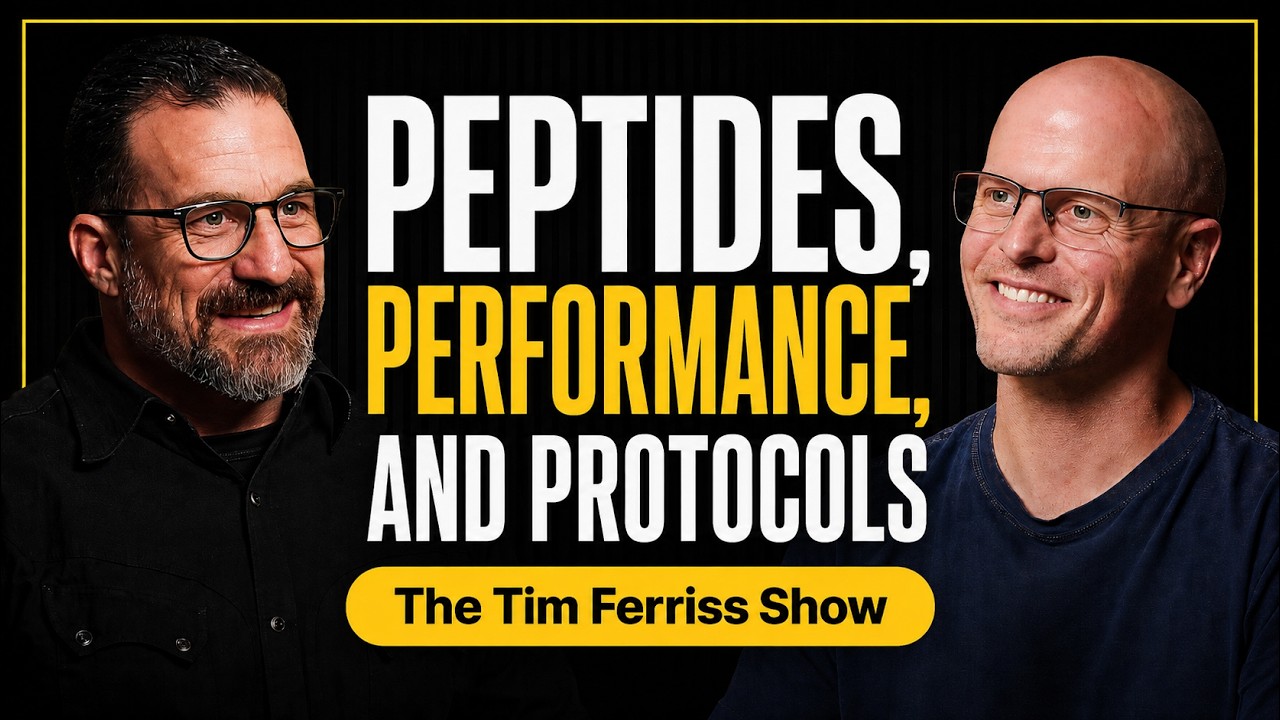
Dr. Andrew Huberman — Peptides, Performance, and Protocols
 112 min
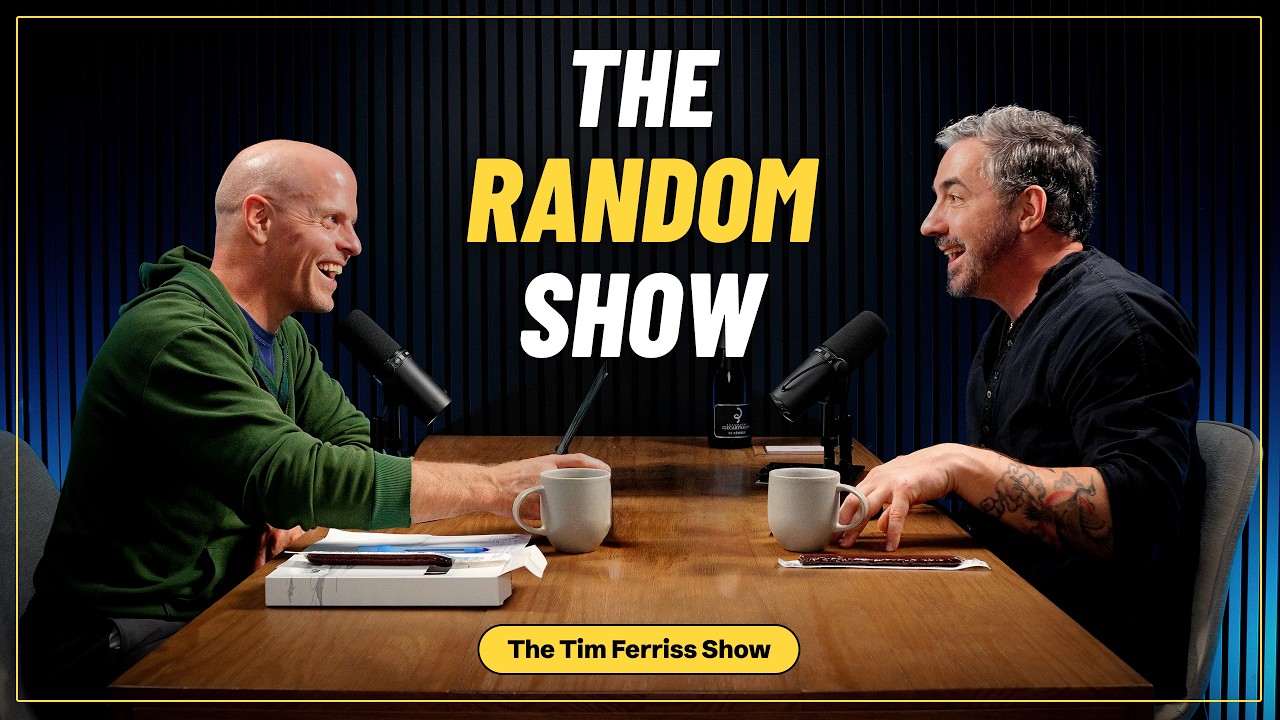
The Random Show! Mortality, AI, Supplements, Rock Climbing, & More
 88 min
The Legendary Hollywood Power Broker — Guy Oseary on 36 Years of Managing Madonna, 26 IPOs, and More
Ask anything from this episode.
Save it, chat with it, and connect it to Claude or ChatGPT. Get cited answers from the actual content — and build your own knowledge base of every podcast and video you care about.
Get Started Free