Key Moments
#76 – Kyle Kingsbury: Finding meaning, depression, and psychedelics
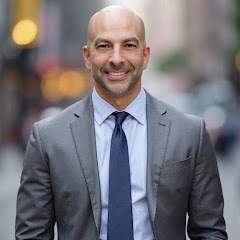 Peter Attia MD
Want to know something specific about what's covered?
We've already dissected every moment. Ask and we will deliver (with timestamps).
Key Moments
Kyle Kingsbury discusses his past struggles with depression, suicide, PEDs, and his journey to healing through psychedelics.
Key Insights
Kyle Kingsbury battled lifelong depression and suicidal thoughts, stemming from a difficult childhood characterized by parental conflict.
His athletic career in football and MMA provided a sense of purpose but also served as a distraction from his internal struggles.
Kingsbury shares his experiences with performance-enhancing drugs (PEDs), noting that they amplified existing tendencies rather than creating new ones.
A near-fatal suicide attempt led to profound spiritual and life-changing experiences, particularly after using psychedelics like psilocybin and ayahuasca.
Psychedelic-assisted therapy, combined with breathwork and traditional practices, became a turning point for his emotional health and self-understanding.
His journey has enabled him to embrace fatherhood and break generational cycles of pain and trauma, focusing on self-compassion and forgiveness.
EARLY STRUGGLES AND ATHLETIC ESCAPISM
Kyle Kingsbury's childhood was marked by significant emotional turmoil due to his parents' frequent fighting, leading to lifelong struggles with depression and suicidal ideation, beginning as early as age seven. Football and later MMA provided him with an outlet and a sense of purpose. While these sports offered a distraction and helped him channel aggression, they also served as a means to avoid confronting his deep-seated internal issues. His academic life initially lacked resonance, in contrast to his engagement with sports and later, more intellectually stimulating college courses.
PERFORMANCE-ENHANCING DRUGS AND THEIR IMPACT
Kingsbury recounts his use of performance-enhancing drugs (PEDs), starting with testosterone in high school to gain a competitive edge in football. This continued through college and into his MMA career, where he experimented with higher doses and other substances like human growth hormone. He offers a nuanced perspective, suggesting that these substances amplified pre-existing traits rather than creating new ones. This contrasts with public perception, often linking PEDs directly to aggression or uncontrolled rage, which he did not personally experience at those high doses.
A LIFE-ALTERING SUICIDE ATTEMPT
The pivotal moment in Kingsbury's life occurred during a period of intense depression and drug use following his transition away from professional football. After a difficult breakup, he overdosed on prescription medications and drove to a parking lot with the intention of ending his life. Standing on the edge, he experienced a profound, almost spiritual moment of peace and a voice that told him 'not yet.' This incident led to hospitalization, a week in detox, and subsequent exploration of various therapeutic and psychiatric interventions, including a resistance to SSRIs.
THE TURNING POINT: PSYCHEDELICS AND MINDFULNESS
Kingsbury's path to healing took a transformative turn with the introduction to psychedelics, starting with psilocybin and then ayahuasca. Initially introduced through his boxing coach in a traditional, intentional setting, these experiences offered a safe environment for profound self-reflection and emotional processing. He describes these ceremonies as deeply personal and unique, involving not only cathartic purging but also profound insights into his past traumas, his programming, and his patterns of behavior, particularly his struggles with addiction and self-medication.
EMBRACING FATHERHOOD AND BREAKING CYCLES
His psychedelic journeys, particularly a challenging but ultimately beautiful ayahuasca ceremony in Costa Rica, led to deep healing and a realization of his role in breaking generational cycles of pain and shame. Witnessing his young son, bear, fueled his desire to be a present and healthy father, ensuring his son would not experience the same trauma he endured. This led to a profound sense of gratitude and compassion for his own parents, understanding they did the best they could with their limitations.
REDEFINING SUCCESS AND RAISING A SON
Kingsbury now focuses on raising his son with a balance of confidence-building activities like martial arts and unstructured play, while also exploring ancestral living and rites of passage. He values the ability to reconnect with ancient practices and find meaningful ways to navigate modern life. He emphasizes the importance of intention and proper guidance when engaging with powerful plant medicines, comparing it to 'psychic surgery.' His journey has shifted his definition of success from external validation to internal peace, self-compassion, and authentic connection.
Mentioned in This Episode
●Supplements
●Products
●Software & Apps
●Companies
●Organizations
●Books
●Drugs & Medications
●Concepts
●People Referenced
Common Questions
Kyle Kingsbury initially struggled academically in high school and attended junior college. He transferred to a junior college near ASU to increase his chances of getting accepted, driven by his desire to play Division 1 football and join friends already there.
Topics
Mentioned in this video
A plant-based psychedelic Kyle Kingsbury used towards the end of his UFC career, which he describes as a turning point in his emotional and spiritual journey.
Form of testosterone used by Kyle Kingsbury in high school and college to gain size for football, with doses significantly higher than typical TRT.
Opiate painkiller Kyle Kingsbury was prescribed, though he experienced severe nausea with high doses, which acted as a 'built-in governor' against abuse.
Anti-anxiety medication prescribed to Kyle Kingsbury, which he abused, leading to a profound sense of euphoria and destructive partying.
Psychedelic substance Kyle Kingsbury first used inappropriately but later used with intention and reverence, leading to significant personal insights and lasting peace.
Medication prescribed to Kyle Kingsbury for bipolar disorder, which he found made him feel mute and emotionally flat, leading him to stop taking it.
Kyle Kingsbury mentioned using MDMA as one of the plant medicines that helped him work through his childhood trauma, distinguishing it from the 'shitty pressed pills' he used in his youth.
Medication prescribed to Kyle Kingsbury to wean him off other anxiety medications in a detox center.
Retired UFC fighter, Director of Human Optimization at Onnit, and the main guest on the podcast, discussing his life, career, and mental health journey.
Physician and author, admired by Kyle Kingsbury for his insights, particularly regarding psychedelic experiences.
Self-help author and motivational speaker referenced by Kyle Kingsbury for his quote about what comes out of you when 'squeezed'.
Neuroscientist and author, whose book on sleep Kyle Kingsbury read, validating his understanding of how sleep deprivation impacted his mental state.
Author who discusses covert and overt depression, particularly in men and women, in his book 'I Don't Want to Talk About It'.
University where Kyle Kingsbury played football after attending junior college; it was known as a big party school.
Kyle Kingsbury's strength and conditioning coach at ASU, who later became an NFL strength coach and pushed Kyle beyond his limits.
Former MMA fighter and coach at AKA when Kyle Kingsbury first trained there as a teenager.
Founder of Onnit, mentioned by Kyle Kingsbury as a potential 'uncle' figure to guide his son through a psychedelic rite of passage in the Amazon.
One of Bruce Lee's main students and a JKD practitioner; Kyle Kingsbury's striking coach trained under him.
One of the greatest MMA fighters, known for his well-rounded skills, exemplifying the need for a strong base skill in the sport.
Another strength and conditioning coach at ASU who went on to become the head strength coach for the 49ers and Vikings.
Spiritual teacher quoted by Kyle Kingsbury on the challenges of personal growth in relation to family relationships.
Author of 'Nonviolent Communication,' whose work Kyle Kingsbury values.
Legendary Brazilian Jiu-Jitsu practitioner who demonstrated the effectiveness of BJJ at the early UFC events.
MMA referee who officiated Kyle Kingsbury's first professional loss, stopping the fight due to the severity of the beating.
Ethnobotanist and author, respected by Kyle Kingsbury for his extensive experience with psychedelic ceremonies.
Author of 'How to Change Your Mind,' recommended by Peter Attia for his storytelling on the importance of understanding psychedelics.
NFL player known for being caught using 'The Whizzinator' to pass drug tests.
One of the greatest MMA fighters, known for his wrestling background, exemplifying the need for a strong base skill in the sport.
Author of 'Anabolics 2000,' whose detailed and unemotional guide to anabolic pharmacology Kyle Kingsbury and Peter Attia admire.
Professional American football league; Kyle Kingsbury aspired to play in it but ultimately realized it was out of reach.
Prolific MMA training institute in San Jose where Kyle Kingsbury trained as a teenager and later returned to train professionally with top fighters.
NFL team for which Mark Uyeyama became the head strength coach.
NFL team for which Mark Uyeyama currently works as a strength coach.
The premier mixed martial arts promotion where Kyle Kingsbury fought professionally.
NFL team for which Joe Kenn served as strength coach.
City in California, part of the area where Kyle Kingsbury grew up.
Location where Kyle Kingsbury nearly attempted suicide, taking a large number of pills.
City in California where Kyle Kingsbury's dad lives and where his family would celebrate Father's Day.
City in California, where Kyle Kingsbury grew up.
City in California, where Kyle Kingsbury played football as a child and later worked as a bouncer.
Location of Kyle Kingsbury's first professional MMA loss in King of the Cage.
The first holistic supplement Kyle Kingsbury explored after a psychiatrist recommended studies on its benefits for the brain, marking a shift in his approach to health.
Drug Kyle Kingsbury used during his period of substance abuse alongside alcohol and anti-anxiety pills, to manage depression.
Substance that helped Kyle Kingsbury sleep during stressful fight camps, although he also reflected on past casual abuse.
Supplement Kyle Kingsbury mentioned from his earlier days, contrasting it with his later exploration of holistic supplements like fish oil.
Anabolic steroid Kyle Kingsbury started taking with testosterone after realizing he wouldn't go pro, noting it helped with inflammation and overall well-being.
Anti-anxiety medication prescribed to Kyle Kingsbury at high doses, alongside Xanax and Vicodin, by a doctor who later went to jail.
Book by Michael Pollan about psychedelics, recommended by Peter Attia as a great resource for understanding the topic better.
A book by William Llewellyn that Kyle Kingsbury read to understand the pharmacology of anabolic steroids.
Book by Matthew Walker that Kyle Kingsbury read, which helped him understand the profound impact of poor sleep on his mental health during his depressed period.
Book by Terrence Real that profoundly impacted Peter Attia, discussing overt vs. covert depression, especially in men.
Publication that recognized Kyle Kingsbury's high school as one of the top ten public schools globally.
TV show with an episode about the Great Flood, which the host referenced in relation to ASU's reputation.
A documentary by Chris Bell about steroid use, mentioned in the discussion about the social perception of steroids and their connection to mental health.
A book by Marshall Rosenberg that Kyle Kingsbury deeply appreciates for its insights into communication, contrasting with his parents' communication style.
A martial art Kyle Kingsbury practiced, noting its merging with MMA and its technical demands.
Martial arts philosophy created by Bruce Lee; Kyle Kingsbury learned JKD from a student of Dan Inosanto.
Substance that Kyle Kingsbury experimented with, noting its positive effect on recovery, especially after an ankle injury.
Form of kickboxing from Thailand known for its fighters' conditioning and technical sparring, which Kyle Kingsbury suggests as a model for MMA training.
Drug Kyle Kingsbury used during his period of substance abuse alongside alcohol and anti-anxiety pills, to manage depression.
More from Peter Attia MD
View all 333 summaries 135 min
381‒Alzheimer’s disease in women: how hormonal transitions impact the brain, new therapies, & more
 9 min
9 minIs Industrial Processing the Real Problem With Seed Oils? | Layne Norton, Ph.D.
 13 min
Cooking with Lard vs Seed Oils | Layne Norton, Ph.D.
 146 min
380 ‒ The seed oil debate: are they uniquely harmful relative to other dietary fats?
Ask anything from this episode.
Save it, chat with it, and connect it to Claude or ChatGPT. Get cited answers from the actual content — and build your own knowledge base of every podcast and video you care about.
Get Started Free