Key Moments
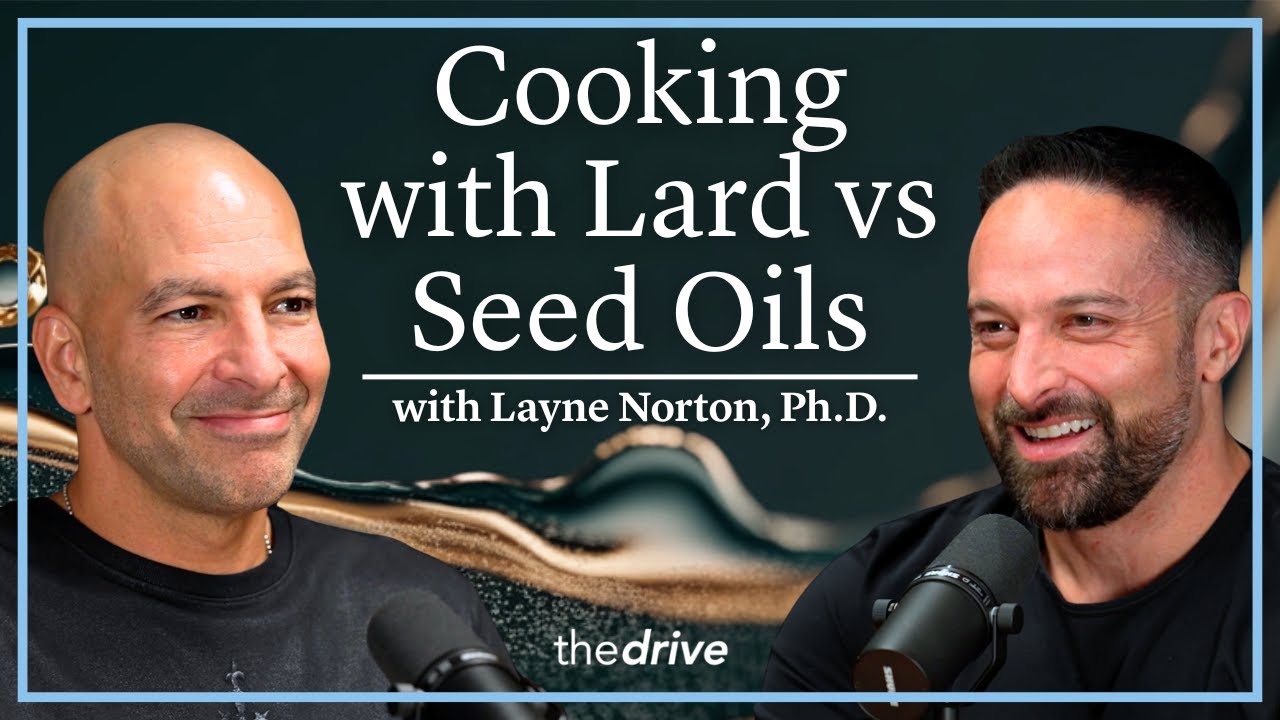
Is Industrial Processing the Real Problem With Seed Oils? | Layne Norton, Ph.D.
 Peter Attia MD
Want to know something specific about what's covered?
We've already dissected every moment. Ask and we will deliver (with timestamps).
Key Moments
Hexane extraction in seed oils, its minimal residue and low inhalation risk; processing concerns.
Key Insights
Hexane is used because it is a non-polar solvent with a low boiling point, enabling efficient oil extraction, though mechanical extraction exists with trade-offs.
Residues of hexane in refined oils are extremely low (roughly 0.05–0.5 ppm) and are not considered a risk from ingestion; inhalation is the primary hazard in industrial settings.
The hexane removal step is relatively brief (minutes to about 90 minutes) and occurs at temperatures lower than those required to cause substantial oil oxidation, which occurs only at much higher temperatures for long durations.
Even with hexane present, the body can clear it and hexane does not bioaccumulate in a meaningful way; an enormous amount of oil would need to be consumed to approach levels associated with mild toxicity.
Mechanical extraction yields less oil and is more costly, so most consumers cannot easily access mechanically extracted oils; price increases would be expected if available.
Dietary linoleic acid has risen from under 3% of total food supply a century ago to around 10% today, framing the broader context of seed oil consumption in modern diets.
HEXANE EXTRACTION: WHY IT'S USED AND HOW IT WORKS
Seed oils are typically extracted using hexane because it is a non-polar solvent that readily interacts with oily components and has a low boiling point, enabling efficient separation of oil from seeds. The process typically involves washing the seeds with hexane to dissolve the crude oil, yielding an oil-hexane mixture. After extraction, the solvent is removed by distillation using steam; the overall heating involved is modest, since hexane boils around 69 degrees Celsius. Oxidation of seed oils, in contrast, tends to occur at much higher temperatures (well over 200C) and with prolonged exposure, far beyond what is required for hexane removal. In practice, the hexane removal step is short, often minutes to about 90 minutes, and the result is a low residual hexane content in the final product. Even with perfect removal, some trace hexane remains due to fundamental limits of purification, but most oils show hexane levels between 0.05 and 0.5 parts per million or are non-detectable with standard instrumentation. The discussion also emphasizes that inhalation, not ingestion, is the primary route of hexane toxicity observed in occupational settings, while ingestion of trace amounts is not shown to cause harm at these low levels.
MECHANICAL VERSUS CHEMICAL EXTRACTION: COST, YIELD, AND PRACTICALITY
The transcript contrasts mechanical extraction with chemical extraction using solvents like hexane. Mechanical extraction avoids chemical solvents but comes with trade-offs: it is typically more costly and yields less oil from the same amount of seed. As a result, products labeled as mechanically extracted might be more expensive and less common in grocery aisles, though they do exist. The speaker notes that while mechanical extraction is feasible, it is not universally adopted due to economic considerations. The implication for consumers is that price and availability influence which oil processing methods are accessible, and that there may be a niche market for mechanically extracted oils, albeit at a premium.
HEXANE RESIDUES AND TOXICITY: INGESTION ISN'T THE MAIN ISSUE
A core point is that the danger associated with hexane is primarily inhalation exposure in industrial settings rather than ingestion through food. Measured hexane in refined seed oils tends to be extremely low—commonly 0.05 to 0.5 ppm, with many samples showing non-detectable levels. The speaker notes that there is no documented human death from hexane ingestion and that rodent studies suggest toxicity occurs only at very high doses. A striking calculation is presented: to reach mild adverse effects via ingestion, one would theoretically have to consume about 11,340 kilograms of oil at once, an impossibly large amount for a single person. Thus, from a consumer ingestion perspective, hexane in seed oils is unlikely to pose a risk, while occupational inhalation hazards remain a concern in production settings.
OXIDATION AND PROCESSING TEMPERATURES: WHAT REALLY HURTS OIL QUALITY
The discussion acknowledges that oxidation is a concern for seed oils but clarifies it happens primarily at high temperatures and long exposure times. In the context of hexane extraction, the steam distillation used to remove hexane occurs at relatively low temperatures, limiting the extent of oxidation during processing. The speaker notes that substantial oxidation of soybean oil, for example, typically requires heating around 240C for several hours, a scenario far more extreme than the conditions used to recover hexane. Consequently, the short, low-temperature steps involved in solvent removal are unlikely to cause meaningful oxidation; any oxidation observed is more a function of processing conditions that involve sustained high heat rather than the brief hexane removal stage.
DIETARY CONTEXT: LINOLEIC ACID, HEALTH, AND THE BIG PICTURE
A broader dietary point is raised: about a century ago, linoleic acid comprised less than 3% of total food availability, whereas today it is closer to 10%. This shift reflects the growing use of seed oils and polyunsaturated fats in modern diets. The transcript positions this trend as a backdrop for discussions about the health implications of seed oil consumption, oxidation, and dietary balance. While the conversation focuses on processing and chemical aspects rather than prescribing dietary guidance, the rise in linoleic acid intake provides important context for understanding how seed oils have become a more prominent part of contemporary nutrition and the ongoing debates about their long-term health effects.
Mentioned in This Episode
●Concepts
Seed oil processing and hexane-related data
Data extracted from this episode
| Metric / Item | Value | Notes |
|---|---|---|
| Hexane boiling point | 69°C | Used as a solvent; low boiling point facilitates evaporation |
| Oxidation onset temperature for seed oils | >200°C | Oxidation occurs only at sufficiently high temperatures for hours |
| Soybean oil oxidation example | ≈240°C for 3 hours | Leads to some oil oxidation; exact percentage not specified |
| Hexane residue in end product | 0.05–0.5 ppm | Many oils are below 1 ppm; some non-detectable |
| Mild toxicity dose in rodent studies | 5,000 mg/kg body weight | Neurotoxicity and liver effects observed in studies (inhalation exposure context) |
| Oil amount to reach mild side effects (hypothetical) | 11,340 kg | Consumed all at once; used as a perspective on risk |
| Historical linoleic acid share in foods (100 years ago) | 3% | Lower share historically |
| Current linoleic acid share in foods | ≈10% | Higher share in modern diets |
Common Questions
Hexane is a non-polar solvent used to wash seeds and extract crude oil because it mixes well with oils and has a low boiling point for easy removal. The solvent is later evaporated, typically via steam, during processing. The discussion notes that hexane exposure is mainly a concern for inhalation rather than ingestion, and residues in oils are generally very low.
Topics
Mentioned in this video
More from Peter Attia MD
View all 335 summaries 51 min
396 – Breast cancer screening: understanding risk, deciding when to start, and more
 105 min
395 – Brain lipidology: understanding APOE, cholesterol homeostasis, Alzheimer’s disease, & more
 135 min
381‒Alzheimer’s disease in women: how hormonal transitions impact the brain, new therapies, & more
 13 min
Cooking with Lard vs Seed Oils | Layne Norton, Ph.D.
Ask anything from this episode.
Save it, chat with it, and connect it to Claude or ChatGPT. Get cited answers from the actual content — and build your own knowledge base of every podcast and video you care about.
Get Started Free