Key Moments
A guide to cardiorespiratory training at any fitness level to improve longevity (AMA 79 sneak peek)
 Peter Attia MD
Want to know something specific about what's covered?
We've already dissected every moment. Ask and we will deliver (with timestamps).
Key Moments
Zone 2 cardio drives longevity by expanding base and peak fitness via sustainable volume.
Key Insights
Cardiorespiratory fitness (CRF) is the strongest modifiable predictor of all-cause mortality; VO2 max (V2 max) reflects oxygen delivery and utilization efficiency.
CRF can be understood as a triangle: a wide base (sustained, aerobic capacity) and a high peak (maximal aerobic output); both grow with training, with volume being the key driver.
Zone 2 sits near the first lactate threshold (~2 mmol/L) and allows large training volumes with manageable fatigue, supporting long-term adaptations and robust lactate clearance.
Oxygen delivery hinges on four factors—diffusion, cardiac output (driven mainly by stroke volume), hemoglobin, and muscle extraction—of which cardiac output is the most influential for V2 max.
Cellular mechanics involve mitochondria, fat oxidation, and lactate shuttling; Zone 2 training enhances mitochondrial density, fat utilization, and lactate handling across muscle fibers.
Measurement and monitoring include VO2 max tests or METs; practical Zone 2 tracking often uses heart rate zones and lactate thresholds, sometimes with emerging lactate monitors.
Practical strategy favors high volume in Zone 2 for longevity, supplemented by occasional high-intensity work; total weekly volume matters more than per-session intensity for long-term adaptations.
Tailored guidance is needed across ages and sexes; as volume tolerance and recovery shift with age, training plans should balance Zone 2 volume with targeted high-intensity efforts.
INTRODUCTION: WHY CARDIORESPIRATORY FITNESS MATTERS
CRF, or how efficiently the heart, lungs, blood vessels, and muscles work together to use oxygen, is a central predictor of how long and how well we live. The episode emphasizes that V2 max is a standardized, practical metric for this efficiency, and that training can meaningfully modulate it. The host highlights the ongoing discussion around zone 2 lactate and the balance between volume and intensity, while acknowledging the value of a practical guide to aggregate decades of insight into a usable framework.
BASE VS PEAK: THE CARDIORESPIRATORY TRIANGLE
The triangle concept frames CRF as needing both a broad base (sustained submaximal work) and a high peak (maximal aerobic output). The base improves fat oxidation and mitochondrial efficiency; the peak reflects the ceiling of oxygen delivery and utilization. Volume is the primary driver of adaptations, but a well-rounded program should develop both elements. Training that only focuses on one end tends to underperform the holistic gains seen when the base and peak expand together.
ZONE 2 DEFINED: LACTATE THRESHOLDS AND PRACTICAL VALUE
Zone 2 is described around the first lactate threshold, roughly at 2 mmol/L, where local tissues balance lactate production and clearance. At this intensity, lactate begins to circulate systemically but can still be cleared efficiently by the heart, brain, and liver. Zone 2 allows high training volume with tolerable fatigue, promoting fat oxidation and lactate shuttle efficiency while avoiding the fatigue cascade that accompanies higher-intensity efforts.
CELLULAR MECHANISMS: MITOCHONDRIA, FAT OXIDATION, AND LACTATE SHUTTLES
At the cellular level, mitochondria power ATP production from fatty acids and glucose-derived pyruvate. Zone 2 training boosts mitochondrial density and fat oxidation efficiency, supporting a more economical energy system. Lactate produced in fast-twitch fibers can be shuttled to slow-twitch fibers or cleared by organs like the liver and heart. This lactate shuttle underpins the metabolic flexibility that makes Zone 2 sustainable for long training blocks.
OXYGEN DELIVERY: CARDIAC OUTPUT AND ITS DRIVERS
Delivering oxygen hinges on diffusion and cardiac output, which is governed largely by stroke volume and heart rate. Hemoglobin carries oxygen, and muscles extract it efficiently at the tissue level. Among these, cardiac output explains a substantial portion of V2 max variability—roughly a large portion of the difference in maximal aerobic capacity among individuals. Understanding this helps explain why improving heart function has outsized effects on VO2 max.
MEASURING AND TRACKING ZONE 2 AND VO2 MAX
V2 max is typically measured in maximal-effort tests and reported in mL O2 per kg per minute, or via METs. Zone 2 is harder to measure directly because it's submaximal, but it can be inferred from lactate thresholds, heart rate zones, and metabolic testing. The discussion emphasizes practical measurement approaches for non-lab settings, including wearable data and occasional lab-based testing to calibrate training zones and track progress over time.
TRAINING STRATEGY: VOLUME, INTENSITY, AND RECOVERY FOR LONGEVITY
Volume is the dominant driver of adaptation; Zone 2 enables sustained training that supports longevity-focused goals without the prohibitive fatigue of constant high-intensity work. High-intensity work still has value, especially for peak power and certain performance goals, but it must be balanced with Zone 2 to maintain adherence and recovery, particularly as age and life demands increase. The episode discourages a one-size-fits-all approach and emphasizes individualized programming.
PRACTICAL GUIDELINES FOR DIFFERENT LIFESTAGES
The host acknowledges variability in time, age, and metabolic flexibility. While 150 minutes of combined exercise weekly is a baseline, longer-term health and lifespan benefits come from greater volume and well-distributed intensities. For older adults, recoverability and fatigue management become critical, so training plans should progressively integrate Zone 2 with fewer high-impact sessions. Women and men may have differing trajectories, but the core principles of Zone 2 training remain applicable.
Mentioned in This Episode
●Products
●Studies Cited
●People Referenced
Zone 2 / Cardiorespiratory Training Cheat Sheet
Practical takeaways from this episode
Do This
Avoid This
Zone 2 training guidelines (summary from the AMA)
Data extracted from this episode
| Metric | Guideline / Value | Notes |
|---|---|---|
| General weekly cardio time | About 150 minutes or more | Baseline public guidelines; more volume may be beneficial for longevity |
| Endurance share of zone 2 | Approximately 80% | Endurance athletes can spend most training time here |
| HIIT guidance when volume is available | Two 45-minute sessions per week | If you have 2.5 hours for cardio, consider higher-intensity work too |
| Primary driver of adaptations | Volume > intensity | Volume drives adaptation, provided zone 2 intensity is maintained for threshold work |
Common Questions
Zone 2 refers to a submaximal aerobic intensity where lactate is manageable and fat oxidation is optimized. It’s important because it’s a strong modifiable predictor of healthspan and lifespan, largely through its impact on cardiorespiratory fitness (CRF) and mitochondrial efficiency.
Topics
Mentioned in this video
Plasma lactate around ~2 mM used to define Zone 2 and systemic balance between production and clearance.
Concept describing shuttle of lactate from fast-twitch fibers to slow-twitch fibers and mitochondria for oxidation; part of the cellular mechanism of CRF.
Metabolic equivalents; one MET equals 3.5 mL/kg/min of oxygen uptake and is used to estimate VO2 max and exercise intensity.
Higher lactate level (often ~4–5 mM) where glycolytic lactate production exceeds clearance, marking later exercise intensity zones.
The maximum rate at which the body can utilize oxygen; a standardized measure of cardiorespiratory fitness (CRF). Expressed in mL/kg/min and linked to mortality risk.
More from Peter Attia MD
View all 337 summaries 118 min
Building strength and muscle mass: optimize training & nutrition for longevity (AMA #71 rebroadcast)
 121 min
397 - Endometriosis and adenomyosis: diagnosis, fertility, reproductive aging, & emerging treatments
 51 min
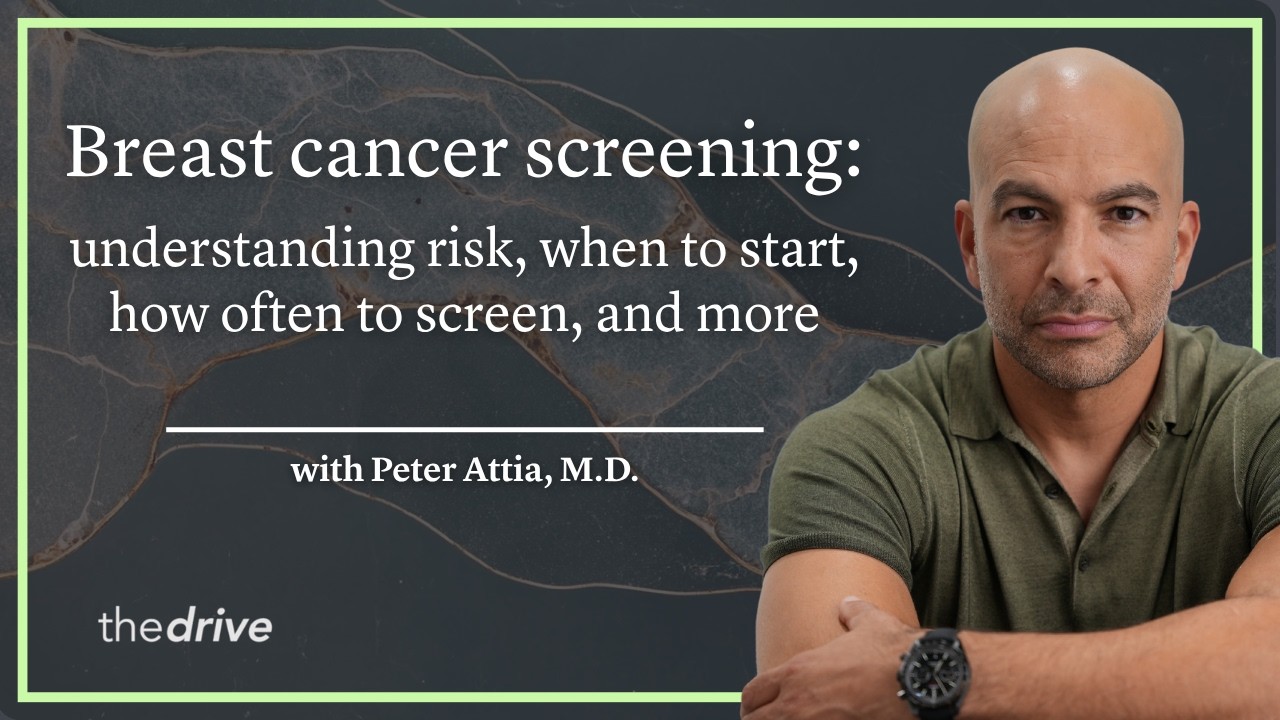
396 – Breast cancer screening: understanding risk, deciding when to start, and more
 105 min
395 – Brain lipidology: understanding APOE, cholesterol homeostasis, Alzheimer’s disease, & more
Ask anything from this episode.
Save it, chat with it, and connect it to Claude or ChatGPT. Get cited answers from the actual content — and build your own knowledge base of every podcast and video you care about.
Get Started Free