Key Moments
LIVE EVENT Q&A: Dr. Andrew Huberman Question & Answer in Melbourne, AU
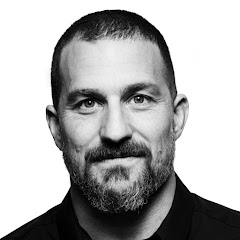 Andrew Huberman
Want to know something specific about what's covered?
We've already dissected every moment. Ask and we will deliver (with timestamps).
Key Moments
Dr. Andrew Huberman discusses brain health, willpower, circadian rhythms, meditation, and future research.
Key Insights
Cardiovascular health, especially Zone 2 cardio, is crucial for brain health and dementia prevention.
The anterior mid-cingulate cortex (AMCC) is the brain region associated with willpower and grit, strengthened by engaging in challenges.
Disruptions to circadian rhythm can be managed by controlling light exposure, particularly blue light, during shift work.
Non-Sleep Deep Rest (NSDR) is an effective, zero-cost tool for restoring cognitive and physical vigor by promoting self-directed relaxation.
Mindless scrolling on phones can be reduced by creating behavioral barriers, such as regularly deleting and reinstalling problematic apps.
Future research directions include psychedelics for mental health, childhood trauma rewiring, understanding consciousness, and further exploration of genetics and the microbiome.
BRAIN HEALTH AND DEMENTIA PREVENTION
Dr. Huberman emphasizes that good cardiovascular health is fundamental for brain health and preventing dementia. He highlights the benefits of Zone 2 cardio, which involves maintaining a heart rate where one can comfortably converse, recommending 180-200 minutes per week. This type of exercise increases blood flow to the brain and supports the release of beneficial growth factors and anti-inflammatory cytokines. Age-related cognitive decline, particularly in working memory, can also be addressed by modulating neurotransmitters like dopamine through healthy lifestyle choices.
THE SCIENCE OF WILLPOWER AND THE AMCC
The anterior mid-cingulate cortex (AMCC) is identified as the brain region responsible for willpower, tenacity, and grit. This area is activated when individuals engage in challenging activities, pushing through discomfort or difficulty. Research, including brain stimulation studies, suggests that the AMCC grows or becomes more active with consistent engagement in challenging physical or cognitive tasks. Superagers, individuals who age cognitively very slowly, often exhibit a hyperactive AMCC, indicating a strong link between lifelong challenge-seeking and sustained cognitive function.
MANAGING CIRCADIAN RHYTHMS AND SHIFT WORK
Disruptions to the natural circadian rhythm, common in shift work and modern lifestyles, can negatively impact mood and alertness. Dr. Huberman stresses the importance of a cortisol peak early in the day. To mitigate these effects, especially during night shifts, he recommends limiting exposure to blue light by using blue-blocking glasses or red-tinted lighting. Adjusting eating schedules and strategically using light exposure (e.g., sunlight in the morning) are also crucial for recalibrating the body's internal clock.
NON-SLEEP DEEP REST (NSDR) AND MEDITATION
Dr. Huberman distinguishes between Non-Sleep Deep Rest (NSDR) and meditation. NSDR, inspired by Yoga Nidra, is presented as a powerful, zero-cost tool for physical and cognitive restoration, capable of offsetting sleep deprivation and improving sleep quality. It involves a state of focused relaxation, distinct from structured thought processes. Traditional meditation, often involving focus and attention redirection, can improve memory and focus but is generally seen as a cognitive exercise rather than an energy-replenishing one.
COMBATING PHONE ADDICTION AND MINDLESS SCROLLING
Addressing the pervasive issue of mindless scrolling on smartphones, Dr. Huberman suggests creating significant behavioral barriers. A highly effective method is to regularly delete and reinstall problematic apps from one's phone. This simple act introduces enough friction into the process to reduce compulsive usage. He acknowledges that for younger generations, smartphones are deeply integrated into their sense of energy and connectivity, requiring a systemic approach rather than outright avoidance, advocating for a 'channel, not a dam' mentality.
FUTURE RESEARCH FRONTIERS AND CALL TO ACTION
Dr. Huberman expresses excitement for future research in areas such as psychedelics for treating depression and PTSD, developing structured protocols for childhood trauma, understanding consciousness, and advancing genetics and microbiome research. He also touches on the critical need for more research into female hormones. His overarching call to action encourages the public dissemination of reliable scientific information through various platforms, promoting curiosity, discernment, and a collective effort towards improving public health and communication.
Mentioned in This Episode
●Supplements
●Products
●Software & Apps
●Companies
●Organizations
●Drugs & Medications
●Studies Cited
●Concepts
●People Referenced
Common Questions
Maintaining good cardiovascular health through practices like Zone 2 cardio (180-200 minutes per week) is crucial for brain circulation. Additionally, protocols that increase catecholamines, like dopamine, through zero- or low-cost behavioral methods can improve working memory and offset age-related decline.
Topics
Mentioned in this video
Mentioned as a substance some older individuals are starting to take for cognitive enhancement.
Discussed as a compound that might offset age-related reductions in dopaminergic and cholinergic transmission, though not recommended for smoking or vaping.
Discussed in terms of its potential effects on serotonin and dopamine, and a study on LDS individuals showed minimal neurodegeneration with moderate use, though contamination is a concern.
Mentioned as a substance some older individuals are starting to take, but clarified as an amphetamine with potential for cognitive enhancement.
Mentioned as a substance being researched for its potential to ameliorate depression.
A neurosurgeon at Stanford who conducted experiments by stimulating the anterior mid-cingulate cortex.
A colleague of Robert Sapolsky at Stanford who studies self-directed hypnosis for solving particular problems.
Host of the Huberman Lab podcast, professor of neurobiology and ophthalmology at Stanford School of Medicine.
A colleague of David Spiegel at Stanford, known for his work on stress and biology, particularly with baboons.
Her laboratory's work on meditation's effects on memory and focus is cited.
Mentioned as one of the structured tools that have merit for treating trauma.
A thousand-year-old practice of lying still with an awake mind, used for self-directed relaxation and potentially aiding recovery from addiction.
A type of cardiovascular exercise where one can barely maintain a conversation, recommended for brain health and potentially offsetting age-related cognitive decline.
A growth factor discussed in relation to Zone 2 cardio's benefits for the brain.
A brain region identified as the seat of willpower, activated when individuals overcome challenges and showing increased activity in 'superagers'.
A term coined by Huberman for practices like Yoga Nidra, designed to restore cognitive and physical vigor and improve sleep.
Mentioned as a technology that could theoretically be used to modify the genome of adults and babies.
More from Andrew Huberman
View all 395 summaries 32 min
The Science & Treatment of Obsessive Compulsive Disorder (OCD) | Huberman Lab Essentials
 159 min
Raising a Dog & Mastering Calm Assertive Energy | Cesar Millan
 37 min
Essentials: Tools for Hormone Optimization in Males | Dr. Kyle Gillett
 33 min
Essentials: The Science of Eating for Health, Fat Loss & Lean Muscle | Dr. Layne Norton
Ask anything from this episode.
Save it, chat with it, and connect it to Claude or ChatGPT. Get cited answers from the actual content — and build your own knowledge base of every podcast and video you care about.
Get Started Free