Key Moments
#70–David Sinclair, PhD: How cellular reprogramming could slow our aging clock, & the latest on NAD
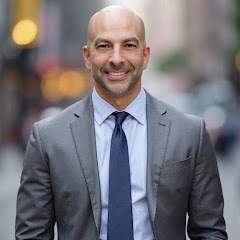 Peter Attia MD
Key Moments
Cellular reprogramming can reverse aging, offering hope for extended healthspan. NAD+ and methylation clocks are key.
Key Insights
The "information theory of aging" posits that aging is a loss of cellular identity due to epigenetic errors, akin to data degradation.
DNA methylation patterns act as a biological clock, accurately reflecting chronological age and potentially predicting lifespan.
Cellular reprogramming, particularly partial reprogramming using Yamanaka factors, can revert cells to a younger state, restoring function.
Senescent cells, though preventing cancer, contribute to aging by releasing inflammatory signals that stress surrounding cells.
NAD+ is crucial for cellular energy and DNA repair; declining levels are linked to aging, with precursors like NR and NMN showing promise.
While interventions like Metformin primarily slow aging in unhealthy individuals, reprogramming offers a potential reversal.
Resveratrol and NAD+ boosters may offer benefits, especially for those not at peak health, by activating protective cellular pathways.
THE INFORMATION THEORY OF AGING
David Sinclair introduces the "information theory of aging," drawing parallels with Claude Shannon's information theory. Aging, in this context, is viewed as a loss of cellular identity and function due to accumulated errors in gene regulation, similar to how information degrades over transmission. This loss isn't necessarily due to a genetic program dictating aging, but rather a consequence of constant cellular repair and stress responses that disrupt the precise epigenetic patterns established early in life. The ability to maintain or reset this information is central to controlling aging.
EPIGENETIC CLOCKS AND CELLULAR IDENTITY
Sinclair explains that the epigenome, particularly DNA methylation, acts as a "clock" that tracks biological age. These methylation patterns, established during development, dictate which genes are expressed. As we age, these patterns become corrupted, leading to cells losing their specific identity and functions. This epigenetic drift can cause cells to revert to a more primordial state or acquire aberrant gene expression, contributing to the hallmarks of aging. The Horvath clock is presented as a highly accurate measure of this epigenetic age.
CELLULAR REPROGRAMMING FOR REJUVENATION
A key concept discussed is cellular reprogramming, particularly partial reprogramming using Yamanaka factors. This process can effectively reset the epigenetic clock, restoring cells to a younger, healthier state. Experiments in mice have shown that partial reprogramming can rejuvenate tissues, restore lost function (like vision), and even reverse aspects of aging. This approach bypasses typical aging interventions by directly targeting the epigenetic information that governs cellular identity and health.
SENESCENCE AND THE ACCUMULATION OF DAMAGE
The conversation delves into senescent cells – aged cells that stop dividing but remain metabolically active, releasing pro-inflammatory signals. While these cells prevent cancer by halting damaged cells, their accumulation contributes to chronic inflammation and tissue dysfunction associated with aging. Sinclair suggests that these senescent cells can further disrupt the epigenome of neighboring cells, accelerating the aging process. This creates a vicious cycle where damaged cells contribute to further damage and aging.
NAD+ AND SIRTUINS: FUELING CELLULAR DEFENSE
Nicotinamide adenine dinucleotide (NAD+) is highlighted as a critical molecule for cellular energy production and DNA repair, essential for the activity of sirtuins, key longevity proteins. Declining NAD+ levels with age impair these protective mechanisms. Precursors like nicotinamide riboside (NR) and nicotinamide mononucleotide (NMN) are discussed as potential ways to boost NAD+ levels, particularly in individuals with age-related deficits or diseases. The effectiveness and optimal delivery methods of these precursors are still under investigation.
INTERVENTIONS AND THEIR MECHANISMS
Various interventions are considered, including Metformin, Resveratrol, and NAD+ boosters. Metformin's effects on metabolism and mitochondria are discussed, with a suggestion to "pulse" its use, avoiding it during intense exercise to allow for mitochondrial recovery. Resveratrol is presented as a sirtuin activator, potentially beneficial for those not in peak health. NAD+ boosters are explored for their role in replenishing cellular energy and repair, with ongoing research into their efficacy and optimal forms (NR vs. NMN) in humans.
THE FUTURE OF LONGEVITY: FROM THERAPY TO REVERSAL
The potential for gene therapy and reprogramming to treat age-related diseases and extend healthspan is immense. Sinclair envisions a future where interventions like viral vectors deliver reprogramming factors to specific tissues, effectively dialing back cellular age. While challenges remain in optimizing delivery and ensuring safety, the progress suggests a shift from merely slowing aging to actively reversing it, offering a profound impact on individual health and societal structures in the coming decades.
Mentioned in This Episode
●Supplements
●Software & Apps
●Companies
●Organizations
●Books
●Drugs & Medications
●Concepts
●People Referenced
Common Questions
The Information Theory of Aging posits that aging is a result of epigenetic noise and the loss of correct gene expression patterns. Sirtuin genes, which act as 'silent information regulators,' play a crucial role in maintaining gene silencing and repairing DNA, but their function is disrupted over time, leading to cellular identity loss.
Topics
Mentioned in this video
Academic institution where David Sinclair was a postdoc in Lenny Guarente's lab when sirtuin genes were discovered.
Medical institution where David Sinclair's lab's most advanced pro-drug molecule, designed to boost NAD+, is currently undergoing phase one human studies.
Academic institution where David Sinclair is a professor in the Department of Genetics.
Research institute where Juan Carlos Izpisua Belmonte showed that over-reprogramming cells can lead to tumor formation in mice.
Institution where collaborations on reprogramming experiments, particularly restoring eyesight, are taking place.
The Food and Drug Administration, whose head (Ned Sharpless) created a specific mouse model for tracking cellular senescence.
Academic institution where Josh Rabinowitz's lab conducted research on the metabolism of nicotinamide riboside.
Medical institution where Jim Kirkland researched the effects of senescent cells.
An antibiotic used in experimental reprogramming as an on/off switch for gene expression in AAV vectors, allowing controlled activation of rejuvenating genes.
A drug that inhibits mitochondria to stimulate their growth, with recent studies suggesting it may blunt exercise effects in metabolically healthy individuals, leading to a suggestion of pulsed dosing.
A drug discussed for its potential in extending lifespan in mice by around 30%, but its optimal pulsatile dosing in humans is still unclear, and it may interfere with muscle growth from exercise.
Former head of the FDA who created a mouse model where p16 gene activation caused cells/tissues to fluoresce, indicating stress or senescence.
Professor at Princeton whose lab conducted a tracer study on oral nicotinamide riboside in mice, showing initial conversion to NAD+ primarily in the liver.
Researcher based in Switzerland who has studied the effects of NR in old mice and in mitochondrial disease.
Professor in the Department of Genetics at Harvard Medical School and co-director for the biological mechanism of aging program, known for his work in understanding aging and its effects.
Scientist in whose lab David Sinclair was a postdoc at MIT when sirtuin genes were first discovered.
Scientist at the Salk Institute who demonstrated that pushing cellular reprogramming too far can induce tumors.
A colleague of David Sinclair known for his belief that future technology will allow replacement of any body part or system.
Researcher at the Mayo Clinic who conducted experiments showing senescent cells implanted into mice caused signs of premature aging.
Scientist from the 1950s who used the metaphor of an embryo rolling down a hill into valleys, representing cell differentiation and identity.
A mathematician from the 1940s who developed the information theory of communication, relevant to understanding how information is preserved and transmitted, and analogously, how epigenetic information is maintained in cells.
One of the inventors of the epigenetic clock, a mathematician at UCLA, whose work allows estimation of biological age and prediction of lifespan.
Zombie cells that stop dividing but don't die, accumulating with age and releasing inflammatory signals that stress surrounding cells, contributing to aging.
A theory proposed by David Sinclair suggesting that aging is caused by a loss of fidelity in the epigenetic information, rather than direct genetic mutations.
An epigenetic clock, invented by Steve Horvath, that measures biological age by analyzing DNA methylation patterns with high accuracy, capable of predicting lifespan and reflecting lifestyle choices.
A gene-editing technology mentioned in the context of engineering out undesirable genes in embryos, though not directly part of Sinclair's reprogramming research.
A family of genes discovered to control aging in yeast, maintaining gene silencing and responding to stress to repair DNA, requiring NAD+ for their activity.
A set of genes used in the reprogramming field to take an adult cell and convert it into a stem cell, effective for reversing cellular age.
A genetic disease often considered a poster child for gene therapy due to its single known gene mutation.
A plant molecule found in red wine, taken in high doses by David Sinclair, shown to activate sirtuin enzymes and extend the lifespan of mice on a Western diet.
A form of Vitamin B3, also known as niacin, that can raise NAD+ levels but is an effective inhibitor of sirtuins at high doses, making it less ideal than other precursors.
A molecule very similar to resveratrol, included in a high-dose NR supplement used in a small ALS patient study.
A precursor to NAD+, chemically similar to DNA and Vitamin B3, directly absorbed by cells and converted to NMN, then NAD+, making it a promising booster.
Nicotinamide adenine dinucleotide, a molecule vital for various biological processes and identified as a crucial fuel for sirtuin activity, with discussions around its replenishment and boosting effects.
A molecule that NR is converted into inside cells before becoming NAD+, also a direct precursor to NAD+ being studied for its effects.
More from Peter Attia MD
View all 333 summaries 135 min
381‒Alzheimer’s disease in women: how hormonal transitions impact the brain, new therapies, & more
 9 min
9 minIs Industrial Processing the Real Problem With Seed Oils? | Layne Norton, Ph.D.
 13 min
Cooking with Lard vs Seed Oils | Layne Norton, Ph.D.
 146 min
380 ‒ The seed oil debate: are they uniquely harmful relative to other dietary fats?
Ask anything from this episode.
Save it, chat with it, and connect it to Claude or ChatGPT. Get cited answers from the actual content — and build your own knowledge base of every podcast and video you care about.
Get Started Free