Key Moments
369 ‒ Rethinking protein needs for muscle and longevity, and the benefits of creatine & sauna use
 Peter Attia MD
Want to know something specific about what's covered?
We've already dissected every moment. Ask and we will deliver (with timestamps).
Key Moments
Protein needs revised, creatine benefits brain & muscle, sauna use aids health.
Key Insights
The Recommended Daily Allowance (RDA) for protein (0.8g/kg) is insufficient; a minimum of 1.2g/kg is needed to prevent negative protein balance.
Increased protein intake, especially for older adults, can significantly mitigate age-related muscle loss and reduce frailty.
Resistance training is crucial for combating anabolic resistance and maximizing protein's benefits, making inactivity a greater culprit than aging itself.
Creatine supplementation, at doses of 10g/day, shows promise for cognitive function, particularly under stress (sleep deprivation, aging), by supporting brain energy metabolism.
Sauna use, especially at high temperatures and frequencies, offers cardiovascular and neuroprotective benefits, possibly through heat shock proteins and improved cardiorespiratory fitness.
The optimal protein intake range for active individuals is likely 1.6-2.2g/kg, with higher ends beneficial for those in caloric deficits or aiming for body recomposition.
REVISED PROTEIN REQUIREMENTS
The current Recommended Daily Allowance (RDA) for protein, set at 0.8 grams per kilogram of body weight, is widely considered insufficient. Research, including stable isotope tracer studies, suggests that a minimum of 1.2 grams per kilogram daily is necessary for adults to maintain a positive protein balance. This updated baseline is crucial because the body does not store amino acids, unlike fats or carbohydrates, making consistent daily intake vital to prevent muscle breakdown.
COMBATING AGE-RELATED MUSCLE LOSS
For older adults, insufficient protein intake is exacerbated by anabolic resistance, where muscles become less sensitive to amino acids. Increasing protein consumption to 1.2g/kg can significantly offset age-related muscle mass decline. Studies indicate that older women achieving this intake are substantially less likely to experience frailty, highlighting protein's critical role in maintaining functional independence and quality of life in aging.
THE CRITICAL ROLE OF EXERCISE
Physical activity, particularly resistance training, is paramount in mitigating muscle anabolism resistance and maximizing protein's benefits. Inactivity is identified as a primary driver of anabolic resistance, more so than chronological aging. Engaging in regular resistance training can restore muscle sensitivity to amino acids, reducing the need for extremely high protein intakes and ensuring that protein consumed supports muscle health rather than being inefficiently utilized.
OPTIMAL PROTEIN INTAKE STRATEGIES
While 1.2g/kg is the new minimum, optimal intake for actively training individuals likely ranges from 1.6g to 2.2g/kg. This higher intake supports increased muscle protein synthesis and strength gains, especially when combined with resistance training. For those aiming for body recomposition or in a caloric deficit, even higher protein intakes may be warranted to prevent muscle catabolism. Clinically, aiming for a higher target (e.g., 2.0g/kg) is recommended to ensure an adequate average intake, accounting for daily fluctuations.
CREATINE'S BENEFITS FOR BRAIN AND MUSCLE
Creatine, a widely studied and safe supplement, plays a key role in ATP recycling, vital for energy production in both muscle and brain cells. While 5g/day is often sufficient for muscle saturation over time, doses of 10g/day may be necessary to increase brain creatine levels. This is particularly beneficial under conditions of stress, such as sleep deprivation or aging, potentially improving cognitive function, processing speed, and memory. Vegetarians and vegans, with lower dietary intake, may see the most significant benefits from supplementation.
SAUNA THERAPY FOR CARDIOVASCULAR AND NEUROPROTECTION
Regular sauna use, particularly at high temperatures (around 175-195°F or 80-88°C) for 20 minutes, offers significant cardiovascular benefits, mimicking some effects of moderate-intensity exercise by improving cardiorespiratory fitness and potentially lowering dementia risk. The increase in heat shock proteins may protect against protein misfolding, a factor in neurodegenerative diseases. While infrared saunas can be beneficial, they may require longer durations to achieve similar physiological effects compared to traditional dry saunas.
ADDRESSING MACRONUTRIENT AND THERMAL CONTROVERSIES
The discussion also touched on potential controversies, like the link between protein intake and mTOR activation, often misinterpreted from animal studies. It's emphasized that exercise activates mTOR beneficially in skeletal muscle, supporting its role in recovery and growth. Similarly, extreme heat exposure (over 200°F or 99°C) in saunas might carry risks, suggesting that finding a hormetic balance, rather than pursuing extreme conditions, is optimal for health benefits without undue harm.
Mentioned in This Episode
●Supplements
●Products
●Software & Apps
●Tools
●Organizations
●Books
●Studies Cited
●Concepts
●People Referenced
Protein, Creatine, and Sauna: Quick Reference Guide
Practical takeaways from this episode
Do This
Avoid This
Common Questions
The hosts argue that the current Recommended Daily Allowance (RDA) of 0.8 grams of protein per kilogram of body weight per day is insufficient. Based on stable isotope studies, the minimal daily allowance to avoid negative protein balance is closer to 1.2 grams per kilogram. For optimal benefits, especially with resistance training or during energy deficits, aiming for 1.6 to 2.2 grams per kilogram is suggested.
Topics
Mentioned in this video
An expert who shared an elegant experiment demonstrating that inactivity is a primary driver of anabolic resistance, not aging itself.
Researcher who recently issued a call for data on the harmful effects of high protein intake, receiving no response.
Co-host of the Acquired podcast.
Researcher whose study on dietary protein intake from vegetable vs. meat sources was discussed, with caveats about confounding factors related to lifestyle.
Co-host of the Acquired podcast, known for his extensive preparation for each episode.
Ashley Mason's mentor, who conducted a phenomenal pilot study on hyperthermia for antidepressant effects.
A psychologist researching the effects of infrared saunas and core body temperature increases on depression and mental health.
A protein kinase that regulates cell growth, proliferation, and survival. While generally associated with growth, its systemic activation can be negative, but targeted activation in muscle (e.g., through exercise) is positive.
A plot of body size against lifespan for different organisms, used to understand why some animals live longer or shorter than expected for their size.
A growth hormone activated by amino acids, particularly important for growth in adolescents and children, and has a staggeringly short half-life when administered systemically.
A high-intensity exercise program mentioned by Rhonda Patrick as her resistance training regimen, for which creatine is particularly useful due to explosive movements.
The current official recommended daily allowance for protein (0.8g/kg body weight/day), which the speakers argue is a 'minimal daily allowance' and insufficient for optimal health.
A medical imaging scan used to measure body composition, including lean body mass, useful for calculating protein needs, especially in overweight individuals.
The body's primary storage for amino acids; catabolism of muscle occurs if protein intake is insufficient.
An intervention consistently shown to extend life in laboratory animals, often involving the downregulation of mTOR.
A method of feeding that bypasses the gastrointestinal tract, mentioned in the context of high protein in ICU patients.
Drugs like Tirzepatide (Mounjaro, Zepbound) and Semaglutide (Ozempic, Wegovy) that cause satiety and weight loss, but require careful management of protein intake to preserve muscle mass.
A brand of protein powder that Peter Attia found mixed well in water without needing a blender and had no GI issues.
Hats worn in saunas to shield the head from extreme heat, anecdotally reducing discomfort.
Newer, more accurate studies using isotope tracers (like L13 carbon-labeled phenylalanine) to quantify protein turnover and determine minimal protein needs, showing higher requirements than the RDA.
A publication by Stu Phillips discussing the inadequacy of current protein RDAs for aging populations.
More from Peter Attia MD
View all 337 summaries 118 min
Building strength and muscle mass: optimize training & nutrition for longevity (AMA #71 rebroadcast)
 121 min
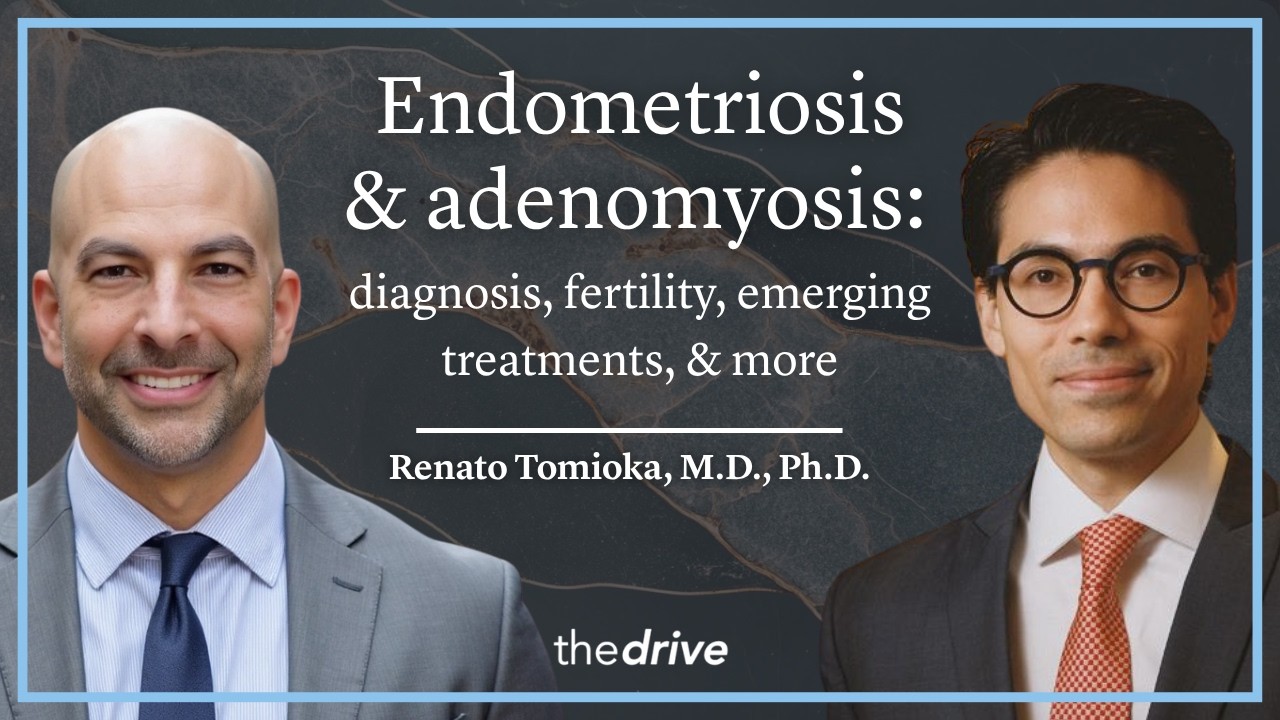
397 - Endometriosis and adenomyosis: diagnosis, fertility, reproductive aging, & emerging treatments
 51 min
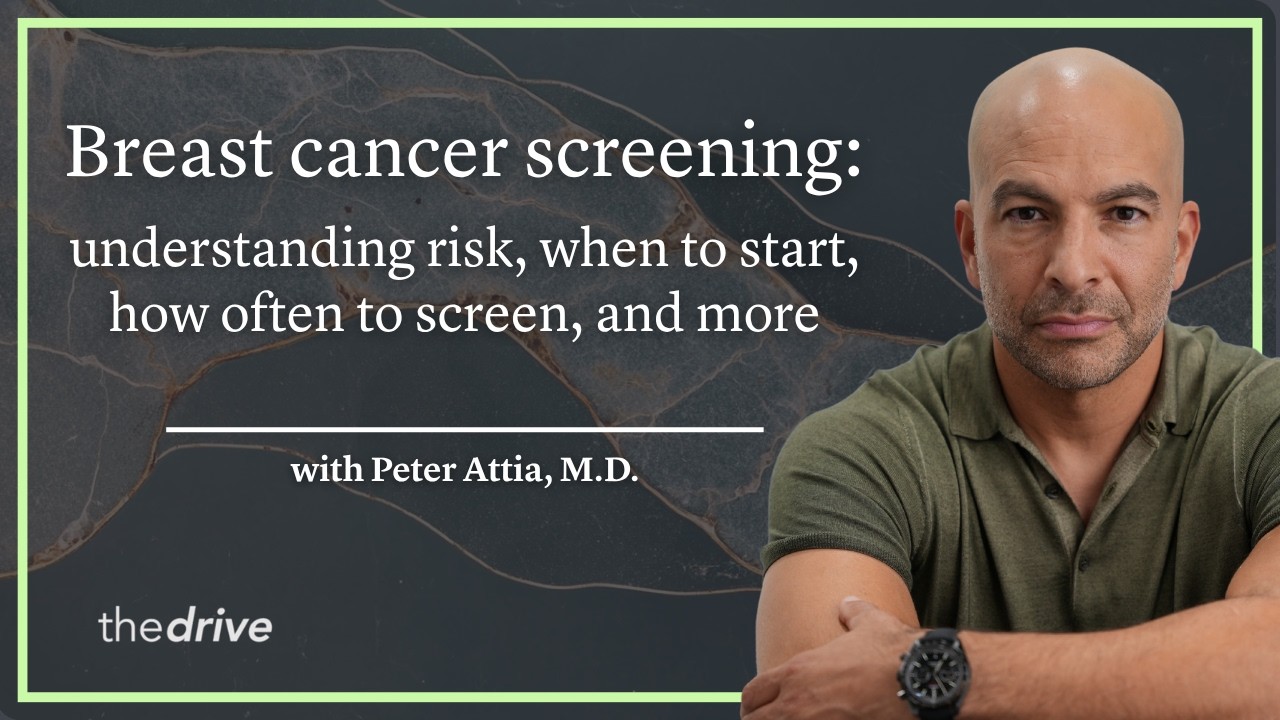
396 – Breast cancer screening: understanding risk, deciding when to start, and more
 105 min
395 – Brain lipidology: understanding APOE, cholesterol homeostasis, Alzheimer’s disease, & more
Ask anything from this episode.
Save it, chat with it, and connect it to Claude or ChatGPT. Get cited answers from the actual content — and build your own knowledge base of every podcast and video you care about.
Get Started Free