Key Moments
The Random Show — New Year's Resolutions, 2010-2019 Lessons Learned, Finding Joy, and Much More
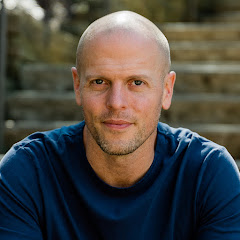 Tim Ferriss
Want to know something specific about what's covered?
We've already dissected every moment. Ask and we will deliver (with timestamps).
Key Moments
Tim Ferriss and Kevin Rose discuss relationships, energy management, and personal growth in the past decade.
Key Insights
Effective relationships require intentional structure, open communication, and a focus on being a team.
Energy management is crucial, involving understanding what drains and replenishes you, and mindful attention management.
Saying 'no' strategically and creating systems for decision-making can prevent overwhelm and free up mental space.
Personal growth involves embracing vulnerability, admitting what you don't know, and practicing self-compassion.
Mindful consumption, whether of alcohol, news, or new books, is key to maintaining focus and well-being.
Psychedelics, when used responsibly in therapeutic settings, show potential for profound mental and emotional resets.
Prioritizing presence and acceptance over constant striving leads to greater peace and joy in daily life.
Investing involves a balanced approach with a core of stability and a calculated allocation to high-risk, high-reward ventures.
Setting clear boundaries and communicating needs, even uncomfortably, is vital for personal and relational health.
Learning from mistakes, like panic-selling investments, requires introspection and updating one's 'operating system'.
RELATIONSHIP DYNAMICS AND COMMUNICATION
Kevin Rose and Tim Ferriss delve into the complexities of relationships, emphasizing the importance of polarity, therapy, and structured communication. Rose highlights his decade-long relationship, attributing its success to therapy and a shared 'on the same team' mentality. Ferriss agrees, adding that maintaining polarity and establishing regular check-ins, like quarterly 'couples days,' are crucial for long-term attraction and connection. They discuss the need for intentional systems to cultivate relationships, preventing issues from escalating to a 'Code Red.'
STRATEGIES FOR NAVIGATING DISAGREEMENTS
The conversation turns to managing disagreements within relationships. Rose shares his approach to 'batching' issues, a structured method developed with his girlfriend. This involves starting with positive reinforcement, discussing personal strengths as a partner, and clearly stating desires. The emphasis is on positive framing and avoiding accusatory language, drawing parallels to 'dog training' with positive reinforcement. Rose also stresses the importance of a 'clean fighter' partner and the concept that adversity reveals—rather than builds—character.
THE POWER OF SYSTEMIC THINKING AND SAYING NO
Ferriss introduces frameworks for constructive engagement, like the 'above the line' vs. 'below the line' concept from conscious leadership. Both hosts underscore that finding a system that works personally is more important than adhering to a rigid one. A significant insight is the necessity of saying 'no,' which Ferriss has practiced by ceasing startup investments. He advocates for creating one decision that simplifies many, exemplified by his public commitment to stop reading new books published in 2020 to manage information overload and the 'fear of missing out' (FOMO).
ENERGY MANAGEMENT AND MINDFUL CONSUMPTION
The discussion shifts to energy management, distinguishing it from simple time management. Ferriss emphasizes that attention management is paramount; even blocked-out time is useless if attention is scattered. He identifies categories that drain or replenish energy, citing time in nature and creative work as energizers. Rose shares personal resolutions for 2020, including eliminating plastic and focusing on core strength, dynamic neuromuscular stabilization (DNS), and tracking alcohol consumption with the 'Less' app. Both acknowledge the impact of environmental shifts, like moving from mountains to city noise.
PSYCHEDELICS AND MENTAL WELL-BEING EXPLORATION
Ferriss details his evolving focus from physical biohacking to mental and emotional well-being, largely driven by his family history of neurodegenerative diseases. He discusses his significant investment in psychedelic research, viewing compounds like psilocybin and MDMA as tools for potentially treating intractable conditions and offering profound mental reorganization. He stresses the importance of supervised, therapeutic settings and maintains neutrality to avoid influencing research outcomes, likening his commitment to a non-profit endeavor rather than a for-profit venture.
ACCEPTANCE, PRESENCE, AND SELF-COMPASSION
Both hosts reflect on the transformative power of acceptance. Rose notes that peace comes not from understanding or striving, but from acceptance, while acknowledging it doesn't mean condoning bad behavior. He emphasizes enjoying the present moment and the 'day-to-day dance' of life, contrasting it with his past focus on achievement. Ferriss expands on self-compassion, citing Jack Kornfield's idea that compassion is incomplete if not extended to oneself. He discusses 'radical acceptance' and the damaging nature of an abusive inner voice, advocating for practices like Tara Brach's book and meditation to cultivate self-kindness.
INVESTING STRATEGIES AND LESSONS LEARNED
The conversation transitions to investing. Rose shares his strategy of a diversified core portfolio alongside a calculated 20% allocation to high-risk, deeply understood ventures, citing early investments in Bitcoin and Shopify. He highlights the importance of a clear plan and avoiding 'panic selling' by assessing fundamental business changes. Ferriss contrasts his comfort in public markets with Rose's success across various asset classes, emphasizing that understanding one's strengths and playing to them is key. Both agree on the importance of portfolio construction, risk management, and disciplined selling based on strategy, not emotion.
THE VALUE OF 'CLOSING THE LOOP' AND OPEN COMMUNICATION
Ferriss elaborates on the importance of communication, referencing Jerry Colonna's questions about complicity in negative conditions and what needs to be said. This leads to conversations aimed at 'closing the loop' by addressing unresolved issues or expressing gratitude, even if uncomfortable. He emphasizes that the goal is personal release, not necessarily a specific response from the other party. Rose echoes this, sharing his experience with a friend's note and the power of expressing gratitude, underscoring that these conversations, whether spoken or written, can be profoundly freeing.
EMBRACING SIMPLICITY AND STRATEGIC ENDEAVORS
The discussion touches on simplification and strategic planning. Ferriss mentions his idea for a high-end art auction to fund psychedelic research, with artists like Banksy and David Hockney potentially contributing. He also plans to hire long-form journalists to investigate topics like the perception of time for his blog. Rose highlights his own simplified supplement regimen and the importance of asking, 'What might this look like if it were easy?' to create more manageable systems and focus on impactful projects, rather than getting bogged down in unnecessary complexity.
Mentioned in This Episode
●Supplements
●Products
●Software & Apps
●Companies
●Organizations
●Books
●Drugs & Medications
●Concepts
●People Referenced
Common Questions
Kevin and Daria met through Twitter after Daria retweeted an article Kevin posted about Dr. Andrew Weil. For their first date, Kevin surprisingly bought an entire bottle of wine, which Daria found 'ballsy' but ultimately compelling.
Topics
Mentioned in this video
A group with a framework, 'Above the Line or Below the Line,' used to check engagement in conversations for destructiveness or constructiveness.
A university where studies on nicotine addiction using psilocybin were conducted, and home to the first dedicated Center for Psychedelic and Consciousness Research in the U.S.
The U.S. Food and Drug Administration, which has granted breakthrough therapy designation to both psilocybin and MDMA to expedite their review processes.
Venture capital firm where Kevin Rose worked as a partner.
A book by Greg McKeown that promotes making one decision to eliminate many others, a concept Tim Ferriss is trying to adopt.
A book by David Deida that Tim Ferriss read, which discusses the concept of polarity in relationships.
An audiobook recommended by Neil Strauss to Tim Ferriss, which teaches framing language to take responsibility for emotions.
A book mentioned by Tim Ferriss, introduced to him by Dustin Moskovitz, that provides a framework for constructive communication.
A book by Bruce Tift recommended by a therapist to Tim Ferriss, combining Western psychotherapy with Buddhist practices to help clients accept unresolved feelings.
Tim Ferriss's book that focused on cognitive enhancement, smart drugs, and memory improvement.
Tim Ferriss's book detailing various biohacking experiments related to hormones, strength, and speed.
A book by Tara Brach focused on self-acceptance and reconciling with unwanted emotions, which Tim Ferriss found incredibly helpful.
A blog post by Tim Urban, referenced by Tim Ferriss, which helps visualize the limited number of good books one can read in a lifetime.
Social media platform where Kevin Rose met his wife, Daria, through the suggested user list feature.
Early investment for Kevin Rose, particularly after the launch of OS X in 2001.
A greens supplement used by Tim Ferriss to cover his nutritional bases, especially when traveling.
An early-stage investment for Kevin Rose; Tim Ferriss was also an advisor but panic-sold his shares.
Disney's streaming service, mentioned as a competitor in the streaming market that makes Kevin Rose skeptical of Netflix's future.
Book retailer that boycotted Tim Ferriss's book 'The 4-Hour Chef' due to its publishing arrangement with Amazon.
Apple's streaming service, mentioned as a competitor in the streaming market that makes Kevin Rose skeptical of Netflix's future.
Mentioned as a publishing platform that was boycotted by other retailers during the distribution of Tim Ferriss's book 'The 4-Hour Chef'.
An investment Kevin Rose knowingly avoided due to lack of understanding of its business model and future competition, despite friends making returns.
Mentioned as a recent successful 'ultra risky' tech investment for Kevin Rose.
A company Tim Ferriss invested in pre-IPO and later sold emotionally after it went public.
Author and journalist who recommended the 'Nonviolent Communication' audiobook to Tim Ferriss.
Entrepreneur and author whose blog post about creating better systems and rules inspired Tim Ferriss's 2020 commitment.
Editor of The New Yorker, mentioned by Tim Ferriss to emphasize that he doesn't consider himself a top-tier editor.
Co-host of The Random Show, author, and investor, reflects on his past decade, relationships, biohacking, and focus on psycho-emotional health.
Co-founder of Facebook and Asana, who recommended 'The 15 Commitments of Conscious Leadership' to Tim Ferriss.
CEO coach known for 'Reboot: Leadership and the Art of Growing Up,' who posed powerful self-reflection questions regarding complicity, unspoken truths, and unresolved issues.
Author of 'The Untethered Soul' and 'The Surrender Experiment,' whose work on acceptance and surrender has impacted Kevin Rose and Tim Ferriss.
Host of The Random Show, co-founder of Digg and Zero app, discusses his personal life, relationships, and investment strategies.
Author of 'Essentialism' and podcast guest, his filter for making impactful decisions is discussed.
Real estate magnate from Austin who suggested viewing every agreement as a disagreement to clarify options if conflicts arise.
Neuroscientist, author, and philosopher, potentially quoted by Tim Ferriss as saying 'wisdom is largely taking your own advice'.
Mentioned as a topic Kevin Rose retweeted on Twitter, which led to him connecting with Daria.
Doctor and podcast guest who recommends Dynamic Neuromuscular Stabilization (DNS) and Magnesium L-Threonate.
A famous meditation teacher and clinical psychologist who emphasized that compassion must extend to oneself to be complete.
Mentioned as someone Tim Ferriss discussed hiring top-tier journalists with for his blog.
Developer of 'The Work,' a method for testing assumptions and stories one tells oneself, which can be very eye-opening.
Author of the book 'Already Free', which combines Western psychotherapy with Buddhist practice.
Author of 'Radical Acceptance,' whose work on self-acceptance and making peace with perceived negative emotions was surprisingly recommended to Tim Ferriss by Daria.
A compound mentioned for its potential in treating PTSD, and has been granted breakthrough therapy designation by the FDA.
A novel treatment procedure for psychiatric conditions, recognized for its interesting effects but also its challenges.
A classical psychedelic compound, highlighted for its potential in treating nicotine addiction, depression, and end-of-life anxiety, with studies at Hopkins showing long-lasting effects and low toxicity.
A classical psychedelic compound mentioned in the context of novel mental health treatments.
Common over-the-counter pain reliever, mentioned to highlight that certain psychedelics like psilocybin have exceptionally low toxicity, comparable or even less.
NBCUniversal's streaming service, mentioned as an upcoming competitor in the streaming market.
A free app launched by the team behind Zero, co-founded by Kevin Rose, for tracking alcohol consumption, setting limits, and visualizing progress.
An intermittent fasting app started by Kevin Rose, which now has 1.3 million monthly fasters.
Apple's operating system, the first version of which impressed Kevin Rose and solidified his confidence in Apple as an investment.
A spreadsheet software used by Kevin Rose and his friend Mike for tracking alcohol consumption before the Less app was developed.
A psychiatric disorder with the highest mortality rate, discussed as an intractable condition that psychedelics might help treat.
A framework for communication that emphasizes taking responsibility for one's own experience and emotions, disarming defensiveness in conversations.
Byron Katie's method for stress-testing assumptions and countering self-statements with evidence, especially powerful in a group context.
A system recommended by Peter Attia for core strength and building a physical foundation for long-term health.
A practice developed by Tim Ferriss, similar to 'Already Free,' for reframing fears by anticipating worst-case scenarios and developing mitigation strategies.
More from Tim Ferriss
View all 699 summaries 77 min
The Many Benefits of Coca — The “Divine Leaf” with 8,000+ Years of Use
 100 min
Inside The AI Race: DeepMind, OpenAI, Anthropic, China, and The Race to Superintelligence
 108 min
The Path from The Soviet Union to Building Multi-Billion Dollar Companies — Max Levchin
 127 min
Reimagining Biotech with Jake Becraft of Strand Therapeutics — Tim’s Founder Kitchen
Ask anything from this episode.
Save it, chat with it, and connect it to Claude or ChatGPT. Get cited answers from the actual content — and build your own knowledge base of every podcast and video you care about.
Get Started Free