Key Moments
Dr Peter Attia vs Tim Ferriss | The Tim Ferriss Show (Podcast)
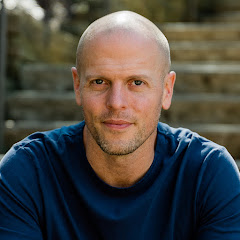 Tim Ferriss
Want to know something specific about what's covered?
We've already dissected every moment. Ask and we will deliver (with timestamps).
Key Moments
Tim Ferriss and Peter Attia discuss mental health, psychedelics for healing, and effective daily practices.
Key Insights
Mental health struggles, like depression and anxiety, are common but often hidden, emphasizing the need for open discussion and destigmatization.
Psychedelics (psilocybin, MDMA, ibogaine) show remarkable potential for treating conditions like depression, PTSD, and addiction by fostering ego dissolution and emotional recontextualization.
Meditation, particularly awareness and loving-kindness practices, is crucial for developing meta-awareness, emotional resilience, and a sense of inner peace.
Self-acceptance and compassion are foundational for well-being; how one treats oneself significantly impacts relationships with others.
Strategic philanthropy and scientific research are vital to advancing the understanding and therapeutic use of psychedelics, overcoming past political barriers.
Consistent, simple practices like hinging exercises, fasting/ketosis, morning meditation, group rituals, and acts of kindness are essential for long-term health and happiness.
THE URGENCY OF ADDRESSING MENTAL HEALTH
Dr. Peter Attia and Tim Ferriss underscore the pervasive yet often unacknowledged struggle with mental health. Ferriss shares his personal history of chronic depression and a near-suicide attempt during college, highlighting the critical role of chance events and the profound realization of his pain's impact on loved ones. Attia resonates with Ferriss's past belief of not being 'wired for happiness,' acknowledging a similar drive fueled by self-loathing. Both emphasize that mental health issues are not exclusive to any demographic and are a 'dirty little secret' that millions battle silently, stressing the importance of open discussion and support.
CHALLENGING THE 'TOUGH IT OUT' MENTALITY
Ferriss and Attia discuss the societal conditioning, particularly for men, to 'bite their lip and suffer in silence,' viewing toughness as the sole coping mechanism. Ferriss likens this to using a kitchen knife by its blade, constantly bleeding, rather than adding an ergonomic handle for effective use. This mindset, while serving in extreme situations, becomes detrimental when applied indiscriminately to life's challenges. Attia introduces the profound insight that 'the way you treat yourself is ultimately how you will treat those you love most,' urging self-compassion as a foundational shift for improving all relationships and overall well-being.
THE POTENTIAL OF PSYCHEDELICS FOR TRAUMA AND HEALING
The conversation shifts to the transformative power of psychedelics. Attia's initial interest was piqued by ibogaine's efficacy in treating opiate addiction, challenging conventional medical approaches. Ferriss recounts his annual use of psilocybin during college as a 'reboot' for anxiety and depression, later exploring guided experiences and ayahuasca after a girlfriend's profound healing experience in Peru. They both highlight the unique characteristic of psychedelics, particularly at higher doses: 'ego dissolution' or a 'controlled death experience,' enabling individuals to view their lives and traumas from an objective, third-person perspective, leading to deep emotional recontextualization.
INEFFABILITY AND DURABILITY OF PSYCHEDELIC INSIGHTS
Ferriss and Attia explain that the impact of psychedelics often defies linguistic description, a phenomenon known as ineffability, akin to a time traveler from the past trying to describe Times Square. This 'felt experience' rather than purely intellectual understanding, allows for profound, durable changes, such as newfound empathy for oneself and others, or the cessation of deeply ingrained negative behaviors. They compare a single, traumatic life event capable of altering one's trajectory for the worse, to a psychedelic experience acting as an 'opposite of a wounding event,' acutely shifting one's life path in a positive, lasting direction.
PSYCHEDELICS: POLITICAL ROADBLOCKS AND SCIENTIFIC ADVANCEMENTS
The history of psychedelics, specifically LSD, being classified as Schedule I drugs due to political and social factors rather than scientific evidence, is discussed. Ferriss notes the 'MKULTRA' program, Timothy Leary's public advocacy, and parental fears fueled the crackdown. Today, a shift is occurring, with increasing scientific rigor and the undeniable need to address epidemics like opiate addiction, PTSD, and depression. The FDA's breakthrough therapy designation for MDMA in PTSD is cited as a significant step, accelerating research and potentially leading to supervised therapeutic use. They also emphasize that these compounds are not 'party drugs' and require careful intention-setting, preparation, and integration.
THE ROLE OF NON-PSYCHEDELIC TOOLS: MEDITATION
Both emphasize meditation as a non-psychedelic pathway to similar states of meta-awareness. Ferriss strongly recommends mindfulness meditation as a 'non-reactivity training' to create a tiny gap between sensory input and cognitive response, allowing for conscious choice instead of reflexive reactions. Attia shares his personal journey with meditation, initially finding it unpleasurable, until he understood that the 'bicep curl of the brain' is not the cessation of thought, but the recognition and gentle return to focus. They advise persistence with various guides and apps (Sam Harris's Waking Up, Headspace, Calm) and a commitment to a consistent, even if short, daily practice.
STRATEGIC PHILANTHROPY AND FUTURE OUTLOOK
Ferriss reveals his significant financial commitment of over $1 million to psychedelic research, inspired by the historical impact of people like Katherine McCormick, who funded the birth control pill against overwhelming odds. He explains that traditional pharma avoids these naturally occurring compounds due to their limited need for repeated dosing, making them less profitable. The focus of current research, particularly with psilocybin and MDMA, is on specific indications like end-of-life depression, PTSD, and addiction, aiming for FDA approval that could open doors for broader, off-label therapeutic use. They both express urgency for these treatments to become available and the need to train qualified clinicians.
FIVE ENDURING PRACTICES FOR A FULFILLING LIFE
Ferriss outlines five consistent practices that have profoundly shaped his life: 1) A weekly hip-hinging exercise (deadlifts/kettlebell swings) for physical health and injury prevention. 2) Quarterly fasting combined with ketosis for a week, appreciating its physical and ascetic benefits. 3) Daily morning meditation (10-20 minutes) as 'non-reactivity rehearsal,' preparing for life's challenges. 4) Prioritizing group ritual, like shared meals, and engaging in therapeutic activities like cooking to combat isolation. 5) Practicing kindness and Metta (loving-kindness) meditation, which often serves as a 'workaround' for personal unhappiness, fostering empathy and profound inner peace.
THE CORE PROBLEM: UNHAPPINESS AND DISCONNECTION
Attia makes a powerful assertion: unhappiness is the single most important problem plaguing civilization, underlying more pain than any physical ailment. He notes the irony that despite advances, many suffer from deep-seated self-loathing and a lack of self-compassion, leading to self-destructive coping mechanisms. The ability of psychedelics to foster interconnectedness and empathy, even for one's younger, wounded self, offers a profound solution. This reframing of self-worth can make previously inconceivable destructive behaviors, like addiction, unbearable, illustrating the deep impact of these experiences on one's relationship with themselves.
THE PATH FORWARD: TRAINING AND OPTIMISM
Both express optimism for the future of psychedelic therapies, acknowledging the significant efforts of organizations like MAPS. The impending challenge, they foresee, will be training a sufficient number of clinicians to administer these complex treatments effectively. They conclude by encouraging listeners, including regulators and policymakers, to explore the research (e.g., Michael Pollan's book) and consider the anti-addictive potential of these compounds, which offer hope in combating epidemics like opiate overdose deaths. The conversation underscores their shared dedication to advancing solutions for mental well-being, both personally and societally.
Mentioned in This Episode
●Software & Apps
●Companies
●Organizations
●Books
●Drugs & Medications
●Concepts
●People Referenced
Tim Ferriss's 5 Pillars for Life Optimization
Practical takeaways from this episode
Do This
Avoid This
Common Questions
The Peter Attia Drive podcast covers topics related to enhancing both lifespan and healthspan, with Peter Attia sharing conversations with experts, acting as a curious sponge for information. This particular episode focuses on mental health, an area Peter knows less about but considers crucial for healthspan.
Topics
Mentioned in this video
A cutting-edge indoor cycling bike that offers live and on-demand studio classes, providing real-time metrics for performance tracking. Tim Ferriss uses it daily for 20-minute rides.
Peter Attia's medical practice with offices in San Diego and New York City, which focuses on the applied science of longevity, encompassing both lifespan and healthspan.
A company in which Tim Ferriss was an early-stage tech investor and advisor.
A company in which Tim Ferriss was an early-stage tech investor and advisor.
A company in which Tim Ferriss was an early-stage tech investor and advisor.
A company in which Tim Ferriss was an early-stage tech investor and advisor.
A company in which Tim Ferriss was an early-stage tech investor and advisor.
The pharmaceutical company for which Albert Hofmann developed LSD-25.
Cited for a quote emphasizing that the Golden Rule applies to self-treatment ('Do unto yourself as you would do unto others').
Host of the '10% Happier' podcast and app, mentioned as featuring Jeff Warren as a guide.
A Peloton instructor whose on-demand classes Tim Ferriss particularly enjoys, watching many of them repeatedly.
Author of the New York Times bestseller 'Leonardo da Vinci,' whom Tim Ferriss previously interviewed. Tim considers the book Isaacson's best biography yet.
A legendary Navy SEAL commander and podcast host who was introduced to Tim Ferriss by Peter Attia and launched his own podcast after being a guest on Tim's show.
A former ultra-endurance athlete, self-experimenter, and founder of Attia Medical PC, specializing in longevity. He trained at Johns Hopkins and NIH, focusing on immune-based therapies for melanoma.
A close friend of Tim Ferriss, known as the basis for 'Searching for Bobby Fischer,' who has also worked with Jim Loehr.
A legendary music producer and friend who recommended meditation to Tim Ferriss, influencing his journey toward inner peace.
An individual who was a guest on Tim Ferriss's podcast, discussed his psychedelic experiences.
A famous photographer and CEO of CreativeLive, who also recommended meditation to Tim Ferriss and encouraged him to take a Transcendental Meditation course.
An individual who was a guest on Tim Ferriss's podcast, discussed his psychedelic experiences.
An individual whose work has influenced Tim Ferriss's explorations into emotional well-being, mentioned in the context of his podcast's evolution.
Author of 'How to Change Your Mind,' whose eloquent writing on empathy and the default mode network resonated deeply with Peter Attia and Tim Ferriss.
The scientist who first isolated or synthesized LSD-25.
A meditation teacher whose guided meditations and teachings on loving-kindness meditation are recommended by Tim Ferriss.
Cited for his eloquent talk 'This Is Water,' which discusses seeing the world through other people's eyes, a concept related to psychedelic experiences.
A relationship therapist who was introduced to Peter Attia by Tim Ferriss and recommended Terence Real's book.
A high-profile individual whose recent death by suicide is mentioned as a tragic demonstration of how people can be knocked off course regardless of external success.
A performance coach who has worked with famous tennis players and emphasizes the importance of the 'inner voice' as the most crucial coach.
A meditation teacher and author of 'Radical Acceptance,' whose teachings and guided meditations have had a significant impact on Tim Ferriss.
Author of 'I Don't Want to Talk About It,' a book on male depression that Peter Attia considers his most gifted book.
Former US President who famously called Timothy Leary 'the most dangerous man in America,' contributing to the political crackdown on psychedelics.
Author of 'Solve for Happy,' a book that Peter Attia devoured and now recommends as his second most gifted book.
Mentioned as a guest on Tim Ferriss's podcast, contributing to the 'first wave' of Tim's psychedelic explorations.
A writer and ethnobotanist who coined the term 'heroic dose' for five grams of psilocybin, a dose "sufficient to flatten even the most resistant ego'.
A mutual friend of Tim and Peter, described as a very impressive published researcher, scientist, and athlete, known for his work on ketosis and fasting.
An early engineer at Google who created the highly popular 'Search Inside Yourself' class, recommending loving-kindness meditation.
A guide on Dan Harris's '10% Happier' app, whose explanations of meditation resonate deeply with Peter Attia, particularly his analogy of thought recognition as 'the bicep curl of the brain.'
The head of MAPS, who has been working since 1986 to legitimize psychedelic research and therapy.
The family behind Bronner's soap, mentioned as philanthropists who have provided funding for psychedelic research.
A high-profile figure who advocated for widespread psychedelic use, contributing to the political crackdown on these compounds, famously called "the most dangerous man in America" by Nixon.
A Harvard contemporary of Timothy Leary, who later became Ram Dass, involved in early psychedelic research that led to their dismissal from Harvard.
A writer whom Tim Ferriss admires for his ability to weave history, science, and characters into first-person narratives, similar to Michael Pollan.
A psychedelic brew, classified as Schedule I in the US, known for its powerful and potentially destabilizing effects, which Tim Ferriss used to release deep-seated anger.
A psychedelic compound found in 'magic mushrooms,' classified as Schedule I in the US. Discussed for its potential in treating depression, anxiety, and addiction, with Tim and Peter sharing personal transformative experiences.
A psychedelic compound found in peyote and San Pedro cactus, also classified as Schedule I in the US. Mentioned for its mind-manifesting properties and potential for ego dissolution.
A plant-derived compound used in Mexico for treating opiate addiction, noted for its effectiveness in rewiring the brain at the root issue, and having anti-addictive potential.
A classic psychedelic, deliberately left out of primary discussion due to its political PR baggage. It was first synthesized by Albert Hoffmann and classified as Schedule I.
Discussed as an 'entactogen' or 'empathogen' that tones down the amygdala and fear response, showing remarkable efficacy for PTSD. It is not considered a classical psychedelic by Tim Ferriss.
Tim Ferriss's blog, identified as the best place to find his content and follow him online.
A company led by Chase Jarvis, described as an 'incredible company' by Tim Ferriss.
A meditation app that Peter Attia finds useful due to the explanation style of its guides, such as Jeff Warren.
A meditation app with a well-done 'Ten in Ten' program, recommended for beginners.
A meditation app preferred by many of Tim Ferriss's friends for its female guides and background nature sounds.
Where Peter Attia trained for five years in general surgery, received awards, and authored a comprehensive review.
Where Peter Attia spent two years as a surgical oncology fellow at the National Cancer Institute, researching immune-based therapies for melanoma.
Where Peter Attia earned his MD.
The agency that allegedly led the MKUltra program, where LSD was used as a 'truth serum' or for sabotage.
The US regulatory body that has granted MDMA 'breakthrough therapy designation' for PTSD, expediting its approval process, and is reviewing Phase 2 data for psilocybin.
The US agency responsible for drug classification and oversight, which currently schedules psychedelics as Schedule I, posing challenges for research and therapeutic use.
An organization headed by Rick Doblin, which has pioneered research into MDMA for PTSD, receiving breakthrough therapy designation from the FDA, and is seeking to expand its efforts to Europe.
A research institution where studies on psilocybin for end-of-life anxiety and smoking cessation have been conducted, with Tim Ferriss having great respect for their team.
A research institution where studies on psilocybin for end-of-life anxiety and smoking cessation have been conducted.
A group out of California prototyping training protocols for therapists to administer psychedelics once they are available through prescription.
One of Tim Ferriss's five #1 New York Times and Wall Street Journal bestsellers, which addresses different types of currencies, with time being the most valuable, and touches on Maslow's hierarchy of needs.
One of Tim Ferriss's bestsellers, focusing on self-experimentation and prescriptive recommendations for physical performance and health.
One of Tim Ferriss's bestsellers, which led to a personal burnout due to overcommitment, but also highlights the therapeutic aspects of cooking as a form of decompression.
A book on the psychology of cognitive dissonance that Peter Attia previously cited as his most gifted book, now superseded by 'I Don't Want to Talk About It.' However, it remains a great book.
One of Tim Ferriss's bestsellers, collecting insights and habits from world-class performers, with Peter Attia jokingly referring to guests as 'biggest tools.'
One of Tim Ferriss's bestsellers, which reflects his current focus on mental and emotional well-being after experiencing burnout, exploring self-acceptance and untying Gordian knots.
Terence Real's book on male depression, which Peter Attia found profoundly impactful, claiming it became his most gifted book.
Mo Gawdat's book that Peter Attia read during a crisis and found profoundly impactful, now being his second most gifted book.
A prominent medical journal where Peter Attia read the first paper on PCKS9 inhibitors, sparking his interest.
Richard Feynman's book, which Peter Attia jokes is his third most gifted book, showing his humorous side.
Michael Pollan's book that does 'a fantastic job' of describing the default mode network and the experience of ego dissolution. Both Tim Ferriss and Peter Attia highly recommend it.
A book mentioned by Peter Attia that clarifies the concept of meditation as cultivating 'altered traits' (long-term changes) rather than just 'altered states' (temporary experiences).
Tara Brach's book, which had a huge impact on Tim Ferriss and is recommended for anyone struggling with emotional or thought patterns.
A mantra-based concentration practice recommended by Tim Ferriss as a way to kickstart his meditation journey, providing structured learning and accountability.
A highly oversubscribed class created by Chade-Meng Tan at Google, which recommended loving-kindness meditation as a technique.
More from Tim Ferriss
View all 699 summaries 77 min
The Many Benefits of Coca — The “Divine Leaf” with 8,000+ Years of Use
 100 min
Inside The AI Race: DeepMind, OpenAI, Anthropic, China, and The Race to Superintelligence
 108 min
The Path from The Soviet Union to Building Multi-Billion Dollar Companies — Max Levchin
 127 min
Reimagining Biotech with Jake Becraft of Strand Therapeutics — Tim’s Founder Kitchen
Ask anything from this episode.
Save it, chat with it, and connect it to Claude or ChatGPT. Get cited answers from the actual content — and build your own knowledge base of every podcast and video you care about.
Get Started Free