Key Moments
Unlearn Negative Thoughts & Behaviors Patterns | Dr. Alok Kanojia (Healthy Gamer)
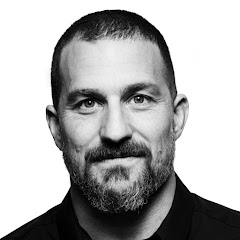 Andrew Huberman
Want to know something specific about what's covered?
We've already dissected every moment. Ask and we will deliver (with timestamps).
Key Moments
Unlearn patterns by changing tendencies, not willpower.
Key Insights
Therapy can change underlying tendencies and self-concept, not just surface behaviors or willpower.
Distress tolerance means actively feeling and labeling emotions, expanding emotional repertoire, and treating emotions as information and motivation—not simply suppressing them.
East–West mind models differ: Western approaches focus on thoughts and behaviors, while Eastern views emphasize ego, self-concept, and internal observation to uncover authentic desires.
The internet amplifies emotional arousal and ambiguity; healthy boundaries and tolerance for uncertainty are essential in dating and social interactions.
There is no single road map for life; effective navigation comes from aligning authentic inner goals with external expectations, using intrinsic motivation as a guide.
Practical tools to rewire the nervous system include naming emotions, cultivating additional emotional perspectives, evaluating potential outcomes, and grounding in core values.
CHANGE TENDENCIES, NOT WILLPOWER
The discussion challenges a common assumption: people try to fix behaviors by dialing up willpower or by changing actions alone. Dr. K argues that psychotherapy can alter the underlying tendencies that drive thoughts and behaviors, effectively reshaping how a person interprets the world and responds to it. This means changing deep-seated patterns—such as excessive self-criticism, narcissistic defenses, or trauma-related responses—so that healthier thoughts and actions arise more automatically. When core self-perceptions shift, certain conditions like treatment-resistant depression or PTSD can transform without relying solely on willpower. The conversation also emphasizes that self-esteem and the sense of self are not static; they can be rehabilitated through targeted therapeutic work. Additionally, the idea of a road map emerges: genuine motivation arises from a redefined sense of self, and energy follows from intrinsic rather than external rewards. Understanding these dynamics helps people pursue goals more efficiently in work, school, and relationships, because the nervous system reorganizes around healthier baselines rather than fighting old tendencies head-on.
EGO, SELF-CONCEPT, AND EAST-WEST PERSPECTIVES
Dr. K’s background as a monk and physician frames a central theme: the mind can be understood from divergent cultural lenses. Western psychology often centers on thoughts, emotions, and behaviors as coupled processes, while Eastern traditions emphasize the ego as a separate mental component that shapes how we interpret experience. This perspective invites a road map that integrates both views: recognizing conditioned desires and external pressures while cultivating a clearer sense of authentic wants. The dialogue highlights the risk of internalizing external expectations, which can blur true goals. By distinguishing the ego from core identity, individuals can examine who they are beyond titles and roles, enabling them to pursue aims aligned with a genuine sense of purpose. The synthesis of East–West insight offers a more nuanced framework for personal growth, where inner observation and adaptive behavior coexist rather than compete.
DISTRESS TOLERANCE: FEELINGS AS INFORMATION AND TOOLS
A central theme is that distress tolerance is not about suppressing emotion but about engaging with it wisely. The practical framework Dr. K presents includes three actionable steps. First, put precise words to the emotion to reduce its emotional load and enable the brain’s language centers to process what’s happening. Second, cultivate additional emotions to broaden the internal landscape, which prevents catastrophizing and helps preserve long-term perspective. Third, apply a forward-looking check by considering both positive and negative outcomes to prevent impulsive decisions fueled by short-term excitement. The discussion also emphasizes that emotions are information and motivation—signals about what matters and what might be at risk—rather than a direct instruction for immediate behavior. This approach helps people act with greater clarity, especially in high-stakes situations like dating, work decisions, or recovery from trauma.
THE ROAD MAP: AUTHENTIC GOALS IN A WORLD OF EXPECTATIONS
The conversation centers on navigating friction between external expectations and internal truth. The road map is not a one-size-fits-all script but a flexible framework that honors the complexity of human motivation. The speaker argues that authentic goals arise from a deep internal sense of purpose rather than a projection of what others want or expect. The dialogue also touches on the role of uncertainty and ambiguity in everyday life, including dating and professional choices. Rather than seeking perfect clarity, individuals can cultivate cognitive and emotional flexibility to weigh competing desires and risks. The idea is to foster intrinsic motivation that sustains effort across contexts, while remaining responsive to feedback from relationships, work, and personal growth. This balanced approach helps prevent burnout and encourages sustainable progress toward meaningful aims.
INTERNET AGE: BOUNDARIES, AMBIGUITY, AND RELATIONSHIPS
The discussion turns to how online life shapes emotion and behavior. The internet amplifies emotional activation, making content that is polarizing or sensational more engaging. This environment increases the cognitive load and depletes willpower, as constant arousal taxes self-regulation. In dating and social interactions, ambiguity is natural and often necessary; the modern online milieu can distort perceptions of boundaries and accountability. The text also discusses the risk of boundary misuse and the tendency to cast vulnerability as weakness, which can distort healthy relationships. The conversation underscores the need for clear boundaries and tolerance for uncertainty, recognizing that authentic connection often emerges through nuanced, iterative communication rather than flawless performance in every exchange.
PRACTICAL TOOLS FOR NERVES: WORDS, OPTIONS, AND ACTION
A practical toolkit emerges from the dialogue, offering concrete steps to rewire the nervous system and improve functioning. Start by labeling emotions accurately to create cognitive space for reflection. Then actively cultivate a broader emotional range to counteract rumination and rigid thinking. Consider not only potential positive outcomes but also possible negative consequences to temper enthusiasm and improve decision-making. The conversation also highlights the importance of experiential learning: repeatedly testing boundaries in low-stakes settings can build resilience. Finally, the integration of Eastern contemplative practices with Western neuroscience provides a holistic approach that acknowledges subjective experience while grounding change in measurable, repeatable actions. Implementing these steps can help individuals sustain motivation, regulate mood, and pursue healthier relationships and goals.
Mentioned in This Episode
●Supplements
●Products
●Software & Apps
●Tools
●Companies
●Organizations
●Books
●Drugs & Medications
●Concepts
●People Referenced
Distress Tolerance Cheat Sheet
Practical takeaways from this episode
Do This
Avoid This
Common Questions
Dr. K argues that the road map is about distinguishing what the world wants from what your inner self truly desires. He emphasizes peeling away ego and external expectations, and listening to your internal pull toward what you genuinely want, rather than chasing external markers of success. Timestamp: 2460
Topics
Mentioned in this video
Host of the Huberman Lab podcast, professor of neurobiology and ophthalmology at Stanford School of Medicine. He discusses science and science-based tools for everyday life.
A researcher whose experiments on adrenaline and memory are referenced.
Mentioned as an example of an individual with multiple Harvard degrees who discusses spiritual downloads.
An 84-year-old Jungian analyst who discussed the importance of shutting up, suiting up, showing up, and touching into genuine heart's desires.
Mentioned in relation to cognitive behavioral therapy and the connection between thoughts, emotions, and behaviors.
A friend of Andrew Huberman who has discussed getting beyond the ego in creative work.
Cited as an example of a charismatic individual who was not necessarily focused on looks.
A colleague of Andrew Huberman at Stanford, author of 'Dopamine Nation', and a pioneer in understanding the neuroscience of social media and spirituality.
Discussed in relation to the feeling of being in love and how social media can affect the dopamine system, making it harder to fall in love.
A part of the brain discussed in relation to anxiety and its role in processing emotions.
Virtual reality technology mentioned in the context of increasingly engaging pornography.
A brand of medical-grade red light therapy devices mentioned as a sponsor of the podcast.
Mentioned as a topic of discussion in relation to East West medicine.
A neuromodulator mentioned in relation to arousal from social media use.
Discussed in relation to the increasing prevalence among young men and its potential link to pornography use.
A Sanskrit term meaning suffering, which is said to stem from ignorance (avidya).
A neuromodulator mentioned in relation to arousal and brain modification.
A validated scientific instrument used to measure depression.
A network in the brain associated with the sense of self, which meditation is suggested to deactivate.
Mentioned in relation to the chief of security who spoke about making people safe versus making them feel safe.
The institution where Andrew Huberman is a professor of neurobiology and ophthalmology.
A database of biomedical literature, mentioned in the context of a specific paper being cited to refute a claim.
An institution where Dr. Kanojia had a research assistant position and where Andrew Huberman's colleagues have degrees.
The university where Randy Pausch was a computer scientist.
A platform where the podcast can be followed and reviewed.
A social media platform where Andrew Huberman discusses science and tools.
A platform mentioned in the context of social media companies and their employees.
A social media platform where Andrew Huberman discusses science and tools.
A platform where the podcast can be followed and commented on.
A social media platform where Andrew Huberman discusses science and tools.
A company mentioned in the context of social media platforms and their business practices.
A platform where the podcast can be followed and reviewed.
A service providing advanced lab tests, mentioned as a sponsor of the podcast.
A company that makes smart mattress covers, mentioned as a sponsor of the podcast.
A psychedelic substance mentioned in studies related to ego death experiences.
Selective serotonin reuptake inhibitors, mentioned in the context of treatment for depression and compared to exercise effectiveness.
Mentioned as a substance whose harmful effects are now understood, analogous to potential future understanding of AI's impact.
An empathogen mentioned as potentially causing ego death experiences.
A neuromodulator mentioned in relation to arousal from social media use.
A book by Randy Pausch discussed in the context of receiving external pressure as a sign of belief.
Andrew Huberman's first book, covering protocols for sleep, exercise, stress control, focus, and motivation.
A book by Anna Lembke that explores the neuroscience of pleasure and pain.
More from Andrew Huberman
View all 395 summaries 32 min
The Science & Treatment of Obsessive Compulsive Disorder (OCD) | Huberman Lab Essentials
 159 min
Raising a Dog & Mastering Calm Assertive Energy | Cesar Millan
 37 min
Essentials: Tools for Hormone Optimization in Males | Dr. Kyle Gillett
 33 min
Essentials: The Science of Eating for Health, Fat Loss & Lean Muscle | Dr. Layne Norton
Ask anything from this episode.
Save it, chat with it, and connect it to Claude or ChatGPT. Get cited answers from the actual content — and build your own knowledge base of every podcast and video you care about.
Get Started Free