Key Moments
Aisha Tyler Interview | The Tim Ferriss Show (Podcast)
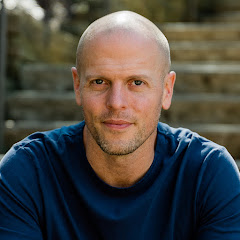 Tim Ferriss
Want to know something specific about what's covered?
We've already dissected every moment. Ask and we will deliver (with timestamps).
Key Moments
Aisha Tyler shares how embracing failure, discomfort, and authenticity is key to creative success, stressing that regret from inaction is far worse than the sting of trying and failing.
Key Insights
Aisha's father's advice to 'grab it by the balls and twist' encouraged her to be aggressive and tenacious in pursuing her goals, viewing failure not as an endpoint but as part of the process.
She advocates for pursuing art for art's sake by keeping a day job, which provides the freedom to create without financial pressure, enabling a focus on joy and experience.
The comedy economy contracted due to market saturation, economic downturns, and the proliferation of comedy on television, leading to intense competition for stage time.
Aisha learned to hone her craft through relentless stage time, embracing bombing as a necessary step to becoming funnier, contrasting with the idea that success comes without mistakes.
Authenticity is paramount in creative pursuits; meaningful art connects because it is truthful and comes from personal experience, differentiating good work from great work.
Directing her first feature film, 'Axis', was a highly aggressive, seven-day shoot on a $200,000 budget, a testament to her ability to learn and adapt under extreme pressure.
The power of a tough childhood and a father's advice
Aisha Tyler recounts being raised by a single father after her parents' divorce, who instilled in her a tenacious spirit with his terse but potent advice: 'Whose day is it?' 'It's my day.' 'What are you gonna do?' 'Grab it by the balls and twist.' This mantra, while unconventional, fostered an attitude of aggression and resilience. She attributes her natural optimism partly to her father's preternaturally positive outlook and partly to his 'walk it off' philosophy, which discouraged self-pity and encouraged perseverance. This upbringing taught her that 'the world is unfair,' but one must still get up and make a life. This mindset is crucial, as she believes the path to success is paved with—and often goes directly through—failure. Her father’s approach, while possibly dancing along boundaries of propriety, was about equipping her with the skills to land when thrown into the air, a stark contrast to an overprotective style that might prevent children from experiencing necessary failures.
The formative experience of 'self-inflicted wounds'
Aisha's father used to ask his daughters for stories of 'self-inflicted wounds'—mistakes that were entirely their own fault. This practice, which inspired her book of the same name, was a deliberate way to initiate conversations about risk and failure. She argues that successful people are not those who avoid mistakes but those who actively engage in risk and court failure. This is instructive because many people avoid starting endeavors for fear of failure, yet there’s no way around it. She shares a personal anecdote from age nine, when she broke her arm riding her bike home from jujitsu camp. Her father’s refusal to pick her up, insisting she ride home on her own despite the injury, taught her a profound lesson: 'No one is coming to save you. You have to save yourself.' While it felt cruel at the time, it fostered self-sufficiency and resilience, preventing her from agonizing over what has been done to her as an adult. This experience highlights the crucial developmental skill of learning to navigate disappointment and failure, which become increasingly consequential if not experienced and processed in childhood.
Transitioning from a dream job to a creative calling
After graduating from Dartmouth with a degree in government and environmental policy, Aisha landed what she considered her dream job working for a conservation organization that transformed blighted urban land into parks in underserved neighborhoods. Despite the meaningful mission, she found herself miserable. This existential crisis led her to realize the absence of creative expression in her life. She identified stand-up comedy as the most accessible path to the stage, requiring no agent or connections, and began performing. Crucially, she maintained her well-paying day job for a long time, a strategy she advocates for, believing it provides the freedom to pursue one’s art for its own sake without financial desperation. This allowed her to treat comedy purely as an experience, not dependent on payment, until she felt ready to transition fully.
The contraction of the comedy economy and the struggle for stage time
Aisha explains that when she started in stand-up, San Francisco was a 'crucible for original comedy,' but the comedy economy was contracting. This contraction was driven by three factors: a glut of comedians and clubs, economic downturns, and the rise of comedy on television, which might have led more people to believe they could do it themselves. The result was a dramatic decrease in comedy clubs and intense competition for limited stage time. To get the necessary practice—the '10,000 hours'—comics had to travel to lesser-known venues in places like Sacramento or Fresno, performing for small audiences, often other comedians, a situation she describes as 'savory masochism.' The lack of stage time made it difficult to work out new material or refine existing jokes, as performing in front of club owners meant being polished rather than experimental.
Bombing as the ultimate teacher in comedy
Aisha asserts that any comedian who claims they've never bombed is lying, and that bombing is the only way to truly get funnier. She recalls an open mic night in the back of a laundromat where she received not a single laugh, a moment that became 'deliciously' funny to her later because it rendered her impervious to future failures. The key, she explains, is the comedian's discipline to never 'tap out': giving up is true failure. She recounts the story of Bill Burr enduring a brutal heckling at a radio show, sticking to his set despite immense pressure. This tenacity, she believes, is understood and respected within the comedy community, where the person with the microphone ultimately has the power. Her own experience of bombing taught her to analyze what did and didn't work, write down what hit, and iterate, rather than relying on approval. This mental fortitude is essential, as comedy, unlike music or writing, is entirely dependent on audience reaction.
Directing 'Axis' and the power of aggressive, deadline-driven creation
Aisha describes her feature film directorial debut, 'Axis,' a thriller about a recovering alcoholic actor in Los Angeles whose life unravels over an afternoon. The film's unique aspect is that it takes place in real-time, entirely within a car, with the lead actor (who was unknown at the time) as the only one on screen, while other actors communicate via phone. Facing Hollywood's typical pushback on creative choices, she opted for crowdfunding, raising about $200,000 via Kickstarter. The production schedule was hyper-aggressive: seven days for a feature, with the lead actor performing over 60 pages of dialogue daily. By shooting with three cameras simultaneously, they essentially 'got the movie in the can' within the first few days, allowing subsequent time for creative exploration. This intense, deadline-driven approach, she found, eliminated time for fear or anxiety, forcing decisive action and a pragmatic acceptance of any mistakes made. The film's experimental nature and success, winning awards and securing distribution despite its shoestring budget and tight schedule, earned her immense pride and confidence.
The struggle with workaholism and the pursuit of rest
Aisha admits to pathological workaholism, where she receives a dopamine release from completing tasks and finds executing work enjoyable. This intensity, however, raises concerns about becoming an uninteresting artist, as she believes rest, daydreaming, and experiencing life are crucial for storytelling. She emphasizes a daily practice of reminding herself to rest, socially engaging more, and seeking out new experiences to avoid boredom and maintain a connection to the human condition. While acknowledging the enjoyment derived from a workout, she notes the constant battle between work effectiveness and personal well-being. Her approach to managing workaholism involves applying the same drive to leisure activities, aiming to integrate 'fun' into her routines and not being afraid to try things that may not work out, as the regret of not trying is far more potent than the discomfort of failure.
The wisdom of 'everything you want is on the other side of fear'
Reflecting on her life philosophy, encapsulated by the billboard quote 'Everything you want is on the other side of fear,' Aisha discusses her current fears, primarily driven by the ambition to continue making films and her struggle with workaholism. She finds that the things that most interest her now don't necessarily engender the same fear as they used to. Her greatest fear is not failure, but rather the regret of not trying. She believes that living aggressively and milking the most out of life means embracing discomfort and actively seeking experiences. This is why she champions pushing beyond perceived limitations, as the confidence gained from such endeavors can transfer to future projects. She concludes that the only uncrowded market is greatness, and to achieve it, one must be brave enough to court failure, emphasizing that 'rough drafts are not a clean business.'
Mentioned in This Episode
●Supplements
●Products
●Software & Apps
●Companies
●Organizations
●Books
●People Referenced
Common Questions
Aisha Tyler realized she was miserable in her dream conservation job because she wasn't doing anything creative. She saw stand-up comedy as the only way to get on stage without needing connections or agents, so she started studying and doing open mics while keeping her day job.
Topics
Mentioned in this video
A well-known brand for inversion tables since 1981, safety-certified by Underwriters Laboratories and registered with the FDA as a Class 1 medical device. Tim Ferriss and Aisha Tyler both use their inversion products for back health and performance.
A cinema chain in Austin, Texas, where Aisha Tyler's film Axis had a theatrical run.
A company providing legal services for businesses, including formation, tax law management, contract review, and NDA creation, offering upfront pricing.
Social media platform where Aisha Tyler is active.
The company behind WordPress, led by CEO Matt Mullenweg, who used LegalZoom for business needs.
Television network that airs the improv show Whose Line Is It Anyway?, hosted by Aisha Tyler.
Social media platform where Aisha Tyler is active.
A band that Aisha Tyler toured with for a couple of dates, making free music videos to gain directing experience.
A brand of kombucha preferred by Aisha Tyler as a mixer for her glutathione supplement.
Television network that airs the Emmy award-winning animated comedy series Archer.
A comedy club in San Francisco that was still active during Aisha Tyler's early career and hosted high-end talent.
Television network that airs Criminal Minds and The Talk, both shows Aisha Tyler was involved with.
A rock band mentioned by Tim Ferriss as an example of a band that might play at a radio station concert.
A rock band mentioned by Aisha Tyler as an example of a band that might play at a radio station concert, often receiving criticism.
A brand of kombucha preferred by Aisha Tyler as a mixer for her glutathione supplement.
An example of a company whose founder, Jack Ma, attributed early success to having 'no experience, no money, and no plan,' forcing innovative thinking.
A laundromat in San Francisco famous for hosting open mic comedy nights, where Aisha Tyler had a memorable 'bombing' experience early in her career.
A brand of kombucha preferred by Aisha Tyler for mixing with supplements.
Host of The Tim Ferriss Show, who interviews Aisha Tyler and discusses his own experiences with procrastination and creative pursuits.
The founder of Alibaba, who stated that his company's early advantage was having no experience, money, or plan, forcing them to think outside the box.
WordPress lead developer and CEO of Automattic, who has used LegalZoom to form his company. His company is valued at over a billion dollars.
An alternative comic who emerged from the San Francisco comedy scene.
A comedian known for his tenacity on stage, particularly for an infamous set where he was booed but refused to leave. Aisha Tyler interviewed him about this experience.
Award-winning director, actor, comedian, best-selling author, podcaster, and activist. Guest on The Tim Ferriss Show, discussing her diverse career and personal philosophy.
Past guest on The Tim Ferriss Show, mentioned as a creative individual.
Author of the '10,000-hour rule' concept, which Aisha Tyler applies to the practice required for stand-up comedy.
A famous director who, according to Aisha Tyler, has a story about his first film being 'unwatchable,' illustrating that even great artists start with spectacular failures.
The designer responsible for the iconic 'Alien' creature design, whose work was a result of the 'Jodorowsky's Dune' project failing.
A legendary stand-up comedian whom Aisha Tyler admired, thinking he was 'an alien' because his talent seemed supernatural.
A disciplined writer and comedian, known for his consistent daily writing practice, contrasted with Aisha Tyler's more intuitive approach.
Creator of the show Penny Dreadful, whom Aisha Tyler met at Comic-Con and later shadowed in Ireland.
A creative musician, wife of Neil Gaiman, quoted as saying that artists need to 'have a life' to create art.
Past guest on The Tim Ferriss Show, mentioned as a creative individual.
An author known for the quote 'Everything you want is on the other side of fear,' which Aisha Tyler selected for a book she contributed to.
A friend of Tim Ferriss who jokingly described the taste/consistency of Lypo-Spheric Glutathione as 'horse semen.'
Past guest on The Tim Ferriss Show, mentioned as a creative individual.
An alternative comic who emerged from the San Francisco comedy scene.
A famous actor mentioned as an example of a recognizable name that a studio might request for a film, in contrast to an unknown actor.
An alternative comic who emerged from the San Francisco comedy scene.
A writer and husband of Amanda Palmer, whose audiobook of 'The Graveyard Book' is highly recommended by Tim Ferriss.
A film director mentioned as an example of an artist whose work, despite its quality, may not be liked by everyone, illustrating the concept that pleasing a critical mass is sufficient.
A popular comedian mentioned as an idol, exemplifying successful comics.
A comedian from a 'golden era' who achieved popularity on TV, influencing the comedy club boom.
A film director mentioned as an example of an artist whose work, despite its quality, may not be liked by everyone, illustrating the concept that pleasing a critical mass is sufficient.
A super spy character voiced by Aisha Tyler on the FX animated comedy series Archer.
A comedian from a 'golden era' who achieved popularity on TV, influencing the comedy club boom.
A writer for The New Yorker, mentioned by Tim Ferriss as an example of a wordsmith he cannot emulate, reinforcing the idea of harnessing one's unique abilities.
A pioneer in comedy who performed stand-up in strip clubs, highlighting the evolution of dedicated comedy clubs.
Emmy award-winning animated comedy series on FX where Aisha Tyler voices Lana Kane.
A video game where Aisha Tyler's voice can be heard.
A show created by John Logan, which Aisha Tyler visited the set of in Ireland to shadow for directing experience.
A thriller feature film directed by Aisha Tyler that premiered in 2017, won an award at the Newport Beach Film Festival, and had a theatrical run. The story is about an expatriate Irish actor living in Los Angeles who is trying to turn his life around.
A popular comedy show that Aisha Tyler mentioned as representing a specific style of black comedy she didn't emulate.
The iconic creature design, attributed to H.R. Giger, which emerged as a positive outcome from the failed 'Jodorowsky's Dune' project.
A video game where Aisha Tyler's voice can be heard.
Character voiced by Aisha Tyler on FX's animated comedy series Archer.
A video game where Aisha Tyler's voice can be heard.
A TV show Aisha Tyler watches while working out, categorizing it as 'fantastic junk' or 'good workout show.'
Hit improv show hosted by Aisha Tyler on The CW.
A TV series whose last season Aisha Tyler shadowed for several days to learn about directing.
A TV show Aisha Tyler watches on Hulu during her workouts.
A film mentioned as an example of an incredible creation with an interesting origin story.
A TV show Aisha Tyler watched during her workouts, describing it as 'pretty great.'
Emmy-winning daytime show on CBS where Aisha Tyler was a co-host for seven seasons.
A popular TV show where Aisha Tyler had a long-standing character arc as the first African-American in such a role.
A TV show Aisha Tyler watches while working out, categorizing it as 'fantastic junk' or 'good workout show.'
A documentary about an unmitigated disaster of an attempt to make a film, which ironically led to the assembly of talent that went on to create other incredible things.
Hit CBS show in its 13th season, where Aisha Tyler is a regular and has also directed episodes.
A show whose set Aisha Tyler visited in Ireland to shadow directors, after tweeting about her love for it.
A TV show Aisha Tyler watches while working out.
A podcast hosted by Aisha Tyler, where she interviewed Tim Ferriss, inspiring him to start his own podcast.
A movie Aisha Tyler watched with her father at a young age, contributing to her love for films.
A movie Aisha Tyler watched repeatedly in high school, further solidifying her love for films.
An analogy used to describe an audience turning against a comedian, quickly and violently, like a mob from the Frankenstein story.
A movie Aisha Tyler watched with her father at a young age, contributing to her love for films.
A short-lived precursor network to Comedy Central where Aisha Tyler watched and studied stand-up comedy.
The film series featuring the character Rocky, which Bill Burr supposedly ridiculed during his Philadelphia performance.
A previous podcast hosted by Aisha Tyler, where she interviewed Tim Ferriss, which contributed to his decision to start The Tim Ferriss Show.
A cinema where Aisha Tyler's film Axis had a theatrical run.
City in California where Aisha Tyler filmed a music video for the band Clutch.
Aisha Tyler's native city, where she grew up and started her comedy career.
An arts-centered town in Ireland where Aisha Tyler filmed her first narrative short film.
Country where Aisha Tyler visited the sets of Penny Dreadful and Vikings to shadow directors, and later filmed her first narrative short film.
A laundromat in San Francisco that hosted open mic comedy nights where Aisha Tyler once bombed. (Disambiguated from other common uses, e.g., 'Brainwash' as a concept).
An organization that provides safety certification for products, including Teeter's inversion tables.
A television network that was preceded by the network 'Ha' which Aisha Tyler studied to learn stand-up comedy. She also made a special for them.
A comedy club in San Francisco that was still active during Aisha Tyler's early career.
A college where Aisha Tyler graduated with a degree in government and environmental policy, and where Naval Ravikant also had his alumni magazine interview title about the 'avenging angel.'
The high school in San Francisco that Aisha Tyler attended, which had a performing arts magnet program within the regular school.
A band that Aisha Tyler spent a day with in Anaheim to shoot a free music video and gain directing experience.
A comedy club in San Francisco, attracting high-end talent, one of two main remaining clubs during Aisha Tyler's early career.
A US federal agency that has registered the Teeter inversion table as a Class 1 medical device.
A model of camera that Aisha Tyler rented to shoot music videos for bands, gaining directorial experience.
A line of bottled cocktails created by Aisha Tyler and launched in the summer of 2018.
Exercise equipment used by Aisha Tyler for swings as part of her routine (specifically 25lb and 35lb weights).
A bodyweight training system used by Aisha Tyler in her home gym to simulate pull-ups and other exercises.
A rowing machine that Aisha Tyler has owned for 18 years, considering it the best piece of equipment in her home gym, and uses it for aggressive rowing workouts.
A fermented tea drink that Aisha Tyler mixes with liquid glutathione to make it more palatable.
An inversion table that uses gravity and body weight to decompress the spine, relieve pressure, and combat back, neck, and leg pain; used by Tim Ferriss as part of his maintenance and performance program and endorsed for better sleep.
A bodyweight training system used by Aisha Tyler in her home gym to simulate pull-ups and other exercises.
A durable and effective piece of gym equipment Aisha Tyler has owned for 18 years, using it for high-intensity interval training and long-distance rows.
Accessories for inversion that allow users to invert from a bar; Tim Ferriss has multiple pairs for travel.
A specific brand/formulation of glutathione in a liquid, 'axle grease' like consistency that Aisha Tyler uses to improve athletic performance.
Supplements Aisha Tyler includes in her IVs when she feels 'wrecked' or travels a lot.
A common supplement taken by Aisha Tyler as part of her morning routine.
A common supplement taken by Aisha Tyler as part of her morning routine.
A common supplement taken by Aisha Tyler as part of her morning routine.
A master antioxidant that Aisha Tyler takes, reporting it has significantly improved her rowing performance to faster times than in her 20s.
A fat-soluble form of glutathione that Aisha Tyler takes, which she believes has significantly improved her rowing times. Known for its 'axle grease' consistency.
A streaming service Aisha Tyler uses to watch shows like The X-Files and The Handmaid's Tale during workouts to avoid commercials.
A content management system, whose lead developer and CEO of Automattic, Matt Mullenweg, used LegalZoom.
A crowdfunding platform that Aisha Tyler used to fund her feature film Axis.
Video platform where Aisha Tyler uploads content.
A book by Aisha Tyler that compiles stories of her own mistakes and failures, emphasizing learning from them.
An audiobook by Neil Gaiman, narrated by him, which Tim Ferriss recommends for its soothing voice.
A TV show Aisha Tyler watches on Hulu during her workouts.
More from Tim Ferriss
View all 706 summaries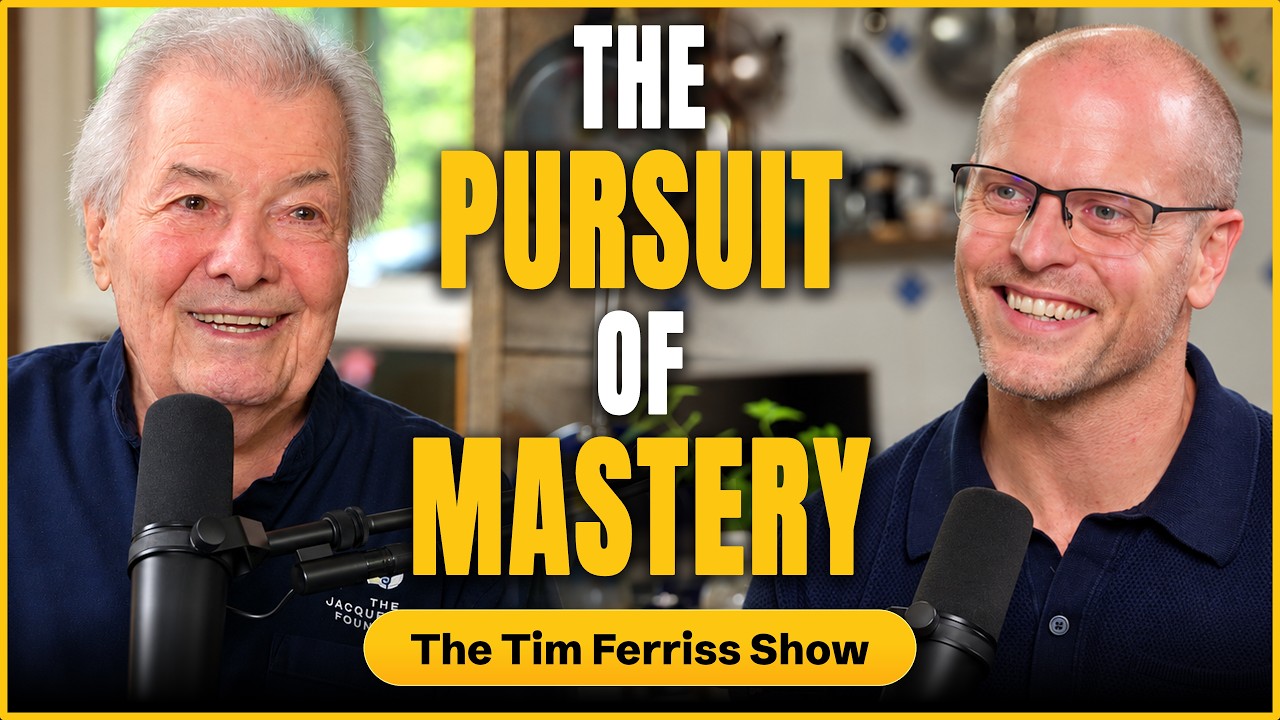 62 min
Legendary Chef Jacques Pépin — The Pursuit of Mastery, Meeting Julia Child, and More
 108 min
The Random Show — AI Super Assistants, Dream Engineering, Wizards, Supplements, and More!
 121 min
How to Legalize Medical Psychedelics in Your Country — Tania de Jong on Australia’s Breakthrough
 70 min
Q&A with Tim — The Art of Male Friendship, Reinvention in The Age of AI, & More
Ask anything from this episode.
Save it, chat with it, and connect it to Claude or ChatGPT. Get cited answers from the actual content — and build your own knowledge base of every podcast and video you care about.
Get Started Free