Key Moments
A.J. Jacobs (Full Episode) | The Tim Ferriss Show (Podcast)
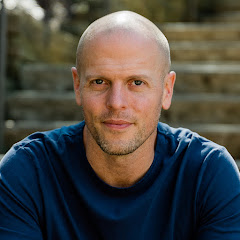 Tim Ferriss
Want to know something specific about what's covered?
We've already dissected every moment. Ask and we will deliver (with timestamps).
Key Moments
AJ Jacobs discusses self-experimentation, "acting your way into thinking", and finding joy in the process.
Key Insights
Embracing self-experimentation as a method for personal growth and discovery.
The principle of 'acting your way into a new way of thinking' can drive behavioral change.
Delusional optimism and a willingness to embrace failure are crucial for ambitious projects.
Radical honesty, while challenging, can lead to unexpected insights and genuine connections.
Gratitude for small things and a focus on the present moment enhance happiness.
Reframing marketing as a creative endeavor and embracing the joy of the process.
THE POWER OF SELF-EXPERIMENTATION
A.J. Jacobs champions self-experimentation as a core method for learning and growth. His career is built on undertaking ambitious, often eccentric, quests to understand life, from learning everything in the encyclopedia to living biblically or striving for ultimate health. These experiments, documented in his best-selling books, serve as personal laboratories for exploring human behavior and societal norms, often revealing profound insights through the absurd. His approach encourages readers to view their own lives as a series of potential experiments.
ACTING YOUR WAY TO A NEW WAY OF THINKING
A central theme in Jacobs' work, echoing cognitive behavioral psychology, is the idea that 'it's easier to act your way into a new way of thinking than to think your way into a new way of acting.' This principle guides his approach to personal change. By consciously adopting the behaviors of the person he wishes to become—whether more compassionate, confident, or courageous—he finds his mindset follows. This practical strategy allows him to overcome ingrained habits and emotional barriers by initiating action first.
EMBRACING DELUSIONAL OPTIMISM AND FAILURE
Jacobs advocates for 'delusional optimism' as a driving force for achieving ambitious goals, citing George Clooney's approach to baseball. While acknowledging that such optimism can sometimes lead to unrealistic expectations, he believes a certain level of it is necessary to undertake large projects. He also highlights the importance of embracing failure as an integral part of the process, noting that experiments often go awry. Learning to accept and even appreciate these failures, particularly when writing about them, becomes a source of growth and humor.
NAVIGATING SOCIAL NORMS: RADICAL HONESTY AND CONNECTION
His experiments with radical honesty reveal the complexities of societal expectations. While the unfiltered truth can be liberating, it often causes social friction. Jacobs found that while radical honesty was too extreme, a modified version, 'positive radical honesty,' where he expressed positive thoughts and gratitude, proved beneficial. This practice, along with the concept of being grateful for small daily occurrences, significantly improved his outlook and relationships, demonstrating the power of intentional social interaction.
THE VALUE OF PERSPECTIVE: GRATITUDE AND THE 'GOOD OLD DAYS'
Jacobs emphasizes the profound impact of cultivating gratitude for everyday occurrences, a practice inspired by his 'Year of Living Biblically' experiment. He contrasts this with a tendency to focus on negative events. This perspective is further reinforced by examining the historical realities of the 'good old days,' which were often far from idyllic. By researching past hardships in areas like medicine, he argues that modern life, despite its flaws, is objectively better, fostering a greater appreciation for present circumstances.
MARKETING AS ART AND THE JOY OF THE PROCESS
Initially averse to marketing, Jacobs learned to reframe it as a creative endeavor, inspired by artists like Christo who integrate bureaucracy into their art. He discovered that segmenting his book's themes for different publications and creating publicity stunts, like billboards across New York City, not only generated interest but also brought him personal joy. This shift in perspective, coupled with his emphasis on enjoying the process rather than just the outcome, has transformed his approach to sharing his work.
RETHINKING MARRIAGE, PARENTING, AND RELATIONSHIPS
Jacobs shares insights into marriage and parenting, often challenging conventional wisdom. He suggests that going to bed angry can be more productive than resolving conflicts late at night, allowing for a clearer perspective in the morning. He also stresses the importance of recognizing the contributions of one's partner, highlighting the often-unseen labor involved in maintaining a household. His experiments, like trying to be the 'best husband ever,' revealed humbling truths about marital dynamics.
THE FUTURE OF TECHNOLOGY AND HUMAN CONNECTION
Reflecting on technological advancements like lifelogging, Jacobs notes their potential benefits for crime prevention but also their risks to personal relationships. The ability to record everything raises questions about privacy and authenticity. He also touches on the idea of 'being kind to your older self' by visualizing future consequences, a concept he applies through digitally aged photos. This forward-looking perspective encourages more responsible decision-making in the present.
THE JOURNEY OF CREATIVITY AND FINDING MEANING
Jacobs discusses the creative process, including the importance of spontaneous ideas and embracing the 'reductio ad absurdum' approach to explore concepts fully. His exploration into genealogy, driven by a seemingly absurd email from a distant cousin, exemplifies this. He views genealogy not just as family history but as the 'greatest social network ever,' offering practical applications for connection and publicity. This willingness to dive into the unconventional fuels his ongoing work.
HUMANITY'S PROGRESS AND WHAT'S NEXT
He touches on the concept of multiverses and the idea of ethical cannibalism, demonstrating his continued fascination with provocative and extreme ideas. His belief in determinism over free will offers a framework for forgiveness and understanding. Through his work, which now includes the podcast 'Twice Removed,' Jacobs continues to explore the vast tapestry of human connection and the often-surprising stories embedded within our histories, encouraging listeners to embrace their own experimental nature.
Mentioned in This Episode
●Supplements
●Products
●Software & Apps
●Companies
●Organizations
●Books
●People Referenced
Common Questions
AJ Jacobs starts his writing day with mental calisthenics, brainstorming random ideas to warm up his brain and fingers. He accepts that the first half-hour of writing will likely be unproductive, using it as a warm-up period. He requires at least three solid hours for effective writing, as he cannot write in short spurts.
Topics
Mentioned in this video
AJ Jacobs' book about his quest to become the healthiest person alive.
AJ Jacobs' book coming out in 2017 about connecting all of humanity in one family tree.
Ancient Indian text on human sexuality, considered for an experiment by AJ Jacobs but vetoed by his wife.
Tim Ferriss's book, mentioned by AJ Jacobs as inspiration for his health book.
The entire encyclopedia that AJ Jacobs read for his book 'The Know-It-All'.
Book of the Bible discussed for its strict rules about touching menstruating women.
Book by Joshua Foer, where Ed Cooke taught him to become a memory champion.
Book by Sam Harris on the topic of radical honesty, recommended by Tim Ferriss.
AJ Jacobs' book about his quest to follow all rules of the Bible as literally as possible.
A podcast by Gimlet Media about starting a podcast company.
Magazine for which AJ Jacobs wrote a piece on 'sex advice in the Bible.'
One of AJ Jacobs' books about his quest to read the entire Encyclopedia Britannica.
One of AJ Jacobs' earlier, less successful books about the world outside of the internet.
A collection of various mishaps and insightful quests by AJ Jacobs, including outsourcing his life and radical honesty.
Book by Steven Pinker about the history of violence and how humanity is in the safest time ever.
Music producer, whose sauna specifications Tim Ferriss adopted.
Author of the book 'Lying,' and also discussed for his belief in no free will.
German philosopher and poet, who supposedly needed rotten apples to inspire him.
Musician, whose advice to 'say less' in conflict resolution is adopted by Tim Ferriss.
Comedian from 'Broad City,' whose ancestor, a woman entrepreneur, was featured on 'Twice Removed.'
Memory champion and coach who taught Joshua Foer to become a national memory champion and uses stargazing to reduce anxiety.
A French hairstylist in New York City known for his $800 haircuts, which AJ Jacobs wrote about.
Former US President, cited for his approach to acting courageous despite fear.
A psychologist from Virginia, founder of the radical honesty movement, who believes in speaking whatever is on your mind without filter.
Founding editor of Wired magazine, known for his approach to filtering and pursuing ideas by giving them away or trying to kill them.
Comedian, referenced for his stand-up routine on Conan about 'everything is great and everyone's miserable.'
Former US President, used as an example of how AJ Jacobs can trace his distant relation to almost anyone through the 'family tree' project.
Producer at Gimlet Media and host of 'Startup,' known for his skill in asking questions and eliciting emotion in interviews.
Eight-time New York Times bestselling author, known for his generosity with ideas and his Rolling Stone article on the 'age of fear'.
Writer, actor, and producer, known for 'The Office,' who pays attention to kinesthetic responses while writing.
Russian-American novelist, known for writing standing up.
Roman Emperor and Stoic philosopher, whose quotes are used by Tim Ferriss as reminders.
Psychologist who invented the concept of micro-expressions for detecting lies, an experiment in which AJ Jacobs failed.
Creator of Dilbert, who also pays attention to bodily responses while writing.
Meditation teacher and author, whose guided meditations Tim Ferriss listens to.
Author who became a national memory champion after being coached by Ed Cooke.
Musical group known for the song 'We Are Family,' who performed at AJ Jacobs' family reunion event.
Actress who agreed to pose nude for Esquire if AJ Jacobs, as the editor, also posed nude.
Author of four New York Times bestsellers, known for his self-experimentation and chronicles of various quests.
Actor mentioned in relation to the movie 'Liar Liar,' embodying the idea of no filter in speech.
Author of 'The Better Angels of Our Nature,' which traces the history of violence and argues we live in the safest time ever.
Known as 'The Iceman,' for his cold exposure techniques, which Tim Ferriss also adopted.
Professional tennis player who recommended Tara Brach's 'Summer Smile' meditation to Tim Ferriss.
French writer, who came up with the word 'essay' meaning 'to try'.
Talk show host, mentioned in reference to Louie C.K.'s stand-up segment.
Former US President, whom AJ Jacobs interviewed by leveraging their distant family connection via the 'family tree' project.
Palliative care physician who uses stargazing to reduce anxiety.
Actor and filmmaker, interviewed by AJ Jacobs, who shared his philosophy of 'delusional optimism' from his baseball days.
Iconic figure known for sewing the first American flag, but also framed as an entrepreneur.
Actor who played AJ Jacobs' father-in-law in a failed NBC comedy pilot based on one of his books.
Self-help guru known for emphasizing changing physiology to change psychology.
A writer for the New York Times and New York Magazine (now Fusion), who was mentored by AJ Jacobs and wrote a book about transferring to Liberty University.
Comedian, referenced for his humorous bit about home births vs. sterile hospitals.
Ketogenic diet researcher who recommended exogenous ketones to Tim Ferriss.
A magazine (now web-only) where AJ Jacobs wrote a column on historical horrors, titled 'The Good Old Days Sucked.'
AJ Jacobs' alma mater, mentioned as a liberal college from which Kevin Roose transferred to Liberty University.
A creative career resource, mentioned as a source where a comparison about method acting and delusional optimism was read.
Magazine that published Neil Strauss's article on the 'age of fear'.
A white supremacist hate group, used as an 'anti-charity' by AJ Jacobs for self-blackmail to quit eating dried mangoes.
A conservative church that AJ Jacobs took Kevin Roose to, inspiring Roose's book.
A conservative university that Kevin Roose transferred to for his book project, contrasted with Brown University.
Magazine for which AJ Jacobs worked and posed nude, and also where he interviewed George Clooney and wrote about the $800 haircut.
An investment service led by technologists that uses software to offer wealth management formerly reserved for the ultra-wealthy at low costs.
A social media platform where AJ Jacobs can be found.
A podcast company known for popular shows like Startup, Reply All, and Mystery Show, producing AJ Jacobs' podcast 'Twice Removed'.
A technology company mentioned as a place where Wealthfront technologists have worked and also where Amelia Boone works.
A brand of small cameras, used as a reference for the size of the camera AJ Jacobs wore for lifelogging.
Apple's health tracking app, which AJ Jacobs connected his Fitbit to.
A website based on the concept of anti-charity, where users commit to a goal and designate an 'anti-charity' to receive money if they fail.
A graphic design service that Tim Ferriss used for book cover prototypes and other design needs.
Platform where AJ Jacobs's podcast 'Twice Removed' is available.
A TV show with an episode that explores a 'lifelogging' premise similar to AJ's experiment, showing dire consequences for marriage.
A technology magazine, whose founding editor Kevin Kelly is discussed.
A popular radio show and podcast, mentioned as the background for many Gimlet Media producers.
Comedy TV show featuring Abbi Jacobson.
AJ Jacob's new podcast by Gimlet Media about finding connections between celebrity guests and surprise cousins.
More from Tim Ferriss
View all 703 summaries 70 min
Q&A with Tim — The Art of Male Friendship, Reinvention in The Age of AI, & More
 125 min
Dr. Andrew Huberman — Peptides, Performance, and Protocols
 112 min
The Random Show! Mortality, AI, Supplements, Rock Climbing, & More
 88 min
The Legendary Hollywood Power Broker — Guy Oseary on 36 Years of Managing Madonna, 26 IPOs, and More
Ask anything from this episode.
Save it, chat with it, and connect it to Claude or ChatGPT. Get cited answers from the actual content — and build your own knowledge base of every podcast and video you care about.
Get Started Free