Key Moments
#27 – David Sinclair, Ph.D.: Slowing aging – sirtuins, NAD, and the epigenetics of aging
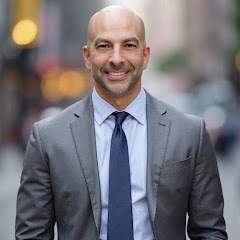 Peter Attia MD
Key Moments
David Sinclair discusses slowing aging via sirtuins, NAD+, and epigenetics, exploring research and potential interventions.
Key Insights
Sirtuins play a crucial role in aging, involved in DNA repair and gene silencing, and are conserved across species.
NAD+ levels decline with age and are essential for sirtuin activity; precursors like NMN and NR are being investigated.
Caloric restriction, sirtuins, and NAD+ pathways are ancient survival mechanisms that also impact longevity.
Resveratrol, an early sirtuin activator, showed promise but has limitations in potency and bioavailability.
Epigenetic drift, visualized as a 'scratched CD,' is a unifying theory for aging, where cells lose identity and function.
Newer synthetic molecules and combination therapies (e.g., NAD+ precursors with sirtuin activators) show greater promise.
Research in areas like female infertility offers a measurable, near-term application of NAD+ biology.
While supplements like NMN are available, Sinclair emphasizes the importance of rigorous scientific validation and clinical trials.
THE DISCOVERY AND MECHANISM OF SIRTUINS
Dr. David Sinclair's research journey began with a fascination for aging, leading him to study yeast genetics at MIT under Lenny Guarente. His work centered on sirtuins, a class of proteins originally known for gene silencing. He discovered their critical role in DNA repair, especially in response to DNA breaks, and established their involvement in aging. Sirtuins, surprisingly conserved across diverse life forms, are HDACs (histone deacetylases) but also target non-histone proteins, influencing signaling and metabolism. Their function is fundamentally linked to cellular stress responses and maintaining genomic stability.
NAD+ AS A KEY REGULATOR OF AGING
A pivotal discovery revealed that sirtuins are dependent on NAD+ to function. NAD+ levels naturally decline with age, impacting sirtuin activity. This insight shifted focus towards NAD+ metabolism as a major factor in aging. While NAD+ is crucial for hundreds of cellular processes, including respiration, its specific role in regulating aging pathways became a key area of investigation. The research highlighted that NAD+ levels fluctuate, particularly within cellular compartments like the mitochondria, and maintaining these levels is vital for cellular survival and repair.
FROM CALORIC RESTRICTION TO IN VIVO ACTIVATORS
Early research linked caloric restriction (CR) to increased lifespan, with sirtuins identified as necessary mediators of these benefits. Sinclair's lab demonstrated that overexpressing sirtuins could mimic aspects of CR. This led to the search for molecules that could activate sirtuins externally. Resveratrol, a plant-derived compound found in grapes, emerged as an early, though imperfect, sirtuin activator. Initial studies in yeast, worms, and flies showed lifespan extension dependent on sirtuins, followed by more significant findings in mice, particularly those on high-fat diets.
RESVERATROL AND THE CHALLENGE OF SYNTHETIC ANALOGS
The discovery of resveratrol's potential sparked considerable public interest, but its limitations became apparent. Resveratrol has poor solubility and bioavailability, requiring high doses, and its effects can be complex, activating other pathways like AMPK at higher concentrations. Subsequent efforts focused on developing more potent and bioavailable synthetic analogs. While resveratrol provided proof-of-concept and allowed for early human studies (often at very high doses), it ultimately paved the way for next-generation molecules with improved pharmaceutical properties, showing promise even in normal aging mice.
THE EPIGENETIC THEORY OF AGING
Sinclair proposes a unifying theory of aging: the loss of epigenetic information. He compares the genome to a digital CD, which remains intact, while the epigenetic information is like the analog signal that gets scratched over time. This 'epigenetic drift' causes cells to lose their identity and function correctly, leading to the hallmarks of aging. This concept is visualized by Waddington's landscape, where cells normally settle into specific valleys; aging causes them to 'jump' out of these valleys, disrupting cellular identity and function. This theory suggests that aging isn't about losing essential genes but about losing the correct program for gene expression.
NAD+ PRECURSORS AND FUTURE DIRECTIONS
Current research heavily focuses on NAD+ precursors like NMN and NR, which can be taken orally and converted to NAD+ within the body. While there's debate about the exact transport mechanisms, evidence suggests these molecules effectively raise NAD+ levels. Companies are developing improved precursors with better bioavailability. Beyond general longevity, these NAD+ boosting strategies show specific promise in areas like improving fertility by enhancing mitochondrial function and chromosome quality in eggs. The field is moving towards combination therapies, potentially integrating NAD+ precursors with sirtuin activators or other longevity pathways to achieve additive or synergistic effects.
CLINICAL TRIALS AND THE PATH FORWARD
Translating these findings into tangible human benefits requires rigorous clinical trials. Sinclair highlights the ongoing efforts to conduct large-scale, well-controlled studies to assess the impact of interventions on healthspan and mortality. He advocates for a multi-pronged approach, testing various drugs and combinations across different age groups. The availability of advanced technologies like NMR spectroscopy, along with gene-editing tools, accelerates the ability to test hypotheses in animal models and inform human trials. The ultimate goal is to develop safe and effective ways to intervene in the aging process, not just for extending lifespan but for improving quality of life.
Mentioned in This Episode
●Supplements
●Products
●Companies
●Organizations
●Drugs & Medications
●Concepts
●People Referenced
Common Questions
Sirtuins are a class of molecules that play a protective role in responding to energy and nutrients. They are involved in gene silencing and DNA repair, and their proper function is crucial for healthy aging. Disruptions in sirtuin activity due to DNA damage can lead to a loss of proper gene expression patterns, contributing to aging phenotypes.
Topics
Mentioned in this video
David Sinclair is a professor in the department of genetics at Harvard Medical School and co-director of the Paul F. Glenn Center for the Biological Mechanisms of Aging.
David Sinclair joined Lenny Guarente's lab at MIT for his postdoctoral research, a pivotal step in his career in aging research.
David Sinclair completed his PhD in molecular genetics at the University of New South Wales in Sydney, Australia.
A prestigious foundation that provided funding for David Sinclair to pursue his postdoctoral research, despite initially being told he couldn't apply as a foreigner.
A molecule that stimulates sirtuins, found in grapes and wine, which gained fame for promoting longevity phenotypes in animal models, though the 'French paradox' connection is a 'spoiler alert, not true'.
NR is a one-step precursor to NAD+ and is packaged with pterostilbene in some over-the-counter products, shown to raise NAD+ levels in the body and cells.
Another plant molecule, found in fruits and onions, discovered by Conrad Howitz at Biomol to activate sirtuin-1 activity in humans, similar in structure to resveratrol.
A molecule and its precursors, specifically NMN, are discussed for their role in stimulating sirtuins and their potential in life extension, although the efficacy of oral administration is debated.
A precursor to NAD+ being explored as a supplement for its potential in life extension, with various companies now selling it.
One of the first plant molecules discovered by Conrad Howitz at Biomol to activate sirtuin-1 activity in humans, similar in structure to resveratrol.
Essentially resveratrol with some methyl groups on it, a 'more novel, sexier version' that some companies include with NR, described as potentially more active by Lenny Guarente.
Another company that sells NAD+ precursors as supplements, mentioned in the context of competition in the NAD+ supplement market.
A parent company that encompasses a family of eight companies collaborating on different aspects of aging, sharing resources and knowledge to conquer aging through various approaches, including NAD+ biology.
A company based in Massachusetts and Australia, exploring the significant positive effects of NAD+ precursor molecules on female infertility or low fertility, with planned publications and clinical trials.
A company in Massachusetts working on developing improved NAD+ precursor molecules with better bioavailability, stability, and efficacy, which are moving into clinical trials.
A widely used anti-diabetic drug that also impacts longevity pathways, often taken by David Sinclair and his colleagues in low doses due to its additive effects with other longevity molecules.
A statin drug that was part of some ITPs (Interventions Testing Program) at NIA, alongside rapamycin and resveratrol, though its inclusion was questioned by Peter Attia.
David Sinclair's mentor at MIT and a pioneer in yeast genetics and aging research, who discovered a mutation that led to the sirtuin story.
An incoming graduate student in Lenny Guarente's lab who performed the experiment showing that overexpressing the sirtuin gene in yeast cells extended their lifespan.
The host of the podcast, Peter Attia, who interviews David Sinclair about his work in aging, sirtuins, and NAD+.
Worked in Lenny Guarente's lab and was involved in finding genes that controlled aging in yeast cells, and discovered the 'sir2' gene.
A super smart and tough guy, king of endocrinology and stem cells at Harvard, who interviewed David Sinclair for his postdoc position.
A mutual friend who introduced Peter Attia and David Sinclair, famous for his work on mTOR.
The discovery of the daf-2 mutation in C. elegans, a nematode worm, by Cynthia Kenyon, coincided with initial work on sirtuins and longevity genes.
The brilliant CEO of Biomol and a chemist, who recognized the structural similarity between the discovered sirtuin-activating molecules and resveratrol, leading to its investigation.
A brilliant scientist from the 1950s who, along with others, speculated on antagonistic pleiotropy, suggesting that traits beneficial in youth can become detrimental in old age.
More from Peter Attia MD
View all 333 summaries 135 min
381‒Alzheimer’s disease in women: how hormonal transitions impact the brain, new therapies, & more
 9 min
9 minIs Industrial Processing the Real Problem With Seed Oils? | Layne Norton, Ph.D.
 13 min
Cooking with Lard vs Seed Oils | Layne Norton, Ph.D.
 146 min
380 ‒ The seed oil debate: are they uniquely harmful relative to other dietary fats?
Ask anything from this episode.
Save it, chat with it, and connect it to Claude or ChatGPT. Get cited answers from the actual content — and build your own knowledge base of every podcast and video you care about.
Get Started Free