Key Moments
261 ‒ Training for The Centenarian Decathlon: zone 2, VO2 max, stability, and strength
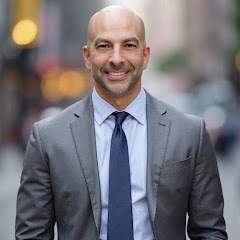 Peter Attia MD
Want to know something specific about what's covered?
We've already dissected every moment. Ask and we will deliver (with timestamps).
Key Moments
Peter Attia discusses the Centenarian Decathlon, focusing on training for longevity to maintain quality of life.
Key Insights
The "marginal decade" refers to the last ten years of life, and training for a remarkable marginal decade requires consistent effort in preceding decades.
The Centenarian Decathlon is a personalized set of activities and physical feats to prepare for the demands of aging.
Key training pillars include Zone 2 aerobic capacity, VO2 max (peak aerobic performance), strength, and stability.
Individuals should create a personalized list of activities and the physical requirements necessary to perform them in old age.
Age is not a barrier to starting training; consistency and a focus on progressive overload are crucial for long-term improvement.
Bone mineral density is vital, especially for women, and strength training is the most critical activity for maintaining it.
DEFINING THE MARGINAL DECADE AND CENTENARIAN DECATHLON
The podcast introduces the concept of the "marginal decade," representing the last ten years of one's life. This period is often characterized by significant declines in physical and cognitive health, leading to a reduced quality of life and withdrawal from activities. The Centenarian Decathlon is presented as a proactive training framework designed to ensure individuals can maintain high functionality and quality of life during this marginal decade. It emphasizes that preparing for these later years requires consistent, directed training throughout one's earlier decades, analogous to practicing for a distant goal to make closer distances manageable.
THE IMPORTANCE OF A PERSONALIZED TRAINING PLAN
The Centenarian Decathlon is not a one-size-fits-all program but a highly personalized set of activities and physical feats. It involves identifying specific recreational activities and activities of daily living that one wishes to perform in their later years. This list then serves as the foundation for a targeted training regimen. Peter Attia shares his own list, which includes tasks like lifting a child, getting up from the floor, carrying weights, and maintaining balance, highlighting the need for strength, stability, and mobility. The key is to "backcast" from the desired capabilities in old age to determine the necessary training today.
FOUR PILLARS OF LONGEVITY TRAINING
The training framework is built upon four fundamental pillars. First, Zone 2 training focuses on aerobic efficiency, improving the body's ability to use fat for fuel and build capillary density. Second, VO2 max training targets peak aerobic output, crucial for high-intensity activities and overall cardiorespiratory health. Third, strength training is essential for maintaining muscle mass, bone density, and metabolic function. Fourth, stability training encompasses balance, mobility, and coordinated movement, vital for preventing falls and maintaining functional independence. These pillars address the physical capabilities needed to thrive, not just survive, in later life.
ASSESSING AND TRACKING PROGRESS
To effectively train for the Centenarian Decathlon, understanding one's current physical status is crucial. Metrics like VO2 max, which can be estimated or measured, provide insight into cardiorespiratory fitness. Strength can be assessed through various feats like dead hangs or farmer's walks, with specific targets for different age groups. Bone mineral density, often assessed via DEXA scans, is particularly important for women and is best maintained through load-bearing strength training. Muscle mass, also assessed through DEXA, is an integrator of exercise quality and a predictor of lifespan, though strength is a more direct predictor.
TRAINING METHODOLOGIES AND MINIMAL EFFECTIVE DOSE
The podcast outlines practical approaches to training, emphasizing consistency and progressive overload. For those with limited time, a minimum effective dose might involve around three hours per week, allocated to Zone 2, strength, high-intensity intervals (for VO2 max), and daily stability work. The importance of practicing stability exercises daily for short periods, rather than infrequent long sessions, is highlighted for neurological adaptation. For advanced training, an 80/20 split between Zone 2 and VO2 max training is recommended, with Zone 2 sessions typically lasting 30-60 minutes and VO2 max sessions involving 3-8 minute intervals.
ADAPTING TRAINING FOR AGE AND INDIVIDUAL NEEDS
Age is not a deterrent to training for longevity; individuals of any age can improve their physical capabilities. While younger individuals may need to start from a higher baseline to maintain capabilities into old age, older adults can still significantly enhance their health and function. The principle of progressive overload means gradually increasing the demands on the body. For those with previous injuries or specific concerns like lower bone density, training should be tailored, potentially involving lighter loads initially, focusing on proper form, and perhaps seeking guidance from knowledgeable practitioners. Consistent effort and purpose are key, regardless of starting point or age.
EQUIPMENT AND INJURY PREVENTION
While access to a gym can be beneficial, much of the training for the Centenarian Decathlon can be done with minimal equipment, including bodyweight exercises, resistance bands, dumbbells, and kettlebells. Investing in adjustable dumbbells or kettlebells can be a cost-effective solution for home training. For injury prevention, especially for older individuals or those with pre-existing conditions, a cautious and informed approach is necessary. This involves understanding the specific demands of exercises, listening to one's body, and potentially consulting with healthcare professionals or knowledgeable trainers to navigate rehabilitation and avoid exacerbating injuries.
THE ULTIMATE GOAL: QUALITY OF LIFE
The overarching message emphasizes that the benefits of training, particularly for longevity, extend far beyond simply adding years to life; they profoundly enhance the quality of those years. Even if training were to slightly shorten one's lifespan by a year, the improvement in daily life quality through increased strength, energy, and functional capacity would still make it a worthwhile endeavor. The fact that this training likely extends lifespan while simultaneously improving its quality makes it, in Attia's view, one of the most important pursuits for physical health. The commitment is framed as an investment in a more vibrant and capable future.
Mentioned in This Episode
●Products
●Tools
●Books
●Drugs & Medications
●Concepts
●People Referenced
Centenarian Decathlon Training Quick Guide
Practical takeaways from this episode
Do This
Avoid This
Centenarian Decathlon Performance Metrics (Examples)
Data extracted from this episode
| Metric | Target Metric (Example) | Notes |
|---|---|---|
| Pick up 30 lb child from a squatted/crib position | Achievable | Requires strength, stability, mobility. |
| Get up off the floor with one point of support | Achievable | Tests stability and strength. |
| Place 30 lb suitcase overhead | Achievable | Tests strength and mobility. |
| Dead hang | 30 seconds | Tests strength and stability. |
| Farmer Walk (with 25% bodyweight each hand) | 1 minute | Tests strength and anaerobic capacity. |
| Weighted sled push/pull (distance) | 100 feet | Tests strength. |
| Stairs with feet pointed forward | Achievable | Tests ankle mobility. |
| Single leg stand (eyes open) | 30 seconds | Tests balance. |
| Single leg stand (eyes closed) | 15 seconds | Tests balance under more challenging conditions. |
| Get up from a seat without support | Achievable | Tests leg strength and stability. |
| Hex bar deadlift | Body weight for 5 reps | Tests strength. |
| Dumbbell lunge (with 15% bodyweight each hand) | 10 reps per leg | Tests strength and stability. |
| Walk 3 miles in 1 hour | Achievable | Tests sustained mobility. |
| Carry 20 lbs up 4 flights of stairs | Achievable | Tests strength and endurance. |
| VO2 Max | > 30 ml/kg/min | Enables activities like walking at 3 mph on a 6% grade for 15-20 min. |
| Tread water | 10 minutes | Tests aerobic endurance. |
| Scale a shoulder-height ledge or pull out of a pool (12" above water) | Achievable | Tests functional strength and upper body power. |
| Single leg glute bridge | 15 reps without lumbar loading | Tests hip and glute strength. |
| Plank | 1 minute (perfect form) | Tests core stability. |
| Pull a 50 lb compound bow | Achievable | Recreational activity requiring specific strength. |
Strength Metrics for Men and Women (Age 40s)
Data extracted from this episode
| Metric | Target (Men, 40s) | Target (Women, 40s) | Notes |
|---|---|---|---|
| Farmer Carry (% body weight/hand) | 50% | 37.5% (75% of 50%) | Duration: 1 minute |
| Dead Hang (seconds) | 120 seconds (2 minutes) | 75 seconds (1 minute 15 seconds) | Discount: ~10-15 sec per decade after 40. |
Common Questions
The centenarian decathlon is a framework for training throughout life with specific goals for the last decade of your life. It's about defining 10 key physical feats or activities you want to be able to perform in your 80s or 90s to ensure a high quality of life.
Topics
Mentioned in this video
Host of The Drive podcast, author of 'Outlive', and physician discussing longevity and training. He outlines the centenarian decathlon and principles for physical healthspan.
Mentioned for her concept of 'backcasting' from a future goal, which Peter Attia applies to his centenarian decathlon planning.
Referred to as a top cyclist (two-time Tour de France winner) who dedicates a significant majority of his training to Zone 2, illustrating the 80/20 principle.
Collaborated with Peter Attia on videos detailing his rehab process after shoulder surgery.
A framework for setting specific physical goals for the last decade of life, serving as a scaffold to guide training throughout life. It involves defining key activities and feats one wants to accomplish at an advanced age.
A zone of aerobic training characterized by the ability to speak uncomfortably but not hold a full conversation. It focuses on building mitochondrial efficiency and is considered a foundational pillar of fitness for longevity.
A diagnostic tool used for accurately measuring bone mineral density, visceral fat, and muscle mass, crucial for assessing healthspan metrics.
A condition where bones become weak and brittle, significantly increasing the risk of fractures. It is addressed through load-bearing exercise and proper nutrition.
More from Peter Attia MD
View all 340 summaries 140 min
404 ‒ Mental health beyond neurotransmitters: hormones in psychiatry, psychedelic therapies, & more
 51 min
403 ‒ Peptides: separating scientific promise from marketing hype
 148 min
402 ‒ NMR blood analysis: how mortality risk and more can be assessed from a single blood sample
 118 min
Building strength and muscle mass: optimize training & nutrition for longevity (AMA #71 rebroadcast)
Ask anything from this episode.
Save it, chat with it, and connect it to Claude or ChatGPT. Get cited answers from the actual content — and build your own knowledge base of every podcast and video you care about.
Get Started Free