Key Moments
Ryan Holiday Returns (Full Episode) | The Tim Ferriss Show (Podcast)
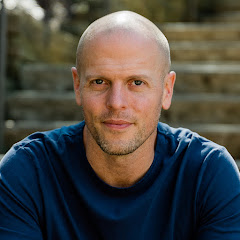 Tim Ferriss
Want to know something specific about what's covered?
We've already dissected every moment. Ask and we will deliver (with timestamps).
Key Moments
Ryan Holiday discusses ego, stoicism, and practical life lessons from crisis and success.
Key Insights
Ego can be a destructive force, leading to poor decisions and a distorted view of reality, even amidst success.
Stoic principles, like focusing on what is within our control and maintaining perspective, are crucial for navigating challenges.
External validation and ambition driven by ego can be detrimental; focusing on internal values and "doing" over "being" is essential.
Learning from mistakes and embracing feedback are critical for growth, contrasting with those who become insulated by their success.
Intentional living involves setting priorities, practicing self-awareness through journaling, and making deliberate choices to avoid destructive patterns.
Translating knowledge into practice requires conscious effort, treating self-improvement like training a skill, not passive consumption.
THE ROLE OF EGO IN SUCCESS AND FAILURE
Ryan Holiday explores ego as the primary internal obstacle, distinct from external challenges. He explains that while ambition can be positive, an inflated ego driven by vanity and a need for control can lead to self-sabotage, poor decision-making, and a distorted perception of reality. This is particularly true when success breeds a belief in one's own infallibility, preventing learning and adaptation. Holiday emphasizes that ego makes challenging situations worse, hindering an individual's ability to step back, assess objectively, and make rational choices.
LESSONS FROM PERSONAL CRISIS AND WORKAHOLISM
Holiday recounts a period of intense personal crisis, including his involvement with the American Apparel situation, which led to significant stress and a realization of his own overcommitment. This experience forced him to confront his tendency to take on too much, driven by a desire for external validation or the thrill of chaos. He discusses attending Workaholics Anonymous, learning the distinction between "human being" and "human doing," and recognizing that work can become an addictive escape, a predictable activity that offers control when other life aspects feel unmanageable.
THE WISDOM OF STOICISM AND EXTERNALIZING CONTROL
The conversation heavily features Stoic philosophy, particularly the idea that external events are beyond our control, but our reactions to them are not. Holiday's tattoos, "The Obstacle Is the Way" and "Ego Is the Enemy," serve as daily reminders of this. He highlights Marcus Aurelius's quote about reverting to oneself when jarred by circumstance. This philosophy provides a framework for managing emotions, thinking rationally, and making the best of any situation, a principle that resonates strongly with the high-pressure world of professional sports.
THE POWER OF SELECTIVE FAME AND NICHE AUDIENCES
Discussing the unexpected cult following of "The Obstacle Is the Way" in professional sports, Holiday and Ferriss touch upon the concept of "selective fame." Instead of seeking broad, generalized recognition, cultivating influence within specific, thought-leading communities (like NFL coaches) can be far more impactful. This approach emphasizes genuine connection and resonance over mass appeal, allowing ideas to spread organically through word-of-mouth and trust within influential circles.
CONTRASTING HISTORICAL FIGURES: HUGHES VS. MUSK
Holiday uses Howard Hughes as a cautionary tale of immense talent and potential squandered by ego, recklessness, and a lack of objectivity. Hughes's repeated failures, cushioned by inherited wealth, highlight how ego can insulate individuals from accountability. In contrast, Elon Musk is presented as an example of someone who, despite immense ambition, demonstrates rationality, discipline, and a commitment to first principles, leading to groundbreaking achievements while seemingly learning from historical missteps.
CULTIVATING SELF-REGULATION AND ACTIONABLE KNOWLEDGE
The discussion emphasizes the importance of practical application over passive consumption of knowledge. Holiday's personal practices of journaling, tracking deep work hours, and exercising are highlighted as methods for self-awareness and accountability. The transition from reading about self-improvement to actively implementing it is crucial. Examples like the "no complaint experiment" and forming accountability groups underscore the need for consistent practice and conscious conditioning to integrate lessons into daily life and build resilience.
Mentioned in This Episode
●Products
●Software & Apps
●Companies
●Organizations
●Books
●Drugs & Medications
●Concepts
●People Referenced
Practical Stoicism for Modern Life
Practical takeaways from this episode
Do This
Avoid This
Common Questions
Ryan Holiday is heavily inspired by Stoicism, and even has tattoos of stoic maxims like 'The Obstacle Is the Way' and 'Ego Is the Enemy' on his forearms, which serve as daily reminders.
Topics
Mentioned in this video
Great football coach who defined ego as 'when your ego gets bigger than your ears'.
Actress featured in the movie 'Our Brand Is Crisis'.
Special assistant for the New England Patriots, who read 'The Obstacle Is the Way' and helped spread it through the professional sports world.
General Manager of the Seattle Seahawks, who was recommended 'The Obstacle Is the Way' by Michael Lombardi.
An NFL player for the Tampa Bay Buccaneers who read 'The Obstacle Is the Way'.
Civil Rights leader whose 'I Have a Dream' speech is owned by George Raveling.
Strategist and writer, author of 'The Obstacle Is the Way' and 'Ego Is the Enemy', and guest on The Tim Ferriss Show.
Entrepreneur and business magnate, CEO of SpaceX and Tesla, discussed for his highly rational approach and 'first principles' thinking, contrasting with Howard Hughes' ego-driven failures.
Former coach of the Texas Longhorns basketball team, who read 'The Obstacle Is the Way'.
Former Governor of California and actor, who read 'The Obstacle Is the Way'.
Austrian neurologist and the founder of psychoanalysis, whose definition of ego is distinguished from Ryan Holiday's use of the term.
Co-founder of Apple, mentioned in the context of successful individuals with large egos.
Co-founder of PayPal and Palantir, first outside investor in Facebook.
Co-founder of Y Combinator, whose quote 'Keep your identity small' influenced Ryan Holiday's thinking and the original title of 'Ego Is the Enemy'.
Host of The Tim Ferriss Show, who interviews Ryan Holiday about his books and experiences.
An American business magnate, investor, record-setting pilot, engineer, film director, and philanthropist, discussed as a cautionary tale of unchecked ego leading to destructive behavior and financial ruin.
Author of 'The 48 Laws of Power', for whom Ryan Holiday apprenticed.
Roman Emperor and Stoic philosopher, whose quotes influenced Ryan Holiday's tattoos and philosophy.
Hall of Fame basketball coach and director of basketball for Nike, who owns an original copy of Martin Luther King Jr.'s 'I Have a Dream' speech.
Author of the essay '1,000 True Fans'.
Founder of American Apparel and Ryan Holiday's mentor, who was controversially fired from the company, leading to its hostile takeover.
Author of 'Small Giants'.
Civil War General and later 18th U.S. President, who despite his military success, suffered financially and politically due to ego-driven decisions outside his area of expertise.
Author of 'Fahrenheit 451', whose quote about multiple ways to burn a book is referenced.
Creator of 'Dilbert', who compared creativity to drilling for oil, acknowledging potential for spectacular failure.
African-American woman supposedly caught saying racist things in a misleadingly edited video posted by Breitbart.
Former NBA player for the San Antonio Spurs, who listens to The Tim Ferriss Show and recognized a joke in Argentine Spanish.
Musical genius and rapper, presented as an example of someone whose ego, particularly in fashion ventures, led to financial debt despite musical talent.
Author of the Elon Musk biography.
A reverend or preacher who created the '21-Day No Complaint Experiment'.
American financier who executed the largest Ponzi scheme in history, referenced as a comparison to Grant's deceitful financial partner.
Automotive engineer and executive, CEO of DeLorean Motor Company, whose mistakes Elon Musk learned from.
Author of 'Deep Work', whose book inspired Ryan Holiday to track his deep work hours.
Renowned motivational speaker and life coach, whose observation about suffering stemming from a focus on 'me' is discussed.
Military theorist and historian, whose writing about achieving success through slow accumulation based on achievement rather than predetermined confidence is quoted by Ryan Holiday.
Legendary basketball coach for UCLA, famous for his dispassionate style and meticulous attention to detail, even teaching players how to tie their shoes as a 'first principle'.
Mathematician and investor, managing partner at Thiel Capital, with whom Tim Ferriss discussed the term 'bigoteer'.
Former US President, mentioned in the context of alarming public figures.
General in the Civil War, known for his strategic genius and humility, famous for declining the presidency.
French military and political leader, compared to Sherman as someone driven by a belief in his own greatness and destiny.
37th U.S. President, used as an example of someone who, caught in ego, becomes unable to receive truthful advice.
Professional baseball player fired by ESPN for an offensive Facebook post, used to illustrate hyper-sensitivity and disproportionate outrage.
An investing service led by technologists and investors, offering automated habits and strategies like tax-loss harvesting and portfolio rebalancing at low costs.
A technology company whose former technologists contribute to Wealthfront.
A clothing company where Ryan Holiday served as director of marketing, and whose public implosion he witnessed and was involved with.
A technology company that is a client of Brass Check.
A software company co-founded by Peter Thiel.
Social media platform where Ryan Holiday can be found and where social accountability plays a role.
Ryan Holiday's current company, which advises clients like Google and Taser.
A company that is a client of Brass Check.
An internet service provider that failed Ryan Holiday during a stressful period, exacerbating his panic.
A website run by Shane Parish that wrote about 'The Obstacle Is the Way', helping it gain attention.
Sports apparel company for which George Raveling is the director of basketball.
Elon Musk's electric vehicle and clean energy company, whose launch incorporated lessons from John DeLorean's mistakes.
Investment firm where Eric Weinstein is a managing partner.
An oil drilling business founded by Howard Hughes' father, which provided the financial cushion for Hughes' many egotistical failures.
Elon Musk's aerospace manufacturer, launched based on 'first principles' thinking to reduce rocket costs.
Film production and distribution company owned by Howard Hughes, which lost tens of millions of dollars under his mismanagement.
Sports channel that fired Kurt Schilling over a social media post.
Grocery store chain accused of writing a gay slur on a cake, later revealed by security footage to be a potential shake-down attempt.
Social media company, mentioned in relation to Peter Thiel's early investment.
Startup accelerator co-founded by Paul Graham.
A media company advised by Brass Check.
A film depicting Howard Hughes, which mentions the Spruce Goose.
A comic strip created by Scott Adams.
A film that reminded Tim Ferriss of Ryan Holiday's crisis management experiences.
The famous speech by Martin Luther King Jr., an original copy of which is owned by George Raveling.
A sports magazine that published a piece about 'The Obstacle Is the Way' after it gained traction in professional sports.
A far-right news and opinion website, which posted a misleadingly edited video of Cheryl Sherrod.
A book by Ryan Holiday translated into 17 languages and adopted by NFL coaches and world-class athletes, focusing on external obstacles.
A book authored by Robert Greene, under whom Ryan Holiday apprenticed.
A book by Cal Newport that influenced Ryan Holiday to track his hours spent in focused, uninterrupted work.
Ryan Holiday's new book, which addresses internal obstacles like pride, vanity, and self-absorption.
An essay by Kevin Kelly about focusing on a small, dedicated audience for product launches or businesses.
A biography of Elon Musk by Ashley Vance, recommended for understanding his approach to business.
A book by Bo Burlingham about companies that choose to be the best rather than the biggest, focusing on niche demographics.
A novel by Ray Bradbury, whose common misconception about censorship—that it's government-mandated rather than public-driven—is discussed.
A journaling tool used by Tim Ferriss to cultivate gratitude and daily clarity.
A book about Howard Hughes that deeply impacted Ryan Holiday while he was dealing with the American Apparel crisis.
Tim Ferriss's book, which, like 'The 4-Hour Workweek', creates social accountability for him.
Tim Ferriss's book that became a New York Times bestseller, leading to personal social accountability for him.
University of California, Los Angeles, where John Wooden coached basketball and Tim Ferriss spoke to students.
University where Shaka Smart became the basketball coach.
An NFL team that adopted 'The Obstacle Is the Way' after winning the Super Bowl.
University where Tim Ferriss wanted to support research related to psilocybin.
National Football League, whose coaches and players adopted 'The Obstacle Is the Way'.
A 12-step program that Ryan Holiday attended, which helped him realize his life was becoming unmanageable due to prioritizing work over personal well-being.
An NFL team for which Garrick Gillekey plays.
University where George Raveling coached basketball.
NBA team for which Manu Ginóbili played.
An NFL team that adopted 'The Obstacle Is the Way' shortly before winning the Super Bowl.
A militant terrorist group, mentioned as a serious global threat to highlight disproportionate outrage over minor offenses.
A newspaper that featured 'The 4-Hour Workweek' on its bestseller list.
An ancient Greek philosophy emphasizing virtue, reason, and resilience in the face of adversity, central to Ryan Holiday's work and personal practices.
A practice involving wearing a rubber band and switching it to the other wrist every time one complains, with the goal of going 21 consecutive days without complaining to build self-awareness and reduce negativity.
A method to measure body fat, used in weight loss betting pools for accurate results.
An online invoicing, payment, time tracking, and expense organization software used by startups and contractors.
A weight loss challenge platform mentioned as a tool for social accountability.
A meditation app mentioned as a tool for developing mental practices.
A habit tracking platform mentioned as a tool for social accountability.
A commitment platform where users can make a public pledge and put money on the line to achieve goals, mentioned as a tool for social accountability.
More from Tim Ferriss
View all 699 summaries 77 min
The Many Benefits of Coca — The “Divine Leaf” with 8,000+ Years of Use
 100 min
Inside The AI Race: DeepMind, OpenAI, Anthropic, China, and The Race to Superintelligence
 108 min
The Path from The Soviet Union to Building Multi-Billion Dollar Companies — Max Levchin
 127 min
Reimagining Biotech with Jake Becraft of Strand Therapeutics — Tim’s Founder Kitchen
Ask anything from this episode.
Save it, chat with it, and connect it to Claude or ChatGPT. Get cited answers from the actual content — and build your own knowledge base of every podcast and video you care about.
Get Started Free