Key Moments
How to Thrive in an AI World, Tips for Life’s Darkest Hours, & The Art of Sabbaticals (4K)
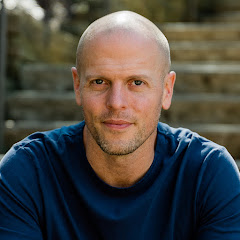 Tim Ferriss
Key Moments
Matt Mullenweg discusses open source, AI, travel, sabbaticals, and life advice for an AI-driven world.
Key Insights
Open source software promotes user freedom and collaboration, allowing individuals to use, modify, and distribute code without restrictions.
Matt Mullenweg's company, Automattic, is expanding beyond WordPress into messaging and e-commerce, aiming to be a 'digital Berkshire Hathaway' with a focus on open web and user-centric philosophies.
AI is rapidly transforming various sectors, making prompt engineering a new form of programming and holding immense potential for education and everyday utility through local, efficient models.
Travel, personal well-being, and continuous learning are vital for navigating a dynamic world, emphasizing the importance of sabbaticals for rest, reflection, and organizational health.
The conversation around psychedelics requires caution, focusing on preparation, integration, and distinguishing between therapeutic use and curiosity-driven exploration, with breathwork and non-pharmacological interventions offering accessible alternatives.
Addressing mental health challenges like depression benefits from a 'state, story, strategy' approach, prioritizing physical well-being (sleep, hydration, nature) and cognitive reframing to interrupt negative cycles.
Misinformation, particularly on platforms like TikTok, poses a significant geopolitical threat, prompting a critical re-evaluation of social media's impact on societal understanding and truth.
THE ETHOS OF OPEN SOURCE AND AUTOMATTIC'S EXPANSION
Matt Mullenweg co-founded WordPress at 19, an open-source content management system now powering over a third of global websites. He later founded Automattic, a commercial entity for WordPress-related ventures, which has grown to over 1900 employees in 97 countries, operating fully remote since 2005. Mullenweg passionately advocates for open source, defining it as a 'bill of rights' for users, granting freedoms to use, modify, and understand software without proprietary restrictions. This philosophy extends beyond WordPress to Automattic's acquisitions, including Tumblr and the messaging app Texts, aiming to build an open, free, and liberty-promoting web for future generations.
STRATEGIC ACQUISITIONS: A DIGITAL BERKSHIRE HATHAWAY
Automattic's acquisition strategy is likened to a 'digital Berkshire Hathaway,' focusing on diverse internet services. After success in publishing with WordPress and e-commerce with WooCommerce, Automattic ventured into messaging with Texts.com. This move was driven by Mullenweg's belief in private and open-source messaging as a fundamental human right, aligning with their overarching mission of promoting freedom and utility across human activity. The company aims for minimal coordination costs between products through open-source principles and APIs, allowing diverse teams to build collaboratively. This contrasts with proprietary platforms where integration is often restricted or subject to changing terms, risking a 'rug pull' for developers and users.
THE IMPACT AND EVOLUTION OF ARTIFICIAL INTELLIGENCE
Mullenweg is enthusiastic about AI, comparing prompt engineering to 'spellcasting' that unlocks new 'superpowers.' He anticipates a 10x advancement in AI models next year, with non-GPU chip architectures and non-Transformer learning methods boosting efficiency. A surprising trend is the rapid pace at which open-source AI models have achieved quality comparable to proprietary systems. While AI's impact on customer service is currently limited due to poor bot performance, it holds immense potential for transforming education and content creation, enabling personalized learning and automated website building. This rapid advancement highlights the need for continuous learning and adaptation to thrive in an AI-driven world.
CAREER ADVICE IN AN AI-DRIVEN LANDSCAPE
In an AI-dominated future, Mullenweg advises young people to embrace continuous learning, particularly through active engagement with AI tools like prompt engineering. While initially questioning the necessity of learning to code, he now sees its value in fostering a fundamental understanding of computing, similar to martial arts or humanities, offering intrinsic benefits. He emphasizes the importance of 'great work' and ambition, encouraging individuals to make a significant impact. Mullenweg expresses optimism for future generations, believing that technology, coupled with human goodness, can overcome challenges. He also changed his mind about global population decline, seeing it as a potential opportunity for growth and innovation.
THE ART OF SABBATICALS AND PERSONAL RECHARGE
Mullenweg is taking his first sabbatical in 18 years, a benefit offered by Automattic where employees receive 2-3 months of paid time off every five years. The sabbatical aims to promote personal recharge and organizational health by forcing teams to operate independently, identifying bottlenecks and fostering leadership opportunities. Mullenweg is 'terrified' but hopes to use the time to unplug, focus on hobbies, and detox from digital consumption. Success would mean returning re-energized, inspired, and with renewed clarity, combating the 'toasty' feeling from recent demanding years. He acknowledges fears of irrelevance during this time but sees it as essential for long-term well-being.
REDISCOVERING THE POWER OF BREATHWORK AND MINDFULNESS
Mullenweg has changed his mind on breathwork, initially dismissing it but now recognizing its profound benefits. He explores various techniques, from those inducing relaxation to those providing energy, viewing it as a powerful, accessible, and endogenous tool for internal well-being. Coupled with his long-standing meditation practice, breathwork offers a way to achieve calm and focus without external substances. Tim Ferriss also endorses breathwork as a foundational practice, often recommending it as a prerequisite for those considering psychedelics, emphasizing that many find significant relief and self-awareness without needing to escalate to altered states.
COMBATING DEPRESSION: STATE, STORY, AND STRATEGY
Drawing from personal experience, Ferriss offers insights into managing depression, emphasizing that while he is not a doctor, he has navigated severe depressive episodes. He highlights the importance of addressing the 'state, story, and strategy' in that order: first, changing one's physical state (e.g., cold showers, exercise) to shift energy, which then enables a more enabling 'story' or narrative, leading to more effective 'strategies' for action. Mullenweg's recent experience with chemotherapy-induced empathy for depression underscores the challenge of apathy. Both emphasize basic health practices: sleep, hydration, exercise, and avoiding alcohol, alongside professional help for acute cases like suicide hotlines.
CHALLENGES AND CAUTIONS IN THE DIGITAL AGE
Mullenweg expresses alarm over misinformation, particularly a statistic showing 20% of young adults believing the Holocaust was a myth, which he links to potentially adversarial influences on platforms like TikTok. This raises concerns about geopolitical advantages through algorithmic manipulation. He also revisits his stance on psychedelics, moving from being 'super pro' open legalization to advocating for caution and extensive research due to potential risks and the importance of prepared, integrated therapeutic use. This cautious approach extends to the 'data liberation front,' an initiative by Automattic to promote open data standards and reduce vendor lock-in, fostering a more competitive and user-friendly web.
THE HIDDEN RISKS OF MEDITATION AND PSYCHEDELICS
Ferriss and Mullenweg discuss the often-overlooked risks of meditation, particularly with extensive practice. While short daily sessions are low-risk and beneficial, prolonged or unsupervised meditation can lead to increased sensitivity, disorientation, or other adverse effects. Similarly, while psychedelics offer immense therapeutic potential, they carry significant risks, especially without proper preparation, integration, or in individuals with pre-existing conditions. Both caution against using these tools for mere curiosity, emphasizing the need for a 'safety net' and a willingness to put in foundational work (like breathwork) before exploring more intense interventions, likening the process to working with 'psychological nuclear power.'
FUTURE TECH TRENDS AND UNCONVENTIONAL INNOVATIONS
Mullenweg is excited about USBC becoming a universal standard, simplifying connectivity across devices. He also discusses surprising innovations like Lantern Bioworks' experimental bacteria, designed to eliminate dental cavities through a one-time oral treatment, a technology currently being explored in less regulated environments. This highlights how open-source and libertarian approaches can accelerate the development of groundbreaking medical solutions outside traditional regulatory frameworks. His interest in such 'absurd but beautiful' technologies underscores a future where bio-hacking and advanced personalization become commonplace, although often raising ethical and accessibility questions.
HUMOR, PERSONAL QUIRKS, AND THE EVOLUTION OF WORK
Mullenweg shares several humorous and unconventional personal habits, including maintaining 500 open browser tabs and masochistically replying to emails from years past to thank early supporters—a practice he acknowledges as absurd but deeply ingrained. He also shares a humorous change of mind about Vienna sausages, realizing their unhealthiness despite childhood nostalgia. His 'pocket ranch' idea—carrying individual packets of ranch dressing for any occasion—exemplifies his meticulous approach to personal preferences. This blend of humor, self-awareness, and relentless curiosity reflects a personality constantly questioning norms and seeking both efficiency and enjoyment in life.
THE PERENNIAL VALUE OF WRITING AND COMMUNITY
Despite the rise of video and AI-generated content, Mullenweg finds blogging to be a 'beautifully absurd' and deeply rewarding activity. The act of writing clarifies thought, fosters vulnerability, and drives interaction through comments and follow-ups. He and Ferriss discuss the potential for revitalizing blog comment sections and creating a 'Wikipedia-like' corpus from podcast episodes, converting audio into rich, interlinked blog posts. This emphasis on written output and community interaction points to a desire for deeper engagement and a more structured approach to sharing knowledge, contrasting with the fleeting nature of short-form social media content.
CRITICAL OBSERVATION AND THE QUEST FOR WABI-SABI
Mullenweg acknowledges his 'ultra-critical eye,' a superpower for identifying pixel-level flaws in design but also a curse that hinders his ability to simply enjoy things as they are. This 'curse' extends to constantly remodeling and seeking improvement rather than embracing 'wabi-sabi'—the acceptance of imperfection. Ferriss relates this to his own practice of accepting minor imperfections, like a tilted light switch plate, as a daily mindfulness exercise. This struggle between meticulous optimization and appreciative acceptance highlights a common tension for high performers, with meditation and self-reflection serving as tools to cultivate a more balanced perspective.
Mentioned in This Episode
●Supplements
●Products
●Software & Apps
●Tools
●Companies
●Books
●Drugs & Medications
●Concepts
●People Referenced
Common Questions
Matt Mullenweg co-founded WordPress at 19, which now powers over a third of all websites. He then founded Automattic, the for-profit company that commercializes WordPress-related services, aiming to be a 'digital Berkshire Hathaway' through strategic acquisitions like Tumblr and Text.com, all while focusing on open-source principles. (Timestamp: 49)
Topics
Mentioned in this video
A microblogging and social networking website acquired by Automattic, aligning with their open web philosophy.
An open-source Twitter alternative funded by Jack Dorsey, showcasing a trend of successful proprietary founders investing in open-source projects.
A password manager recommended for generating and storing strong, unique passwords, and for its potential support for Passkeys.
An open-source messaging competitor to Text.com, built on the Matrix ecosystem and philosophically aligned with open-source values.
A fully encrypted local journaling app, philosophically aligned with Automattic's open principles, even though it doesn't share technology with WordPress.
A knowledge base software often used for linked notes, similar to features discussed in the context of Day One for interlinking entries.
A messaging app acquired by Automattic that unifies multiple messaging services into one secure desktop application, prioritizing user privacy and local encryption.
Another open-source Twitter alternative funded by Jack Dorsey, contributing to the open-source social media movement.
An e-commerce platform that has grown to handle over $30 billion in sales, expanding Automattic's offerings.
An open-source, non-profit messaging app co-founded by Brian Acton, known for its strong encryption and philosophical alignment with open-source principles.
An app for beta testing iOS apps, mentioned as a way to 'sideload' software onto phones, bypassing official App Store restrictions.
An open-source blogging and content management system co-founded by Matt Mullenweg, powering over a third of all websites globally.
A meditation app that Matt Mullenweg invested in to address his personal need for meditation, highlighting his philosophy of acquiring products for self-improvement.
A note-taking app that allows interlinking of notes, a feature comparable to what Matt Mullenweg appreciates in journaling apps.
A meditation app by Sam Harris, recommended as a foundational course for those interested in exploring mental tools, including breathwork.
Another multi-messaging app that faced blocking from Apple due to its iMessage support, illustrating challenges faced by such platforms.
A proprietary website builder that doesn't offer easy data export, cited as an example of services that lock users in, contrasting with the 'Data Liberation Front' initiative.
A universal charging and data transfer standard that Matt Mullenweg is very excited about due to its simplification and efficiency, especially with Apple's adoption.
A newer depression treatment protocol developed at Stanford that compresses TMS therapy into 5 days, offering faster and potentially more durable results.
A new technology replacing passwords with secure key exchanges, built into operating systems to allow logging in with facial or fingerprint scans.
A powerful breathwork technique developed by Stanislav Grof and others, recommended for a weekend course to explore altered states and address psychological challenges.
Transcranial Magnetic Stimulation (TMS), a newer brain stimulation method for treatment-resistant depression and anxiety, with protocols that offer faster and durable results compared to older treatments.
A method developed by Byron Katie for self-inquiry, consisting of four questions and 'turnarounds' to question and reframe stressful thoughts, available for free on her website.
A technology company criticized for blocking multi-messaging apps like Beeper and for its restrictive App Store policies, but also respected as a potential 'benevolent elder statesman' in tech.
A social network experiment by Google that failed due to internal coordination costs and lack of user responsiveness, serving as an example of poor integration.
A music streaming service used as an example of how App Store fees can make subscriptions more expensive when purchased through mobile platforms versus the web.
A social media platform that raised concerns due to a statistic showing a significant percentage of young adults believing the Holocaust was a myth, prompting questions about misinformation and adversarial influence.
Mentioned as an inspiration for Automattic's acquisition strategy, focusing on standalone businesses with strong leadership and robust business models.
An e-commerce giant used as an example where App Store payments aren't enforced for physical goods like books, highlighting the arbitrary nature of platform fees.
A video streaming service, also mentioned in the context of App Store fees affecting subscription prices, similar to Spotify.
A public company known for its open-source operations, publishing almost everything and serving as an example of successful open-source business models.
A messaging app known for its relatively small team supporting a large user base, demonstrating efficient scaling.
A company mentioned for its executives spending significant time with customers and its history of acquisitions leading to potential integration challenges.
Praised for its 'amazing turnaround' and shift towards becoming more benevolent, user-centric, and embracing open source.
The for-profit company founded by Matt Mullenweg to commercialize services around WordPress, envisioning itself as a 'digital Berkshire Hathaway' with over 25 acquisitions.
A messaging app co-founded by Brian Acton, mentioned for its small team size relative to its large user base and transition towards open-source projects.
A company attempting to commercialize a genetically modified bacteria that eliminates cavities by replacing acid-producing bacteria in the mouth.
A ride-sharing app where in-app tipping revenue is not subjected to App Store cuts, contrasting with other digital services.
Former CEO of Automattic, whose three-month road trip sabbatical as CEO inspired the company's sabbatical program and provided a leadership opportunity for Matt Mullenweg.
A pioneering psychedelic researcher who famously compared working with psychedelics to 'working with nuclear power,' emphasizing their potency and need for caution.
Spiritual teacher and author of 'Awareness,' a short book recommended for its insights into self-awareness.
A blogger and author known for his "Slate Star Codex" essays, who also wrote about a new bacteria-based cavity treatment.
A venture capitalist cited for his presentation on 'regulatory capture,' detailing how industries use lobbying and political influence to stifle competition.
An American polymath whose daily logging habits are mirrored by Matt Mullenweg's use of Day One for dated entries and notes.
A computer scientist credited with the quote 'The best way to predict the future is to invent it.'
A historian and philosopher, author of 'Fallen Leaves,' from which a quote about happiness being in making things rather than consuming them is shared.
Mentioned as an investor in nuclear energy startups, contributing to the shift in perspective towards nuclear as a clean energy source.
Chair of Psychiatry at Yale, who discussed ketamine in a podcast episode, providing comprehensive information on its use for acute suicidal ideation.
Entrepreneur who, in a past podcast, advised stopping alcohol consumption for those experiencing depression, based on his social observations.
Co-founder of OpenAI, also mentioned as having a startup in the nuclear energy space, indicating significant investment in the technology.
Co-founder of WhatsApp, who later became head of Signal, an open-source non-profit messaging app.
A psychiatrist who, along with his wife, developed Holotropic Breathwork as a method for self-exploration and healing.
Motivational speaker whose 'State, Story, Strategy' framework is used to describe how changing one's physical or emotional state can positively impact one's narrative and subsequent actions.
Owner of X (formerly Twitter), mentioned for his platform's use of a redirect service to insert delays for certain media links, an example of invisible competition.
A venture capitalist and coach, known for his insightful questions like 'How am I complicit in creating the conditions I say don't want?'
A spiritual teacher whose 'The Work' method involves interrogating beliefs through a series of questions and 'turnarounds' to find alternative perspectives.
Neuroscientist and author, creator of the Waking Up app, whose work is recommended for meditation and mindfulness practices.
Co-founder of WordPress and founder of Automattic. He's known for his work in open-source software and his global approach to business operations.
Known for his 'Blueprint' system, a diet and health protocol that has inspired a delivery service for his specialized meals in San Francisco, which Matt Mullenweg considers trying.
An economist and blogger known for his 'Marginal Revolution' blog and distinct podcast interview style, influencing Matt Mullenweg's early blogging.
Warren Buffett's business partner, admired for his longevity and his enduring wisdom, despite not engaging in modern content formats.
An iconic investor whose business philosophy, especially about finding businesses a 'monkey could run', informs Automattic's digital acquisition strategy.
Co-founder of Twitter, who, after making money from proprietary companies, now funds open-source alternatives like Noster and Blue Sky.
Co-founder of Wired magazine, mentioned for recommending the book 'Empty Planet' and for his general advice.
A well-known figure associated with specific breathwork techniques and cold exposure, demonstrating the variety of breathwork practices.
An entrepreneur and author whose blog is noted for its high-quality comment section, contrasting with the decline of comments on many blogs.
A posthumously published book by Will Durant, containing reflections on life and wisdom, including a quote about health, action, and happiness.
A book by Anthony De Mello, recommended as a short, impactful read for enhancing self-awareness, potentially in conjunction with breathwork and meditation.
A book recommended by Kevin Kelly, suggesting that the world population might not continue growing as previously thought, influencing Matt Mullenweg's changing views on global population and parenthood.
More from Tim Ferriss
View all 692 summaries 89 min
From Food Stamps to the Super Bowl War Room — NFL Chief Security Officer Cathy Lanier
 55 min
From Dad’s Basement to Selling Two Companies — 4-Hour Workweek Success Story
 184 min
Daredevil Michelle Khare — How to Become a YouTube Superstar
 81 min
Q&A with Tim — The Upcoming AI Tsunami and Building Offline Advantage
Ask anything from this episode.
Save it, chat with it, and connect it to Claude or ChatGPT. Get cited answers from the actual content — and build your own knowledge base of every podcast and video you care about.
Get Started Free