Key Moments
How to Launch a Million-Dollar Business This Weekend — Noah Kagan (4K)
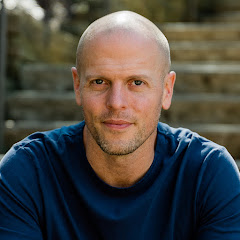 Tim Ferriss
Want to know something specific about what's covered?
We've already dissected every moment. Ask and we will deliver (with timestamps).
Key Moments
Noah Kagan and Tim Ferriss discuss building million-dollar businesses by taking small, consistent actions and embracing experimentation.
Key Insights
Start by asking for small, non-threatening things to build confidence in negotiation and sales.
Focus on solving problems you personally care about or encounter, applying your existing expertise.
Adopt an "unambitious goals" approach to foster sustainability and allow for 10x experimentation.
Prioritize one singular goal for your business, supported by a maximum of three core key performance indicators (KPIs).
Embrace constraints (like a weekend or limited budget) to spark creativity and resourcefulness.
Leverage free work or low-cost prototypes to validate demand and learn from direct customer feedback before investing heavily.
Cultivate a practice of seeking and acting on direct, concise feedback (e.g., Top 3, Bottom 3).
Be patient and persistent; most large successes are not overnight but are the result of consistent, focused effort over time.
THE JOURNEY OF ENTREPRENEURSHIP: FROM INTEL CUBICLE TO $80M APPSUMO
Noah Kagan reflects on his unconventional entrepreneurial journey, starting as Facebook's #30 employee and Mint.com's #4, eventually founding AppSumo.com, which now generates $80 million annually. He emphasizes that AppSumo began as a bootstrapped weekend project, proving that significant ventures don't require large initial investments. Kagan highlights his early adoption of trends like Austin's growth and sees Barcelona as the next remote work hub, attributing his success to picking things early and a focus on lifestyle balance over relentless work.
BARCELONA: THE NEW FRONTIER FOR REMOTE WORK AND LIFESTYLE
Kagan advocates for Barcelona as a burgeoning remote work capital, praising its cycling culture, affordable cost of living, walkable neighborhoods, and vibrant social fabric. He contrasts this with Austin's increasingly specialized communities in tech, BJJ, and comedy. Kagan notes the challenges of obtaining a digital nomad visa for Spain, outlining options like the lengthy nomad visa, half-million-dollar golden visa, or obtaining residency through a local partner, even suggesting exploring ancestral citizenship as a backdoor into the EU.
NAVIGATING BUREAUCRACY AND THE TRADE-OFFS OF GLOBAL LIVING
The conversation touches on the global complexities of immigration, especially for partners, and the economic importance of attracting international talent for industrialized nations. Kagan shares his personal struggles with his Venezuelan-Portuguese girlfriend's visa applications for the US, highlighting the often-unseen difficulties beyond reality TV portrayals. This segment underscores that even for successful entrepreneurs, personal life choices often involve intricate logistical challenges and trade-offs between different geographic and lifestyle aspirations.
EFFICIENT NEGOTIATION TACTICS AND BIANNUAL REVIEWS
Kagan provides practical negotiation tips, including disarming counterparts by stating, "I'm really bad at negotiating," maintaining a positive demeanor for future interactions, and clearly articulating the value of your offer. He stresses the importance of silence after stating your price. AppSumo conducts biannual reviews of all contractor and software subscriptions, categorizing them by cost and ROI (low, medium, high) to proactively cancel or negotiate down 'low value' items and seek discounts on 'high value' ones, likening it to a personal financial audit.
BUILDING CONFIDENCE WITH COMFORT CHALLENGES
To foster negotiation skills and overcome the fear of asking, Kagan recommends "comfort challenges." The "coffee discount" involves asking for 10% off any purchase, first with an explanation of it being an exercise, then without. The "dollar challenge" pushes individuals to ask a friend to invest $1 in their business idea. These small, low-stakes exercises are designed to build resilience and confidence, making bigger asks in business and life less daunting, underscoring the principle that "life punishes the vague wish and rewards the specific ask."
CEO FRAMEWORKS: GOALS, KPIs, AND FEEDBACK
As a CEO, Kagan employs specific frameworks. AppSumo maintains one singular goal annually (e.g., $45 million net revenue) and tracks a "daily pulse" Slack bot with key metrics like gross sales, net revenue, average order value, new buyers, and conversion rates. For 80/20 prioritization, he focuses on traffic, conversion rate, and average order value. He also implements "unambitious goals" for sustainable growth (e.g., 5-10% annual growth for AppSumo, 25% for YouTube), which paradoxically creates freedom for 10x experiments, contrasting with Silicon Valley's often unrealistic "10x or bust" mentality.
THE POWER OF T3 B3 AND WEEKLY REVIEWS
Kagan utilizes the "Top 3, Bottom 3" (T3 B3) feedback framework from Uber, asking direct reports (and his partner) for the top three things he's doing well and the bottom three he can improve on, conducting this quarterly. An example includes feedback on micromanager tendencies, leading him to delegate credit card bill reviews. Another perennial B3 is his need for longer-term vision, prompting him to develop a 2026 strategic vision with clear milestones. He also conducts a weekly personal review answering three questions: "How was the week (1-5) and why?", "Was I consistent this week (1-5)?", and "What are my top three for next week?", using Google Forms for tracking.
LESSONS FROM BILLIONAIRES: ONE THING, SALES, AND HAPPINESS
Through his YouTube series interviewing billionaires like John Paul DeJoria (Patrón Tequila, Paul Mitchell) and Michael Dell (Qualcomm), Kagan noted several recurring insights. Firstly, none became billionaires in under 20 years. Secondly, they all achieved wealth by focusing on one core product or service. Thirdly, they were all entrepreneurs. Finally, a significant number of them did not appear as genuinely happy as one might expect, though Kindness, like DeJoria's, stood out as a positive trait. A critical takeaway was their exceptional sales ability, often disguised as technical expertise or genuine vision, rather than aggressive tactics.
THE EFFORT EQUATION: FOCUSING HARD WORK STRATEGICALLY
Tim Ferriss elaborates on the concept of focused effort, explaining his launch strategy for "The 4-Hour Workweek." Instead of blindly pushing, he interviewed bestselling and best-writing authors to identify undervalued, uncrowded channels — discovering the power of early blogs relative to declining TV influence. He invested his limited budget in in-person events to meet influential bloggers organically, using a "light touch" approach (e.g., not pitching directly but allowing interest to emerge) and offering specific, low-commitment value. This strategic effort, rather than sheer volume, yielded disproportionate results.
THE EVOLVING LANDSCAPE OF CONTENT AND FAME
Ferriss discusses his current pause on aggressive YouTube growth, citing the platform's shift towards algorithm-driven content and short-form video, leading to diminished originality and the commoditization of creators. He expresses concern about the "halflife of fame" shortening and the psychological implications of content creation becoming a dopamine-chasing game. Ferriss emphasizes owning one's audience (e.g., via email newsletters, personal blogs) rather than renting it from platforms that can unilaterally change rules. He seeks "blue ocean" opportunities, focusing on what he's uniquely suited for and what is currently neglected or old, rather than blindly chasing new trends.
TESTING IDEAS CHEAPLY: THE MILLION-DOLLAR WEEKEND
The core of Kagan's "Million-Dollar Weekend" philosophy (and book) is to overcome the fear of starting by taking very small, actionable steps within 48 hours. Key is not relying on authors who got rich from their books but those with proven business success. The process involves identifying a problem you care about (e.g., golf trips, toy rentals, house managers), validating the market size (at least $1 million potential) using simple tools like Google Trends or Facebook ads, and quickly prototyping a "one-minute business model" to check profitability with rough estimates.
PRE-SELLING AND THE VALUE OF "DOING NOW"
Kagan highly recommends pre-selling as a validation method, using examples like the Cybertruck or Airbnb that started by testing demand before building. For Jake, the golf trip enthusiast, this meant creating a Google Doc with photos of a luxurious golf experience and asking friends for a $100 refundable deposit. The key is to get immediate commitment from customers, as "a promise of a deposit is a rejection." This approach forces entrepreneurs to deliver what they promised and gauge genuine interest without significant upfront investment. It also emphasizes using existing expertise and network, avoiding the common mistake of chasing entirely new, unproven territories (like "AI apps" when one's expertise is in sales).
LEARNING FROM REJECTION AND THE POWER OF "UNDERSERVED"
Both Ferriss and Kagan view rejection as valuable feedback and an opportunity to learn, rather than a definitive failure. Kagan shares an anecdote of a potential podcast guest withdrawing his offer, which Kagan met with gratitude for honesty, leading to a potential future collaboration. Ferriss highlights his "informed optimism" – that opportunities are abundant, and a missed deal often means being saved from a worse outcome. He suggests that if one is questioning a path, it may be due to a scarcity mindset, and opportunities for "category of one" businesses (Blue Ocean Strategy) are always present, though often neglected by those chasing crowded markets.
THE UNSEEN VALUE OF FREE WORK AND HIGH-TOUCH CUSTOMER ENGAGEMENT
Both speakers underscore the transformative power of "free work" and high-touch customer engagement, particularly in early stages. Ferriss's first job involved a free competitive analysis, his book lectures were free, and his early investments were often accompanied by significant pro-bono work to prove value. Kagan landed his job at Mint by creating a free marketing plan, and AppSumo started with manual Gmail-based code delivery for deals, allowing for direct customer feedback that shaped the business. This hands-on, highly responsive approach builds strong relationships and provides invaluable learning that is often lost when prematurely scaling or avoiding personal engagement.
PERSISTENCE, PATIENCE, AND FINDING YOUR OWN DEFINITION OF SUCCESS
The conversation concludes by reiterating that great success, whether million-dollar businesses or fulfilling careers, is rarely sudden. It emphasizes persistence, learning from every "failure" (rejection, iteration), and patience in execution. It challenges the Silicon Valley narrative of "10x or bust," suggesting that a consistent 5-10% growth can lead to profound long-term success. Importantly, entrepreneurship offers the freedom to design a life, whether that means millionaire status or simply "grocery money," allowing individuals to escape dependence on others and live authentically, without trading a 9-to-5 for a 24/7 hustle.
Mentioned in This Episode
●Products
●Software & Apps
●Companies
●Books
●Drugs & Medications
●Concepts
●People Referenced
Million-Dollar Weekend: Rapid Business Launch Principles
Practical takeaways from this episode
Do This
Avoid This
Common Questions
Barcelona offers a high quality of life with walkable cities, fresh food, a strong sense of community, and a lower cost of living compared to places like Austin or California. It's also a world-class cycling destination. Noah Kagan believes it could become a global hub for remote work. (Timestamp: 336)
Topics
Mentioned in this video
Host of the podcast, author of 'The 4-Hour Workweek' and other books, and entrepreneur.
Tech investor and executive, referenced for his daily pulse metric tracking framework.
Author of 'A Million Miles in a Thousand Years', who tells a story of living a more interesting life, including biking across America.
Guest on the podcast, founder of AppSumo, author of 'Million Dollar Weekend', and former employee at Facebook and mint.com.
Podcaster known for his longevity and skill, mentioned as an example of a professional entertainer in the podcast space.
CEO of Facebook, mentioned for his focus on singular goals for business growth.
Famous cyclist, mentioned in the context of Girona being a world-class cycling destination.
CEO of Tesla and SpaceX, mentioned for his strategy of pre-selling products like the Cybertruck and Model 3 years before delivery.
Acclaimed Japanese filmmaker and co-founder of Studio Ghibli, admired for his unique, high-quality work that doesn't follow a volume game.
Venture capitalist and former Google employee, mentioned as a connection that helped Noah get free ads on Reddit.
Content creator and author, mentioned as living in Austin, contributing to its creator scene.
Co-founder and CEO of OpenAI, his brother created Lattis HQ.
Co-founder of Microsoft, mentioned as an example of a billionaire who started small by creating software while working for someone else.
Friend and advisor to Noah Kagan, who introduced the T3 B3 feedback system and helped model AppSumo's business.
Noah Kagan described working as a 'cubicle monkey' at Intel, which motivated him to pursue entrepreneurship.
A social media platform mentioned in the context of the 'email is dead' narrative, highlighting the shifting landscape of communication.
Noah Kagan was employee number 30 at Facebook; mentioned as an example of picking tech trends early.
A large tech company with a skyscraper being built in Austin, indicating tech growth.
A genetic testing service, mentioned as a tool for tracing genealogy to potentially gain citizenship in other countries.
Japanese animation studio co-founded by Hayao Miyazaki.
A social news aggregation, content rating, and discussion website, used by Noah for early AppSumo marketing and finding customers.
A data warehousing company, used by AppSumo's business intelligence team.
A data storage company, mentioned as having a good sales training culture.
A printing and document services company founded by Paul Orfalea, sold for $2.4 billion.
A language-learning app, where Tim Ferriss was an early investor and whose Chief People Officer advises AppSumo.
A job search engine, whose executive Roger T. Mooker serves on AppSumo's board.
E-commerce giant, mentioned as a marketplace for validating business ideas.
An e-commerce website focused on handmade or vintage items, mentioned as a marketplace for validating business ideas.
An automation tool used by AppSumo to connect different apps and automate their daily pulse Slack bot.
A semiconductor and telecommunications equipment company, mentioned in the context of its founder being a billionaire.
An online payment system, used for AppSumo's initial sales before a full backend was built.
A peer-to-peer file-sharing service, mentioned as something Wirehog competed with.
An e-commerce platform mentioned as a potential necessity for starting a pinball business, and a podcast sponsor.
An electronic signature software, mentioned as a potential product AppSumo could create an alternative for.
An online learning platform that started with textbook rentals, used as an example of a successful business model that could be applied to toy rentals.
An email marketing platform, mentioned as a company whose CFO is a coach for AppSumo, and as a product for which AppSumo created an alternative.
Noah Kagan was employee number four at mint.com; mentioned as an early career step.
A scheduling automation platform, mentioned as an example of a popular product that AppSumo created an 'affordable low-entry version' of.
A content management system, mentioned as an open-source platform that allows creators to own their audience.
A tool recommended for quickly assessing market size and interest in a business idea ('Is Google Trends flat, declining, or growing?').
An American classified advertisements website, mentioned as a marketplace for validating business concepts by listing fake or real products.
An AI chatbot, mentioned as a tool that could be helpful for market research for business ideas.
Tim Ferriss's book, whose launch leveraged podcasts, mentioned as a personal reference for various methods.
A book on the creative process by Ann Lamott, one of Noah Kagan's favorite books.
A book about focusing on the vital few inputs that yield the most significant results, recommended by Tim Ferriss.
A book about creating new market spaces where there is no competition, recommended by Tim Ferriss.
Tim Ferriss's first book, which influenced Noah Kagan and many others in entrepreneurship.
Tim Ferriss's book, mentioned as a personal reference for various things.
A coaching firm, mentioned in the context of Dan Putt, Noah Kagan's CEO coach.
Noah Kagan's book focused on launching a seven-figure business in 48 hours, emphasizing quick action and testing.
More from Tim Ferriss
View all 700 summaries 88 min
The Legendary Hollywood Power Broker — Guy Oseary on 36 Years of Managing Madonna, 26 IPOs, and More
 77 min
The Many Benefits of Coca — The “Divine Leaf” with 8,000+ Years of Use
 100 min
Inside The AI Race: DeepMind, OpenAI, Anthropic, China, and The Race to Superintelligence
 108 min
The Path from The Soviet Union to Building Multi-Billion Dollar Companies — Max Levchin
Ask anything from this episode.
Save it, chat with it, and connect it to Claude or ChatGPT. Get cited answers from the actual content — and build your own knowledge base of every podcast and video you care about.
Get Started Free