Key Moments
David "DHH" Heinemeier Hansson — The Power of Being Outspoken | The Tim Ferriss Show
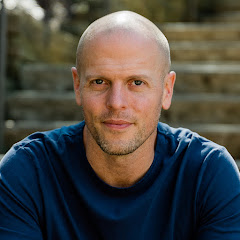 Tim Ferriss
Want to know something specific about what's covered?
We've already dissected every moment. Ask and we will deliver (with timestamps).
Key Moments
David Heinemeier Hansson on self-sufficiency, building Basecamp, Ruby on Rails, and embracing an outspoken, balanced life.
Key Insights
Self-sufficiency and a methodical learning approach are key drivers for DHH, evident in learning to drive, programming, and racing.
The 'easy to learn, hard to master' principle applies to successful endeavors like Ruby and Basecamp, attracting users while offering deep engagement.
First-principles thinking is crucial for Basecamp's operations, challenging norms in hiring, growth, and company culture.
A focus on compatibility in goals and prioritizing tranquility over endless accumulation leads to a more fulfilling life.
Empathy and internal metrics (like personal progress) are vital for effective parenting and sustainable personal growth, contrasting with external validation.
The 'it's always your fault' philosophy promotes accountability and continuous learning by viewing situations as systems where one is complicit.
THE JOURNEY TO SELF-SUFFICIENCY AND MASTERY
David Heinemeier Hansson (DHH) emphasizes that his multi-faceted career, from programming to race car driving, stems from a deep-seated desire for self-sufficiency. This drive led him to learn skills out of necessity—like obtaining a driver's license at 25 for travel independence, or learning to code to build gaming websites without relying on others. His approach to learning is methodical, characterized by constant self-commentary and iterative improvement, much like the 'take two, take three' process in coding or racing. This iterative mindset allows him to continuously refine his understanding and performance in any domain he tackles.
THE ALLURE OF CLOSED-LOOP SYSTEMS AND FLOW STATES
DHH is captivated by closed-loop systems that provide instant feedback, a characteristic he first encountered in video games and profoundly experienced in race car driving. A single lap on a track offers immediate data on performance, fostering an intoxicating cycle of improvement. This environment readily induces 'flow states' – periods of intense focus and timelessness – which DHH finds more elusive but equally rewarding in programming once a certain level of skill and conceptual understanding is attained. The high criticality of racing, he notes, sharpens the mind and accelerates the development of an 'eye' for the domain.
DISCOVERING RUBY: A PROGRAMMING LANGUAGE REMIX
DHH's programming journey began out of a pragmatic need for tools, not an initial passion for the activity itself. His 'aha moment' came with achieving self-sufficiency in creating functional websites. The true turning point, however, was discovering Ruby in 2003. He describes Ruby not as inventing new ideas, but as a 'master mixtape' – a brilliant remix of the best concepts from previous languages, making it incredibly approachable yet deeply complex. This 'easy to learn, hard to master' quality, coupled with its elegance and flexibility, made programming a profoundly enjoyable and creatively fulfilling activity for him, leading to the creation of Ruby on Rails as a framework.
BUILDING BASECAMP: FIRST PRINCIPLES AND SUSTAINABLE GROWTH
Basecamp, DHH's company (formerly 37signals), is a testament to his commitment to designing systems from first principles. He and co-founder Jason Fried questioned every established business norm, from hiring and marketing to growth strategies. Their philosophy rejects the typical venture capital-fueled 'hockey stick' growth model, opting instead for linear, sustainable growth funded by revenue. This approach allows them to maintain a small team (around 50 people for millions of users), prioritize profitability, and avoid external pressures that might compromise their long-term vision and desired work-life balance. Their famous 'spend it wisely' credit card policy for employees exemplifies this trust-based, low-overhead approach.
COMPATIBLE GOALS AND THE PURSUIT OF TRANQUILITY
DHH stresses the importance of having compatible life and business goals. His aim is not to become a billionaire, but to achieve a comfortable level of financial independence that supports a desired lifestyle, emphasizing tranquility and contentment over endless accumulation. He critiques the 'seven-year sprint' mentality prevalent in Silicon Valley, where individuals sacrifice personal well-being for a promised future reward that often proves unfulfilling. His decision to take a non-controlling investment from Jeff Bezos in 2006, as a hedge bet, reinforced his belief that external success doesn't necessarily equate to an increase in happiness or internal peace. He views happiness and tranquility as internal mental games, heavily influenced by expectations.
THE POWER OF NEGATIVE VISUALIZATION AND ACCOUNTABILITY
Inspired by Stoic philosophy, DHH regularly practices negative visualization, imagining worst-case scenarios to temper expectations and cultivate gratitude without attachment. This practice is crucial for maintaining inner peace and preparing for adversity. Complementing this, his 'it's always your fault' mentality promotes radical accountability. He views situations as systems and acknowledges his complicity in outcomes, even when not directly responsible. This perspective transforms 'bad luck' into opportunities for learning and system improvement, preventing the repetition of mistakes—a personal abhorrence stemming from his programming background where redoing work was physically painful.
THE DELICATE BALANCE OF OUTSPOKENNESS AND EFFICIENCY
DHH is known for being outspoken, utilizing platforms like Twitter for 'long-form screaming' – voicing strong opinions and critiques on various topics, particularly politics and industry practices. While this can sometimes be perceived as anger, he sees it as a form of therapeutic release and a platform to advocate for systemic change and better practices. He believes that pushing back against norms, like the 'always-on' corporate culture that prioritizes constant interruptions over deep, creative work, is essential for fostering tranquility and achieving genuine productivity. Basecamp's 'Work Can Wait' feature, which silences notifications outside working hours, directly reflects this philosophy.
THE ART OF BEAUTIFUL CODE AND CLEAR THINKING
For DHH, 'beautiful code' is characterized by clarity, elegance, and low 'mechanical noise.' He values methods that operate at the same level of abstraction, reading like well-organized prose or a detailed table of contents. This allows programmers to understand high-level functionality without immediately diving into every minute detail. He observes a high correlation between individuals who write elegant code and those who are clear, logical thinkers and good writers. He believes that the iterative process of refining code, moving from a functional draft to a polished, simple, and succinct version, is where true pride and flow are found.
PARENTING WITH EMPATHY AND FOSTERING INDEPENDENCE
DHH applies his first-principles thinking to parenting, striving to be mindful and empathetic. He challenges conventional parenting norms, such as those that 'criminalize independence' or overprotect children from minor risks. He believes in allowing children to learn through direct experience and consequences, rather than constantly dictating behavior. His approach encourages self-regulation, as seen with screen time, where he allows his children to 'binge' on an iPad, trusting them to disengage when they've had enough, provided they have other enriching alternatives. His focus is on fostering a relationship built on understanding and respect for his children's developing autonomy.
LIFE AS A LONG GAME: STAYING THE DISTANCE
DHH views life as 'long enough,' emphasizing quality over sheer quantity of output. He practices 'lifestyle design,' consciously making decisions that benefit his long-term well-being and allow him to enjoy different phases of life fully, rather than delaying gratification for a distant retirement. His commitment to 'staying the distance' is evident in his long-term work on Basecamp and Ruby on Rails, and his continued engagement in endurance racing. This philosophy underpins his aspiration to live a life free of regret, embracing the journey with its successes and failures as integral parts of his path.
THE VALUE OF DIVERSE INTERESTS AND PERSPECTIVES
DHH believes in diversifying interests and avoiding the pursuit of being 'the very best in the world' at a single thing, preferring to be in the top 80th percentile across several domains. This multifaceted approach provides resilience and enriches his life. He values learning from diverse perspectives, including those that are diametrically opposed to his own, as exemplified by his interactions with Jeff Bezos. He also highlights the importance of appreciating the 'good enough' and the fundamental joys in life, aligning with the Coco Chanel quote: 'The best things in life are free, and the next things are very expensive.' This perspective helps him maintain a sense of proportion and contentment.
INSIGHTS FOR ASPIRING CREATORS AND ENTREPRENEURS
DHH offers practical advice for those building companies or pursuing creative endeavors: focus on self-sufficiency, embrace iterative improvement, and prioritize clarity and elegance in your work. He champions the creation of tools like Ruby on Rails that lower barriers to entry, enabling small teams to achieve great things without needing external capital. He encourages aspiring entrepreneurs to challenge assumptions, operate from first principles, and build businesses that align with their desired lifestyle rather than conforming to conventional, often unsustainable, growth models. His experience underscores that sustained, linear growth and a focus on long-term well-being can lead to profound success and fulfillment.
THE NARRATIVE OF PERSONAL GROWTH AND ACCEPTANCE
DHH reflects on his own personal growth, recognizing his past 'failures' as integral to his present strengths. His 'overambitious' high school and early career experiences, where he struggled in traditional employment roles, ultimately led him to a path better suited to his independent and critical nature. He views strengths and weaknesses as two sides of the same coin, emphasizing the importance of self-awareness and learning to place oneself in contexts where strengths can flourish. This deep self-acceptance, coupled with continuous learning, allows him to navigate life's challenges with a sense of purpose and tranquility.
Mentioned in This Episode
●Supplements
●Products
●Software & Apps
●Companies
●Organizations
●Books
●Concepts
●People Referenced
Common Questions
David Heinemeier Hansson (DHH) is the creator of Ruby on Rails, a founder and CTO at Basecamp (formerly 37signals), and a best-selling author. He is also a Le Mans-winning race car driver and known for being outspoken.
Topics
Mentioned in this video
An investing service led by technologists that automates investing habits and strategies like tax-loss harvesting and portfolio rebalancing. Tim Ferriss is an investor in the company but cannot use it as a client due to SEC regulations.
A technology company whose products, like the first iPod and iBook, were used as payment for DHH's early programming work.
The original name of Basecamp, mentioned in the context of its founding and evolution.
A Brazilian industrial company known for its radical management practices, run by Ricardo Semler, which inspired DHH and Jason Fried.
A company from which DHH rented a Leica camera for a weekend, allowing him to try it before committing to the expensive purchase.
DHH finds Instagram has transitioned into a valuable distribution channel for fantastic photographers, allowing him to follow and be inspired by good work.
A Finnish company that produces mushroom coffee, introduced to Tim Ferriss by an acrobat. Their products include Chaga and Lion's Mane mushrooms.
E-commerce and cloud computing company founded by Jeff Bezos. Mentioned in the context of Bezos's long-term leadership.
A specific Twitter account DHH mentions showing historical newspaper clippings about past 'terrors' like books or comic books being bad for kids, relating to current iPad screen time debates.
An audiobook platform DHH uses frequently, especially while driving, to consume books effectively.
A major Chinese e-commerce company founded by Jack Ma, used as an example of significant success following early rejections.
The guest on The Tim Ferriss Show, creator of Ruby on Rails, founder and CTO of Basecamp, best-selling author, and Le Mans class-winning race car driver.
Founder of Atari, known for the 'easy to learn, hard to master' principle in game design.
Author of 'The Age of Absurdity,' a book DHH is reading that discusses constant interruption and multitasking, and ties into Stoicism.
Author of 'Punished by Rewards' and 'The Myth of the Spoiled Child,' whose work inspired DHH's parenting philosophy.
A fellow Dane known as 'Mr. Le Mans' for winning the 24 Hours of Le Mans nine times, inspiring DHH's interest in the race.
A respected programmer who wrote about Ruby, influencing DHH to explore the language.
Co-creator of Mosaic and Netscape, and prominent venture capitalist, who discussed the value of CEOs having combinations of disparate top-percentile skills.
Co-founder of Apple, mentioned as a 'hero' figure who sticks to things that provide flow and challenges, even after achieving great success.
A programmer DHH respected, who wrote about Ruby in industry magazines, influencing DHH's decision to try the language.
Founder of Amazon and early investor in 37signals (Basecamp). DHH discusses his 'regret minimization framework' and the decision to accept his investment.
A Roman emperor and Stoic philosopher whose writings are mentioned as approachable source material for Stoicism.
Founder of Semco in Brazil, author of 'Maverick,' and an early business idol for DHH and Jason Fried due to his radical approach to company design.
Host of the 'Hardcore History' and 'Common Sense' podcasts, an absolute favorite of DHH and Tim Ferriss due to his engaging storytelling, deep research, and insightful political commentary.
Author of the two-part book series: 'The Origins of Political Order' and 'Political Decay,' which traces nation-states and puts current events into a larger historical perspective.
A larger-than-life business persona for whom DHH has a soft spot, acknowledging the mix of caricature and myth at that level of fame.
CEO of Alibaba, who famously shared his story of being rejected by KFC but went on to found a major internet company in China, illustrating how early failures can lead to later success.
Host of The Tim Ferriss Show, who interviews DHH about his career, philosophies, and interests.
DHH's business partner and co-founder of Basecamp (formerly 37signals). They share a philosophy of building a company from first principles and avoiding venture capital.
The Japanese creator of Ruby, inspired by Perl. DHH admires his long-term commitment to the language.
Entrepreneur who aspires to own the New York Jets, used as an example of someone with grand financial dreams.
The 'king of big wave surfing' who introduced David to Chaga mushrooms.
Author, marketing guru, and a connection through whom Tim Ferriss and DHH first connected regarding publishing 'Rework'.
Creator of Dilbert, who wrote about combining unusual skills as an alternative path to 'greatness' compared to specializing in one domain.
Filmmaker and Youtuber who likely produced content about Boosted Boards, inspiring DHH's interest in electric skateboards.
An early Ruby developer and a friend who explained Ruby basics to Tim Ferriss using an analogy to Hindi.
Entrepreneur known for ambitious goals like sending people to Mars, used as an example of someone who needs billions of dollars to fulfill their dreams, contrasting DHH's 'modest' goals.
A Roman Stoic philosopher whose 'Moral Letters to Lucilius' are recommended by Tim Ferriss, particularly Letter 18, 'On Festivals and Fasting,' which discusses negative visualization and fear rehearsal.
A comedian with a brilliant Twitter account known for insightful and humorous 'screaming into the pillow' commentary.
An American investor and business magnate, mentioned as a commonly respected figure.
Author of 'Drive,' which extrapolates ideas about motivation and rewards. DHH likes the core concepts but finds the 'businesse' language a bit grating.
Author of 'Understanding Exposure,' a recommended book for learning photography basics.
A project management and team communication software company, formerly 37signals, founded by DHH and Jason Fried. Known for its distinct business philosophy, focus on long-term sustainability, and 'work can wait' feature.
A server-side scripting language DHH used in his early career. He found it approachable but conceptually shallow compared to Ruby.
A markup language DHH taught himself to build websites.
A programming language mentioned as being more 'radical' and 'pure' but less flexible than Ruby.
A programming language mentioned as being more 'radical' and 'pure' but less flexible than Ruby.
A programming language that inspired Ruby's creator.
A Java web framework that served as a 'negative inspiration' for the development of Ruby on Rails.
DHH's preferred programming language, which he discovered in 2003 and found to be a perfectly fitting, deeply fascinating 'master mixtape' of previous languages.
A book by Daniel Pink discussing motivation and rewards. DHH appreciated its core concepts but disliked its 'businesse' language in the audiobook version.
A programming language DHH taught himself for web development.
An open-source web application framework created by DHH, discussed as enabling rapid, elegant web development.
A stylesheet language DHH taught himself to design websites.
A programming language DHH was exposed to in university, but found his side projects more interesting than the schoolwork involving Java.
A publishing platform where DHH writes longer-form content (dhh).
An introductory text that summarizes various philosophies, particularly Stoicism, which DHH found approachable and resonant. It served as his entry point into deeper philosophical reading.
A book suggested by an Olympic archery coach, which helped Tim Ferriss take archery seriously by focusing on a specific, intricate technique.
A book by Alfie Kohn providing specific guidance on nurturing and supporting children.
A book about a naval commander who transformed a struggling US nuclear submarine crew by empowering them to state their intentions rather than waiting for commands. DHH finds it very actionable for fostering a 'manager of one' culture.
Dan Carlin's political podcast, which DHH finds therapeutic for digesting current events due to Carlin's novel and insightful viewpoints.
The second part of a two-book series by Francis Fukuyama, tracing the development of nation-states, which DHH read/listened to.
A book by Michael Foley that DHH is reading, which draws on Stoicism to critique the accelerating culture of constant interruption and multitasking. DHH appreciates the narrator of the audiobook version.
A book by Alfie Kohn about motivation and how rewards often don't work for developing kids or encouraging creative work.
A book by Bryan Peterson that DHH highly recommends as a primer for understanding basic photography concepts like ISO, shutter speed, and aperture.
A best-selling book co-authored by DHH and Jason Fried, which Tim Ferriss helped them with aspects of publishing. DHH aims for conciseness in the book, with most ideas expressed within one to two pages.
The first part of a two-book series by Francis Fukuyama, which DHH listened to as an audiobook. It traces nation-states and provides historical perspective on current events.
A mental state of complete immersion and enjoyment in an activity, which DHH experiences frequently in race car driving and in the later stages of programming.
An ancient Greek philosophy that DHH incorporates into his personal operating system, particularly the concept of negative visualization and focusing on tranquility over happiness.
Video game company whose founder, Nolan Bushnell, coined the 'easy to learn, hard to master' principle for good games.
Fast-food chain that rejected Jack Ma for a job, illustrating how initial failures can lead to greater opportunities.
A digital camera that DHH purchased, which, despite its high cost, became his most worthwhile investment for capturing priceless memories and improving his photography skills. It features a rangefinder for manual focusing.
An e-reader platform DHH uses exclusively for digital books.
An electric skateboard DHH initially wanted to buy, but ended up getting a manual skateboard first. Tim Ferriss advises caution due to its power.
DHH's preferred lens for his Leica M240 camera, chosen for its quality, longevity, and classic design.
A podcast by Dan Carlin, highly recommended by DHH for its engaging and in-depth historical narratives. DHH was particularly hooked by 'Wrath of the Khans' and its segments on WWII and Rome.
A specific series within Dan Carlin's 'Hardcore History' podcast that DHH found absolutely amazing and got him hooked on the show.
A TV show DHH would rather watch than a bloated documentary, finding it a more efficient use of time compared to a less concise non-fiction presentation.
A Basecamp podcast that profiles companies who have been successful for 30 years or more, focusing on the challenge of 'staying' in business rather than just starting up.
A book by Ricardo Semler that greatly inspired DHH and Jason Fried by demonstrating radical company design principles in an industrial setting.
More from Tim Ferriss
View all 704 summaries 121 min
How to Legalize Medical Psychedelics in Your Country — Tania de Jong on Australia’s Breakthrough
 70 min
Q&A with Tim — The Art of Male Friendship, Reinvention in The Age of AI, & More
 125 min
Dr. Andrew Huberman — Peptides, Performance, and Protocols
 112 min
The Random Show! Mortality, AI, Supplements, Rock Climbing, & More
Ask anything from this episode.
Save it, chat with it, and connect it to Claude or ChatGPT. Get cited answers from the actual content — and build your own knowledge base of every podcast and video you care about.
Get Started Free