Key Moments
The Person I Call Most for Startup Advice — Naval Ravikant
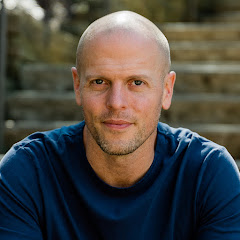 Tim Ferriss
Want to know something specific about what's covered?
We've already dissected every moment. Ask and we will deliver (with timestamps).
Key Moments
Naval Ravikant discusses startup advice, personal growth, happiness, investing, and life philosophies.
Key Insights
Define success not just by external achievements but by internal happiness and peace.
Integrity, intelligence, and energy are crucial traits for founders.
Embrace honesty as a core value to maintain presence and happiness.
Develop habits systematically and focus on sustainable, effortless practices.
Reading older, foundational books offers timeless wisdom often missing in modern content.
Treat life as a personal movie and strive to be the hero by living ethically and present.
ENTREPRENEURSHIP AND ANGEL LIST
Naval Ravikant identifies himself as an entrepreneur at heart, disliking routine and repetition. His primary 'day job' is as CEO and co-founder of AngelList, a platform aiming to bring venture capital and recruiting for startups online. AngelList facilitates fundraising, connects investors with startups, and serves as a marketplace for talent, aiming to empower founders and ultimately foster a future where most people work for themselves.
THE DUALITY OF INTENSITY AND CALM
Ravikant acknowledges his inherent intensity and competitiveness, stemming from a childhood marked by adversity and a strong desire to win. However, he emphasizes a parallel pursuit of inner peace and happiness, recognizing that the drive for external success can often be counterproductive to genuine contentment. Learning to control and balance this intensity is a continuous process of introspection and self-awareness.
FOUNDATIONAL VALUES: HONESTY AND SIMPLICITY
Honesty is presented as a core foundational value, influenced by physics, where truth is paramount, and by early life experiences in New York. Ravikant argues that dishonesty creates mental clutter, detracts from presence, and ultimately leads to unhappiness. He advocates for radical honesty, even in white lies, to maintain mental clarity and true presence in the moment.
THE FOUNDER'S TRIAD: INTELLIGENCE, ENERGY, AND INTEGRITY
When evaluating founders, Ravikant prioritizes intelligence, meaning deep understanding and insight into their chosen field. This must be coupled with boundless energy to persevere through the brutal challenges of startup life. Crucially, integrity is non-negotiable; a smart, energetic individual without integrity is seen as a dangerous crook. He stresses that integrity is demonstrated by ethical behavior when no one is watching or when it's financially disadvantageous.
THE POWER OF READING AND LEARNING
Ravikant is a voracious reader, attributing much of his learning to books. He champions reading older, foundational texts like Darwin's 'Origin of Species' for their timeless wisdom. To combat modern attention spans, he suggests treating books like throwaway blog posts, feeling no obligation to finish them, thereby enabling a more fluid and enjoyable absorption of knowledge.
MASTERING INTERNAL STATES: MEDITATION AND ACCEPTANCE
He advocates for working on one's internal state through practices like meditation, specifically 'choiceless awareness,' which involves observing thoughts without judgment. This practice helps create space between thoughts, leading to greater peace and appreciation for the present. Ravikant also emphasizes acceptance and the understanding that desire is a contract for unhappiness, advocating for embracing life's situations.
HABITS AND SUSTAINABLE CHANGE
Habits are seen as the building blocks of identity, and conscious effort must be placed on cultivating good ones while discarding bad ones. Ravikant prefers sustainable, effortless habits, often achieved by finding healthier taste substitutions or changing immediate environments, rather than relying solely on willpower. He highlights the transformation achieved through consistent daily routines, such as his mobility and breathing practice.
LESSONS FROM INVESTING: SUCCESSES AND FAILURES
While declining to dwell on numerous 'dumb luck' misses, Ravikant cites early investments in Twitter and Uber as significant successes. He cautions against conventional wisdom in investing, noting that great companies often look strange initially. He also differentiates startup investing from traditional value investing, where outliers can dramatically offset losses.
THE ESSENCE OF SUCCESS: CREATION AND INTERNAL PEACE
Beyond conventional definitions of success like financial wealth or technological innovation (e.g., Elon Musk, Steve Jobs), Ravikant posits that true winners are those who achieve internal peace and self-sufficiency, needing nothing from others. He references figures like Buddha and Jiddu Krishnamurti as exemplars of stepping out of the 'game' of external validation.
PERSONAL GROWTH AND EMOTIONAL INTELLIGENCE
Ravikant stresses that skills like happiness, nutrition, and self-awareness are cultivated over time, not learned through single epiphanies. He draws heavily from Stoic philosophy, particularly Marcus Aurelius' 'Meditations,' to cultivate emotional resilience and perspective, learning to accept challenges and manage one's internal state regardless of external circumstances.
BUILDING TRIBE AND OVERCOMING LONELINESS
The importance of community and a 'tribe' is highlighted as a counter to modern loneliness. Ravikant shares childhood experiences of collective living and emphasizes the need to actively build and engage with a supportive social network, suggesting practices like hosting or participating in community activities as antidotes to isolation.
THE ART OF STRATEGY AND INFLUENCE
Drawing from principles of psychology and Game Theory, Ravikant discusses how tools of influence like Cialdini's principles (consistency, liking, authority, social proof, scarcity, reciprocity) can be used ethically. He laments that such vital life skills are often neglected in formal education in favor of less practical knowledge.
ADVICE TO YOUNGER SELF AND THE NATURE OF DESIRE
Reflecting on past selves, Ravikant consistently advises to 'chill out,' reduce anxiety, be more oneself, protect one's time, and prioritize love. He defines desire as a self-imposed contract for unhappiness, advocating for careful selection of desires and recognizing them as potential sources of suffering. The core message remains about self-actualization and living authentically.
MORNING ROUTINES AND HEALTHY HABITS
An ideal morning routine involves waking naturally to sunlight, followed by a short, meditative workout combining movement and controlled breathing. He advocates for gentle wake-up methods over jarring alarms and finds that integrating meditation into physical activity enhances both physical and mental well-being. Avoiding stimulants like caffeine has led to a more consistent energy level.
Mentioned in This Episode
●Supplements
●Products
●Software & Apps
●Companies
●Organizations
●Books
●Concepts
●People Referenced
Common Questions
Naval believes that at heart, he is an entrepreneur who dislikes solving the same problem twice. He sees humans as meant to do something different every day, defining themselves loosely, unlike the specialization of the Industrial Revolution.
Topics
Mentioned in this video
Naval Ravikant was an early investor in this delivery service.
Acquired OpenDNS for $635 million in cash.
A company started by former AngelList engineers.
A company Naval invested in.
A computer company whose success challenged the belief that money was in mainframes, and where Steve Jobs dominated over Steve Wozniak.
A platform for online fundraising and recruiting for startups, co-founded by Naval Ravikant. It disrupts the Venture Capital space by connecting investors and opportunities.
A ridesharing company that Naval was an early investor in via AngelList, with returns up to 4,000x.
A company Naval was an early investor in.
A platform Naval helped in the early days but didn't take stock in when offered.
A tech company where Naval worked and was 'embarrassed into starting his first company' due to public pronouncements.
A company Naval invested in.
A company co-founded by Naval Ravikant that went public as part of Shopping.com.
Another company co-founded by Naval Ravikant.
A company acquired by Cisco for $635 million in cash, which Naval had invested in.
A company Tim Ferris led a deal for on AngelList, which saw its valuation increase by 40x.
A company whose engineers have joined Bolt.
An enterprise company that was a single founder company.
The company that Epinions went public as part of.
A social media platform where reporters build individual brands, and one of Naval's early investments, as well as a source of engineers for Bolt.
A company whose success overturned the belief that money was in Hardware not software, and where Bill Gates dominated over Paul Allen.
An enterprise company that was a single founder company.
A social media platform mentioned as a source of bite-sized information that can diminish attention spans and prevent real learning.
An investment Naval passed on early, despite the founder, Jeff Lawson, giving him every chance to invest.
A platform recommended by Tim Ferris for combating loneliness by hosting or connecting with others.
A grocery delivery service that Sequoia Capital invested in, demonstrating their ability to re-evaluate opportunities even after a previous failure in the same space.
An investment Naval passed on, despite his then-fiancée obsessively using it.
A company whose engineers have joined Bolt, and a deal Naval passed on despite its early success.
A company that was successfully founded by a married couple, despite conventional wisdom against it.
A company co-founded by Drew Houston.
A failed grocery delivery service from the late 90s in which Sequoia Capital had invested.
Company where Scott Adams worked and used a self-programming technique in front of a mirror to become a cartoonist.
Mentioned as an example of a successful person whom modern wisdom encourages people to emulate.
An investor who taught Naval the valuable lesson of telling founders to keep money rather than returning it after a failed investment, to foster reputation.
Founder of Bolt, who Naval recently invested in and was impressed by his professionalism and diligence.
Co-founder of Dropbox, noted for recruiting a co-founder quickly.
An investor who pioneered intellectual honesty by discussing biggest mistakes, and known for his two rules of investing.
A Roman Stoic philosopher whose writings were influential to Naval.
Founder of Twilio, who Naval passed on investing in.
Pinterest founder who offered Naval multiple chances to invest.
The pseudonymous creator of Bitcoin, considered successful by Naval for this incredible technological creation.
Author of 'The Rational Optimist' and 'The Origins of Virtue,' whose works Naval finds provocative and insightful regarding evolution and human behavior.
CEO and co-founder of AngelList, an entrepreneur, builder, and investor with over 100 company investments. Known for deep thinking and hyper-rationality.
Naval's brother, author of 'Love Yourself Like Your Life Depends On It,' who responded differently to childhood adversities.
A physicist Naval idolized, who emphasized never fooling oneself and explored being a polymath. Author of 'Surely You're Joking, Mr. Feynman!''
Considered super successful by Naval for his incredible work commercializing the web browser with Netscape.
A cartoonist mentioned by Tim Ferris, known for his profane comic strips and distinctive drawing style.
Author of 'Illusions,' a book that inspired Tim Ferris to treat life as a movie.
Mentioned as an example of a successful person whom modern wisdom encourages people to emulate, and someone who changed viewpoints on modern technology entrepreneurship.
Martial artist and philosopher who wrote great philosophy, and a believer in self-discovery over systematic teaching.
Author of 'Don't Shoot the Dog,' known for her work in behavioral modification with marine mammals and dogs.
Author of 'The Secret Life of Salvador Dalí,' known for his egotistical and surrealist approach.
Co-founder of 'One' (now After School Protocol), noted for brilliant and deep thinking about social products.
An Indian philosopher who is extremely influential to Naval, known for his uncompromising directness and focus on observing one's own mind.
Writer of the blog 'Melting Asphalt', known for digging deep into topics and offering orthogonal viewpoints without firm conclusions.
Author of 'Sapiens,' a history professor whose book Naval considers mind-blowing and frequently gifts.
A friend of Tim Ferris, known for his calm demeanor under pressure, used as an example for adopting desirable characteristics.
Roman Emperor and Stoic philosopher whose 'Meditations' was life-changing for Naval.
Referred to by Naval as a creator and commercializer, especially for his role in creating the iPhone, and someone who dominated over Steve Wozniak at Apple.
Warren Buffett's partner at Berkshire Hathaway, a brilliant older gentleman whose speeches are collected in 'Poor Charlie's Almanack' and known for advice like 'be worthy of a worthy mate'.
A rational Buddhist and neuroscientist, author of 'Lying,' whom Naval considers great for intelligent reasoning on training the mind.
Author of 'On the Origin of Species,' whose theory of evolution Naval uses as a binding principle for human action.
Creator of Dilbert, a self-made individual who leveraged business judgment and hypnotic techniques, and author of the influential blog post 'The Day You Became a Better Writer.' He also used consistency bias on himself to become a cartoonist.
Possibly mentioned in a prior conversation where Tim Ferris discussed detached self-observation.
Author of 'Snow Crash,' known for his foresight in predicting various technologies.
Author of 'Siddhartha', a book recommended for its lyrical quality and insights on spiritual journey.
A design platform Tim Ferris has used for various graphic design needs, from banner ads to book covers.
A company started by Corey and Michael Callahan, running a protocol after school, whose founders impress Naval.
A tool mentioned for setting punishments and rewards as incentives for behavioral change.
A tool mentioned for setting punishments and rewards, specifically for weight loss, as incentives for behavioral change.
An example of a successful company founded by a couple.
A physical practice recommended by Tim Ferris for social connection and enjoyment.
A web browser whose commercialization by Marc Andreessen was a significant success.
A blog by Kevin Simler out of New York, highly recommended by Naval for its deep exploration of complex topics without demanding conclusions.
A book written by Naval's brother, Kamal Ravikant.
One of Tim Ferris's favorite books, recommended for non-technical people to explore Feynman's questioning and polymathic nature.
A collection of excerpts from Jiddu Krishnamurti's speeches and books, considered by Naval to be his best work.
A book by Charles Duhigg recommended by Tim Ferris for understanding behavior change.
A brilliant and old science fiction novel by Neal Stephenson, recommended by Naval for predicting technologies like Bitcoin, the internet, and virtual reality.
A lyrical and beautiful book by Herman Hesse, recommended for spirituality and internal awareness, parallel to the making of the Buddha.
A book by Richard Bach, read by Tim Ferris, offering mental hacks for life by treating it as a movie.
A book by Tim Ferris for which he used 99designs for sketches and mockups, and also where he recommended Athletic Greens without compensation.
Charles Darwin's foundational work on evolution, recommended by Naval as essential reading to understand human action and the natural world.
A short book by Sam Harris that had a huge impact on Tim Ferris, exploring the impact of deceit and white lies.
A fantasy novel recommended by Tim Ferris for pure enjoyment and as a way to combat insomnia.
A classic novel recommended by Tim Ferris for its deep philosophy and humor.
A blog post by Scott Adams that Naval uses as a basic template for effective writing and thinking.
A lecture by Sam Harris recommended by Tim Ferris as a teaser for meditation concepts.
The personal diary of Roman Emperor Marcus Aurelius, which Naval found life-changing, and a beautiful, easy read for internal awareness and changing one's worldview on success.
A book summarizing some of Bruce Lee's philosophy.
A classic book on the psychology of persuasion, recommended by Naval for understanding consistency, liking, authority, social proof, scarcity, and reciprocity.
A fantasy novel (part of 'The Gentleman Bastards' series) recommended by Tim Ferris for its humor and dialogue.
An autobiography by Salvador Dalí, recommended by Tim Ferris for its fun and egotistical author.
A history of the human species by Yuval Noah Harari, recommended by Naval for its orthogonal view on humans, and for being an easy read that documents human species' self-organization through storytelling.
A provocative and eye-opening book by Matt Ridley, gifted often by Naval.
A graphic novel series recommended by Naval as a work of art.
A book by Karen Pryor recommended by Tim Ferris for understanding behavioral modification and incentives for change.
A collection of speeches by Charlie Munger, considered by Naval to be the best business book he's ever read.
A top investment firm known for re-evaluating opportunities even after failed investments, such as with Instacart after Webvan.
A major newspaper where The 4-Hour Body became a number one bestseller, and whose reporters build individual brands on Twitter.
A magazine where Tim Ferris recalls reading a theory about Homo sapiens domesticating wolves.
Naval's alma mater, where he studied computer science and economics.
A magnet Math and Science high school in New York that Naval attended, described as brutal and eye-opening.
A book mentioned by Tim Ferris as a comparison for 'Melting Asphalt's' style, though Naval prefers Simler's approach due to its lack of forced conclusions and higher quality than the later works of Freakonomics.
A graphic novel recommended by Naval as a work of art.
A financial newspaper where The 4-Hour Body became a number one bestseller.
A video (likely Nova episode) that gives a taste of Richard Feynman's approach to questioning and exploring. Recommended as a gateway to his books.
A cartoon liked by Naval for its humor and intelligence.
A comic strip created by Scott Adams.
A graphic novel recommended by Naval as a work of art.
A $50 grill bought by Naval, considered his best investment for health due to enabling fresh, simple cooking similar to Japanese Tepanyaki.
Ryan Breslow's company in the financial payment space, known for assembling a crack team of engineers.
A product created by Steve Jobs that Naval considers to have changed lives for all of humanity.
More from Tim Ferriss
View all 701 summaries 112 min
The Random Show! Mortality, AI, Supplements, Rock Climbing, & More
 88 min
The Legendary Hollywood Power Broker — Guy Oseary on 36 Years of Managing Madonna, 26 IPOs, and More
 77 min
The Many Benefits of Coca — The “Divine Leaf” with 8,000+ Years of Use
 100 min
Inside The AI Race: DeepMind, OpenAI, Anthropic, China, and The Race to Superintelligence
Ask anything from this episode.
Save it, chat with it, and connect it to Claude or ChatGPT. Get cited answers from the actual content — and build your own knowledge base of every podcast and video you care about.
Get Started Free