Key Moments
Daredevil Michelle Khare — How to Become a YouTube Superstar
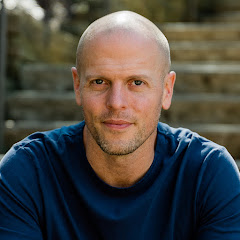 Tim Ferriss
Key Moments
Michelle Khare's YouTube channel, 'Challenge Accepted,' achieves Emmy ballot recognition and over a billion views by daring to pursue intensely difficult, unique stunts for months, a stark contrast to high-volume creator burnout, demonstrating that extreme quality and a defensible 'category of one' can attract premium support and outlast algorithms.
Key Insights
Michelle Khare's 'Challenge Accepted' has amassed over 6 million followers and more than 1 billion views by focusing on highly challenging stunts and professions, such as recreating Tom Cruise's plane stunt and attempting Houdini's water torture cell escape.
Khare's team operates on an editorial calendar planned 12-15 months in advance, publishing only 8-10 episodes per year, a deliberate 'quality over quantity' strategy against the common 'culture of cortisol drive' for frequent uploads, enabling premium advertiser scarcity.
A pivotal decision for Khare's channel growth was narrowing focus from diverse content to 'Challenge Accepted' after observing passion projects consistently outperforming other videos, creating a 'category of one' that is difficult for others to replicate (e.g., undertaking seven marathons on seven continents in one week).
Khare's early success involved leveraging her Google internship savings to 'practice poverty' and build a two-month video backlog before quitting her job, demonstrating that strategic risk mitigation (defining, preventing, and repairing fears) is crucial for ambitious leaps.
The 'Formula 1 team' approach, consisting of a coach (e.g., Taekwondo Grandmaster), a mentor (e.g., peer creators a few steps ahead), and a cheerleader (e.g., supportive family/friends), was key to her early, capital-constrained growth, in addition to effective cold emailing to institutions like the FBI.
Khare avoids creator burnout, a common issue for colleagues, by rigorously saying 'no' to opportunities that don't align with her core vision, rejecting 'scope creep' from commercial temptations or expanding into tangential ventures like licensing a kids' channel, instead focusing on the 'tip of the spear' of her main show.
Michelle Khare's 'Challenge Accepted' defies typical creator metrics to achieve billions of views and Emmy recognition
Michelle Khare's YouTube channel, 'Challenge Accepted,' has become a standout success, accumulating over 6 million followers and exceeding 1 billion views. The show distinguishes itself by having Khare attempt some of the world's most daunting stunts and professions, from mastering Harry Houdini's water torture cell to training with the Secret Service or recreating Tom Cruise's perilous plane stunt from 'Mission Impossible.' This unique approach has garnered multiple streaming awards, including Show of the Year, and has been featured in prestigious publications like The New York Times and Forbes. In 2025, 'Challenge Accepted' achieved a historic milestone by successfully petitioning to join the Primetime Emmy ballot, recognized as a Time 100 honoree for its impact as a creator and storyteller. Khare's content stands apart by embracing vulnerability and showing the entire process—including breakdowns and failures—as a core 'feature,' rather than a 'bug.' This emphasis on the journey, not just the highlights, resonates deeply with audiences and supports her mission to prove that 'with enough dedication and failure, anything is possible.' This strategic choice positions her channel as a 'category of one' in the saturated creator landscape, allowing her to command premium ad rates and maintain editorial control, a stark contrast to many creators driven by constant, high-volume uploads.
Adopting a 'quality over quantity' model in the creator economy
In a digital landscape often characterized by a 'culture of cortisol drive' demanding continuous, high-frequency uploads, Khare deliberately operates on an antithetical model. Her editorial calendar for 'Challenge Accepted' is planned 12-15 months in advance, with only 8-10 long-form episodes released per year. This less frequent publishing schedule allows for cinematic quality, in-depth storytelling, and extensive preparation for each challenge. This approach, while seemingly 'fighting the drive of the algorithm,' creates a scarcity mindset among advertisers, enabling Khare to sell inventory at a premium. It also insulates her from the burnout common among creators who feel compelled to constantly produce content, ensuring the longevity and integrity of her brand. This focus on making each episode a 'one of one' experience has proven more valuable than mere consistency or mass viewership, attracting a dedicated audience and high-value partnerships while allowing for the rigorous, physically demanding nature of her work.
BuzzFeed as a 'startup MBA' for comprehensive video production skills
Khare credits her early tenure at BuzzFeed as a pivotal 'startup MBA' that provided the foundational skills necessary for her later YouTube success. Unlike traditional film sets with highly specialized roles and strict union rules, her producer role at BuzzFeed required her to master every aspect of video production: ideation, filming, editing, and uploading. This comprehensive experience, though not initially aligned with her film-lover father’s 'homegrown little film school' in Shreveport, was invaluable. It cultivated empathy for each department, enabling her to lead a diverse team more effectively by understanding their challenges, from sound engineering to post-production. She advocates for aspiring entrepreneurs, especially recent graduates, to gain such breadth of experience on 'someone else's dime' before launching their own ventures, noting that her immediate post-Google-internship leap to YouTube would have likely resulted in failure without the hands-on learning from BuzzFeed.
Fear setting as a narrative and personal growth tool
Fear setting, a systematic approach inspired by Stoic philosophy and formalized by Tim Ferriss, plays a dual role in Khare's life: a personal grounding mechanism and a powerful narrative framework for 'Challenge Accepted.' Khare revealed that the show originally stemmed from her literally writing down her fears on a whiteboard and then devising challenges that would force her to confront them. This vulnerability is intentionally woven into her storytelling, often starting with an 'all is lost' moment, which creates a stronger emotional connection and makes audiences care more about her struggles and triumphs. She shared a personal fear-setting email from 2016, detailing her anxieties about leaving her job, financial ruin, and defining her own success. The exercise helped her demystify her fears and take immediate, tangible steps, such as moving into a smaller apartment and meticulously preparing a two-month video backlog, rather than waiting for a 'false sense of security.' This proactive preparation, combined with a clear understanding of potential pitfalls and repair strategies, allowed her to mitigate risks and ultimately make the leap into entrepreneurship from a place of emotional stability.
Assembling a 'Formula 1 team' without initial capital
In the early, capital-constrained days of her YouTube channel, Khare strategically built a 'Formula 1 team' of three essential types of people: a coach, a mentor, and a cheerleader. Her 'coach' was initially individuals she cold-emailed—experts light-years ahead in their fields, providing high-level advice in small doses. Mentors were peer creators who were just a few steps ahead, offering practical guidance on thumbnail design or channel growth, often met at industry meetups. Her 'cheerleader' was her sister, Maline, offering unconditional emotional support regardless of success or failure. This framework enabled her to access critical guidance and support even before her channel generated significant revenue. For specific challenges, this model translates to finding a respected master (coach), learning from those who have recently undergone similar experiences (mentors), and having a completely detached supporter (cheerleader). This structured approach to leveraging relationships helped bridge the gap between Khare's athletic training mindset and the self-directed demands of business ownership.
The art of the cold email: opening doors to the FBI and beyond
Khare attributes much of her early success, particularly collaborating with prestigious institutions like the FBI and Secret Service, to the power of a well-crafted cold email. Her method involves a concise subject line that immediately conveys value (e.g., 'Collaboration with Michelle Khare and [follower count]'). The email body consists of three short paragraphs, each two sentences or less. The first paragraph establishes her legitimacy and states her ask or offer (e.g., 'I'm a content creator inquiring about a collaboration to film for my channels'). The second provides details and demonstrates prior research (e.g., specific activities at the FBI Academy 'best for camera'), flattering the recipient and putting them at ease. The third is a clear call to action, explicitly including her phone number and inviting a text or call to remove response barriers ('Feel free to text me anytime'). This anti-Tim Ferriss (in terms of specific placement, not principle) tactic of prominent contact information signals trust and ease of communication, significantly increasing the likelihood of a response. Khare’s successful outreach to the 'Hollywood guy' at the FBI, who had worked on the 'McMillions' documentary, exemplifies how a compelling, low-entitlement cold email can open unexpected doors.
Rigorous 'Areas of Responsibility' and thoughtful feedback drive team excellence
To manage her growing enterprise, Khare employs an 'Areas of Responsibility Chart,' a comprehensive spreadsheet detailing every company action, from major strategic decisions to day-to-day tasks. This granular mapping clarifies roles, even within her tight internal team of seven full-time staff (herself, a Chief Creative Officer, Head of Production, three editors, and an assistant). This core team, composed of department heads, expands into a 'slinky operation,' ballooning to 50+ people for large projects like the 'Mission Impossible' stunt. This structure ensures clear accountability and efficient scaling. Khare also applies frameworks like Kim Scott's 'Radical Candor' for feedback, crucial for someone who previously struggled with 'ruinous empathy' (being too nice to deliver critical feedback effectively). She emphasizes direct, honest communication while also explaining the 'why' behind feedback, addressing both the tactical and emotional wavelengths of communication to foster a culture where team members feel heard, artistically expressed, and motivated, which she believes contributes to high employee retention and an exceptional work environment.
Strategic 'no' protects joy and prevents burnout
Khare consciously practices saying 'no' to opportunities that do not align with her core vision, a critical strategy for avoiding burnout and 'scope creep'—the gradual expansion of a project or business beyond its original goals. She recounts flying 73 times in a single year, a stark reminder from Kim Scott about the need to prioritize personal well-being. This discipline means declining lucrative brand deals that don't genuinely resonate and resisting pitches to license 'Challenge Accepted' for spin-offs, such as a kids' channel, which would divert her focus and energy. By remaining 'brutal' in protecting her brand and personal capacity, Khare has maintained slow, steady growth and, notably, has never experienced the debilitating creator burnout common among her peers. This sustained focus on the 'tip of the spear'—making 'Challenge Accepted' the best show it can be—preserves the trust she has built with her audience and ensures her continued passion for the work. This disciplined 'no' is not about fragility but about safeguarding the integrity and longevity of her career, ultimately ensuring she can continue to inspire by example.
Mentioned in This Episode
●Products
●Software & Apps
●Companies
●Organizations
●Books
●Concepts
●People Referenced
Michelle Khare's Guide to Creative Success on YouTube
Practical takeaways from this episode
Do This
Avoid This
Common Questions
Michelle Khare's 'Challenge Accepted' is a YouTube show where she attempts highly difficult stunts and professions, ranging from recreation of Tom Cruise's plane stunt to training with the Secret Service. It highlights the full journey, including failures and struggles, to prove that anything is possible with dedication.
Topics
Mentioned in this video
Actor who starred in 'Snitch,' a movie Michelle Khare interned on.
A mutual friend of Tim Ferriss and Michelle Khare, who recommended Michelle for the show, and later is mentioned as one of Michelle's 'Mount Rushmore' figures.
The legendary escape artist whose deadliest trick, the water torture cell, Michelle Khare attempted to recreate.
The actor whose Mission Impossible stunt (hanging off a military aircraft) Michelle Khare recreated, and whom she views as an inspiring figure.
A well-known music producer mentioned as an example of someone whose reputation precedes him, making cold emailing less formal.
An 83-year-old man from Oklahoma who completed the seven marathons on seven continents challenge four times, known for his joyful demeanor.
A close friend of Tim Ferriss and founding editor of Wired magazine, who practices poverty by camping in his living room annually, drawing parallels to Stoicism.
Professor from whom Tim Ferriss took a formative writing seminar in college, emphasizing structure and rigorous critique.
Actor/writer from The Office who knows Mindy Kaling, mentioned by Tim Ferriss for his talent.
A smart, cool, and groundbreaking figure in the YouTube world who Michelle Khare cold-emailed for life advice and mentorship, receiving a multi-page response.
Mentioned as Nick's previous employer at Broadway Video, indicating Nick's background in high-budget commercial work.
Acknowledged by Tim Ferriss as two of the best interviewers in the creator economy space, and a source for Michelle's insights on production.
A legendary fantasy writer who intentionally wrote five books before attempting to publish any, highlighting the importance of practice.
An actress, writer, and producer whom Michelle Khare highly admires and wishes to meet, seeing her as a parallel path of an Indian woman in entertainment who shifted culture.
The tennis player featured in John McPhee's book 'Levels of the Game'.
Author of 'The Six Thinking Hats' and 'Lateral Thinking,' whose work on structured thinking helped Michelle Khare and Tim Ferriss.
A Grandmaster in martial arts who took Michelle Khare under his wing and trained her to achieve a black belt in Taekwondo in 90 days.
Businessman mentioned as an inspiring figure with longevity in his career, who keeps 'going out there'.
Host of Survivor, described as the 'Einstein of that operation' by Tim Ferriss, and studied by Michelle Khare for his masterful interviewing and researching skills.
Author of 'Radical Candor', considered a 'Mount Rushmore' figure by Michelle Khare, whose frameworks on feedback were instrumental in Michelle's managerial development.
The subject of 'Free Solo,' endlessly inspiring to Michelle Khare. Tim Ferriss interviewed him before his famous El Capitan ascent.
Co-director of 'Free Solo' and wife of Jimmy Chin, described as 'in a lot of ways the filmmaker'.
Mentioned by Tim Ferriss as an example of a busy, successful friend who takes excellent care of himself, serving as a 'counter example' to common complaints.
Author of a quote related to fear that Tim Ferriss has etched on driftwood in his house.
Co-director of 'Free Solo,' praised by Michelle Khare for his outstanding work. Married to Chai Vasarhelyi.
Michelle Khare's YouTube show where she attempts the world's toughest stunts and professions. It has over 6 million followers and a billion views, and in 2025 made history by successfully petitioning to join the Primetime Emmy ballot.
The film franchise from which Michelle Khare recreated a stunt by hanging off a military aircraft.
A publication that has featured Michelle Khare's work.
A movie starring The Rock that Michelle Khare interned on in 2013, her first job in the film industry.
A follow-up film by Jimmy Chin and Chai Vasarhelyi, mentioned as 'incredible'.
A show debuted by Tim Ferriss in 2013 where he conducted weekly experiments, which faced internal problems at Turner Broadcasting's Upwave and distribution issues.
Michelle Khare's favorite documentary, about Alex Honnold's free solo ascent of El Capitan, praised for its direction and sensitivity.
Magazine of which Kevin Kelly was the founding editor.
A riveting HBO documentary series about fraud in the McDonald's Monopoly game, which the FBI's "Hollywood guy" worked on as a representative.
Magazine where AJ Jacobs published a piece about his experimentation with radical honesty.
A reality competition show Michelle Khare makes her class watch to study hosting, storytelling, and editing techniques under Jeff Probst.
The fictional nanny whose iconic silhouette and attire are based on the Norland Nannies.
A kids survival show on HBO that Michelle Khare hosted, providing her with experience in deep research for hosting.
A show where Mindy Kaling's presence was instrumental to Michelle Khare, who saw a path for herself as an Indian woman in entertainment.
An agency Michelle Khare trained with for a week as part of her 'Challenge Accepted' show.
A publication that has featured Michelle Khare's work.
A publication that has featured Michelle Khare's work.
An institution Michelle Khare cold-emailed to collaborate with, becoming one of the first YouTube channels to do so.
A real-life 'Royal Nanny School' in England that trains nannies for billionaires and royal families, known for defensive driving and unique attire, which Michelle Khare wants to collaborate with.
Their breath-holding abilities are compared to Michelle Khare's during the Houdini water torture cell challenge.
Where Tim Ferriss gave guest lectures on high-tech entrepreneurship, which inspired 'The 4-Hour Workweek'.
Michelle Khare's alma mater, where she took a design thinking class.
Michelle Khare was named a Time 100 honoree for her impact as a creator and storyteller.
A list of movies that Michelle Khare and her dad used at home for their homegrown film school.
A martial art Michelle Khare attempted to get a black belt in 90 days as part of her show, an experience that greatly changed her.
A chess ranking system, which Michelle Khare worked to achieve her goal in chess.
Ancient philosophy from which the practice of fear setting is derived, as systematized by Tim Ferriss.
Japanese horseback archery, which Tim Ferriss learned for a different TV show pilot.
An engineering class Michelle Khare took at Dartmouth that taught her to approach problems with a 'how could it be possible' mindset.
The first physical challenge Tim Ferriss attempted for his 'Tim Ferriss Experiment' show, which led to multiple long-term injuries.
A storytelling framework Michelle Khare recommends studying, noting its importance in conveying vulnerability and structuring narratives for impact.
A term for the group of former PayPal employees who went on to found and invest in other successful technology companies, used as a parallel to the talent from The Office.
Michelle Khare's hometown, where she got her first taste of the film industry.
Country from which Michelle Khare's father immigrated, learning English by watching films.
A city that attracted films due to tax incentives, alongside Shreveport.
The granite monolith climbed free solo by Alex Honnold, featured in 'Free Solo', described as infinitely harder than the Taipei climb.
Mentioned hypothetically by Tim Ferriss in relation to falconry and Michelle's experiences.
The location of marathon number seven, the finale of Michelle Khare's seven marathons challenge.
Home state of Dan Little, an inspiring marathon runner.
A place where Michelle Khare met other creators and mentors in the early days of her channel.
One of the continents where Michelle Khare ran a marathon, described as a brutal experience with frostbite risk, as part of her seven marathons challenge.
The location of marathon number six in Michelle Khare's seven marathons challenge, described as a 'sneaky sleeper' due to extreme heat and humidity.
The location of a live Netflix climbing event mentioned in the conversation.
Film series mentioned as a type of movie that inspired knock-offs filmed in Shreveport.
Tim Ferriss's book about accelerated learning, which was a 'suicide mission of a deadline' and faced distribution challenges.
Tim Ferriss's book that changed Michelle Khare's life, inspiring her fear setting exercise and entrepreneurial journey.
A book by Adam Grant, mentioned by Michelle Khare as one of her recommended reads.
A book Michelle Khare used to learn about Silicon Valley management practices, inspiring her 'Areas of Responsibility Chart'.
Another book by Edward de Bono mentioned by Tim Ferriss as being helpful, though he wonders how it would age.
A screenwriting book recommended by Michelle Khare for understanding the fundamental structure of stories and narrative arcs.
A book by John McPhee about a tennis match involving Arthur Ashe, recommended for its tremendous writing.
A book by Kim Scott, highly recommended by Michelle Khare for its frameworks on giving feedback, especially for new managers.
A book by Edward de Bono that teaches a method of problem-solving and idea assessment by approaching issues from six different 'thinking types'.
Mentioned as one of the big box retailers that boycotted 'The 4-Hour Chef' due to Amazon Publishing's entry into the market.
The parent company of Upwave, a startup where 'The Tim Ferriss Experiment' was initially produced.
The platform where Michelle Khare's 'Challenge Accepted' show is most active. Later discussed as the medium where she strives to shift cultural expectations for content creators.
The "naent" publishing arm of Amazon that acquired The 4-Hour Chef, causing fear among traditional publishing houses and retailers.
Platform where 'The Tim Ferriss Experiment' was self-published after rights were reclaimed from Upwave.
Mentioned as an 'omnipowerful, omnipotent entity' that controls distribution, leading to boycotts of 'The 4-Hour Chef'.
A startup within Turner Broadcasting that produced 'The Tim Ferriss Experiment' but ultimately shut down.
The network that aired the documentary series 'McMillions'.
Michelle Khare completed an internship at Google and later used her savings from it to support her entrepreneurial endeavors. Also, Tim Ferriss mentions friends who work at Google.
Platform mentioned as a tool for career readiness and job applications during Michelle's fear-setting exercise.
A traditional entertainment company where Nick, Michelle's head of production, previously worked under Lorne Michaels.
Streaming platform that recently aired a live climbing event, mentioned in contrast to 'Free Solo'.
An 'amazing gym' mentioned in relation to parkour.
Fast food chain whose Super Bowl commercials Nick, Michelle's head of production, previously worked on.
A platform mentioned in relation to the popularity of chess among Tim Ferriss's audience.
A service mentioned by Tim Ferriss that can be used to spin up a burner phone number for cold emailing.
The platform where 'The Tim Ferris Experiment' was launched and became the number one non-fiction show.
The website Michelle Khare visited to find contact information for the FBI to propose a collaboration.
Mentioned as a platform from which Google Voice numbers can be easily created.
Specialized contact lenses fabricated for Michelle Khare to wear during the C-130 stunt, to protect her eyes in high winds without goggles.
The military aircraft Michelle Khare strapped herself to to recreate Tom Cruise's stunt, requiring her to call foreign militaries.
More from Tim Ferriss
View all 690 summaries 81 min
Q&A with Tim — The Upcoming AI Tsunami and Building Offline Advantage
 91 min
The Random Show, Couch Edition! — Supplements, Breathing and Balance Training, and Much More!
 76 min
How to Quiet the Ruminative Mind and Avoid The Traps of Self-Help — Tim Ferriss
 86 min
NYT Bestselling Author on Writing 200+ Children's Books — Tish Rabe
Found this useful? Build your knowledge library
Get AI-powered summaries of any YouTube video, podcast, or article in seconds. Save them to your personal pods and access them anytime.
Get Started Free