Key Moments
Rick Rubin Interview (Full Episode) | The Tim Ferriss Show (Podcast)
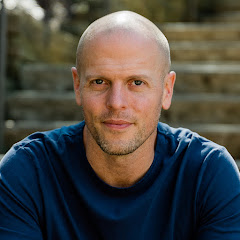 Tim Ferriss
Want to know something specific about what's covered?
We've already dissected every moment. Ask and we will deliver (with timestamps).
Key Moments
Rick Rubin discusses his massive weight loss, music production philosophy, and life lessons learned from mentors.
Key Insights
Rick Rubin lost over 130 pounds by first optimizing his circadian rhythm and metabolism with Phil Maffetone, then implementing a high-protein, low-calorie diet prescribed by Dr. Heber.
Rubin's approach to music production focuses on helping artists discover their authentic voice and best performance, rather than manufacturing a product.
He emphasizes that great art often divides audiences and that true inspiration comes from immersing oneself in timeless art, not contemporary trends.
Rubin advocates for competing with oneself ('being better than you were yesterday') over external competition to foster genuine artistic growth.
Meditation, immersing in nature, and engaging with diverse forms of art are crucial for spiritual and creative development.
Physical and mental resilience can be cultivated through practices like saunas, ice baths, and understanding one's limitations, as exemplified by Laird Hamilton and others.
TRANSFORMATIVE WEIGHT LOSS
Rick Rubin details his remarkable 135-pound weight loss journey. Initially a strict vegan, he reached 318 pounds before seeking help. His transformation began with Dr. Phil Maffetone, who helped reset his metabolism and circadian rhythm by encouraging sunlight exposure upon waking, regular low-intensity aerobic exercise, and incorporating animal protein, like eggs and fish, into his diet, viewed initially as medicine. This foundational work prepared him for a subsequent diet.
DIETARY REVOLUTION AND METABOLIC RESET
After two years of foundational lifestyle changes with Dr. Maffetone, which significantly improved his health and energy despite minimal weight loss, Rubin consulted nutritionist Dr. Heber. Under Dr. Heber's guidance, Rubin adopted a high-protein, low-calorie diet, consuming seven protein shakes daily. This dietary shift, combined with the previously established metabolic improvements, led to a rapid 130-135 pound weight loss over 14 months, fundamentally altering his physical state and well-being.
THE PHILOSOPHY OF MUSIC PRODUCTION
Rubin describes his role not as a manufacturer but as a facilitator of authentic artistic expression. He prioritizes helping artists discover their true selves and deliver their best performances, steering them away from commercial pressures that can dilute their unique voices. He believes that art's greatest power lies in its ability to be intensely moving and singular, sometimes even divisive, rather than universally agreeable, emphasizing a connection to a deeper source of inspiration.
INSIDE THE ARTISTIC PROCESS
Challenging common inhibitions, Rubin suggests that ego, self-doubt, and the fear of judgment are significant barriers to artistic excellence. He advocates for a focus on self-improvement, aiming to be better than one was yesterday, rather than engaging in external competition. Rubin stresses that inspiration often stems from emotion and heart work, with the intellect serving to organize these raw impulses. He recommends deep immersion in diverse forms of great art as a means to cultivate one's own creative voice.
THE POWER OF IMMERSION AND NATURE
Rubin finds inspiration not just in art but in the natural world, citing sunsets, bird formations, ocean waves, and starlit skies as profound influences. He sees nature's balance as a benchmark for creating impactful art. He also highlights the importance of listening intently to artists, understanding their unspoken needs, and reflecting their own truths back to them to facilitate breakthroughs. This mirrors how he encourages artists to find their unique perspectives and artistic paths.
CULTIVATING RESILIENCE AND MENTAL CLARITY
A consistent meditation practice since age 14 has provided Rubin with a sense of calm, though he admits to internal turmoil. He finds solace and renewed perspective through activities like exercise, saunas, and ice baths, particularly the latter, which he describes as potent mood elevators. Rubin also shares his experience with underwater weight training alongside Laird Hamilton and emphasizes the power of breaking down seemingly impossible challenges into manageable steps, a lesson learned from Hamilton's approach to training.
DEFINITIONS OF SUCCESS AND LIFE LESSONS
For Rubin, true success is synonymous with happiness, not solely financial or professional achievement. He admires individuals like 80-year-old Don Wildman, who embodies vitality, curiosity, and consistent self-improvement. Laird Hamilton also represents success through his athlete achievements, positive outlook, and innovative spirit. These figures exemplify a life dedicated to continuous learning, pushing boundaries, and enjoying the journey, rather than merely reaching a destination.
GUIDANCE FOR ARTISTS AND SELF-REFLECTION
Rubin often assigns 'homework' to artists facing creative blocks, starting with small, achievable tasks like writing a single word or completing a small segment of a song. This incremental approach, inspired by his own experiences and lessons from Laird Hamilton, helps break down overwhelming challenges. He stresses that anything is possible with the right information and a willingness to learn and persevere, fostering a belief in one's potential for growth and achievement.
ADVICE TO HIS YOUNGER SELF AND SELF-COMPASSION
Rubin advises his 20-year-old self to have more fun and enjoy the process, recognizing that he was once overly driven and felt a need to prove himself, potentially missing significant life experiences. To his 30-year-old self, he would urge greater self-kindness, acknowledging a tendency to be hard on himself due to high expectations. This theme of self-compassion is something he continues to work on, understanding that undue self-criticism is not beneficial to himself or his creative output.
PERFECTIONISM AND ACCEPTANCE
Addressing the perpetual struggle between perfectionism and self-compassion, Rubin suggests that the drive for perfection, while enabling past success, might be a myth. He posits that once an artist has achieved a certain level of mastery and an audience, they can afford to be kinder to themselves without losing their creative edge. Killing oneself through relentless pursuit of unattainable perfection is ultimately counterproductive for both the artist and their audience.
THE WISDOM OF DIVERSE INFLUENCES
Rubin frequently gifts 'The Tao Te Ching' by Stephen Mitchell and 'Wherever You Go, There You Are' by Jon Kabat-Zinn, finding them perennial sources of wisdom that offer new insights upon each reading. He also mentions '20,000 Days on Earth,' a documentary about Nick Cave, as a particularly impactful recent watch. These selections reflect his deep appreciation for varied artistic and philosophical expressions that guide personal growth and creative understanding.
COLLABORATION AND ARTISTIC CHEMISTRY
Rubin's collaborations, such as with Jay-Z on '99 Problems,' showcase his ability to capture potent performances. He describes the process with Jay-Z as a week of studio experimentation culminating in a track that inspired immediate lyrical improvisation. This dynamic reflects his broader approach to working with artists: fostering an environment where creative energy can flow spontaneously, leading to authentic and impactful works that resonate deeply.
Mentioned in This Episode
●Supplements
●Products
●Software & Apps
●Companies
●Organizations
●Books
●Concepts
●People Referenced
Common Questions
Rick Rubin lost 135-140 lbs by first optimizing his metabolism and circadian rhythm with Dr. Phil Maffetone, focusing on sunlight exposure and low-intensity exercise. Later, a nutritionist, Dr. Heber, put him on a high-protein, low-calorie diet, leading to significant weight loss over 14 months. He emphasizes that the initial lifestyle changes created the foundation for the diet to be effective.
Topics
Mentioned in this video
Mentioned as having named Rick Rubin the most important music producer of the last 20 years.
Co-founded by Rick Rubin and Russell Simmons, instrumental in popularizing hip-hop.
Rick Rubin formerly served as co-president of this record label.
A company offering supplements and fitness gear, used by Tim Ferriss for years.
An influential hip-hop group that Rick Rubin worked with.
Author of a book about running 1000 miles in 11 days, who inspired Rick Rubin's health journey.
Author of 'Wherever You Go, There You Are', a book on meditation.
Known as 'The Iceman', he is a Dutch extreme athlete famous for his breathing techniques, cold therapy, and ability to withstand extreme temperatures.
An artist Rick Rubin worked with early in his career, producing his first album.
An influential hip-hop group that Rick Rubin worked with.
A legendary singer-songwriter with whom Rick Rubin worked extensively.
A rock band Rick Rubin has worked with.
A legendary singer-songwriter Rick Rubin has worked with.
Founding drummer of The Police, who trained Tim Ferriss for a drumming episode.
A doctor and songwriter who guided Rick Rubin through significant health and lifestyle changes.
Co-founder of Def Jam Records with Rick Rubin.
Lead singer of The Rolling Stones, a musician Rick Rubin has worked with.
A legendary singer Mo Austin worked with.
A renowned big-wave surfer and innovator, known for his extreme physical training and positive outlook.
A country music group that Rick Rubin has worked with.
A nu-metal band Rick Rubin has worked with.
An alternative metal band Rick Rubin has worked with.
Translator of the Tao Te Ching, referenced for his version of the text.
An Australian musician whose documentary '20,000 Days on Earth' was highly recommended.
Author and friend of Tim Ferriss, mentioned in relation to his upcoming book and his journey of self-examination.
An influential hip-hop group that Rick Rubin worked with.
A band Rick Rubin has worked with.
A pioneering heavy metal band Rick Rubin produced their last album.
A rock band Rick Rubin has worked with.
Pop artist Rick Rubin has worked with.
Author who advised Neil Gaiman to 'enjoy it' during a book signing event.
A mentor and former head of Warner Brothers Records who recommended a nutritionist to Rick Rubin.
A friend of Tim Ferriss who introduced him to meditation.
Author whose experience with Stephen King's advice to 'enjoy it' resonated with Tim Ferriss's reflection on his own career.
A professional hockey player and friend who introduced Rick Rubin to daily sauna use.
A rock band Rick Rubin worked with extensively on 'La Futura'.
A rapper Rick Rubin has worked with.
Laird Hamilton's nephew who suggested using an ice tub, taking hot/cold therapy to a new level.
A music magazine whose 'Top 100 Albums of All Time' list is recommended as a starting point for exploring great music.
The podcast featuring the interview with Rick Rubin.
A documentary about musician Nick Cave, described as spectacular and unusual.
A film referenced for its depiction of a unique teaching method.
A popular song by Jay-Z, for which Rick Rubin produced the track and appeared in the music video.
Tim Ferriss's TV show, highlighted for its drumming episode featuring Stuart Copeland.
The band co-founded by drummer Stuart Copeland.
University where Rick Rubin studied philosophy and film and television.
A magazine whose 'Top 100 Albums' list is recommended as a starting point for exploring great music.
University where Tim Ferriss took a class on the Tao Te Ching.
A book on meditation by Jon Kabat-Zinn, recommended for both beginners and experienced meditators.
Tim Ferriss's book that reached #1 on the New York Times and Wall Street Journal bestseller lists, featuring design work from Brazilian designers.
A classic Chinese text that Rick Rubin often gifts, praised for its profound and ever-relevant insights.
A platform for graphic design services, used by Tim Ferriss for various projects, including book covers.
A therapy Rick Rubin has been experimenting with, involving breathing pure oxygen in a pressurized chamber.
An app used by Rick Rubin to track food intake and calories, helping him develop better habits.
A breathing technique Rick Rubin has recently started practicing, associated with Wim Hof.
More from Tim Ferriss
View all 703 summaries 70 min
Q&A with Tim — The Art of Male Friendship, Reinvention in The Age of AI, & More
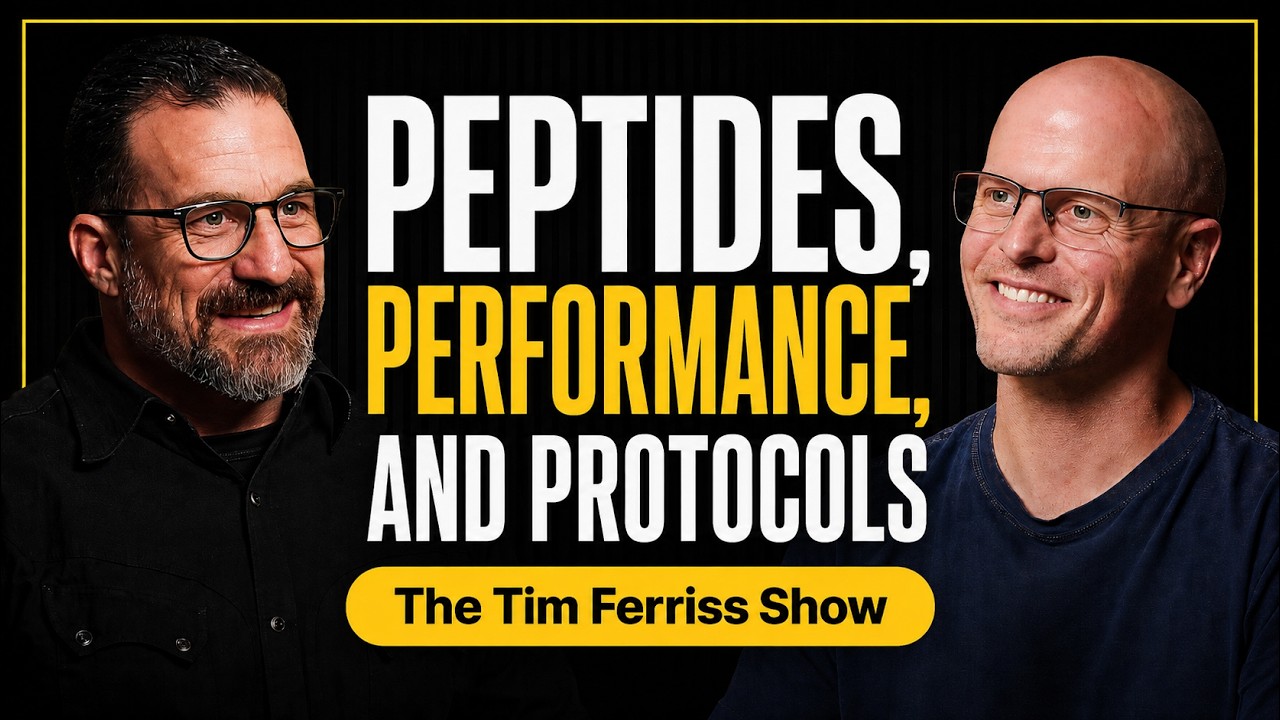 125 min
Dr. Andrew Huberman — Peptides, Performance, and Protocols
 112 min
The Random Show! Mortality, AI, Supplements, Rock Climbing, & More
 88 min
The Legendary Hollywood Power Broker — Guy Oseary on 36 Years of Managing Madonna, 26 IPOs, and More
Ask anything from this episode.
Save it, chat with it, and connect it to Claude or ChatGPT. Get cited answers from the actual content — and build your own knowledge base of every podcast and video you care about.
Get Started Free