Key Moments
Rick Doblin — Psychedelic Breakthroughs, $10M Bets, PTSD Promise, and More | The Tim Ferriss Show
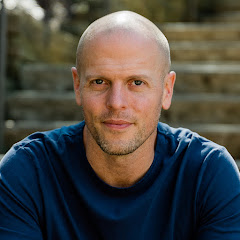 Tim Ferriss
Want to know something specific about what's covered?
We've already dissected every moment. Ask and we will deliver (with timestamps).
Key Moments
Rick Doblin on psychedelic therapy, MDMA for PTSD, MAPS' mission, and a $30M funding campaign.
Key Insights
MDMA-assisted psychotherapy shows significant success rates in treating chronic, treatment-resistant PTSD, with a high percentage of participants no longer qualifying for the diagnosis after a few sessions.
MDMA works by reducing amygdala activity and releasing oxytocin, promoting self-compassion and social bonding, while facilitating 'fear extinction' and 'memory reconsolidation' to re-process traumatic memories.
The efficacy of psychedelic-assisted therapy relies heavily on integration work and a supportive therapeutic context, not solely on the substance itself.
Rick Doblin founded MAPS in 1986 to navigate the FDA approval process for MDMA as a medicine, shifting from a legal battle strategy after MDMA was criminalized.
The historical context of MDMA development by Merck and its testing by the US Army reveals its chemical properties bridging methamphetamine and mescaline.
MAPS is launching a $30 million "Capstone Fund" campaign to complete Phase 3 trials and achieve FDA approval for MDMA-assisted psychotherapy, with a $10 million challenge grant activated by further donations.
THE ORIGINS OF MAPS AND THE FIGHT FOR MDMA
Rick Doblin established MAPS (Multidisciplinary Association for Psychedelic Studies) in 1986 after a failed attempt to keep MDMA legally available for therapeutic use. Initially, Doblin worked through the legal system, demanding hearings when the DEA moved to criminalize MDMA. When this proved unsuccessful, he recognized the need for a scientific, medical approach through the FDA, positioning MAPS as a non-profit pharmaceutical entity to develop MDMA and other psychedelics.
MDMA-ASSISTED PSYCHOTHERAPY FOR PTSD: PROMISING RESULTS
MAPS has shown remarkable success with MDMA-assisted psychotherapy for PTSD, even in chronic, treatment-resistant cases. Studies indicate that a significant majority of participants no longer meet PTSD criteria after only two to three sessions. This treatment has demonstrated enduring effects, with many individuals showing sustained improvement at 12-month follow-ups, defying conventional psychiatric treatment timelines.
UNDERSTANDING MDMA'S MECHANISMS AND THERAPEUTIC POTENTIAL
MDMA is a substance that subtly enhances emotional clarity and reduces fear responses by decreasing amygdala activity and increasing oxytocin release. This facilitates self-compassion and allows individuals to revisit traumatic memories in a safer state, enabling 'fear extinction' and 'memory reconsolidation.' This process allows for the re-encoding of these memories with less emotional distress, leading to lasting therapeutic change.
THE CRITICAL ROLE OF THERAPY AND INTEGRATION
The effectiveness of MDMA-assisted therapy is not solely attributed to the drug but also to the crucial therapeutic context and integration work that follows. While MDMA can create a window of neural plasticity, it is the psychotherapy that helps individuals metabolize traumatic experiences and learn new coping mechanisms. Without this guided process, the benefits may fade, underscoring that it's psychotherapy facilitated by MDMA.
A PIONEERING PATIENT STORY AND PERSONAL MOTIVATIONS
The story of Marcella, an early patient in 1984, highlights the profound impact of this therapy, particularly after a combination of LSD and MDMA led to a breakthrough. Her experience underscores Doblin's personal drive, fueled by early exposure to Holocaust stories and a deep concern about human dehumanization. This personal mission, coupled with tragic experiences like a patient's suicide note blaming the system, propels his decades-long advocacy.
THE CAPSTONE FUND: A STRATEGIC CAMPAIGN FOR APPROVAL
MAPS is currently raising $30 million through its "Capstone Fund" to complete Phase 3 trials and secure FDA approval for MDMA-assisted psychotherapy. A significant $10 million challenge grant, activated by further donations, is central to this campaign. This initiative aims to not only legalize MDMA for PTSD treatment but also to pave the way for other psychedelic therapies and demonstrate a new model for public health and pharmaceutical development.
OVERCOMING OBSTACLES AND BUILDING POLITICAL SUPPORT
Despite clear efficacy and growing public interest, traditional funding sources like the VA and NIMH have not supported MAPS' research. However, the organization has garnered support across the political spectrum, indicating a broad recognition of the potential benefits. This diverse funding base is crucial for minimizing potential backlash and highlights the increasing acceptance of psychedelic-assisted therapies.
THE HISTORICAL DEVELOPMENT OF MDMA
MDMA was first synthesized in 1912 by Merck pharmaceutical company, not for psychoactive effects, but as part of a synthetic pathway for other drugs. Its potential was later explored by the US Army. Chemist Sasha Shulgin independently re-synthesized MDMA and shared it widely, contributing to its underground therapeutic use before its criminalization, which then led to its association with rave culture as 'ecstasy.'
THE STRATEGIC ADVANTAGE OF MDMA OVER OTHER PSYCHEDELICS
While other psychedelics like LSD and psilocybin remain important, MDMA's unique properties make it particularly suitable for PTSD treatment. Its ability to reduce fear without causing significant ego dissolution, and its subtle experiential shift, allow patients to process trauma more manageably. This gentleness, combined with its efficacy, makes it a prime candidate for broad therapeutic application once approved.
TRANSFORMATIVE OUTCOMES AND THE FUTURE OF PSYCHOTHERAPY
The impact of successful MDMA-assisted therapy can be life-altering, with individuals reporting a resurrection of their emotional lives and relationships. This transformative potential, witnessed in patient stories and highlighted in documentaries, signifies a paradigm shift in mental healthcare. The ongoing work by MAPS and its supporters aims to unlock these healing technologies for widespread public benefit.
Mentioned in This Episode
●Products
●Software & Apps
●Companies
●Organizations
●Books
●Drugs & Medications
●Concepts
●People Referenced
Common Questions
MAPS, founded by Rick Doblin in 1986, is a non-profit pharmaceutical organization working to make MDMA and other psychedelics, along with marijuana, into legally approved prescription medicines through the FDA and other regulatory bodies, focusing on therapeutic applications.
Topics
Mentioned in this video
A magazine that selected Helix Sleep as the number one best overall mattress pick of 2020.
The first non-profit founded by Rick Doblin in 1984, in anticipation of the DEA criminalizing MDMA, to gather support from the psychedelic therapy community.
A top scientific journal where Gül Dölen's studies on mice and MDMA's effects on neural connections were published.
The agency that must approve MDMA as a medicine, having already granted it 'breakthrough therapy' designation for PTSD.
A foundation founded by Steven and Alexandra Cohen, contributing $5 million to the MAPS Capstone Fund.
The largest foundation in England, focused on neuroscience and psychology, which rejected MAPS' funding request due to perceived 'reputational risk.'
Where Rick Doblin received his doctorate in public policy, writing his dissertation on the regulation of medical psychedelics and marijuana.
Published a seven-minute video profile of John Lubecky and his experience with MDMA for PTSD.
A non-profit organization focused on developing psychedelics and marijuana into medicines, founded by Rick Doblin in 1986.
The agency that moved to criminalize MDMA, despite an administrative law judge's recommendation that it be scheduled as medicine.
A month-long workshop by Stan and Kristina Grof focused on helping people work through spiritual emergencies, which can lead to breakthroughs.
A research institute that Rick Doblin tried to get funding from for MDMA research but was rejected, as they prioritize mechanism of action studies over efficacy and safety.
Tested MDMA in 1953 as part of their search for mind-control drugs.
Funded research claiming MDMA was neurotoxic, contrasting with Rick Doblin's observation of Marcela's long-term improvement.
Despite spending billions on PTSD treatments and disability payments, has not contributed any funding to MAPS' MDMA research.
An organization that featured MDMA for PTSD on the cover of their bimonthly magazine, indicating growing support.
Where Rick Doblin studied with Stan Grof and Kristina Grof in 1982 and 1984, learning about MDMA and spiritual emergence work.
A group that launched the Capstone Fund, bringing together donors and providing advisory capacity for psychedelic research.
A university where research on psilocybin for nicotine addiction has been conducted, showing great results.
A research institution where Tim Ferriss has supported psychedelic research.
The pharmaceutical company that invented MDMA in 1912 while attempting to evade a competitor's patent.
Investment firm founded by James Bailey, who is a significant contributor to MAPS.
A mattress company offering a quiz to match users with their perfect mattress, providing a 10-year warranty, and a 100-night risk-free trial.
A publication that selected Helix Sleep as the number one best overall mattress pick of 2020.
The pharmaceutical company developing the drug Tanmaya, which failed its interim analysis for PTSD treatment.
Shoe company founded by Blake Mycoskie, who is a significant contributor to MAPS.
A pharmaceutical company from which many MAPS employees have transitioned, becoming 'refugees from pharma' due to their passion for psychedelics.
A corporation under MAPS that will sell MDMA once it becomes a medicine, prioritizing public benefit over profit and reinvesting profits into further research.
A drug known as 'the love drug' in the 60s, which Sasha Shulgin later resynthesized and found to be therapeutic, though more psychedelic than MDMA.
A psychedelic compound found in 'magic mushrooms,' also shown to increase new neural connections and used in therapeutic contexts for conditions like nicotine addiction.
A psychedelic from peyote, to which MDMA is chemically similar, also providing properties of bringing inner material to awareness.
A compound with energizing and psychedelic properties, originally synthesized by Merck in 1912, later tested by the US Army, and used in psychotherapy before becoming known as 'ecstasy.'
A classic psychedelic that was also used by Leo Zeff and a Dutch psychiatrist for PTSD treatment, but does not reduce amygdala activity like MDMA.
A repurposed sleeping pill developed by Tonix Pharmaceuticals, designated as a breakthrough therapy for PTSD, which failed its interim analysis for futility.
A political figure with whom John Lubecky met to discuss the potential benefits of MDMA for veterans.
Tim Ferriss mentions that the episode was recorded before George Floyd's death but the discussion on trauma and PTSD remains relevant.
A legendary figure in psychedelic therapy, under whom Rick Doblin was an early student.
A renowned chemist who independently resynthesized MDA and developed many other psychedelic compounds, sharing his work widely, including with the DEA.
Known as the Secret Chief, a leader of the underground psychedelic psychotherapy movement who postponed retirement after experiencing MDMA's potential.
An exceptional therapist who, along with his wife Annie, helped develop the MAPS protocol for MDMA-assisted psychotherapy.
Founder and Executive Director of the Multidisciplinary Association for Psychedelic Studies (MAPS), with a PhD in Public Policy from Harvard's Kennedy School of Government.
A US Senator for whom John Lubecky served as a liaison to veterans during his 2016 presidential campaign.
Neuroscientist who conducted studies showing MDMA's pro-social effects in octopuses and its role in stimulating new neural connections in mice.
Dr. at Johns Hopkins who led studies on psilocybin for nicotine addiction, demonstrating impressive abstinence rates.
President of the Psychedelic Science Funders Collaborative (PSFC), instrumental in raising the $10 million matching grant for MAPS.
Wife and collaborator of Sasha Shulgin, involved in testing and documenting psychedelic compounds.
Collaborator with Stan Grof, with whom Rick Doblin studied at Esalen.
Members of the Rockefeller family have donated millions to MAPS, representing support from the liberal political spectrum.
An Iraq veteran who attempted suicide multiple times due to PTSD, found profound healing through MDMA-assisted psychotherapy, and now advocates politically for its use.
An exceptional therapist who, along with her husband Michael, helped develop the MAPS protocol for MDMA-assisted psychotherapy.
Founder of RXBAR and a significant contributor to the $10 million challenge grant for MAPS.
A prominent donor who has contributed to the cause, indicating broad support across the political spectrum.
Founder of Bale Capital and a significant contributor to the $10 million challenge grant for MAPS.
A donor from the conservative political spectrum who has contributed to MAPS.
Founder of TOMS and a significant contributor to the $10 million challenge grant for MAPS.
A scientific journal that published a paper on the MDMA for PTSD study involving John Lubecky, reporting that two-thirds of participants no longer qualified for PTSD diagnosis.
A book published by MAPS about Leo Zeff's work in underground psychedelic psychotherapy.
A film released in the United States by Tim Ferriss, showing footage of MDMA-assisted psychotherapy sessions with PTSD patients.
Magazine that published an article describing the recovery ratio for MDMA-assisted psychotherapy.
Mentioned as the source of an article about the mental health tsunami following COVID-19, quoting a NIMH representative.
More from Tim Ferriss
View all 703 summaries 70 min
Q&A with Tim — The Art of Male Friendship, Reinvention in The Age of AI, & More
 125 min
Dr. Andrew Huberman — Peptides, Performance, and Protocols
 112 min
The Random Show! Mortality, AI, Supplements, Rock Climbing, & More
 88 min
The Legendary Hollywood Power Broker — Guy Oseary on 36 Years of Managing Madonna, 26 IPOs, and More
Ask anything from this episode.
Save it, chat with it, and connect it to Claude or ChatGPT. Get cited answers from the actual content — and build your own knowledge base of every podcast and video you care about.
Get Started Free