Key Moments
Movement Coach Nsima Inyang — True Athleticism at Any Age
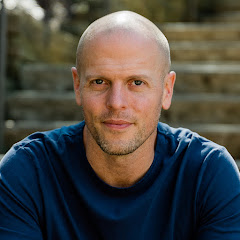 Tim Ferriss
Want to know something specific about what's covered?
We've already dissected every moment. Ask and we will deliver (with timestamps).
Key Moments
Nsima Inyang shares insights on building true athleticism at any age through holistic movement, breathing, and consistency.
Key Insights
Traditional training primarily in the sagittal plane often neglects spinal rotation and can lead to stiffness and limited movement patterns.
The 'spinal engine' concept (Serge Graavitzki) emphasizes the spine as the driver of locomotion, with arms and legs supporting this rotation.
Rope flow, a symmetrical and rotational practice, enhances spinal mobility, body symmetry, and power generation from the ground up, benefiting activities like martial arts.
Learning to breathe properly during all movements, including lifting, increases tissue safety, reduces excess tension, and promotes free movement, preventing breath-holding patterns.
Micro-dosing movement and soft tissue work throughout the day, rather than solely relying on structured workouts, helps build consistent progress and long-term physical well-being.
Regressions are crucial for overcoming pain and improving mobility; starting with pain-free, basic movements and gradually progressing prevents injury and cultivates strength over time.
Sled training is a highly versatile and safe exercise for developing full-body strength and can be adapted for all fitness levels, promoting healthy movement patterns.
Incorporating impact (like rebounding and hopping) into training, even at low intensities, is vital for bone density, elasticity, and maintaining the ability to jump throughout life.
Self-massage and soft tissue work are essential for releasing tension, improving range of motion, and fostering body awareness to enhance overall movement quality.
THE LIMITATIONS OF TRADITIONAL TRAINING
Nsima Inyang, an elite powerlifter and movement coach, critiques the common pitfalls of traditional gym training, which often overemphasizes movements primarily within the sagittal plane (forward and backward, like squats and deadlifts). While beneficial for building strength in a neutral spine, an exclusive focus on these movements can neglect crucial rotational capacity of the spine. This specialization can lead to a 'plain-bound' body, limiting athletic movement and potentially degrading the natural function of the 'spinal engine,' a concept by Serge Graavitzki that posits the spine as the primary driver of human locomotion. Excessive stiffness and lack of rotational access can manifest as chronic pain and impaired functional movement in daily life.
EMBRACING SPINAL ROTATION WITH ROPE FLOW
To counteract the stiffness caused by sagittal-plane training, Nsima advocates for practices that restore spinal rotation. Rope flow, developed by David Wet, is highlighted as a symmetrical and meditative practice involving swinging a heavy rope in figure-eight patterns, primarily driven by core and spinal rotation, not just the arms. This practice helps to improve symmetry between dominant and non-dominant sides, balance, and the ability to generate power from the ground up, a skill crucial in martial arts like jiu-jitsu. Rope flow is not a rigid workout but a 'flow practice' where repetitions are less important than fluid, full-body movement, leading to immediate improvements in walking and overall body feel.
THE CRITICAL ROLE OF BREATHING IN MOVEMENT
A foundational element often overlooked in training is the conscious control of breath. Nsima explains that during injury or perceived threat, individuals instinctively hold their breath, causing tissues to seize up for protection, a pattern that can become ingrained. This breath-holding (Valsalva maneuver) is useful for maximal lifts but detrimental for everyday movement, as it limits spinal mobility and creates excess tension. He strongly recommends learning to breathe continuously through all movements, inhaling during the eccentric phase (lowering) and exhaling during the concentric phase (lifting). This practice makes the body feel safer, allows tissues to move freely, and reduces global tension, fostering better overall well-being.
STRATEGIC PROGRAMMING FOR LONGEVITY AND STRENGTH
For individuals seeking strength and athleticism without compounding injury risk, Nsima suggests moving beyond heavy maximal lifts and prioritizing movement quality over sheer load. He recommends unilateral exercises like ATG split squats and sandbag squats over traditional barbell back squats, especially for those with lower back sensitivities, as they reduce direct spinal compression while building strength through long ranges of motion. When using barbells, he advises stopping above parallel in squats (e.g., box squats) to prevent excessive lumbar rounding (butt wink) and always maintaining tension while breathing. The focus is on progressive overload of movement quality, allowing for gradual increases in load as proficiency and pain-free range improve.
MICRO-DOSING MOVEMENT: THE DAILY PRACTICE
Nsima emphasizes integrating movement into daily life through 'micro-dosing,' inspired by concepts like Pavle Tsatsouline's 'greasing the groove.' This involves performing small, consistent bursts of movement throughout the day, rather than relying solely on intense, infrequent workouts. Examples include keeping kettlebells, clubs, sandbags, or even a 'hunkerin stool' (low squat seat) readily accessible in one's environment to encourage spontaneous movement. This approach makes activities like bending, squatting, and rotating feel natural and effortless, reducing the need for extensive warm-ups and preventing the body from becoming stiff or deconditioned in between structured training sessions. It fosters a playful relationship with movement, turning exercise into an inherent part of daily living.
SOFT TISSUE WORK AND REGRESSION FOR PAIN MANAGEMENT
Addressing chronic pain and improving tissue suppleness is paramount. Nsima, drawing from Kelly Starrett's 'Becoming a Supple Leopard,' highlights the importance of regular soft tissue work (self-myofascial release) using tools like foam rollers, medicine balls, or specialized instruments like the 'body lever.' A key principle is to maintain a relaxed face and consistent breathing during this work, as tension hinders effective tissue release. He stresses the power of 'regression' in all physical practices: if an exercise causes pain, scale it down in load, range of motion, or complexity until it can be performed comfortably and safely. This patient, ego-free approach to slowly rebuilding capacity is essential for overcoming injuries and achieving lasting physical freedom.
THE POWER OF SLED TRAINING AND NON-TRADITIONAL LIFTS
The sled emerges as a highly versatile and safe training tool for all ages and fitness levels. It allows for full-body force production forward and backward with minimal injury risk, as resistance is self-limiting (if you can't push it, it doesn't move). Sled training taxes the cardiovascular system while building structural strength from the feet upwards. Nsima also integrates the sled for targeted spinal conditioning, progressing from neutral spine pushing/pulling to deliberately moving with spinal flexion, extension, and lateral flexion at lighter loads. This practice strengthens the spine in diverse positions, making it more resilient and less susceptible to injury in unpredictable real-life movements. Additionally, he recommends staggered stance deadlifts for their close relation to natural gait patterns.
IMPACT TRAINING FOR BONE DENSITY AND ELASTICITY
Acknowledging the importance of bone density and tissue elasticity for longevity, Nsima emphasizes the reintroduction of impact training. Many adults cease jumping, leading to a decline in bone health and the body's ability to absorb force, often resulting in injury when attempting such movements later in life. He recommends starting with low-intensity options like a rebounder (mini-trampoline), which reduces impact while still stimulating bone growth and improving elasticity. Progressions include light hopping with hand support, gradually moving towards jumping rope. The key is to start small and listen to bodily signals, slowly building the capacity to jump and land safely, thereby preserving a vital human movement skill often quoted as 'once you stop jumping, you start dying.'
OPTIMIZING MOBILITY WITH ANKLE AND FOOT EXPLORATION
Ankle mobility is crucial for deep squat positions and overall body mechanics. Nsima points to exercises like the ATG split squat, popularized by Ben Patrick, which builds strength through deep knee flexion and hip extension, thereby improving ankle dorsiflexion over time. For sumo deadlifts, proper foot rooting and external hip rotation are emphasized, using the cue of 'ripping the ground apart' with the feet to engage the hips and create space for movement. He also highlights the importance of dedicated foot work, such as rolling the bottoms of the feet with hard rubber balls, for systemic relief and improved knee pain, underscoring that many traditional practices have unproven benefits that are nonetheless highly effective in practice.
HOLISTIC MOVEMENT: THE PATH TO LIFELONG ATHLETICISM
Ultimately, Nsima advocates for a holistic and playful approach to physical practice that prioritizes feeling good and moving well over chasing arbitrary numbers or a specific aesthetic. This involves cultivating an environment that encourages spontaneous movement, embracing regressions to build foundational strength and mobility, and regularly performing soft tissue work. The goal is not just to build muscle or lift heavy, but to foster control, resilience, and adaptability in the body, allowing one to engage in diverse physical activities (like rock climbing, tennis, or Muay Thai) throughout life without pain. This 'play the long game' mentality transforms training from a chore into a sustainable, enjoyable journey of self-discovery and continuous improvement.
Mentioned in This Episode
●Products
●Software & Apps
●Tools
●Companies
●Organizations
●Books
●Concepts
●People Referenced
Holistic Movement & Longevity Cheat Sheet
Practical takeaways from this episode
Do This
Avoid This
Common Questions
Powerlifting focuses on the squat, bench press, and deadlift. Nsima Inyang's best competition lifts were a 622 lb squat, 396 lb bench press, and 755 lb deadlift, totaling 1758 lbs. His gym lifts were even higher, with a 645 lb squat and 775 lb deadlift.
Topics
Mentioned in this video
A video by Nsima Inyang that challenges conventional training methods, featuring examples like a man moving without limbs and emphasizing the spinal engine.
A travel show mentioned by the host as an example of copying Conan's 'move'.
A balance and movement practice that Nsima compares to rope flow in its playful and flow-state nature.
A martial art involving pad work which the host loves for endurance, emphasizing the rotation and power generation that rope flow can improve.
An exercise performed by leaning the torso forward from the knees, using hamstring strength to control the descent and ascent, known to build hamstring resiliency for sprinting.
A unilateral squat variations that particularly strengthens the adductors and improves hip and ankle mobility, often used as a warm-up or for greasing the groove.
A training methodology focusing on bodyweight exercises to build strength and mobility, often yielding impressive muscle gains without traditional heavy lifting.
A breathing technique used by lifters to increase intra-abdominal pressure and stabilize the spine, but often leads to limited movement and tension if not purposeful.
A traditional grip training tool involving plunging hands into a bucket of rice and performing various movements to strengthen hands and forearms.
A movement practice involving swinging a rope to improve spinal rotation, symmetry, and generate power from the ground up, feeling like play rather than a workout.
A more specific adductor movement mentioned as an alternative to machines.
A low, springy seat designed by Casey, encouraging users to sit in a low squat position for comfort and mobility development.
An acupressure mat similar to the Naoya mat, mentioned as an imitator.
A leverage tool for self-massage, resembling a 'nutcracker', used to apply pressure and knead muscles in various body parts.
A mini trampoline used for low-intensity jumping to build bone density, improve elasticity, and decompress the body, serving as a regression for higher impact jumping.
A heavier, smoother rope for rope flow practice, costing about $80, offering better feedback than cheaper alternatives.
A full-body exercise demonstrating the ability to get from a lying position to standing, mentioned in the context of daily movement in Japan.
A machine for performing Nordic curls, owned by the host.
A mat with plastic 'golf cleats' designed for acupressure, used for soft tissue work and pain relief, particularly for back issues.
A high-end brand of rebounders (mini trampolines), referred to as the 'Rolls-Royce' of rebounders.
A rope for flow practice, priced around $40-45, known for its smooth rotation feedback.
Recommended as a good quality and affordable source for making a custom rope flow tool.
Soft tissue massage balls by Jill Miller, not extremely hard, offering a bit of give for deeper pressure without causing excessive tension.
A versatile exercise tool suitable for all fitness levels, used for pushing and pulling to build structural strength and improve gait, with options for magnetic resistance and various spinal positions.
A versatile training tool that offers an asymmetrical load, encouraging an open-palm grip and full-body organization to lift safely, beneficial for real-life lifting scenarios and can be used for various exercises.
A tool used for rubbing pressure in soft tissue work, similar to using a butter knife with lotion.
Author of 'The Spinal Engine', who theorizes that the spine drives human movement and locomotion.
Popularizer of the ATG split squat and founder of Athletic Truth Group. Known for his open-minded approach to fitness and continuous learning, focusing on regressions for pain-free movement.
A phenomenal circus performer, famous for one-arm hand balancing, who recommended the acupressure mat for back issues.
A strength coach respected for his holistic approach to athlete training, applying various modalities like Nordic curls, soft tissue work, and static stretching when appropriate.
The inventor and popularizer of rope flow.
A 'lifting samurai' from Hawaii, 56 years old, known for being incredibly shredded and strong, who refers to his workouts as a 'practice' and is continuously open to learning.
Host of Mark Bell's Power Project and a former geared powerlifter, who later did raw powerlifting.
David Weck's head coach who showed Nsima Inyang rope flow.
Known for popularizing the concept of 'greasing the groove' for strength and skill development.
The creator of Tune Up Fitness balls, which are described as hard but with a slight give for deep soft tissue work.
Ben Patrick's company, offering an app with regressions for various movements, particularly useful for ankle mobility and pain remediation.
A gym in Sacramento where the host first saw Nsima Inyang deadlifting.
An NBA team for which Cory Schlesinger was the director of performance, implementing microdosing movement practices.
More from Tim Ferriss
View all 700 summaries 88 min
The Legendary Hollywood Power Broker — Guy Oseary on 36 Years of Managing Madonna, 26 IPOs, and More
 77 min
The Many Benefits of Coca — The “Divine Leaf” with 8,000+ Years of Use
 100 min
Inside The AI Race: DeepMind, OpenAI, Anthropic, China, and The Race to Superintelligence
 108 min
The Path from The Soviet Union to Building Multi-Billion Dollar Companies — Max Levchin
Ask anything from this episode.
Save it, chat with it, and connect it to Claude or ChatGPT. Get cited answers from the actual content — and build your own knowledge base of every podcast and video you care about.
Get Started Free