Key Moments
Jack Kornfield — Finding Freedom, Love, and Joy in the Present | The Tim Ferriss Show (Podcast)
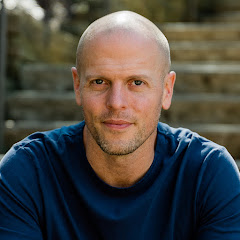 Tim Ferriss
Want to know something specific about what's covered?
We've already dissected every moment. Ask and we will deliver (with timestamps).
Key Moments
Jack Kornfield shares profound wisdom on mindfulness, compassion, and finding joy in the present.
Key Insights
Childhood experiences of unpredictability and abuse shaped Kornfield's path toward healing and understanding.
Psychedelic experiences in the 1960s opened Kornfield's mind to consciousness and inner freedom, influencing his spiritual pursuits.
Training as a Buddhist monk in Thailand and Burma, under teachers like Ajahn Chah, offered profound lessons in navigating suffering and cultivating equanimity.
Compassion is distinct from empathy; it's the active desire to alleviate suffering in oneself and others.
Loving-kindness meditation, especially for those struggling with self-criticism, can be a powerful practice for self-acceptance and growth.
Integrating inner work with daily life is crucial; true freedom is found in the present moment, not in escaping circumstances.
Rituals and rites of passage are vital in modern society to help individuals navigate transitions and integrate experiences.
EARLY LIFE AND THE QUEST FOR HEALING
Jack Kornfield's childhood was marked by significant unpredictability and emotional turmoil due to his father's brilliance juxtaposed with his mental health struggles and abusive tendencies. This environment fostered a sense of fear but also a deep connection with his brothers. The family's constant moves and his father's volatile nature profoundly impacted Kornfield, leading him to seek healing and understanding, a journey that would eventually lead him to study psychology and explore spiritual paths.
TRANSFORMATIVE PATHWAYS: PSYCHEDELICS AND BUDDHISM
During his college years and the 1960s, Kornfield's engagement with LSD opened his mind to the nature of consciousness and the possibility of inner liberation. These experiences, alongside his academic studies in Asian philosophy, ignited a passion for spiritual exploration. This led him to join the Peace Corps and travel to Thailand, seeking ancient wisdom and a path that could offer profound personal transformation beyond the conventional.
MONASTIC TRAINING AND THE SCHOOL OF SUFFERING
Kornfield's extensive training as a Buddhist monk in Thailand and Burma, under masters like Ajahn Chah, provided an immersive education in mindfulness and enduring hardship. He learned to confront his own inner turmoil—anger, fear, and boredom—through disciplined meditation. The rigorous daily schedule, simple living, and contemplative practices were designed to cultivate equanimity and a deeper understanding of the self, even amidst physical discomfort and isolation.
THE NATURE OF COMPASSION AND LOVING-KINDNESS
Kornfield distinguishes compassion from empathy, defining it as an active, quivering desire to alleviate suffering. He emphasizes that this capacity is innate and can be cultivated through practices like loving-kindness meditation. This practice, often best initiated by directing well-wishes towards loved ones before oneself, helps soften self-criticism and fosters unconditional acceptance of imperfection, which is crucial for genuine inner peace.
INTEGRATING INNER WORK WITH DAILY LIFE
Kornfield stresses that profound spiritual insights and freedom are not found by escaping life's challenges but by engaging with them mindfully. He advocates for integrating contemplative practices into everyday routines, whether through formal meditation or by bringing awareness to family life, work, or challenging interactions. True awakening, he suggests, comes from learning to be present with all experiences, transforming difficulties into opportunities for growth and love.
THE NEED FOR MODERN RITES OF PASSAGE
The conversation highlights a societal deficit in meaningful initiation rituals. Kornfield explains how the lack of structured rites of passage can lead individuals, particularly youth, to seek dangerous self-initiation through risky behaviors. He advocates for creating modern rituals that acknowledge transitions, honor trauma, and facilitate the integration of experiences, drawing parallels to initiations in indigenous cultures and the potential for mindfulness and compassionate practices to serve this role.
NAVIGATING DIFFICULTIES AND HARNESSING ENERGY
Kornfield offers practical strategies for managing intense emotions like anger, emphasizing that energy itself is not negative but requires skillful direction. He guides listeners through visualizations and affirmations, such as the symbol of a stable, cooling blue pyramid, to help regulate powerful feelings without resorting to self-judgment. This approach allows for the expression of necessary force while maintaining compassion and benevolence.
THE POWER OF FORGIVENESS AND HEALING COLLECTIVE TRAUMA
Practices of forgiveness, particularly self-forgiveness, are presented as essential for liberating oneself from past traumas and survival mechanisms. Kornfield shares how creating safe containers, whether through simple rituals or ancient storytelling, can allow individuals, including veterans and at-risk youth, to voice their experiences, be held in compassion, and begin to heal from deep-seated wounds and collective suffering.
THE WISDOM OF THE HEART AND PERSONAL CONTRIBUTION
Kornfield posits that true freedom and well-being stem from reconnecting with our innate capacity for love and compassion, viewing this not as weakness but as a profound strength. He argues that technological advancement must be matched by inner development to address global challenges. Each individual has unique gifts and a vital role in contributing to a more conscious and loving world, finding joy not in external achievements but in the quality of presence and connection.
Mentioned in This Episode
●Supplements
●Software & Apps
●Companies
●Organizations
●Books
●Drugs & Medications
●Concepts
●People Referenced
Common Questions
Jack Kornfield describes his childhood as a mix of happy adventures with his three brothers and constant fear of his brilliant but abusive father, who suffered from mental problems. His family moved frequently, and he took on the role of a peacemaker.
Topics
Mentioned in this video
Cloud accounting software designed for self-employed professionals, used by over 10 million people for invoicing, time tracking, and expense management.
Amazon's virtual assistant, used as an example of an algorithm in the discussion of building compassion into technology interfaces.
Apple's virtual assistant, used as an example of an algorithm in the discussion of building compassion into technology interfaces.
A 40-day online program offered by Sounds True, providing 12-15 minute daily instructions in mindfulness and loving-kindness practices.
The country where Jack Kornfield trained as a Buddhist monk and served in the Peace Corps.
The country that appointed its first 'Minister of Loneliness'.
The country where Grindelwald is located, a place where Jack Kornfield enjoys paragliding.
Location of the Insight Meditation Society, co-founded by Jack Kornfield.
A location in Switzerland where Jack Kornfield enjoys tandem paragliding.
The Hawaiian island where Jack Kornfield recently visited Ram Dass.
One of the countries where Jack Kornfield trained as a Buddhist monk.
One of the countries where Jack Kornfield trained as a Buddhist monk and underwent intense meditative training.
Location of the Spirit Rock Center, co-founded by Jack Kornfield.
A city in Japan, mentioned metaphorically as a distant place one might feel the need to travel to for wisdom, when it actually resides within.
University of California, San Francisco, where Adam Gazzaley is based.
The Cambodian communist regime responsible for the Cambodian genocide, during which Maha Ghosananda lost all his family members.
A professional American football team that had a meditation coach when they won a championship.
A volunteer program that Jack Kornfield joined to avoid the draft and explore Buddhism in a Buddhist country, leading him to Thailand.
Where Ram Dass (Richard Alpert) and Timothy Leary were early explorers of LSD. Also where David McClelland chaired the social science and psychology department.
A consortium for social-emotional learning that works in schools to teach kids social and emotional skills, including compassion, improving their lives and academic performance.
Meditation Center in the San Francisco Bay Area co-founded by Jack Kornfield, mentioned as a beautiful and valuable place to visit.
A university where Roland Griffiths conducts research on psilocybin and where Stan Grof was still working when Jack Kornfield met him.
A growth center where Jack Kornfield joined Stanislav Grof and helped with the development of holotropic breathwork.
The UN High Commissioner of Refugees, which granted Maha Ghosananda permission to open a temple in a refugee camp on the border of Thailand and Cambodia.
A religious group that played a significant role in the abolition of slavery in the British Empire.
Co-founded by Jack Kornfield in Barre, Massachusetts, with Sharon Salzberg and Joseph Goldstein.
A meditation center in Woodacre, California, co-founded by Jack Kornfield, where Tim Ferriss did his first silent retreat.
The college where Jack Kornfield studied, initially pre-med and later Asian Studies.
Newspaper that published a profile of Jack Kornfield in 2014.
New York University, where research on psilocybin is also being conducted.
Where David McClelland was chairman of the social science and psychology department, and where Dan Goleman was a graduate student.
An organization founded by Michael Meade and Luis Rodriguez, whose work with gang kids and war veterans is described as impactful.
Location of the first White House Buddhist leadership gathering, attended by Jack Kornfield.
An indigenous confederacy whose traditions might include principles of compassion and wise society, similar to Buddhist and Taoist teachings.
An East African people with a tradition of young men killing a lion as an initiation rite.
A spiritual tradition focusing on suffering, its causes, and its end, which deeply influenced Jack Kornfield to pursue Asian Studies and monastic training.
An Eastern philosophy that Jack Kornfield studied at Dartmouth, taught by Dr. Wing-Tsit Chan.
An ancient Indian language, the liturgical language of Theravada Buddhism, used by Maha Ghosananda in chanting.
A powerful breath transformation technique developed by Stanislav Grof, which Jack Kornfield helped develop at Esalen.
A deeper training course, following 'Mindfulness Daily', and mentioned in the context of an online teacher training for mindfulness and loving-kindness.
A psychopharmacologist, and a colleague and friend of Jack Kornfield since the 70s, with whom Jack worked on the development of holotropic breathwork.
Stanislav Grof's wife at the time Jack Kornfield met them.
A PhD MD neuroscientist at UCSF and mutual friend of Tim Ferriss and Jack Kornfield, who suggested the topic of hang gliding. He also collaborated on the MetaTrain software.
A neuroscientist and author, and a close friend of Tim Ferriss, known for his diligent meditation practice which was influenced by his psychedelic experiences.
A scientist and psychonaut with whom Jack Kornfield set up a program at a growth center in Boston.
Ancient Chinese philosophers whose teachings, like those of Buddha, Iroquois, and other wise traditions, embody principles of compassionate and wise society.
Author who calls Jack Kornfield 'one of the greatest spiritual teachers of our time'.
Host of The Tim Ferriss Show, who deconstructs world-class performers and interviews Jack Kornfield about his spiritual journey and teachings.
A graduate student at Harvard who Jack Kornfield met, who later wrote 'Emotional Intelligence'. He introduced Jack to Tibetan wheel of birth and death as a psychological diagram.
A Western monk and the first Peace Corps volunteer in Borneo, who later became quite famous in Thailand and abbot of a temple in England, and introduced Jack Kornfield to Ajahn Chah.
A wartime journalist who co-produced documentaries like 'Restrepo' and wrote the book 'Tribe', which touches on themes of warriors returning and community.
A Buddhist monk and spiritual teacher known for introducing Buddhist mindfulness practice to the West, co-founder of Insight Meditation Society and Spirit Rock Center, and a prolific author.
Pulitzer Prize-winning poet and environmentalist, an elder in the environmental movement, who advised that environmental action should stem from love, not guilt or anger.
A behavioral scientist associated with the 'persuasion laboratory at Stanford', who researched behavioral change and the strategy of starting small.
Co-founder of Mosaic Multicultural Foundation, mentioned for his work with Michael Meade with gang kids and war veterans.
A Harvard professor and author of 'The Better Angels of Our Nature', discussing human progress and the reduction of violence.
Fellow meditation teacher who co-founded the Insight Meditation Society with Jack Kornfield and Joseph Goldstein, and has also been a guest on The Tim Ferriss Show.
Fellow meditation teacher who co-founded the Insight Meditation Society with Jack Kornfield and Sharon Salzberg.
Author of 'Be Here Now', an early explorer of LSD at Harvard who later became a spiritual teacher in India. Jack Kornfield recently visited him on Maui.
Jack Kornfield's main Buddhist teacher in Thailand, described as funny, wise, warm-hearted, strict, and demanding, who taught him how to confront suffering and become the 'one who knows'.
A mindfulness coach and friend of Jack Kornfield, who coached championship teams like the Seattle Seahawks and LA Lakers.
A drummer, storyteller, and mythologist, co-founder of Mosaic Multicultural Foundation, who works with incarcerated youth, vets, and gang kids, and has profound insights on initiation.
A senior professor of psychopharmacology at Johns Hopkins University Medical School, leading research on psilocybin and its applications for terminal cancer patients and depression.
A poet quoted by Jack Kornfield for his verse 'You can cut all the flowers, but you cannot keep spring from coming,' symbolizing inherent renewal.
A central figure in the movement to end slavery in the British Empire, to whom Quakers paid great respect.
Co-founder of Twitter and Square, who recently completed his first 10-day meditation retreat, which was transformative for him according to Jack Kornfield.
A meditation teacher whose work is recommended alongside Jack Kornfield's for loving-kindness and self-compassion.
A Cambodian monk, scholar, and medicine man, known as the 'Gandhi of Cambodia', who inspired Jack Kornfield profoundly with his compassionate response to the Khmer Rouge genocide.
Nobel Prize winner for discovering telomerase and telomeres, whose research is cited to support that consciousness affects the body.
A neuroscientist mentioned in the context of the field of presence and interconnected consciousness.
Spiritual leader who initially didn't understand the concept of self-hatred when discussed by Western Buddhist teachers, also known for his joyful nature despite suffering.
Creator of 'Search Inside Yourself' at Google and an early engineer, who recommended loving-kindness meditation to Tim Ferriss.
Author who influenced Tim Ferriss to write in hotels.
Researcher whose work, along with Liz Blackburn's, supports the idea that consciousness affects the body and that cells listen to intention.
Cited by Jack Kornfield for a quote about attention and focus, related to multitasking in modern society.
Cited as an example of transformative love and soul force, and for his quote about the arc of the moral universe bending towards justice.
The creator of Judo, who appeared in Tim Ferriss's visualization exercise as a wise master offering a 'blue pyramid' and advice on the 'most efficient use of energy'.
A social media platform where Jack Kornfield can be found.
A publisher of audio and multimedia programs, including many of Jack Kornfield's guided meditations and courses like 'Mindfulness Daily' and 'The Power of Awareness'.
A company specializing in mushroom-based products. Tim Ferriss mentions their mushroom coffee and reishi mushroom elixir for sleep.
An automotive company whose CEO (or Chairman) sought Jack Kornfield's advice during the 2008 auto industry crisis.
Where Chade-Meng Tan created the 'Search Inside Yourself' program as a popular employee class.
A book written by Jack Kornfield, listed as one of his more popular works and a guide to Buddhist psychology.
A book by Jack Kornfield, noted by Tim Ferriss as one of his favorite book titles.
A book by Jack Kornfield, recommended as a richer and fuller read.
A bestseller from the 60s authored by Ram Dass, mentioned during the discussion of psychedelics.
An e-book recommended by Tim Ferriss, which provides a short answer to how to achieve a '4-hour workweek' with a service business.
A book by Jack Kornfield that includes guided practices. He also mentions it as a good starting point for meditation.
Jack Kornfield's most recent book at the time of the recording.
A recent book by Steven Pinker that Jack Kornfield recommends, charting the growing consciousness of humanity and reduction in violence over centuries.
A book written by Dan Goleman, which has sold ten million copies.
A program created by Chade-Meng Tan, initially an internal Google class, which became popular for teaching mindfulness.
A book written by Sebastian Junger, which discusses similar topics to the ancient stories of returning warriors and community.
A book about the ending of slavery in the British Empire, starting with a small group of men, highlighted by Jack Kornfield as an example of human possibility.
A sweetener that Tim Ferriss prefers to avoid. He requested a version of Four Sigmatic's reishi elixir without it.
A Four Sigmatic product, specifically a reishi mushroom elixir, used to promote sleep and calming. Tim Ferriss tried a version without stevia, which he found effective.
A psychedelic substance that Jack Kornfield experimented with in the 60s, showing him the possibilities of inner freedom and consciousness.
The active psychoactive ingredient in 'magic mushrooms' currently being researched at Johns Hopkins and NYU for its therapeutic potential in cancer patients, depression, and addiction.
More from Tim Ferriss
View all 703 summaries 70 min
Q&A with Tim — The Art of Male Friendship, Reinvention in The Age of AI, & More
 125 min
Dr. Andrew Huberman — Peptides, Performance, and Protocols
 112 min
The Random Show! Mortality, AI, Supplements, Rock Climbing, & More
 88 min
The Legendary Hollywood Power Broker — Guy Oseary on 36 Years of Managing Madonna, 26 IPOs, and More
Ask anything from this episode.
Save it, chat with it, and connect it to Claude or ChatGPT. Get cited answers from the actual content — and build your own knowledge base of every podcast and video you care about.
Get Started Free