Key Moments
How to Secure Financial Freedom and Maximize Productivity | The Tim Ferriss Show (Podcast)
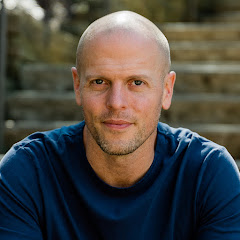 Tim Ferriss
Want to know something specific about what's covered?
We've already dissected every moment. Ask and we will deliver (with timestamps).
Key Moments
Tim Ferriss answers subscriber questions on health, productivity, and finances.
Key Insights
Prioritize health markers related to major mortality risks (cancer, stroke, heart attack, neurodegenerative disease), consulting experts like Dr. Peter Attia.
Manage contacts through 'just-in-time' introductions rather than extensive systems, focusing on key individuals in each field.
Prevent binge eating by removing trigger foods from the home and optimizing breakfast with protein and fiber to manage appetite.
Financial freedom involves defining personal goals, understanding wealth building vs. preserving, and employing a barbell asset allocation strategy (high-risk/high-reward paired with stability).
Productivity for non-Type A individuals can be enhanced by reframing routines as enabling 'scaffolding' rather than a grind.
Personalized happiness is determined by analyzing activities and people that generate positive or negative emotional states, focusing on the 'where' (geography) that optimizes these factors.
OPTIMIZING HEALTH MARKERS AND PREVENTATIVE CARE
Tim Ferriss emphasizes a personalized approach to health monitoring, suggesting focus on the four primary killers: cancer, stroke, heart attack, and neurodegenerative diseases, especially after age 40. He defers to experts like Dr. Peter Attia for detailed guidance, referencing specific blood markers like ApoE genotype, LDL particle number, Lp(a), and IGF-1. Preventive strategies can include intermittent or extended fasting, along with cycles of hypertrophy and autophagy, though personal risk factors dictate specific interventions.
STRATEGIES FOR MANAGING CONTACtS AND RELATIONSHIPS
Instead of relying on complex contact management software, Tim Ferriss prefers a 'just-in-time' approach to networking. He aims to know one or two highly competent individuals in each field who can then provide introductions to others needed. This philosophy extends from 'just-in-case' information hoarding to 'just-in-time' information retrieval, focusing on knowing how to find what's needed when it's needed, rather than trying to retain vast amounts of data proactively.
PREVENTING BINGE EATING AND CULTIVATING DISCIPLINE
Tim Ferriss advocates for environmental control over willpower when preventing binge eating. The most effective strategy is to remove trigger foods, or 'cheap foods,' from the home entirely, as the allure of readily available unhealthy options often leads to overconsumption during stressful periods. Additionally, optimizing breakfast with a significant protein and fiber load (e.g., eggs, beans, spinach) can significantly reduce overall daily calorie intake and curb cravings later in the day.
FINANCIAL FREEDOM AND STRATEGIC INVESTING
Financial freedom is defined on a personal level, ranging from debt freedom to the ability to pursue any choice. Tim emphasizes understanding wealth building versus wealth preservation. Personally, he employs a 'barbell' investment strategy: a large portion in highly volatile assets like startups and cryptocurrency, balanced by stable assets such as real estate and cash equivalents. He cautions against copying this allocation, noting it's a result of successful early investments that have grown disproportionately.
PRODUCTIVITY AND ROUTINES FOR AMBITIOUS NON-TYPE-A INDIVIDUALS
For those who find traditional routines a 'grind,' Tim suggests reframing them as enabling 'scaffolding' rather than rigid impositions. Routines, or 'rituals,' provide structure that frees up mental energy by reducing decision fatigue, allowing focus on more critical tasks. This scaffolding helps create a reliable framework for crafting one's best work and life, ensuring that energy is directed effectively rather than being depleted by constant daily choices.
DESIGNING LIVING SPACES FOR MENTAL OPTIMIZATION
Tim Ferriss places significant importance on home environment design to foster positive mental states. His living spaces are intentionally kept clutter-free, featuring artwork that evokes positive emotions and books that serve as reminders of encouraging experiences or principles. Items like photos from meaningful trips, motivational books, and meaningful objects are curated to reinforce desired mindsets and productivity, serving as visual cues and anchors.
DETERMINING 'WHERE' FOR OPTIMAL HAPPINESS
To discover one's 'where'—the optimal geographical location for happiness—Tim recommends an 80/20 analysis of the past year's calendar. This involves identifying the 20% of people and activities that generate 80% of positive emotional states and, conversely, those that cause 80% of negative emotions. The 'not-to-do' list emerges from the negative column, while the positive column guides the search for locations with a high density of enjoyable activities.
NAVIGATING INTROVERSION AND COMMUNICATION SKILLS
Considering himself an introvert who recharges through solitude, Tim Ferriss believes embracing introversion is valid, though developing public speaking skills is highly recommended. He views public speaking as a valuable investment, capable of amplifying communication effectiveness significantly. Even introverts can train themselves to be effective communicators in short bursts, gaining a competitive edge without needing to fundamentally alter their introverted nature.
LIFE DECISIONS ON CHILDREN AND PERSONAL PHILOSOPHY
Tim expresses a nuanced and somewhat conflicted philosophy on having children, citing concerns about partnership stability and divorce rates. However, he acknowledges the profound desire many have for children, noting that few regret having them. He also touches on male fertility issues, suggesting they are often underestimated. He frames this as an undecided category, open to future biological imperatives and personal evolution.
LIFE AND WORK-LIFE DESIGN IN AUSTIN
Tim expresses strong enthusiasm for living in Austin, finding it a spectacular city that has exceeded his expectations after moving there. He has 'doubled and tripled and quadrupled down' on the city, praising its live music scene, barbecue, friendly atmosphere, and overall appeal. This move reflects a conscious choice to design his lifestyle and environment for optimal happiness and effectiveness.
THE VALUE OF EXPERIMENTATION AND PERSONAL CHALLENGES
Tim encourages listeners to embrace experimentation, highlighting a '21-day no complaint experiment' as a valuable challenge. This practice aims to reduce negativity and cultivate positive reinforcement, both externally and internally. The experiment is designed to dramatically illustrate the frequency of complaining and to foster a more positive outlook, thereby improving overall quality of life. He provides a resource for detailed instructions on his blog.
PERSONAL EXCURSIONS AND DEEP WORK PRACTICES
To foster perception and higher-level awareness, Tim deliberately creates space for deep work and reflection. This includes disconnecting from technology through trips to remote locations without Wi-Fi or extended periods offline. He also draws inspiration from essays like 'The Tail End' to appreciate time with family and aims for extended periods of solitude to develop enhanced sensitivity and reduce reactivity, crucial for both focused work and personal insight.
PRACTICAL EVERYDAY CARRY (EDC) ITEMS AND TRAVEL ESSENTIALS
Tim Ferriss's EDC is practical rather than extensive, often utilizing a vest or backpack as a mobile carrier. Key items include a massage ball (like the Rux ball) for muscle relief, a headlamp, immune-boosting supplements like sprayable zinc and melatonin, dental floss, a journal, earplugs, and an eye mask for sleep optimization during travel. He notes that past EDC items, like multi-tools, have been impractical due to TSA restrictions.
THE STRATEGY BEHIND BOOK ILLUSTRATIONS AND ARTISTIC EXPRESSION
While Tim Ferriss has a background in illustration and has designed his book covers, he generally prefers a polished final product for his books, outsourcing detailed illustrations to professionals. He does not exclude the possibility of incorporating more visual sketches, perhaps for social media, as a way to re-engage with his artistic roots and share his process more intimately with his audience.
Mentioned in This Episode
●Supplements
●Products
●Software & Apps
●Companies
●Organizations
●Books
●Concepts
●People Referenced
Common Questions
After age 40, focus on markers related to the four leading causes of death: cancer, stroke, heart attack, and neurodegenerative diseases. Key metrics include ApoE genotype, LDL particle number, Lp(a), OGTT, and IGF-1. Consulting with experts like Dr. Peter Attia is highly recommended for personalized guidance.
Topics
Mentioned in this video
A critical metric related to heart health, mentioned as a health marker to monitor.
A hormone discussed as a health marker to monitor.
A genetic marker discussed as indicative of predisposition to conditions like Alzheimer's.
Investment in startups is described as a core part of Tim Ferriss's barbell strategy, representing a high-risk, high-reward category where he aims to create alpha.
Mentioned as a health marker, likely related to cardiovascular health.
An acrobatic form of yoga that Tim Ferriss finds correlates to a high degree of happiness. He notes the large AcroYoga community in Austin.
Friend and podcast guest, mentioned for his 'Waking Up' app and his experience using psychedelics to drive his meditation practice.
Trainer at OnPoint Tactical who worked with Tim Ferriss on escape techniques.
Olympic weightlifting champion and mentor, who advised that not having children by a certain age (45-50) can lead to 'going crazy inside your own head'.
Mentioned as someone who taught Tim Ferriss the concept of 'just-in-time information' versus 'just-in-case information'.
Author of 'Discipline Equals Freedom Field Manual', mentioned as a motivator for Tim Ferriss when facing discomfort or difficult decisions.
Author of 'The Book of Laughter and Forgetting', which is part of Tim Ferriss's home decor.
Four-time world champion in obstacle course racing, who introduced the Rubz ball to Tim Ferriss.
Considered one of the greatest swordsmen in Japanese history; his books are part of Tim Ferriss's home decor.
A scientist and researcher whose work on fasting and ketogenic diets was introduced to Tim Ferriss by Peter Attia.
Mentioned as a fan of Melatonin.
A renowned investor whose philosophy on capping downside risk and evaluating symmetric risk/reward is influential for Tim Ferriss.
Author of the essay 'The Tail End' on Wait But Why, which put the remaining time spent with family into perspective for Ferriss.
Co-founder of Virgin Atlantic, mentioned for his practice of limiting downside risk, like negotiating lease return options with Boeing.
Lead developer of WordPress and founder of Automatic, mentioned as a guest who has used LegalZoom.
Photographer mentioned as someone Tim Ferriss follows on Instagram.
A doctor and longevity expert, referred to as one of the wisest doctors Tim knows and an evidence-based concierge doctor. His podcast episodes are recommended for detailed health information.
Mentioned for his concept of 'creating space to listen,' which influences Tim Ferriss's post-book launch focus.
Television host who was shown in a YouTube video with Tim Ferriss practicing AcroYoga.
Author known for his work on 'deep work,' a concept requiring extended periods of uninterrupted focus.
Financial expert whose methods for getting out of debt are recommended.
A friend and expert in personal finance, known for his automated finance systems. His guest blog post on Tim Ferriss's site is recommended.
Hedge fund manager whose investment question 'Is this truly the hard trade?' is quoted.
Author of 'Principles', which is part of Tim Ferriss's home decor.
Mentioned as the creator of Budō floss, a tool for self-care related to joint issues.
Author of 'Rich Dad Poor Dad', mentioned for the book's useful concepts like the Quadrant.
Influenced Tim Ferriss's investment style.
Author of 'How to Stop Worrying and Start Living', a book recommended for managing fear and insecurity related to money.
An investor whose approach to investing is mentioned as being discussed on the Tim Ferriss podcast.
National Geographic photographer whose photo of a grizzly bear, 'Majesty Rising,' is part of Tim Ferriss's home decor.
An investor consistently successful in his field, mentioned as a teacher of investment approaches.
Buddhist author and meditation teacher who helped Tim Ferriss navigate a difficult silent retreat experience.
Host of the '10% Happier' podcast, who discussed his challenging silent retreat experience with Tim Ferriss.
Brand of a lightweight fleece vest used as a portable bag for carrying everyday items.
A longtime sponsor of the podcast, providing resources for launching and running businesses, including estate planning and legal advice.
Mentioned as a successful startup investment that has significantly grown Tim Ferriss's initial allocation.
Brand of sprayable zinc mentioned as a product for bolstering the immune system.
Mentioned as a successful startup investment that has significantly grown Tim Ferriss's initial allocation.
Mentioned as a successful startup investment that has significantly grown Tim Ferriss's initial allocation.
Brand of tactical flashlight that Tim Ferriss used to carry.
Aircraft manufacturer whose lease agreements were negotiated by Richard Branson to allow for potential return of planes.
Mentioned as a successful startup investment that has significantly grown Tim Ferriss's initial allocation.
A company created by a reader after going through 'The 4-Hour Workweek', known for bags made out of hemp.
A book by Tony Robbins discussing financial strategies, mentioned alongside 'Unshakeable'.
An anthology of writings on minimalism, displayed in Tim Ferriss's home for its inspirational value.
A journal mentioned as part of an EDC routine, often used for morning pages, though sometimes replaced by lighter versions due to weight.
A book by Tim Ferriss that influenced his past EDC, specifically regarding prep tools and techniques.
A book by Tony Robbins that includes investment principles, including the question 'Is this truly the hard trade?'.
A book by Robert Kiyosaki, particularly its 'Quadrant' concept, is mentioned as useful for understanding financial principles.
Two books on Miyamoto Musashi, considered one of the greatest swordsmen in Japanese history, are displayed in Tim Ferriss's home.
A novel by Milan Kundera that holds positive associations for Tim Ferriss and is part of his home decor.
One of Tim Ferriss's books that represents advice given to interviewees, also applicable to those over 40.
A podcast hosted by Dan Harris, which featured a conversation with Tim Ferriss about his experience in a silent retreat.
A book by Dale Carnegie recommended for dealing with fear and insecurity, which can indirectly help with managing money.
Tim Ferriss's book that reached number one on The New York Times and Wall Street Journal bestseller lists. It compiles advice from various mentors.
A book on the ketogenic diet mentioned in the context of Tim Ferriss's home decor, aimed at promoting helpful emotions or memories.
A book mentioned as part of the decor in Tim Ferriss's home, aimed at evoking positive emotions.
A book by Jocko Willink that serves as a reminder for Tim Ferriss to take ownership and face discomfort.
Ray Dalio's book that is part of Tim Ferriss's home decor.
Tim Ferriss's first book, mentioned in the context of designing book covers and how its readers have created companies like Dotsar.
The podcast itself, presented as an anomaly and experiment in this episode, deviating from its usual long-form interview format.
Free case studies and instructions on how to lose significant weight using the slow carb diet, mentioned as evidence of breakfast's impact.
Mentioned as a place where more information about Jersey Greg can be found.
The humor magazine at Princeton University where Tim Ferriss served as graphics editor.
A photograph by Paul Nicklin of a grizzly bear, displayed in Tim Ferriss's home.
A challenge proposed for listeners to reduce negativity and improve quality of life by refraining from complaining for 21 consecutive days.
The platform used for Tim Ferriss's blog and book sites, noted for its widespread use (28% of all websites) and ease of use for non-technical individuals.
A free weekly newsletter from Tim Ferriss sharing five interesting things discovered or explored that week, including books, articles, gadgets, and workarounds.
A medical test mentioned as a health marker to check, likely related to metabolic health.
A tool for self-care related to joint issues, created by Kelly Starrett.
Mentioned in the context of cryptocurrency investment, suggesting it has not risen as much as it could have if invested in very early, but still doubled.
A personality assessment sometimes mentioned in relation to Tim Ferriss's perceived introverted, intuitive, thinking, judging (INTJ) or perceiving (INTP) type.
An eye mask used for sleep that covers the ears externally; described as potentially warm but effective.
A massage ball with prongs, introduced by Amelia Boone, used for alleviating tightness and pain in legs, feet, and hips, especially during travel.
Earplugs recommended for comfortable sleep, especially for side sleepers, as they do not poke into the ear canal.
The Transportation Security Administration, mentioned in the context of a TSA agent confiscating a multi-tool from Tim Ferriss's wallet.
A meditation center in Whittier, California, where Tim Ferriss experienced a challenging 10-day silent retreat.
An organization dedicated to improving public speaking skills, mentioned as a potential training ground that Warren Buffett might have utilized.
Tactical training company where Tim Ferriss trained with Kevin Reeve on escape techniques.
More from Tim Ferriss
View all 704 summaries 121 min
How to Legalize Medical Psychedelics in Your Country — Tania de Jong on Australia’s Breakthrough
 70 min
Q&A with Tim — The Art of Male Friendship, Reinvention in The Age of AI, & More
 125 min
Dr. Andrew Huberman — Peptides, Performance, and Protocols
 112 min
The Random Show! Mortality, AI, Supplements, Rock Climbing, & More
Ask anything from this episode.
Save it, chat with it, and connect it to Claude or ChatGPT. Get cited answers from the actual content — and build your own knowledge base of every podcast and video you care about.
Get Started Free