Key Moments
How to Build a Large Audience From Scratch (And More) | The Tim Ferriss Show (Podcast)
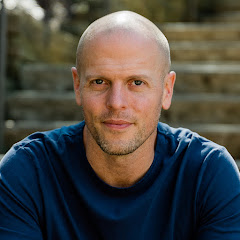 Tim Ferriss
Want to know something specific about what's covered?
We've already dissected every moment. Ask and we will deliver (with timestamps).
Key Moments
Tim Ferriss on building an audience, focus, and habits from self-experiments.
Key Insights
Focus on "1,000 true fans" and niche subcultures rather than mass audiences.
Prioritize "evergreen content" that remains valuable long-term for SEO and audience growth.
Ask "why" three times to ensure your goals are aligned and to find the most direct path.
Integrate habits from extensive self-experiments, like cold baths, journaling, and the 80/20 principle.
Maintain focus by identifying the "lead domino" task that makes others easier or irrelevant.
Critically evaluate health information by learning to parse good science from bad, often through resources like Ben Goldacre's "Bad Science."
BUILDING AN AUDIENCE FROM SCRATCH
To build an audience from scratch today, the core principle is to focus on "1,000 true fans" rather than aiming for mass appeal. This involves identifying niche subcultures you belong to and understanding their preferred platforms and content. The strategy emphasizes creating high-quality, "evergreen content" that remains relevant and valuable over time, particularly long-form pieces that benefit SEO. This approach is labor-efficient and ensures that content continues to attract an audience years after its initial publication, making it a sustainable way to build a loyal following.
THE "WHY" BEHIND AUDIENCE BUILDING
Before embarking on audience building, it's crucial to ask "why" three times to clarify the ultimate goal. Often, the perceived necessity of building an audience is an intermediate step, not the end objective. For instance, if the goal is freedom, there might be more direct paths than audience acquisition. This exercise helps distinguish between the goal itself and the methods used to achieve it, aligning actions with true objectives and potentially revealing more efficient routes to desired outcomes.
STRATEGIC FOCUS ON NICHE MARKETS
Instead of targeting broad markets, the most effective strategy is to identify and focus on specific subcultures and underserved markets where you can become ubiquitous. This involves understanding your own demographics and psychographics to tailor your approach effectively. By concentrating efforts on a well-defined group, you can achieve a high impact with limited resources, appearing more prominent than your actual investment might suggest.
INTEGRATION OF HABITS FROM SELF-EXPERIMENTS
Drawing from extensive self-experiments, many habits are integrated into daily life, including cold and heat exposure for sleep, journaling using the "five-minute journal" for daily focus, and practicing the "no complaint" experiment. The 80/20 principle is consistently applied, and elements from various books like "The 4-Hour Body" and "The 4-Hour Workweek" are implemented, such as the Slow Carb diet (though experimenting with keto currently) and leveraging automation and the 80/20 analysis for task management.
MAINTAINING FOCUS AND PRIORITIZATION
To maintain focus and achieve goals, the most important question to ask daily is: "Which of these, if done, makes the rest easier or irrelevant?" This involves identifying the "lead domino" task that has a disproportionate impact. Additionally, asking "which of these makes me the most uncomfortable?" can often point to the critical task that, when completed, reduces anxiety and improves quality of life. These questions are vital for effective prioritization amidst numerous demands.
CRITICAL EVALUATION OF HEALTH INFORMATION
Navigating the vast amount of health information requires developing the ability to discern reliable sources from misleading ones. Reading books like Ben Goldacre's "Bad Science" is recommended to learn how to parse good science from bad, understand sensationalized headlines, and properly evaluate studies. This critical skill allows for better decision-making regarding health and lifestyle choices, distinguishing genuine insights from common noise.
MINIMIZING SUPPLEMENTATION FOR OPTIMAL HEALTH
The approach to supplementation is to minimize it, prioritizing whole foods and dietary optimization instead. Supplements should be used only when specific deficiencies exist that cannot be addressed through diet. Consuming a wide spectrum of colorful foods and incorporating items like coconut oil and Brazil nuts can cover many nutritional bases. Athletic Greens is mentioned as an insurance policy for travel or times when dietary coverage might be lacking, but the emphasis remains on natural dietary intake.
DEVELOPING WRITING SKILLS AND REVIEW PROCESS
To improve as a writer, reading outside one's genre, particularly good fiction, is advised. Books like Stephen King's "On Writing" and "Bird by Bird" offer practical advice. Engaging a lawyer to proofread can help remove extraneous words due to their precision. Implementing daily practices like "Morning Pages" fosters consistency. For feedback, the rule is that if one person loves an idea, it's kept; however, consensus is needed to remove something, ensuring that positive reception is valued over negative criticism.
BRAIN DUMPING AND GUILTY PLEASURES
For times when the brain needs a rest or a "brain dump," enjoyable activities include hand drumming, playing the hand pan, and watching serial television shows like "True Detective" or "The Jinx." Reading well-written children's or young adult fiction, such as "A Wrinkle in Time," is also a relaxing option. These activities provide a break from problem-solving and allow for mental decompression, aiding in overall well-being and creativity.
ADVICE TO YOUNGER SELF: START MEDITATING
The primary piece of advice to a younger self is to start meditating earlier. A vast majority of world-class performers interviewed by Tim Ferriss incorporate some form of meditative practice. Resources like John Kabat-Zinn's "Wherever You Go, There You Are" and Tara Brock's "Radical Acceptance" are recommended. Practices like Transcendental Meditation, Headspace, and Calm are viable starting points, emphasizing consistency over duration in the initial stages to build the habit.
Mentioned in This Episode
●Products
●Software & Apps
●Companies
●Organizations
●Books
●Concepts
●People Referenced
Audience Building and Productivity Cheat Sheet
Practical takeaways from this episode
Do This
Avoid This
Common Questions
Focus on creating high-quality, long-form, Evergreen content. Identify your '1,000 true fans' within specific subcultures you understand and belong to. Target the least crowded channels, which are often still long-form print or audio, to compete cost-effectively.
Topics
Mentioned in this video
Tim Ferriss's website, used to host movie recommendations and other resources.
A tech news website mentioned as a potential outlet for reaching target demographics.
A video-sharing platform mentioned as a sponsor and host for recommended movies, including 'World of Tomorrow' and 'The Lady in Number Six'.
A Chrome extension recommended for maintaining focus by displaying a beautiful photo, quote, and the day's most important task.
A journaling tool inspired by The 4-Hour Workweek, used by Tim Ferriss for morning focus.
The website for Transcendental Meditation, where information about training can be found.
A meditation app recommended as a good tool for getting started with meditation.
A training program mentioned in 'The 4-Hour Body' that Tim Ferriss follows on and off.
A meditation app recommended as a good tool for getting started with meditation.
Mentioned as an example of a customer who might purchase high-end leather pants.
Author of the '1,000 True Fans' concept, recommended for audience building.
Co-founder of Uber and StumbleUpon, mentioned as part of Tim Ferriss's inner circle.
Management consultant quoted on the principle that 'what gets measured gets managed'.
Entrepreneur and founder mentioned as part of Tim Ferriss's current inner circle.
Chef featured in 'The 4-Hour Chef', mentioned as part of Tim Ferriss's inner circle.
Essayist whose work on 'Maker Schedule, Manager Schedule' is referenced for structuring the day.
Author of 'Bird by Bird', a book on writing that Tim Ferriss recommends.
Mentioned as an example of a world-class performer (musician) with a mindfulness practice.
Author whose book 'On Writing' is recommended for advice on the craft.
Author and neuroscientist whose lecture 'Waking Up' is recommended for exploring mindfulness and meditation.
Physicist and Nobel laureate quoted on the difficulty of not fooling oneself.
Author of 'On Writing Well', mentioned for advice on the psychological aspects of writing.
Author of 'Radical Acceptance', a book recommended by Tim Ferriss.
Chess prodigy and author, inspiration for 'Searching for Bobby Fischer', mentioned as part of Tim Ferriss's inner circle.
Legendary music producer, described as Zen, calm, and unflappable, mentioned as part of Tim Ferriss's inner circle.
Author of the book 'Bad Science', which helps readers evaluate scientific information.
Doctor mentioned in relation to a blog post about using saunas and heat for growth hormone increase.
Martial artist and philosopher quoted on the essence of a successful warrior.
Author of 'Wherever You Go, There You Are', a book on mindfulness and meditation.
A media website mentioned as a potential outlet for reaching target demographics.
Mentioned as an example of a DJ/group whose founder practices mindfulness.
A supplement product used by Tim Ferriss as an 'insurance policy' to cover nutritional bases, especially when traveling.
The platform used for Tim Ferriss's blog, mentioned in the context of website analytics.
One of Tim Ferriss's books, mentioned for its recipes, such as 'sexy time steak'.
A lecture/video series by Sam Harris that serves as an introduction to meditation and spirituality without religion.
One of Tim Ferriss's books, from which several habits and concepts are drawn, including training programs and the Slow Carb Diet.
A book recommended for understanding the market for high-quality offerings and premium pricing.
A book on mindfulness and meditation by Jon Kabat-Zinn, recommended by Tim Ferriss.
A young adult novel Tim Ferriss enjoyed reading for relaxation.
A book by Ben Goldacre that teaches how to parse good science from bad science and evaluate sensationalized headlines.
A highly recommended book on writing by Anne Lamott, cited for its value in overcoming insecurities.
A book by Tara Brock recommended for its content related to meditation and acceptance.
A TV series that Tim Ferriss downloads and watches for relaxation.
The podcast hosted by Tim Ferriss, which features deconstructions of world-class performers. This episode is in a Q&A format.
A TV series that Tim Ferriss watches for relaxation.
A science fiction short film recommended by Tim Ferriss, winner of the grand jury prize at Sundance.
An Oscar-winning short film about Alice Herz-Sommer, aged 109, the world's oldest pianist and Holocaust survivor, recommended for its insights on mental framing and perspective.
More from Tim Ferriss
View all 696 summaries 127 min
Reimagining Biotech with Jake Becraft of Strand Therapeutics — Tim’s Founder Kitchen
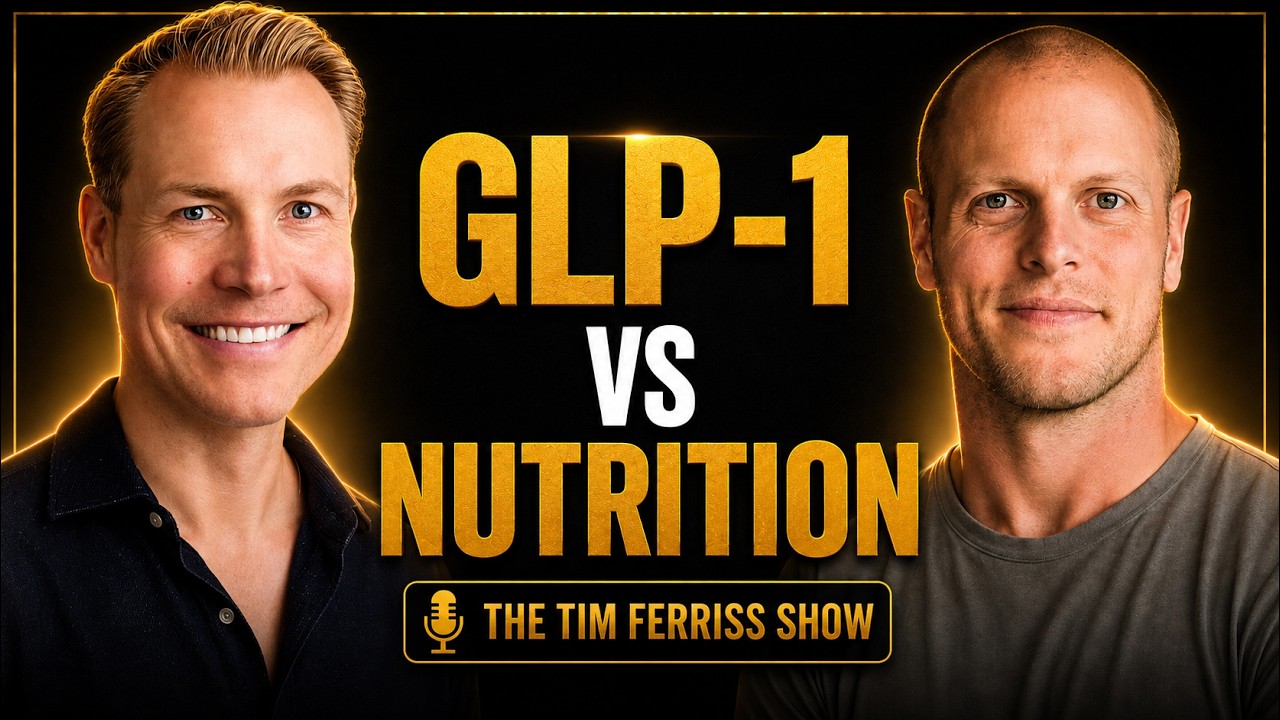 132 min
Reversing Type 2 Diabetes and Rowing 2,750 Miles — Sami Inkinen of Virta Health
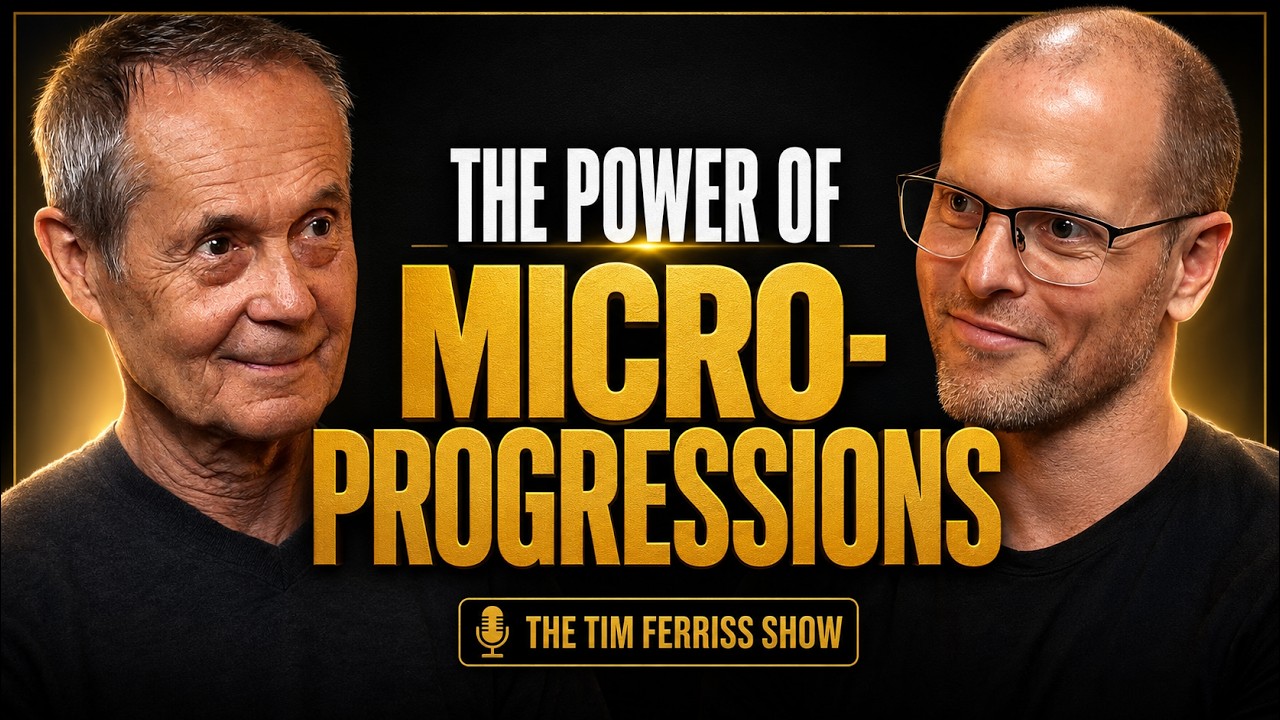 71 min
The Most Incredible Transformation I’ve Ever Seen — Jerzy Gregorek on Cerebral Palsy and Coaching
 34 min
PRISONER NO MORE: The True Story of Tae Jin Park
Ask anything from this episode.
Save it, chat with it, and connect it to Claude or ChatGPT. Get cited answers from the actual content — and build your own knowledge base of every podcast and video you care about.
Get Started Free