Key Moments
#47–Matt Walker, Ph.D. on Sleep (Part 1 of 3): Dangers of poor sleep, dementia risk, mental health..
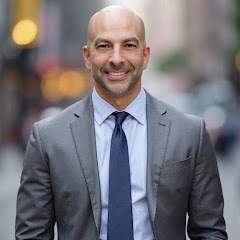 Peter Attia MD
Key Moments
Sleep is crucial for health; lack of it increases dementia, mental health, and disease risk. Understanding sleep stages is key.
Key Insights
Sleep is a fundamental biological drive with profound impacts on brain function, mental health, and disease prevention.
Insufficient sleep significantly elevates the risk of developing Alzheimer's disease by impairing the brain's glymphatic system, which clears toxic proteins like beta-amyloid.
Sleep consists of distinct stages (NREM 1-4 and REM), each crucial for different restorative functions, including memory consolidation and emotional regulation.
Chronic sleep deprivation negatively affects cardiovascular health, metabolic function, and immune response, increasing the risk of serious diseases.
Mental health is strongly linked to sleep quality and quantity, with REM sleep playing a vital role in emotional processing and recalibration.
Drowsy driving is a major cause of accidents, often more fatal than drunk driving due to the lack of reaction time.
Modern society is experiencing a dramatic decline in average sleep duration, exacerbating public health issues.
Prioritizing a non-negotiable sleep opportunity, ideally around eight hours, is a critical, often overlooked, preventative health measure.
Understanding the Fundamental Need for Sleep
Matthew Walker emphasizes that sleep, a fundamental biological drive, has been scientifically underserved compared to other drives like eating and procreation. Despite occupying a third of our lives, the precise 'why' of sleep remained a mystery for decades. Its conservation across evolution suggests a vital, life-sustaining purpose. The speaker, Peter Attia, illustrates this by noting that evolution would not dedicate so much time to a non-essential activity without critical benefits.
Sleep's Crucial Link to Alzheimer's Disease Prevention
A significant portion of the discussion illuminates the causal link between poor sleep and Alzheimer's disease. Insufficient sleep impairs the brain's glymphatic system, a 'sewage system' that clears toxic beta-amyloid protein during deep sleep. When this system underperforms due to lack of sleep, amyloid buildup accelerates, contributing to neuronal death, particularly in memory centers like the hippocampus. This highlights sleep as a key lifestyle factor in Alzheimer's prevention, with evidence now supporting a causal relationship.
The Architecture of Sleep and Its Functions
Sleep is broken down into non-REM (stages 1-4) and REM sleep, cycling approximately every 90 minutes. Deep NREM sleep (stages 3-4) is critical for physical restoration, information transfer, and memory consolidation, particularly declarative memories. REM sleep, characterized by rapid eye movements and vivid dreaming, is vital for emotional regulation, recalibrating emotional networks, and consolidating procedural and implicit memories. Sleep spindles, prominent in stage 2 NREM, are crucial for preparing the brain to form new memories.
The Pervasive Impact of Sleep Deprivation on Health
Chronic sleep deprivation has far-reaching negative consequences beyond cognitive function. It increases oxidative stress, impacts cardiovascular health by raising blood pressure, disrupts metabolic regulation leading to insulin resistance, and weakens the immune system. These effects collectively elevate the risk of major health issues such as heart disease, stroke, diabetes, and even cancer. The discussion posits that sleep is not just another pillar of health but the foundational element upon which diet and exercise rely.
Sleep's Essential Role in Mental and Emotional Well-being
Sleep, particularly REM sleep, functions as 'emotional first aid.' It recalibrates the brain's emotional centers, such as the amygdala, and enhances the regulatory capacity of the prefrontal cortex. Insufficient sleep, especially in adolescents, is a strong predictor of mental health issues, including anxiety, depression, and suicidal ideation. While anxiety can disrupt sleep, the evidence suggests a potent feedback loop where poor sleep amplifies mental health problems.
The Dangers of Drowsy Driving and Societal Sleep Loss
The conversation underscores the severe risks associated with drowsy driving, which accounts for more accidents than drugs or alcohol combined. Microsleeps, brief lapses of attention due to sleep deprivation, can lead to catastrophic outcomes because the driver does not react at all. Furthermore, the average sleep duration has drastically declined in industrialized nations over the past decades. This societal-wide reduction underscores the urgency of prioritizing sleep as a public health imperative.
REM vs. Deep Sleep: Evolutionary Significance and Mortality Risk
Evolutionary analysis suggests REM sleep, a more recent development appearing in birds and mammals, may be even more critical for survival than the older non-REM sleep. Studies show REM sleep deprivation can lead to death as quickly as total sleep deprivation. While non-REM sleep is vital for basic brain functions and clearance, REM sleep appears essential for complex cognitive and emotional processing associated with advanced nervous systems. This highlights the importance of obtaining sufficient amounts of both sleep stages.
Rethinking Sleep: Beyond Machismo to Necessity
Dr. Walker criticizes the 'sleep machismo' prevalent in some circles, where insufficient sleep is worn as a badge of honor. He uses examples like Thatcher and Reagan, who boasted about minimal sleep and later developed Alzheimer's, to illustrate the severe long-term consequences. He contrasts this with the catastrophic outcomes of drowsy driving, highlighting that sleep deprivation is not just a personal health issue but a significant public safety concern. Prioritizing an eight-hour sleep opportunity is framed not as a luxury but a selfish act of self-preservation against disease and early death.
Mentioned in This Episode
●Products
●Software & Apps
●Companies
●Organizations
●Books
●Concepts
●People Referenced
Common Questions
The glymphatic system is the brain's sewage system, clearing metabolic waste. During deep sleep, glial cells shrink, allowing cerebrospinal fluid to perfuse the brain and wash away toxic proteins like beta-amyloid, which is linked to Alzheimer's disease.
Topics
Mentioned in this video
Where Matthew Walker served as a professor of psychiatry before moving to Berkeley.
An organization of which Matthew Walker is a fellow.
The institution where Matthew Walker is a professor of neuroscience and psychology and where the Center for Human Sleep Science is located.
The institution in London where Matthew Walker pursued his PhD.
A polling organization that conducted a systematic questionnaire in 1942, finding the average American adult slept 7.9 hours a night.
The center founded and directed by Matthew Walker, where much of his research on sleep and human brain function is conducted.
One of the organizations that have provided funding awards for Matthew Walker's research.
One of the organizations that have provided funding awards for Matthew Walker's research.
A US state described as an easy place to arrive and a difficult place to leave; Matthew Walker notes its good weather and collaborative academic environment.
A city where Peter Attia notes the weather is predictably bad, and its environment is compared to the brain's glymphatic system.
Used as an analogy to highlight the danger of sleep deprivation; one is allowed multiple jumps off it, but not prolonged sleep deprivation attempts.
Matthew Walker's home country, where average sleep duration is 6 hours and 49 minutes.
Where Matthew Walker earned his undergraduate degree and PhD in neurophysiology.
Peter Attia's home city, described as having utopian weather.
A country where average sleep duration is even worse than America, down to 6 hours and 21 minutes.
Sponsored Felix Baumgartner's jump from space.
Where Matthew Walker serves as a sleep scientist, contributing to the scientific exploration of sleep in health and disease.
Social media platform where Peter Attia can be found.
Social media platform where Peter Attia can be found and is the best way to share questions and comments.
Social media platform where Peter Attia can be found.
A former head of state who was very proud of getting insufficient sleep, and later developed Alzheimer's disease.
The gentleman who sponsored by Red Bull jumped from the outer surface of our planet, breaking the sound barrier, an act considered safe by Guinness while sleep deprivation attempts are banned.
Professor of neuroscience and psychology at the University of California Berkeley, founder and director of the Center for Human Sleep Science, and author of 'Why We Sleep'. He is an expert in the impact of sleep on brain function and health.
A legendary Formula One driver, described as Matthew Walker's hero, after whom Peter Attia's son is named.
The host of The Drive podcast, who discusses his past sleep habits and perspectives on health and longevity.
A wonderful scientist who discovered the helical structure of DNA, who also tried and failed to crack the mystery of why we sleep.
A physician and friend of Peter Attia who is adamant about the importance of sleep and challenged Peter's 'sleep when you're dead' philosophy.
A former head of state who was vociferous about her proclamation of the uselessness of sleep, and later developed Alzheimer's disease.
An international bestseller authored by Matthew Walker, discussing the importance of sleep and its impact on health.
An organization that has banned attempts at the longest period of sleep deprivation due to its devastating health implications, including suicide risk.
More from Peter Attia MD
View all 333 summaries 135 min
381‒Alzheimer’s disease in women: how hormonal transitions impact the brain, new therapies, & more
 9 min
9 minIs Industrial Processing the Real Problem With Seed Oils? | Layne Norton, Ph.D.
 13 min
Cooking with Lard vs Seed Oils | Layne Norton, Ph.D.
 146 min
380 ‒ The seed oil debate: are they uniquely harmful relative to other dietary fats?
Ask anything from this episode.
Save it, chat with it, and connect it to Claude or ChatGPT. Get cited answers from the actual content — and build your own knowledge base of every podcast and video you care about.
Get Started Free