Key Moments
#32–Siddhartha Mukherjee, M.D., Ph.D.: new frontiers in cancer therapy, medicine, and writing
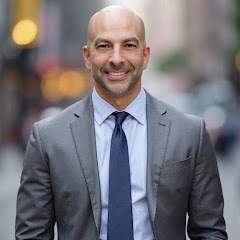 Peter Attia MD
Want to know something specific about what's covered?
We've already dissected every moment. Ask and we will deliver (with timestamps).
Key Moments
Siddhartha Mukherjee discusses cancer therapy, writing, and the "Laws of Medicine" on Peter Attia's podcast.
Key Insights
The history and evolving understanding of cancer, from "The Emperor of All Maladies" to current research.
The integration of writing and science as a process of thinking and making complex topics accessible.
The "Laws of Medicine": intuition vs. testing, outliers as teachers, and bias in experimentation.
Immunotherapy's evolution, particularly checkpoint inhibitors, and their impact on cancer treatment.
The promising, yet complex, intersection of metabolism, diet, and cancer therapy, as seen in a study combining ketogenic diets with pi3 kinase inhibitors.
The importance of making scientific progress by planting the "first stake" in a problem, enabling further linear research.
THE JOURNEY OF CANCER RESEARCH AND WRITING
Siddhartha Mukherjee, a physician and Pulitzer Prize-winning author, shares his perspective on the history and evolution of cancer research. His work, including "The Emperor of All Maladies," aims to provide a comprehensive narrative of the battle against cancer, highlighting significant advances in surgery, chemotherapy, and more recently, immunotherapy. Mukherjee emphasizes that understanding the history of cancer is not a depressing endeavor but rather a clarifying one, offering insights into our progress and future directions in fighting the disease. He also discusses the genesis of his book, sparked by a patient's question about the trajectory of cancer treatment.
BALANCING SCIENCE AND STORYTELLING
Mukherjee views writing not as a separate pursuit but as an integral part of his scientific thinking process. He adheres to principles like ensuring human stories are woven into scientific narratives, making complex topics accessible to a broad audience. His approach transforms scientific concepts into relatable narratives, illustrated by the example of explaining oncogenes by connecting laboratory discoveries to patient experiences. This integration allows for a deeper understanding and broader appeal, making science impactful beyond the research community.
THE THREE LAWS OF MEDICINE
Mukherjee introduces "The Three Laws of Medicine," derived from Bayesian principles and observations on scientific practice. The first law posits that a strong intuition is more powerful than a weak test, emphasizing the value of prior information (priors) in interpreting data. The second law highlights that outliers teach us laws, while normals teach us rules, suggesting that rare cases often reveal fundamental biological principles. The third law states that for every perfect or exceptional medical experiment, there is an intrinsic human bias, stressing the need for skepticism and self-awareness in research and clinical practice.
THE REVOLUTION OF IMMUNOTHERAPY
The discussion delves into the significant advancements in cancer immunotherapy, particularly the development of checkpoint inhibitors like CTLA-4 and PD-1. Mukherjee explains how these therapies work by releasing the brakes on the immune system, allowing it to recognize and attack cancer cells. He notes the Nobel Prize awarded for this work, underscoring its transformative impact. While immunotherapy has led to durable responses in some patients, challenges remain, such as understanding why certain tumors respond and why some patients relapse, driving further research into resistance mechanisms.
METABOLIC THERAPY AND CANCER
A key focus is the collaborative research on combining ketogenic diets with PI3K inhibitors. This study, initially sketched on a napkin, explored how metabolic states affect cancer. The research found that certain cancer drugs can induce a hyperinsulinemic state, which tumors exploit to become resistant. Combining these drugs with a ketogenic diet paralyzed this resistance in animal models. Mukherjee stresses that this is an animal study, not a recommendation for home use, and that the role of ketogenic diets in cancer prevention or treatment requires further rigorous investigation.
THE FUTURE OF ONCOLOGY: PRECISION AND PERSPECTIVE
Mukherjee elaborates on the shift towards more personalized and systemic approaches in cancer treatment. He draws parallels between the systemic assault of immunotherapy and the current metabolic research, suggesting these methods are less about targeting specific mutations (like Gleevec) and more about broad interventions. The research indicates that these approaches can be mutation-agnostic, offering new hope for challenging cancers. The concept of planting the 'first stake' in a problem, whether through immunotherapy or metabolic intervention, is crucial for transforming complex, non-linear problems into linear, addressable research pathways.
Mentioned in This Episode
●Software & Apps
●Organizations
●Books
●Drugs & Medications
●Concepts
●People Referenced
Common Questions
Siddhartha Mukherjee is a Pulitzer Prize-winning writer, physician, and scientist. He is renowned for his books, including 'The Emperor of All Maladies: A Biography of Cancer' and 'The Gene: An Intimate History,' which explore complex scientific topics with compelling narrative.
Topics
Mentioned in this video
Publication where Siddhartha Mukherjee consistently publishes his writing.
Scientific journal where Siddhartha Mukherjee has published.
University where Siddhartha Mukherjee earned his PhD in immunology.
Institution where Siddhartha Mukherjee earned his MD.
Institution where Siddhartha Mukherjee studied biology for his undergraduate degree.
Institution where Siddhartha Mukherjee is an associate professor of medicine and where the interview took place.
Medical journal where Siddhartha Mukherjee has published.
Publication where Siddhartha Mukherjee consistently publishes his writing.
Institution where Peter Atia's friend is undergoing treatment and where Siddhartha Mukherjee did his fellowship.
A short book by Siddhartha Mukherjee commissioned by TED, outlining three fundamental principles for thinking in medicine.
Another book written by Siddhartha Mukherjee, which was also being adapted into a film by Ken Burns.
Siddhartha Mukherjee's Pulitzer Prize-winning book, a history of cancer, praised for its storytelling and readability across different audiences.
A checkpoint inhibitor target in immunotherapy, recognized with a Nobel Prize for its role in cancer treatment.
Siddhartha Mukherjee's field of PhD study, and a subject he has returned to in his research.
Dietary approach discussed in the context of cancer therapy, notably in combination with pi3 kinase inhibitors in a study by Mukherjee and Antley.
One of the checkpoint inhibitor targets in immunotherapy, recognized with a Nobel Prize for its role in cancer treatment.
A protein often overexpressed in breast cancer, relevant to a friend of Peter Atia undergoing treatment.
A classification for breast cancer indicating the absence of progesterone receptors, relevant to a friend of Peter Atia undergoing treatment.
A classification for breast cancer indicating the presence of estrogen receptors, relevant to a friend of Peter Atia undergoing treatment.
Mentioned as an example of a person who wrote to think, similar to Siddhartha Mukherjee's approach.
Physicist and Nobel laureate, admired by Siddhartha Mukherjee and cited for his quote about not fooling oneself.
Mentioned as an example of a person who wrote to think, similar to Siddhartha Mukherjee's approach.
A scientist whose story is used to illustrate the human element in scientific discovery, specifically in identifying cancer-causing oncogenes.
Mentioned as an example of a person who likely writes to think, similar to Siddhartha Mukherjee's approach.
A friend of Peter Atia who set up the initial meeting between Atia and Siddhartha Mukherjee, and a collaborator on a significant paper.
Mathematician and economist whose work on probability led to Bayesian inference, a concept discussed in relation to medical diagnosis and decision-making.
Guest, Pulitzer Prize-winning writer, physician, and scientist specializing in hematology and oncology. He discusses cancer therapy, medicine, and writing.
Mentioned as one of the key figures in the discovery and development of the drug Gleevec.
Pioneering scientist who first hypothesized that cancer cells metabolize differently from normal cells.
A particularly challenging type of breast cancer with few treatment options, chosen for study in the new human trial.
One of the cancer types being studied in the new human trial combining pi3 kinase inhibitors and ketogenic diets.
A genetic disorder that increases the risk of various cancers, and makes patients more susceptible to checkpoint inhibitors.
More from Peter Attia MD
View all 341 summaries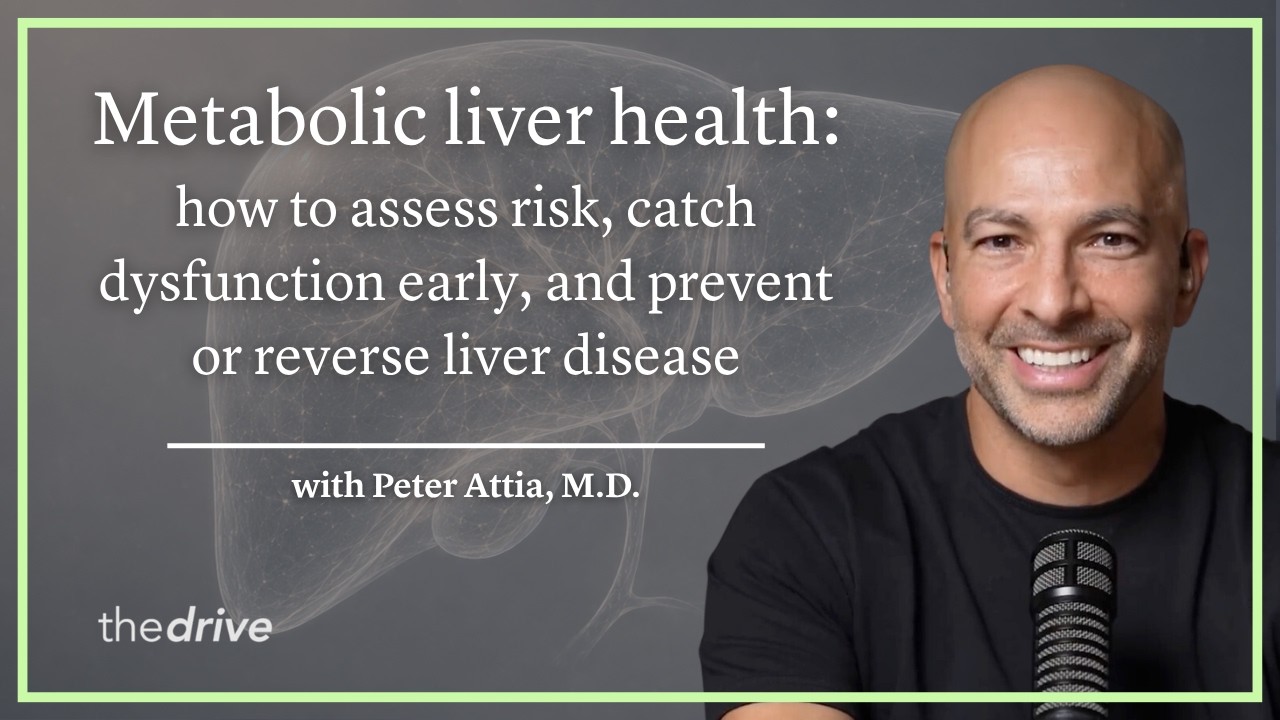 39 min
Metabolic liver health: how to assess risk, catch dysfunction early, and more (AMA 88 sneak peek)
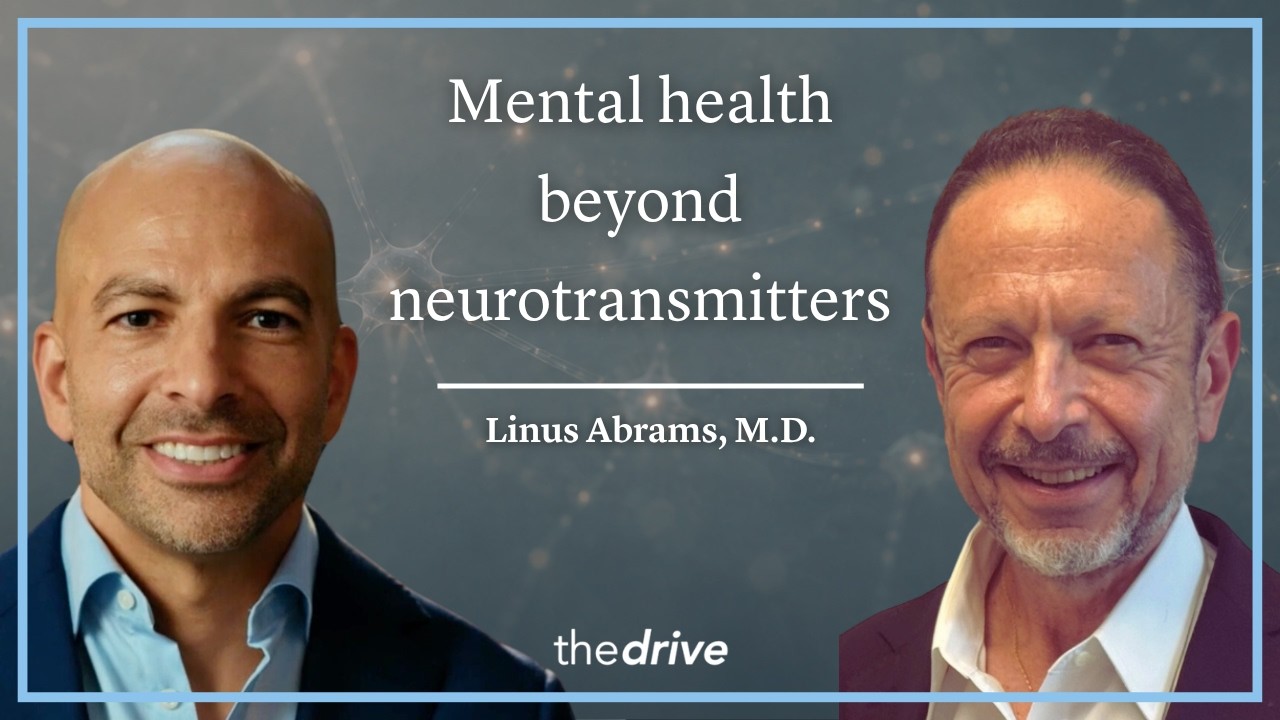 140 min
404 ‒ Mental health beyond neurotransmitters: hormones in psychiatry, psychedelic therapies, & more
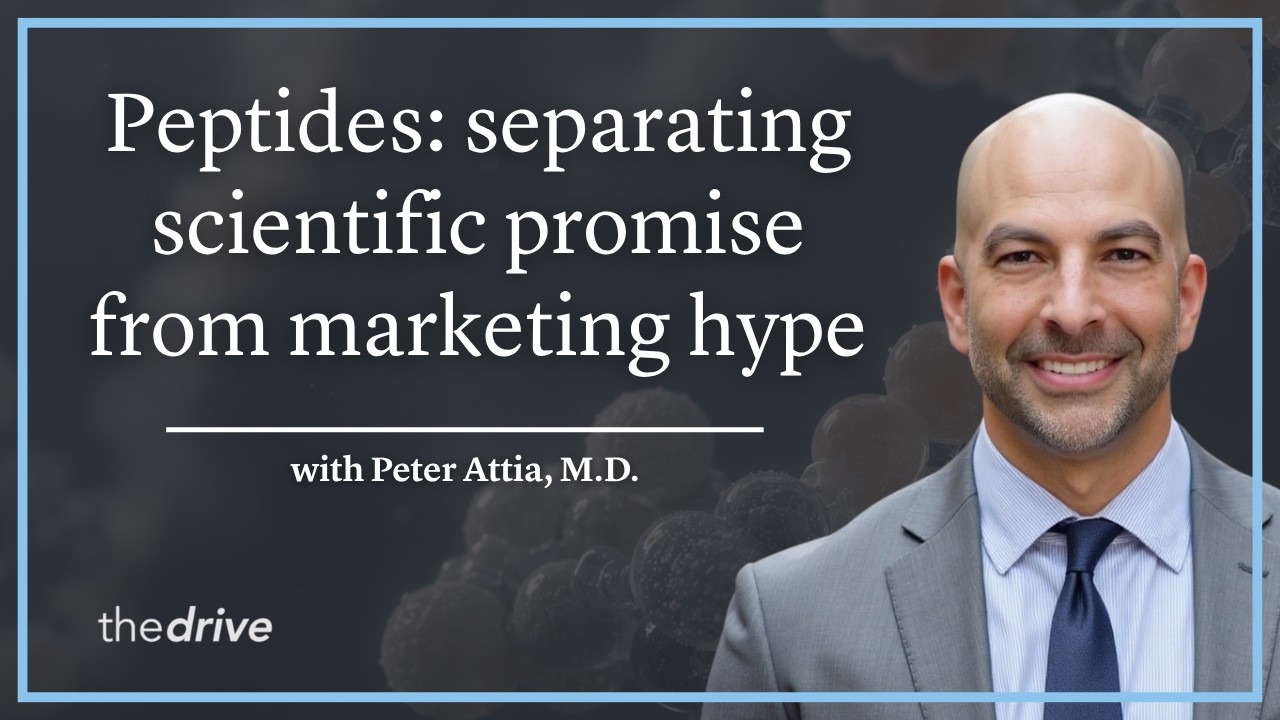 51 min
403 ‒ Peptides: separating scientific promise from marketing hype
 148 min
402 ‒ NMR blood analysis: how mortality risk and more can be assessed from a single blood sample
Ask anything from this episode.
Save it, chat with it, and connect it to Claude or ChatGPT. Get cited answers from the actual content — and build your own knowledge base of every podcast and video you care about.
Get Started Free