Key Moments
276 ‒ Special episode: Peter on longevity, supplements, protein, fasting, apoB, statins, & more
 Peter Attia MD
Want to know something specific about what's covered?
We've already dissected every moment. Ask and we will deliver (with timestamps).
Key Moments
Peter Attia discusses longevity, supplements, and health strategies, emphasizing practical application over extreme lifespan extension.
Key Insights
Realistic lifespan extension focuses on compressing morbidity, not just adding years.
Biomarkers are crucial for evaluating interventions, especially in longevity.
Supplement choices are individualized and based on a risk-reward framework.
Pharmacology is key for significant ASCVD risk reduction (e.g., lowering apoB).
Nutrition research is complex; sustainable, individualized approaches are best.
Wearable technology, like CGMs and future blood pressure monitors, aids personalized health insights.
REALISTIC LONGEVITY ASPIRATIONS
Peter Attia expresses skepticism about achieving extreme lifespans (120-200 years) due to the lack of scientific tools to reverse fundamental aging processes. He emphasizes that while incremental improvements in lifespan and healthspan are possible, the focus should be on "ultra-primary prevention" to delay diseases like cardiovascular disease, cancer, and neurodegeneration. The primary goal is not necessarily living to an extreme age, but rather compressing the period of morbidity, ensuring robust physical and cognitive function in later life, often referred to as the 'marginal decade'.
THE CRUCIAL ROLE OF BIOMARKERS
A significant challenge in longevity research and intervention is the lack of reliable biomarkers for aging itself. Unlike interventions for specific diseases (e.g., blood pressure for hypertension), aging interventions lack clear metrics for success. Peter highlights that without these biomarkers, it's difficult to determine if a supplement or drug is working, if the dosage is correct, or if adverse effects are occurring. This uncertainty underscores the need for robust diagnostic tools to validate the efficacy of zero-protective strategies.
A PERSONAL SUPPLEMENT STRATEGY
Peter outlines his personal supplement regimen, emphasizing that these choices are individualized and based on a risk-reward framework. Key supplements include high-dose EPA/DHA (fish oil) titrated to red blood cell membrane concentration, Vitamin D (5000 IU), slow-release magnesium, methylfolate and methyl B12 (to manage homocysteine), and occasionally baby aspirin. He notes changes in his regimen, such as reduced B6 dosage, reflecting ongoing evaluation based on new data and personal experience. Brands are mentioned for transparency, with no affiliations.
PHARMACOLOGY FOR ASCVD RISK REDUCTION
Addressing cardiovascular disease (ASCVD) is a primary focus due to the clear paths for significant risk reduction. Peter advocates for aggressive lowering of apoB levels, targeting 30-40 mg/dL, which he believes necessitates pharmacologic intervention. He uses a combination of a PCSK9 inhibitor (Repatha) and a dual-acting drug (Nexlizet: bempedoic acid and ezetimibe). While exercise impacts overall health, it plays a minimal role in directly lowering apoB, unlike nutrition and potent fármacos.
NUANCES OF NUTRITION AND DIET
Nutrition research is inherently complex and often yields conflicting results due to the difficulty in controlling variables in human studies. Peter emphasizes that sustainable, individualized dietary approaches are more effective than rigid, short-term adherence to perceived 'best' diets. Energy balance is paramount; excess calorie intake, regardless of diet type, leads to poor metabolic health. While carbohydrate restriction can be beneficial for insulin resistance, the key is finding a manageable and long-term sustainable eating pattern.
LEVERAGING WEARABLE TECHNOLOGY
Wearable devices offer valuable insights for personalized health management. Peter discusses using Morpheus for readiness scores and training zones, finding it tracks well with Zone 2 and VO2 max workouts. Continuous Glucose Monitors (CGMs) remain a key tool, valuable even for non-diabetics, to assess average blood glucose, glucose variability, and metabolic response to food. The development of continuous blood pressure monitors is anticipated with excitement, potentially revolutionizing cardiovascular monitoring due to their ease of use and compliance.
PROTEIN INTAKE ACROSS THE LIFESPAN
The role of protein intake, particularly in relation to aging, is a topic of discussion. Peter believes that for individuals under 50, especially those who are under-muscled, maintaining high protein intake is crucial for building and preserving muscle mass, which is vital for maintaining robustness later in life. He disputes the convincingness of data suggesting increased mortality from high protein intake in younger individuals, attributing such associations more likely to caloric excess or other confounders. For those over 50, preserving existing muscle mass becomes the priority.
PERSPECTIVES ON LONG FASTING AND WEARABLES
Peter is no longer engaging in long fasts (e.g., 7-10 days) primarily due to logistical challenges (lack of travel) and a lack of clear biomarkers demonstrating their benefit. He reserves the right to change his mind if compelling evidence emerges. Regarding future wearables, he expresses strong interest in continuous lactate monitoring during exercise, which would provide more precise data than heart rate or RPE for optimizing training intensity and metabolic response.
Mentioned in This Episode
●Supplements
●Products
●Tools
●Companies
●Organizations
●Books
●Drugs & Medications
●Studies Cited
●Concepts
●People Referenced
Dr. Peter Attia's Health & Longevity Framework
Practical takeaways from this episode
Do This
Avoid This
Common Questions
Peter Attia believes current technology cannot address the fundamental biological processes of aging. While we can slow down aging, there's no evidence we can reverse it meaningfully. Significant technological breakthroughs in halting or reversing aging would be required for such extreme longevity.
Topics
Mentioned in this video
An age-related condition that matters but is not as prominent as the 'four horsemen'.
Considered a potentially great threat to the human species due to low barriers to entry and proliferation.
A type of aerobic exercise where heart rate and RPE are compared against Morpheus predictions, and potentially lactate levels.
A biological process that deteriorates with age, for which current technology cannot effectively reverse.
A biological process that deteriorates with age, for which current technology cannot effectively reverse.
A potential existential threat to the human species, considered alongside biological terrorism and climate change.
Area under the curve for glucose response after a meal challenge, reduced by 30% with the Pendulum probiotic, indicating improved insulin sensitivity.
Biological pathways that degrade with age and cannot currently be reversed meaningfully.
Selective and high-fidelity modulation of the epigenome is a key area of interest for potential technological breakthroughs in aging.
Arteriosclerotic cardiovascular disease, one of the 'four horsemen' of aging, which can potentially be significantly delayed with aggressive early intervention.
Lipoprotein(a), a marker for cardiovascular risk for which a new drug is in phase three trials to potentially obliterate it.
Continuous monitoring of lactate levels during exercise, especially cardio training, is desired for more accurate physiological understanding.
A type of drug being developed to disrupt the synthesis of Apo(a), the protein that forms Lp(a).
High-intensity training sessions where continuous lactate monitoring would be beneficial for tracking metabolic breakdown.
A device with chest and forearm straps that measures heart rate, respiratory rate, and heart rate variability to provide a daily readiness score and training zones.
A continuous blood pressure monitor in the form of a bracelet, currently approved in Europe, which optically measures blood pressure and calibrates against an automated cuff.
Devices that can optically measure blood pressure, providing regular readings throughout the day, with Actia being a notable example available in Europe.
A probiotic taken in the morning with AG1, aiming to improve average blood glucose markers.
A combo drug containing bempedoic acid and ezetimibe, used to lower ApoB levels.
A statin where maximum efficacy is achieved at a low dose (e.g., 5mg), with higher doses primarily increasing side effects.
A statin recommended as a potential option with fewer side effects.
A vegan restaurant in New York City that Peter Attia visited, which caused a significant spike in his blood glucose.
The brand associated with Magnesium L-Threonate, ensuring the proprietary combination is present.
A company selling venison jerky sticks, which Peter Attia consumes for protein.
A brand of EPA and DHA fish oil that Peter Attia uses.
The brand of Ashwagandha Peter Attia currently uses.
A brand used for Methylfolate and Methyl B12 supplements.
A brand of magnesium supplement, taken in doses of two to three per day to reach approximately one gram of elemental magnesium daily.
Taken with Methylfolate to monitor and maintain homocysteine levels below nine.
Dosage reduced to 50mg three times a week due to potential neuropathy risks with excessive intake, influencing homocysteine levels.
More from Peter Attia MD
View all 337 summaries 118 min
Building strength and muscle mass: optimize training & nutrition for longevity (AMA #71 rebroadcast)
 121 min
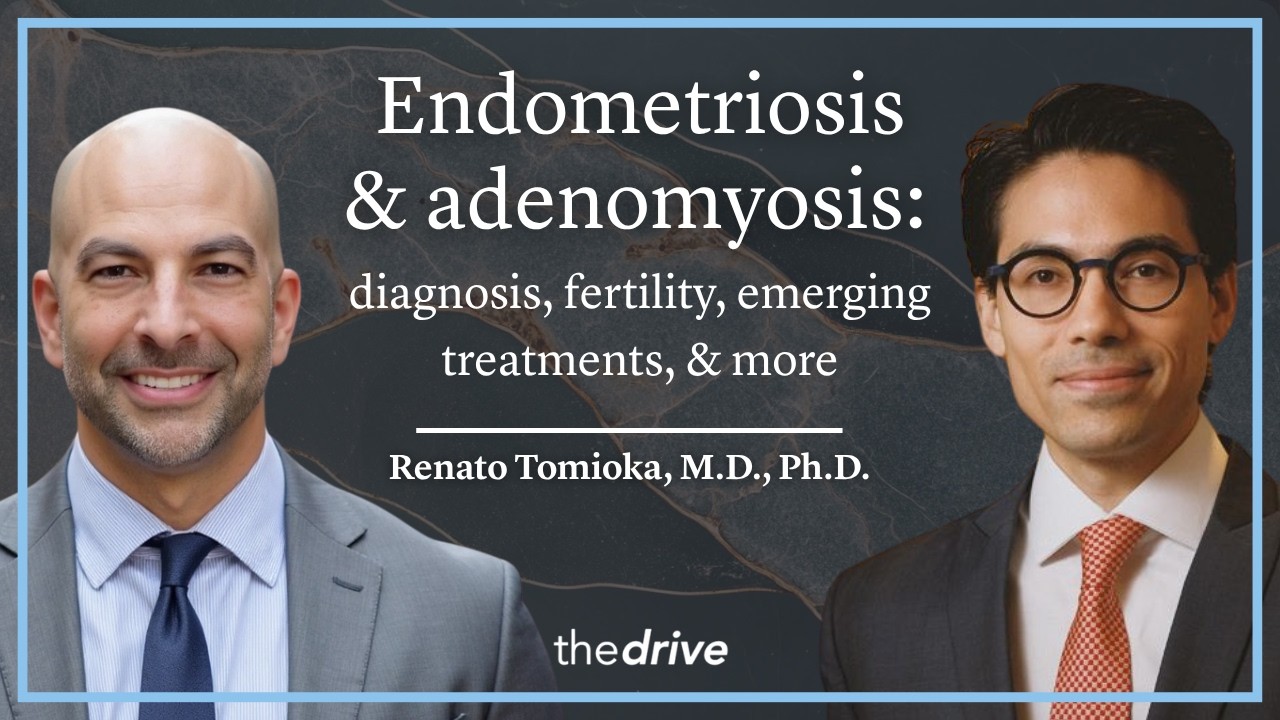
397 - Endometriosis and adenomyosis: diagnosis, fertility, reproductive aging, & emerging treatments
 51 min
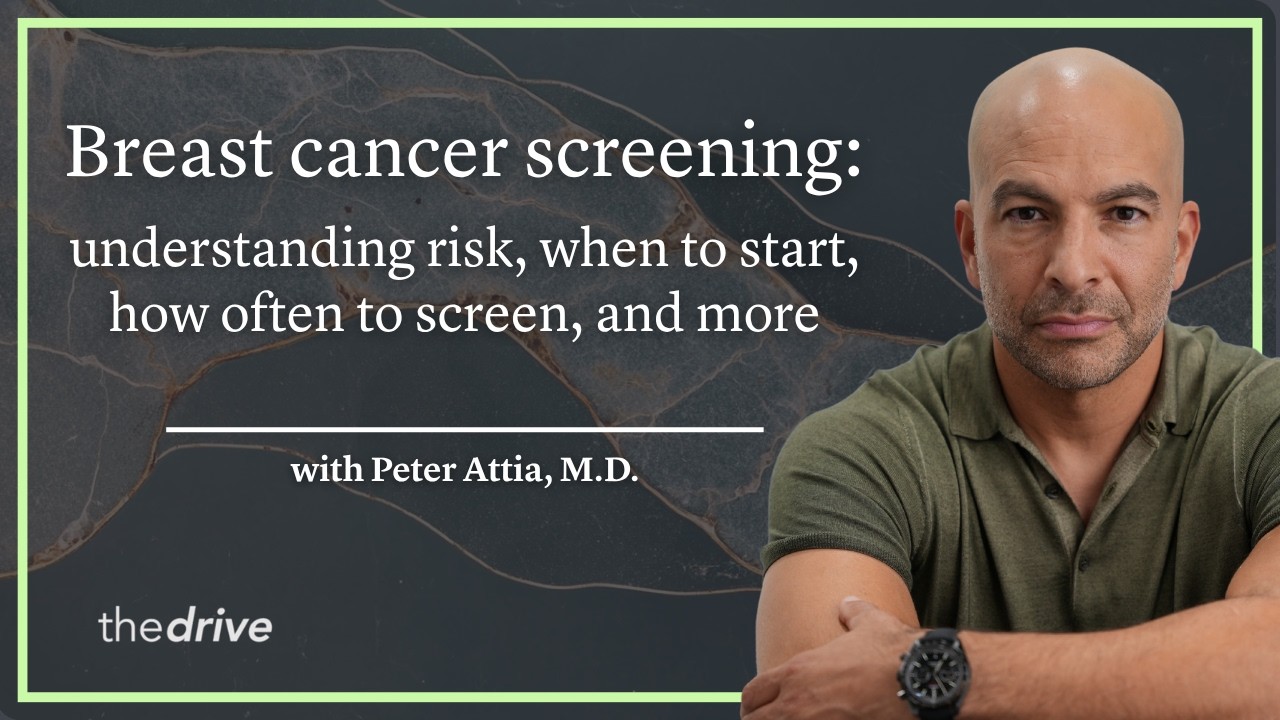
396 – Breast cancer screening: understanding risk, deciding when to start, and more
 105 min
395 – Brain lipidology: understanding APOE, cholesterol homeostasis, Alzheimer’s disease, & more
Ask anything from this episode.
Save it, chat with it, and connect it to Claude or ChatGPT. Get cited answers from the actual content — and build your own knowledge base of every podcast and video you care about.
Get Started Free