Key Moments
Sheldon Solomon: Death and Meaning | Lex Fridman Podcast #117
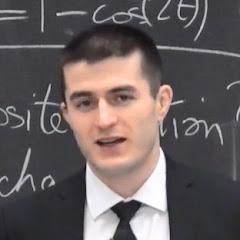 Lex Fridman
Key Moments
Death, consciousness, and the human condition: exploring fear, meaning, and societal constructs.
Key Insights
The human awareness of death is a primary motivator for much of civilization's creations and behaviors.
Terror Management Theory (TMT) suggests that much of human behavior is an attempt to manage the fear of death.
Existential anxieties, stemming from our awareness of mortality and isolation, can lead to maladaptive behaviors like scapegoating and blind adherence to ideologies.
Both conservative and liberal political philosophies have flaws rooted in inaccurate assumptions about human nature; a more nuanced approach is needed.
Religion, historically, has served to foster social cohesion and assuage death anxiety, though it can be co-opted for destructive purposes.
Embracing mortality and existential realities, rather than repressing them, can lead to personal growth, transformation, and a more authentic life.
THE WORM AT THE CORE: DEATH AS A MOTIVATOR
Sheldon Solomon posits that the uniquely human awareness of death is the fundamental driver behind civilization. This idea, rooted in Ernest Becker's work, suggests that our deep-seated fear of finitude motivates our actions, creations, and beliefs, often unconsciously. This 'worm at the core' influences how we perceive the world and seek meaning, shaping everything from individual behaviors to societal structures.
TERROR MANAGEMENT THEORY AND EXISTENTIAL ANXIETIES
Solomon, a co-developer of Terror Management Theory (TMT), explains that TMT empirically supports Becker's claims. The theory proposes that humans manage existential terror by embracing cultural worldviews that provide meaning and value, thereby bolstering self-esteem. When these worldviews are threatened, or when individuals experience existential distress (like the loss of a job or identity), they may resort to less adaptive behaviors, such as tribalism or hostility towards outsiders.
CRITIQUES OF POLITICAL AND ECONOMIC PHILOSOPHIES
Solomon critiques both liberal and conservative political philosophies for basing their arguments on flawed assumptions about human nature. He argues against John Locke's and Adam Smith's foundations of unlimited pursuit of wealth and individual autonomy, pointing out that humans are both selfish and inherently social/reciprocal creatures. He suggests that current economic systems, predicated on infinite growth, are unsustainable and contribute to radical inequality, psychological pain, and societal instability.
THE ROLE OF RELIGION AND FAITH
Religion, in its historical context, is framed as an evolutionary adaptation that originally served to bind communities and foster social cohesion, providing comfort and assuaging death anxiety. While acknowledging the potential for religions to be hijacked by demagogues and lead to conflict, Solomon also finds value in faith, not necessarily in dogmatic adherence, but as a necessary component for action and meaning-making in an unfathomably mysterious world, drawing parallels between Kierkegaard's leap of faith and Heidegger's leap into life.
HEIDEGGER'S SECULAR APPROACH TO MORTALITY
Solomon highlights Martin Heidegger's philosophy as a secular alternative to Kierkegaard's call for faith. Heidegger’s 'being-towards-death' emphasizes confronting the immediacy and inevitability of one's death, not as a source of despair, but as a catalyst for authentic existence. By accepting existential guilt and the limitations of one's circumstances, individuals can achieve 'anticipatory resoluteness' and a life infused with purpose and joy, even without traditional religious belief.
CONSCIOUSNESS, LONELINESS, AND THE SEARCH FOR MEANING
The conversation delves into consciousness, suggesting that our awareness of mortality may be intricately linked to its emergence. The profound existential isolation, stemming from the inability to fully communicate our subjective experience, exacerbates our anxieties. This loneliness, coupled with the fear of death, drives the human search for connection, belonging, and meaning, often leading individuals to seek comfort in tribes or ideologies, underscoring the deep-seated need for belief systems that provide a sense of self and purpose.
ARTIFICIAL INTELLIGENCE, MORTALITY, AND ETHICS
The discussion explores the necessity of incorporating a sense of mortality and existential anxiety into artificial intelligence to make it more human-like and ethically capable. Solomon and Fridman posit that acknowledging finitude is crucial for AI to understand complex human interactions, ethical dilemmas, and the value of life, drawing parallels to how humans connect with things like robots by anthropomorphizing their perceived capacity for 'pain' or 'loneliness,' suggesting that deep connections, even with machines, might hinge on shared or understood limitations.
THE ACADEMIC LANDSCAPE AND THE FUTURE OF EDUCATION
Solomon reflects on academia's tendency to stifle radical innovation in favor of incremental progress, advocating for environments that embrace 'outsider' thinkers. Both he and Fridman express concern over the decline of in-person education, stressing the importance of embodied mentorship and the potential for technology to miss crucial aspects of human connection. They also touch upon the societal undervaluation of educators and public servants, highlighting the need for a broader appreciation of critical thinkers and those who contribute to societal well-being.
Mentioned in This Episode
●Products
●Software & Apps
●Companies
●Organizations
●Books
●Concepts
●People Referenced
Common Questions
Sheldon Solomon's core view, derived from Ernest Becker's work, is that the uniquely human awareness of death and our unwillingness to accept it is the primary motivational impetus for almost everything people do, whether consciously or not.
Topics
Mentioned in this video
Cultural anthropologist and author of 'The Denial of Death' (Pulitzer Prize-winning) and 'Escape from Evil', whose ideas on the terror of death being the primary motivator for human action profoundly influenced Sheldon Solomon.
Former US President, mentioned by Lex Fridman as a political leader whose discussion should transcend partisanship.
Harvard philosopher and early academic psychologist who referred to death as 'the worm at the core of the human condition'.
Psychoanalyst and philosopher, author of 'Escape from Freedom', whose ideas on language being a 'pale shadow' of inner experience contribute to feelings of existential isolation.
French philosopher and author of 'The Plague', known for his existentialist perspective and the idea of coming to terms with death to live a full life.
American novelist, author of 'Clock Without Hands', whose work Solomon recommends as a brilliant literary depiction of existential ideas.
Psycho-historian who shares Solomon's pessimistic, yet hopeful, view about potential catastrophic collapses facing society.
A colleague and friend of Sheldon Solomon, with whom he co-developed Terror Management Theory, cheerfully admitting their academic pursuits can be a way of avoiding personal death anxiety.
Entrepreneur and CEO of SpaceX and Tesla, admired by Solomon for his 'unbridled imagination' and 'leap of faith' in undertaking seemingly impossible projects like colonizing Mars, demonstrating a refusal to be conventional.
Russian novelist and philosopher, not explicitly named but alluded to by Solomon when discussing the idea that confronting death can be a 'red pill' moment.
A dead novelist whose phrase 'the substance of we feeling' is used to describe the original function of religion in fostering social cohesion.
Author of 'Walden', whose book initially sold few copies, demonstrating how influential works can be initially overlooked.
Social psychologist, philosopher, co-developer of terror management theory, and co-author of 'The Worm at the Core'. His life's work focuses on how the human fear of death drives most of human civilization and behavior.
Russian President, mentioned by Lex Fridman as a political leader whose discussion should transcend partisanship.
Danish philosopher cited for his concept of the 'leap into faith' as the sole way to find meaning and resolve death anxiety, a point of disagreement with Solomon.
Scottish economist known for the 'invisible hand' theory and his views on humans as bartering creatures, whose ideas Solomon critiques for assuming infinite resources and overlooking government's role in public goods.
Evolutionary biologist, author of 'The Selfish Gene', cited for his early work on reciprocity and the adaptive function of consciousness.
Author whose publisher was interested in Solomon's book but suggested removing mentions of death, highlighting societal discomfort with the topic.
Italian philosopher whose ideas, alongside Becker's and Heidegger's, are being incorporated into a screenplay about a mortal AI.
Existential psychologist and author, whose work on existentialism identified four universal concerns, including death, choice, isolation, and meaninglessness.
Historian and philosopher, author of 'The Decline of the West', who quotes Goethe's idea that 'the purpose of life is to live.'
German philosopher and writer, quoted as saying 'the purpose of life is to live', which Solomon embraces as advice.
German philosopher mentioned for his rigorous thinking on deep personal self-reflection and the abyss gazing back into you.
Scottish essayist whose book 'Dreamthorp' contained a line that profoundly influenced Solomon's understanding of death: 'It is our knowledge that we have to die that makes us human.'
Famous German social psychologist known for the quote, 'There's nothing more useful than a good theory,' which influenced Solomon's early academic training.
Cognitive psychologist and author whose concept of the 'blank slate' is mentioned in the context of conservative political philosophy, and whose optimistic view on societal progress is debated.
English philosopher, followed by Locke in arguing that society is necessary to prevent a 'state of war' due to human nature.
Poet whose phrase 'the guilt of unlived life' is used by Becker and Solomon to describe the regret over possibilities not pursued, central to Heidegger's understanding of existential guilt.
Soviet dictator mentioned in the context of reading about major historical figures from World War II.
Canadian clinical psychologist and author, whose work on 'Maps of Meaning' initially brought him into disagreement with Solomon's views on the arbitrariness of meaning, but later acknowledged the empirical evidence for TMT.
English philosopher whose assumptions about human nature in a 'state of nature' and the individual right to property form the basis of conservative political philosophy and neo-liberal economics, critiqued by Solomon.
German sociologist who coined the term 'charismatic leader' to describe individuals who arise during times of historical upheaval, a concept Ernest Becker used to explain Hitler's rise.
German philosopher whose book 'Being and Time' provided a secular alternative to Kierkegaard's 'leap of faith' for confronting death anxiety, emphasizing living in the 'now' and accepting existential guilt.
British psychologist who hypothesized that consciousness arose as a way to better predict the behavior of others in social settings.
Novelist whose work was largely unknown during his lifetime, mentioned to illustrate how great works can go unappreciated during the creator's life.
A philosophy professor at Skidmore College who taught Sheldon Solomon, known for his formal dress but lack of pomposity.
Leader of Nazi Germany and central figure in World War II, mentioned in the context of reading about major historical figures.
Ernest Becker's wife, who finished his book 'Escape from Evil' after his death.
Former UK Prime Minister, cited for her statement about the non-existence of society, aligning with individualistic views.
Economist known for the concept of 'creative destruction' in capitalism, which Solomon critiques for its acceptance of catastrophic economic disruption.
Humanistic philosopher from the early 20th century, who observed that fantastic innovations are often initiated by those condemned as lunatics, stressing the importance of trying what seems impossible.
Painter who sold only one painting in his life, cited as an example of great artists not receiving recognition during their lifetime.
Attachment theorist recognized as one of the first serious academics to find evolutionary and psychodynamic viewpoints compatible.
Philosopher and economist whose ideas are supported by Solomon regarding capitalism's inevitable catastrophic psychological, environmental, and economic effects, despite being a 'crappy economist'.
Economist who writes about capital and illustrates that return on investment consistently outpaces wages, leading to increased inequality under capitalism.
Novelist, author of 'Winesburg, Ohio', whose sentiment 'life not death is the great adventure' aligns with Solomon's ultimate goal for confronting death anxiety.
Dead French sociologist who defined religion as originally arising from humans' uber-social nature, fostering social cohesion and coordination.
Lebanese author who writes in French who in the 1990s wrote a book called 'In the Name of Identity: Violence and the Need to Belong', emphasizing the necessity of overcoming tribal mentality.
Irish novelist, author of 'Ulysses' and 'Finnegans Wake', mentioned in the context of difficult literature, and also for his short stories like 'The Dead'.
Author whose words ('The cradle rocks above an abyss, and common sense tells us that our existence is but a brief crack of light between two eternities of darkness') are used by Sheldon Solomon in his book 'The Worm at the Core'.
Philosopher who, in the 1950s, predicted that unchecked economics and global capitalism would lead to governments being subordinate to corporations, causing local economic upheaval and the rise of demagogues.
US Senator who ran against George W. Bush in the 2004 election; TMT experiments showed that without death reminders, people favored Kerry more, but with death reminders, they favored Bush.
Author of 'Darwin's Cathedral', who argued that religion evolved to make groups viable, not directly related to death anxiety.
Harvard psychologist, mentioned as holding the view that consciousness is an epiphenomenological afterthought, rather than having an adaptive function.
Historian who writes about the history of money, mentioned in the context of economic depressions and recessions as a 'price for progress'.
Author of 'Collapse', noted for his research on the breakdown of major civilizations often occurring after periods of apparent prosperity, a view Solomon aligns with regarding modern societal risks.
British philosopher who predicted the rise of economic upheaval and right-wing populist movements due to globalism and misattribution of economic distress.
Former US President whose approval ratings dramatically rose after the 9/11 attacks, an example used to illustrate the influence of death reminders on public support for leaders.
A colleague and friend of Sheldon Solomon, with whom he co-developed Terror Management Theory, acknowledging their academic work can be a personal escape from confronting death anxiety.
French existentialist philosopher whose idea that we are 'condemned by virtue of consciousness to choosing' is referenced in the context of Heidegger's concept of existential guilt.
Another philosopher whose work, along with Becker's and Heidegger's, is being used in a screenplay about an AI grappling with mortality.
A deceased history professor at Skidmore College from whom Sheldon Solomon learned a great deal, notable for his proper attire which contrasted with his open-mindedness.
American novelist, author of 'Absalom, Absalom!', whose work Solomon appreciates.
Behaviorist psychologist mentioned as an 'odd bedfellow' with Marx due to their shared belief that changing external conditions would necessarily improve human nature.
Nun-turned-historian whose book (likely 'A History of God') is mentioned for its view that all religions generally advocate the golden rule and foster pro-social behavior, but are also subject to hijacking by extremists.
Historian, author of 'Sapiens', whose work aligns with Solomon's view of humans as deeply social beings who construct ideas collectively.
Existential psychiatrist and author, whose work on existentialism identified four universal concerns, including death, choice, isolation, and meaninglessness.
American whistleblower, known for remote interviews, whose example is used by Lex Fridman to emphasize his preference for in-person conversations.
Economist and social theorist, author of a recent book on charter schools, arguing for their effectiveness over public education, highlighting flaws in current educational systems.
An organization dedicated to advancing robotics and STEM education for young people globally, receiving donations from Cash App.
An elite university where Solomon interviewed for a job 40 years ago but was rejected for not having a clear research plan, contrasting with the latitude he received at Skidmore College.
An academic institution where Sheldon Solomon has lectured, despite not being considered for a job there early in his career.
The graduate school where Sheldon Solomon was first introduced to the dialectical interplay of theoretical assertions and hypothesis generation, influenced by quotes from Kurt Lewin and a German physicist.
The institution where Sheldon Solomon became a professor in 1980 and began his work on terror management theory, and where he later received tenure.
Location of remarkable studies on infants' innate tendencies for reciprocation and fairness, supporting the idea of humans as inherently social creatures.
Lex Fridman's former teaching institution, mentioned in the context of academic dress codes and the pressure to conform, where he felt like an 'outsider' for wearing a suit.
Part of Eastern Europe, mentioned as the ancestral origin of Solomon's grandparents.
Thomas Piketty's book that discusses how return on investment will always be greater than wages, contributing to economic inequality under capitalism.
Amin Maalouf's book from the 1990s, which argues that overcoming tribal mentality is crucial to avoid violence.
Ernest Becker's Pulitzer Prize-winning book arguing that the terror of death is the primary driver of human behavior and culture, inspiring much of Sheldon Solomon's work.
The biblical story of Adam and Eve's expulsion from the Garden of Eden, interpreted as an allegory for the origin of human consciousness and awareness of death.
Jared Diamond's book that studies the collapse of major civilizations, often right after things appeared to be at their best. Solomon references it to highlight potential modern societal risks.
Ernest Becker's follow-up book to 'The Denial of Death', completed posthumously by his wife, Marie Becker, where he applies his ideas to economic matters and inequality.
Erich Fromm's book, cited for its ideas on humans being smart enough to know that language is a pale shadow of internal experience, contributing to existential isolation.
A novel by Carson McCullers, published in 1953, recommended by Solomon as a brilliant literary depiction of existential ideas within the story of a terminally ill individual.
Herman Melville's novel, mentioned in the context of human assumptions about infinite resources, likening the historical notion of endless whales to Locke's view of empty lands.
Richard Dawkins' book, which explores the idea of reciprocation and cooperation as fundamental evolutionary concepts.
Henry David Thoreau's book, mentioned as having initially sold very few copies, illustrating that important works may not achieve immediate widespread recognition.
F. Scott Fitzgerald's novel, alluded to as an example of profound loneliness even amidst wealth and proximity to others.
A book co-authored by Sheldon Solomon that explores the central role of death anxiety in human motivation and culture.
A book by Scottish essayist Alexander Smith, from which a single line about the knowledge of death shaping humanity greatly influenced Sheldon Solomon.
Jordan Peterson's book that explores the psychology of belief systems and myths, which was a point of early disagreement with Solomon's work.
Martin Heidegger's philosophical work which explores concepts of death anxiety, existential guilt, and personal transformation through a 'turning' towards anticipatory resoluteness, interpreted as a secular 'leap of faith'.
David Sloan Wilson's book arguing that religion primarily evolved for group viability rather than to assuage death anxiety.
Oswald Spengler's philosophical history book which includes Goethe's quote: 'The purpose of life is to live.'
William Shakespeare's tragedy, discussed by Solomon and Peterson from a psychodynamic perspective at a Canadian festival.
Albert Camus' novel, admired by Solomon for its depiction of human nature's capacity for good amidst adversity, particularly relevant during the COVID-19 pandemic.
An early work by Karl Marx, which Solomon prefers for its arguments about human nature and the inherent flaws of capitalism before Marx became a polemicist.
Yuval Noah Harari's book that posits humans construct ideas on top of each other, aligning with Solomon's views on humans as deeply social beings.
James Joyce's notoriously difficult novel, mentioned as something Lex Fridman tried but did not understand, highlighting its complexity.
William Faulkner's novel, which Solomon considers a 'fine book'.
Nicholas Humphrey's book (or work) where he hypothesized the social function of consciousness.
A novel by Sherwood Anderson, referenced for its sentiment that 'life not death is the great adventure', resonating with Solomon's views on moving from hate to love by grappling with mortality.
James Joyce's modernist novel, mentioned by Solomon as a difficult book that took him 40 years to read, paralleling his struggle with Heidegger's 'Being and Time'.
A social psychological theory that posits that the unique human awareness of death, coupled with a desire to live, poses a potentially paralyzing terror that humans manage by constructing and investing in cultural worldviews and self-esteem.
An economic philosophy rooted in John Locke's ideas of individual property rights and limited government intervention, which Solomon argues is based on flawed assumptions about human nature.
An app that condenses key ideas from non-fiction books into 15-minute reads or listens.
A VPN service that allows users to access content unavailable in their region and control their virtual location.
Technology company where Solomon saw a demonstration of a virtual wall, suggesting advanced virtual reality experiences could eventually replicate human interaction.
Ernest Becker's publisher, noted for selling more copies of his books than any other they had published, despite his lack of philosophical renown.
Plato's allegory of the cave, used to illustrate how people resist being divested of comfortable illusions.
A book about Nazi Germany, mentioned for its depiction of how economic pain can lead to anger, hatred, and nationalist pride, drawing parallels to contemporary quiet economic pain.
A film mentioned for its concept of the 'red pill' moment, likened to the discomfort of confronting the reality of death and stepping outside societal narratives.
A short story by James Joyce, mentioned as a work by him that Solomon enjoys, contrasting with the difficulty of his novels.
The geographical origin of Solomon's grandparents, including Russia and Austria, some of whom did not make it out.
Part of Eastern Europe, mentioned as the ancestral origin of Solomon's grandparents.
Sheldon Solomon considers himself fortunate to be a product of the 'American Dream', implying the opportunities available in the U.S.
More from Lex Fridman
View all 549 summaries 259 min
FFmpeg: The Incredible Technology Behind Video on the Internet | Lex Fridman Podcast #496
 124 min
Vikings, Ragnar, Berserkers, Valhalla & the Warriors of the Viking Age | Lex Fridman Podcast #495
 146 min
Jensen Huang: NVIDIA - The $4 Trillion Company & the AI Revolution | Lex Fridman Podcast #494
 311 min
Jeff Kaplan: World of Warcraft, Overwatch, Blizzard, and Future of Gaming | Lex Fridman Podcast #493
Ask anything from this episode.
Save it, chat with it, and connect it to Claude or ChatGPT. Get cited answers from the actual content — and build your own knowledge base of every podcast and video you care about.
Get Started Free