Key Moments
Rick Doblin: Psychedelics | Lex Fridman Podcast #202
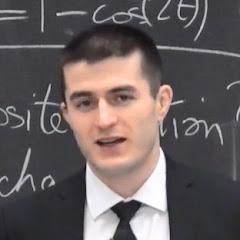 Lex Fridman
Want to know something specific about what's covered?
We've already dissected every moment. Ask and we will deliver (with timestamps).
Key Moments
Psychedelics are mind-manifesting tools that can reveal inner truths and heal trauma, as shown by MAPS' research.
Key Insights
Psychedelics, broadly defined as mind-manifesting experiences, can include dreams and meditative states, with classic psychedelics (LSD, psilocybin) inducing ego dissolution and MDMA fostering empathy.
The brain acts as a 'reducing valve,' filtering vast information, and psychedelics can temporarily lower this filter, revealing suppressed emotions, traumas, and deeper insights.
Psychedelics don't conjure new experiences but rather reveal pre-existing internal states and consciousness, akin to physics revealing new perspectives on reality.
The efficacy and safety of psychedelic use are heavily influenced by context, intention, and preparation, not solely by the substance itself.
MAPS is pioneering the medical and societal integration of psychedelics, focusing on MDMA for PTSD, with a mission to use science and policy reform to improve mental health.
The recent successful Phase III trial for MDMA-assisted therapy for PTSD demonstrates significant efficacy and safety, offering hope for a revolution in psychiatric treatment.
UNDERSTANDING PSYCHEDELICS: MORE THAN JUST DRUGS
Rick Doblin, founder of MAPS, defines psychedelics as 'mind-manifesting' experiences, extending beyond classic substances like LSD and psilocybin to include dreams and holotropic breathwork. He distinguishes between classic psychedelics, known for ego dissolution and unitive states, and MDMA, which fosters empathy and emotional processing. This broader definition acknowledges that various states can bring hidden material to the surface, offering a more nuanced understanding of these profound experiences.
THE BRAIN AS A REDUCING VALVE AND REVEALING INNER LANDSCAPES
Drawing on Aldous Huxley's concept of the brain as a 'reducing valve,' Doblin explains that our minds filter immense amounts of information to focus on survival and core needs. Psychedelics can temporarily lower this filter, allowing access to suppressed traumas, painful emotions, and deeper aspects of ourselves that are usually inaccessible due to ego control or fear. This process isn't about creating something new but revealing what already exists within, facilitated by altered states of consciousness.
THE ROLE OF CONTEXT AND THE LIMITATIONS OF CULTURAL NARRATIVES
Doblin challenges the romantic notion that natural psychedelics are inherently superior to synthetic ones, emphasizing that the experience is determined by the interaction of the drug, the individual, and crucially, the context. He dismisses specific cultural narratives, like Terence McKenna's ' machine elves,' as potentially influenced by preconceptions rather than objective realities. The safety and efficacy of psychedelic experiences are therefore contingent on preparation, setting, and the user's intention, not just the substance itself.
MAPS' MISSION: REVOLUTIONIZING PSYCHIATRY THROUGH SCIENCE AND POLICY
Founded by Doblin, MAPS operates as a non-profit pharmaceutical company with a dual mission: developing psychedelic medicines and reformulating drug policy. Their primary focus is MDMA-assisted therapy for PTSD, aiming to create a new paradigm in mental healthcare by demonstrating safety and efficacy through rigorous scientific research. This approach seeks to re-establish the therapeutic potential of psychedelics, moving beyond prohibition and stigma.
THE MDMA-ASSISTED THERAPY STUDY: BREAKTHROUGH RESULTS FOR PTSD
The discussion highlights the significant success of MAPS' Phase III trial for MDMA-assisted therapy for PTSD. The study demonstrated remarkable efficacy, with a substantial reduction in PTSD symptoms and a significant portion of participants no longer meeting diagnostic criteria. Crucially, the therapy proved effective across diverse populations, including those with chronic and severe PTSD, and even those with a history of suicide attempts, showing minimal side effects and durable positive outcomes.
THE FUTURE OF PSYCHEDELICS: MEDICAL ACCESS AND CULTURAL SHIFT
Doblin envisions a future where psychedelics are safely integrated into society, first for medical applications, then for broader personal growth and creativity. He anticipates FDA approval for MDMA for PTSD by 2023, followed by psilocybin, leading to a proliferation of psychedelic clinics. Ultimately, he hopes for licensed legalization, enabling responsible, educated use within supportive cultural contexts, fostering a global shift towards 'net zero trauma' and a more connected, empathetic world.
Mentioned in This Episode
●Companies
●Organizations
●Books
●Drugs & Medications
●Studies Cited
●People Referenced
MDMA for PTSD Phase 3 Study Outcomes
Data extracted from this episode
| Group | Effect Size (Placebo Subtracted) | Effect Size (Within Group) | P-value | PTSD Remission at 2 months |
|---|---|---|---|---|
| MDMA + Therapy | 0.91 | 2.1 | 0.0001 (1 in 10,000) | 67% |
| Therapy + Inactive Placebo | N/A | N/A | N/A | 32% |
Psychedelic Duration Comparison
Data extracted from this episode
| Substance | Typical Duration |
|---|---|
| Smoked DMT / 5-MeO-DMT | 10-15 minutes |
| Ayahuasca | Couple of hours |
| MDMA (single dose) | 4-6 hours |
| Psilocybin | 4-6 hours |
| LSD | 8-12 hours |
Common Questions
Psychedelics, meaning 'mind manifesting', are substances that bring emotions, feelings, and ideas to the surface. They are seen less as conjuring new experiences and more as revealing existing information within us by altering how the brain filters reality, often leading to ego dissolution. Rick Doblin interprets the term broadly to include experiences like dreams or holotropic breathwork, not just chemical substances.
Topics
Mentioned in this video
Founder and Executive Director of the Multidisciplinary Association for Psychedelic Studies (MAPS), a seminal figure in psychedelic science and cultural history.
Author of 'One Flew Over the Cuckoo's Nest,' who wrote parts of the book under the influence of LSD, benefiting from the drug's ability to broaden associations and foster creative imagery.
Philanthropist who, through the Population Council, funded the development of RU-486, making it the first drug brought to market by a non-profit.
The founder of psychoanalysis, who considered dreams the 'royal road to the unconscious' and speculated about future chemical interventions in therapeutic processes.
An ethnobotanist and author known for his theories on psychedelics, including the concept of 'machine elves' experienced during DMT trips; seen by Doblin as an entertainer whose cultural priming influenced experiences.
The leader of Nazi Germany, mentioned in the context of Rick Doblin's personal DMT and ketamine experiences where he confronted the potential for evil within humanity.
The 'Unabomber,' allegedly part of MK-Ultra studies at Harvard, highlighting that psychedelic experiences are highly context-dependent and can lead to negative outcomes.
Physicist who noted that the splitting of the atom changed everything except our mode of thinking, implying a need for a new, more connected way of thinking.
US President who signed a bill in 1984 creating incentives for developing off-patent drugs through data exclusivity.
Philosopher and author known for his work on psychedelics and his concept of the brain as a 'reducing valve' that filters information.
Chemist known as the 'godfather of MDMA' for rediscovering and bringing it back into use, and for his work on structure-activity relationships of psychedelic molecules.
A doctor in England who conducted a study using MDMA for alcohol use disorder with promising results, often by treating underlying trauma.
The person who coined the term 'psychedelic' (mind manifesting) in dialogue with Aldous Huxley.
Psychiatrist who proposed the concept of the 'collective unconscious,' an idea that echoes the shared human experiences and information accessible through deep consciousness.
Minister at Boston University's Marsh Chapel, mentor to Martin Luther King Jr., and interested in the political implications of mystical experiences; he permitted the Good Friday Experiment to take place.
Psychologist known for his hierarchy of needs, mentioned in the context of how the mind filters information to focus on core needs.
Prominent investor and philanthropist, mentioned as a major donor to the Population Council's efforts in bringing RU-486 to market.
Chemist who invented LSD and first synthesized psilocybin, collaborator with Sasha Shulgin on structure-activity relationships in psychedelics.
An American psychologist, researcher, and counter-culture icon known for advocating psychedelic use, who spearheaded early psilocybin and LSD research at Harvard.
A doctor, formerly head of psychiatry products at the FDA, who advises MAPS on study design, particularly on reducing bias when double-blind studies are difficult.
A long-standing figure at the FDA, in charge of the Office of Science Policy, who advised MAPS on the design of their Phase 3 clinical trials.
Researcher at the Bronx VA studying the epigenetics of trauma, particularly in Holocaust survivors and their children, exploring how trauma is transmitted across generations.
Often called an empathogen or entactogen, it brings material to the surface and alters information processing, stimulating oxytocin and reducing amygdala activity while increasing prefrontal cortex activity.
A classic psychedelic found in mushrooms, known for its ego-dissolving and mystical experience-producing effects, lasting 4-6 hours.
An anesthetic approved as S-ketamine for depression, used in psychedelic doses (one-tenth the anesthetic dose) to reveal deeper information, noted for varying effects between adults and children.
An SSRI (selective serotonin reuptake inhibitor) listed as one of the approved drugs for PTSD, though noted to be less effective in men and for combat-related PTSD.
A classic psychedelic, the main active ingredient in peyote, similar to MDMA in chemical structure (phenethylamine), known for warmth and visuals.
Described as a psychedelic, closer to classic psychedelics in effect than to MDMA.
An SSRI (selective serotonin reuptake inhibitor) listed as one of the approved drugs for PTSD, though noted to be less effective in men and for combat-related PTSD.
A classic psychedelic known for ego dissolution and unitive states, lasting 8-12 hours.
A classic psychedelic brew with indigenous roots, orally active due to a combination of substances, producing effects for a couple of hours.
A toxin from the Sonoran toad, considered one of the most powerful psychedelics, known for completely dissolving ego structures and revealing deeper layers of consciousness.
An SSRI (selective serotonin reuptake inhibitor) listed as one of the approved drugs for PTSD, though noted to be less effective in men and for combat-related PTSD.
A psychedelic mentioned as crucial for opiate addiction, drawing interest from new companies for research.
The abortion pill, approved in Europe and later in the US, notable as the first drug made into a medicine by a non-profit (Population Council) in 1999.
Management consulting firm hired by MAPS Public Benefit Corporation to help plot their commercialization strategy for MDMA.
Pharmaceutical company that developed and patented S-ketamine for depression, delivered without therapy, leading to quick fading effects and maximizing profits.
The pharmaceutical company that first invented MDMA in 1912.
U.S. government agency that in the 1980s and 90s promoted a narrative that MDMA was neurotoxic and caused brain damage, a claim later largely disproven.
A non-profit pharmaceutical company founded by Rick Doblin in 1986 to research and develop psychedelics into approved medicines, and to advocate for drug policy reform.
The European regulatory agency, analogous to the FDA, that sets standards for drug approval.
The regulatory agency that approves drugs for medical use, with whom MAPS has extensively negotiated study protocols for MDMA-assisted therapy.
A study conducted by Timothy Leary aimed at reducing recidivism through psilocybin-induced mystical experiences in prisoners, later found to have fudged data.
A study led by Timothy Leary at Boston University's Marsh Chapel investigating whether psilocybin in a religious setting could produce mystical experiences in divinity students.
A novel written by Ken Kesey, parts of which were inspired by his LSD experiences, reflecting themes of mental institution control and perception.
A highly impactful medical journal where the results of MAPS' first Phase 3 MDMA-assisted therapy study for PTSD were published.
More from Lex Fridman
View all 550 summaries 174 min
Biggest Mysteries in Physics: Antimatter, Dark Energy & ToE - Don Lincoln | Lex Fridman Podcast #497
 259 min
FFmpeg: The Incredible Technology Behind Video on the Internet | Lex Fridman Podcast #496
 124 min
Vikings, Ragnar, Berserkers, Valhalla & the Warriors of the Viking Age | Lex Fridman Podcast #495
 146 min
Jensen Huang: NVIDIA - The $4 Trillion Company & the AI Revolution | Lex Fridman Podcast #494
Ask anything from this episode.
Save it, chat with it, and connect it to Claude or ChatGPT. Get cited answers from the actual content — and build your own knowledge base of every podcast and video you care about.
Get Started Free