Key Moments
How to Learn Skills Faster
 Andrew Huberman
Want to know something specific about what's covered?
We've already dissected every moment. Ask and we will deliver (with timestamps).
Key Moments
Learn skills faster by maximizing repetitions, embracing errors, and allowing for post-session rest.
Key Insights
Learning speed is determined by the number of repetitions per unit of time, not just total hours.
Errors are crucial for skill acquisition as they signal the need for change and open neural pathways for plasticity.
Post-learning/training periods of rest are vital for memory consolidation, allowing the brain to replay sequences.
Mental visualization can supplement physical practice but is not an equal replacement for it.
Focusing attention on a single aspect of a motor movement during a session accelerates learning.
Deliberate practice, including maximizing repetitions and embracing errors, is key to skill acquisition.
UNDERSTANDING MOTOR SKILLS AND NEURAL PATHWAYS
Motor skills can be categorized as open-loop (requiring feedback after action) or closed-loop (allowing real-time adjustments). Key components of skill learning involve sensory perception, movement execution, and proprioception (knowing limb position). Understanding these aspects is crucial for designing effective learning strategies. Movements are generated by central pattern generators (CPGs) for rhythmic actions and upper/lower motor neurons for deliberate actions, especially during the learning phase.
THE POWER OF REPETITIONS AND EMBRACING ERRORS
Contrary to the 10,000-hour rule, learning speed is primarily driven by the number of repetitions performed per unit of time. Crucially, making errors is not a sign of failure but a catalyst for neuroplasticity. Errors signal the nervous system to correct itself and open pathways for adaptation. The 'Super Mario effect' experiment and the 'tube test' in animals demonstrate that engaging in more repetitions, even with errors, leads to faster learning and improved performance.
THE CRITICAL ROLE OF POST-PRACTICE REST
Following a skill-learning session, a period of deliberate rest, even just 5-10 minutes, is vital. During this 'idle time,' the brain replays the learned motor sequences, consolidating the learning. This often involves playing the sequence backward immediately after practice and forward during sleep. This consolidation process is essential for retaining and integrating new skills, and interrupting this rest with other demanding cognitive tasks can hinder learning.
STRATEGIC ATTENTION AND MENTAL REHEARSAL
Directing attention to a single, specific aspect of a motor movement during practice can significantly accelerate learning. While the exact focus (e.g., grip, stance, shoulder rotation) may matter less than consistently focusing on one thing, it's crucial for driving plasticity. Mental visualization can supplement physical practice by engaging upper motor neurons, leading to strength and skill gains, but these benefits are not as substantial as those from actual physical execution.
INTEGRATING METRONOMES AND CEREBELLAR TRAINING
For intermediate to advanced practitioners, using external cues like metronomes can increase repetition rates and force the nervous system to make and correct errors. This external pressure can accelerate plasticity. Furthermore, engaging the cerebellum through specific eye movements can improve range of motion and flexibility, which can be beneficial for skill learning by enhancing physical capacity and preparing the body for movement.
APPLYING PRINCIPLES FOR OPTIMAL SKILL ACQUISITION
Effective skill learning involves maximizing repetitions and errors, followed by periods of rest for consolidation. Subsequent training sessions can incorporate more deliberate focus on specific motor features or external cues like metronomes to further refine skills. For specific goals like increasing range of motion, cerebellar-based exercises can be employed. While supplements like Alpha-GPC may offer minor performance benefits, they do not replace the fundamental principles of dedicated practice.
Mentioned in This Episode
●Supplements
●Products
●Software & Apps
●Companies
●Organizations
●Books
●Studies Cited
●Concepts
●People Referenced
Accelerating Skill Learning Cheat Sheet
Practical takeaways from this episode
Do This
Avoid This
Mental vs. Physical Training for Strength Increase
Data extracted from this episode
| Training Type | Finger Adduction Strength Increase (%) | Elbow Flexion Strength Increase (%) |
|---|---|---|
| Mental Rehearsal (Imagined Movement) | 35% | 13.5% |
| Physical Training (Actual Movement) | 53% | 53% |
Alpha-GPC Dosage and Effects
Data extracted from this episode
| Dosage | Effect |
|---|---|
| 300-600 mg (single dose) | Enhanced power output (e.g., 14% increase reported in one study) |
| Up to 1200 mg daily (divided into three 400 mg doses) | Notable, modest offsetting of cognitive decline, particularly in older populations and some with neurodegeneration (e.g., Alzheimer's symptoms improvement) |
| Lower doses | Promotes growth hormone release (to a small degree), increased fat oxidation |
Common Questions
The two main types are open-loop skills, which provide immediate feedback after a discrete action (e.g., throwing a dart), and closed-loop skills, which offer continuous feedback during ongoing motion (e.g., running or swimming). Understanding the type of skill helps determine the best learning approach, especially regarding feedback and real-time adjustments.
Topics
Mentioned in this video
Healthy fats found in Belcampo's meat, important for mental and physical health, as discussed in previous podcast episodes.
A compound mentioned as an example that, if taken in high doses to elevate baseline dopamine, could hinder skill learning plasticity by reducing signal to noise.
Supplement often paired with Vitamin D3, also offered as a year's supply with Athletic Greens special offer.
A supplement sold over-the-counter that can enhance power output, improve cognitive function (especially in older populations and those with neurodegeneration like Alzheimer's), increase fat oxidation, and promote growth hormone release to a small degree.
A critical vitamin for various health metrics, often supplemented due to insufficient sun exposure, and offered as a year's supply with Athletic Greens.
Andrew Huberman's colleague at Stanford, known for her work on the 'growth mindset' concept, which is distinct from the described mechanism of error-driven learning.
Co-author of the review paper 'Neuroplasticity Subserving Motor Skill Learning,' not to be confused with the musician.
A big wave surfer and friend of Huberman, described as a virtuoso who seeks uncertainty to push his performance.
Andrew Huberman's colleague at Stanford, whose lab conducted research on cooling the palms to improve athletic performance.
Stanford researcher from the 1960s who studied people's ability to mentally rotate three-dimensional objects, relating to visualization abilities.
Researcher whose 2018 work on the influence of pitch feedback on motor learning with piano demonstrates that focusing purely on motor execution can be beneficial in early stages.
Host of the Huberman Lab Podcast and a professor of neurobiology and ophthalmology at Stanford School of Medicine, dedicated to bringing science-based tools to the public.
A surfer who trains with Laird Hamilton, also described as a virtuoso.
Platform where a video describing the Super Mario Effect, created by a YouTuber with a science background, is available.
A regenerative farm in Northern California that raises organic, grass-fed, and grass-finished certified humane meats. Huberman consumes their products due to the animals' health and environmental benefits.
A supplement company partnered with the podcast due to its high quality control and accuracy in ingredient amounts, offering a discount to listeners.
An all-in-one vitamin, mineral, and probiotic drink that Andrew Huberman has used for over a decade to cover his nutritional bases and support gut health.
A personalized nutrition platform that analyzes blood and DNA data to provide insights and suggestions for optimizing health, including an 'inner age' test.
Study from 2004 that examined the effects of mental rehearsal on finger and elbow flexion strength, finding mental training provides significant but lesser gains compared to physical training.
A paper published in the Journal Neuron titled 'Post error recruitment of frontal sensory cortical projections promotes attention,' which highlights how errors activate attention and facilitate neuroplasticity.
Authors of a review in the Journal Neuron detailing how musical training and cadence training can impact various types of skill learning, including physical skills.
A review paper published in the Journal Neuron in 2011 that extensively covers the mechanisms of neuroplasticity in motor skill learning, including the role of immediate post-training idle time for the brain.
An 'excellent' cell press neuroscience journal where the Norman et al. and Dayan and Cohen papers were published.
An internet term describing a phenomenon where providing feedback like 'that did not work, please try again' leads to higher success rates and more repetitions compared to 'you just lost points'.
More from Andrew Huberman
View all 405 summaries 33 min
Essentials: How to Access Your Creativity | Rick Rubin
 130 min
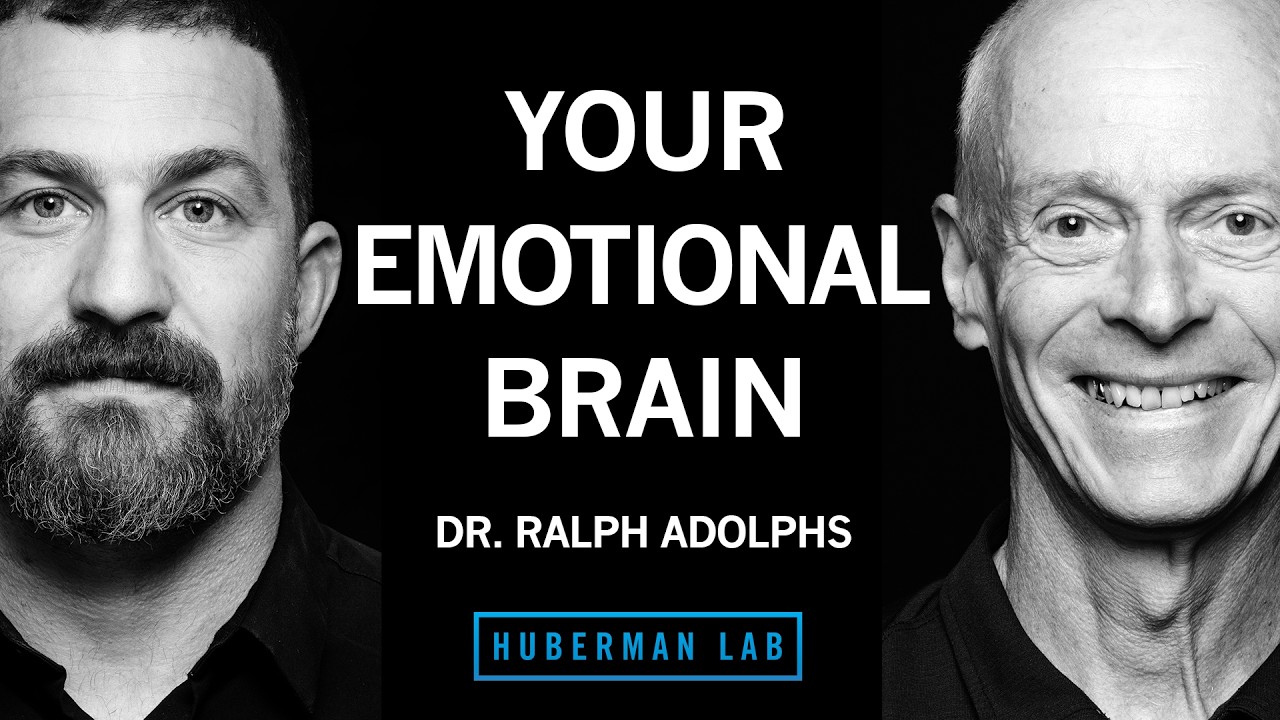
Episode 294 Ralph Adolphs
 35 min
Essentials: How to Optimize Female Hormone Health for Vitality & Longevity | Dr. Sara Gottfried
 129 min
Using AI to Increase Your Intelligence & Enrich Humanity | Dr. Fei-Fei Li
Ask anything from this episode.
Save it, chat with it, and connect it to Claude or ChatGPT. Get cited answers from the actual content — and build your own knowledge base of every podcast and video you care about.
Get Started Free