Key Moments
How to Improve Memory & Focus Using Science Protocols | Dr. Charan Ranganath
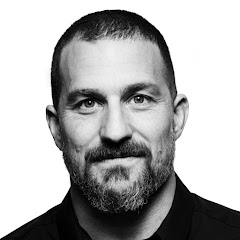 Andrew Huberman
Want to know something specific about what's covered?
We've already dissected every moment. Ask and we will deliver (with timestamps).
Key Moments
Dr. Charan Ranganath on memory: how it works, why we forget, and science-backed ways to improve and preserve it.
Key Insights
Memory is not just about recalling the past; it's about making sense of the present and anticipating the future by selectively retrieving relevant information.
Curiosity is a powerful driver of dopamine release, which acts as a neuromodulator to enhance neuroplasticity and memory formation for subsequent information, even if unrelated to the initial curiosity.
Our prefrontal cortex is crucial for cognitive control, enabling us to focus on important information and filter out distractions, a function that can decline with age due to white matter damage.
Lifestyle factors like adequate sleep, physical exercise (especially cardio), a healthy diet (rich in leafy greens and unprocessed foods), social engagement, and maintaining a sense of purpose significantly reduce the risk of cognitive decline and Alzheimer's disease.
Conditions like depression, poor oral hygiene, untreated hearing/vision impairment, chronic inflammation, and certain environmental factors (e.g., air pollution, excessive sugar intake) are major risk factors for memory impairment and neurodegenerative diseases.
Intentionality is key to memory: actively deciding what to remember and focusing attention with purpose, rather than passively letting external stimuli or task-switching fragment experiences, leads to stronger, more coherent memories.
MEMORY'S DYNAMIC ROLE: PRESENT, PAST, AND FUTURE
Dr. Charan Ranganath, a leading memory researcher, posits that memory's primary function is not merely to recount the past but to synthesize it with the present to predict and navigate the future. Unlike passive recollection, memory actively shapes our perception of current events, allowing us to focus on novel information by drawing upon established schemas. This continuous interplay enables us to orient ourselves, understand our surroundings, and even pre-consciously anticipate where familiar objects or people might be located. Dysfunctions in this dynamic system, as seen in amnesia or dementia, disrupt not only daily tasks but also one's fundamental sense of self and context in the world.
CURIOSITY, DOPAMINE, AND LEARNING
A pivotal mechanism for memory enhancement is curiosity, which directly correlates with dopamine release in the brain's reward circuits. Dr. Ranganath's research revealed that when individuals are intrinsically curious about an answer, there's a surge of dopaminergic activity that not only aids in remembering the answer itself but also primes the brain for enhanced plasticity. This facilitates the memorization of completely unrelated information encountered while in that curious, dopamine-energized state. This finding suggests that actively cultivating curiosity about new information, people, and experiences can be a powerful, accessible tool to bolster overall learning and memory capacity, even in older adults.
THE PREFRONTAL CORTEX AND COGNITIVE CONTROL
The prefrontal cortex (PFC) serves as the brain's 'central executive,' orchestrating cognitive control and allowing us to direct attention toward higher-order goals while filtering out distractions. This mechanism is vital for effective memory formation. Damage to the PFC, often observed in aging or certain conditions, impairs this ability, leading to distractibility and difficulty maintaining focus. Interestingly, older adults with compromised PFC function may struggle to remember information they intended to learn but can be just as good, or even better, at recalling irrelevant background details—highlighting a shift in attentional control rather than a complete loss of memory capacity.
LIFESTYLE INTERVENTIONS FOR BRAIN HEALTH
Maintaining brain health and memory capacity, particularly as we age, is profoundly influenced by lifestyle choices. Dr. Ranganath emphasizes that basic health factors—such as adequate sleep, regular physical exercise (especially cardiovascular for its neuroprotective effects and modulator release), a healthy diet rich in unprocessed foods and leafy greens (like the Mediterranean or DASH diet), and consistent social engagement—are paramount. A large 10-year study in China involving 29,000 subjects demonstrated that individuals adhering to four to six of these healthy lifestyle factors performed nearly twice as well on memory tests compared to those adhering to zero to one, underscoring their collective impact on preventing cognitive decline.
RISK FACTORS FOR COGNITIVE DECLINE
Numerous factors beyond aging can significantly impact memory and increase the risk of neurodegenerative diseases like Alzheimer's. Depression, characterized by anhedonia and rumination, is particularly detrimental, often impairing cognitive function more severely than early-stage Alzheimer's. Poor oral hygiene, linked to gum disease and a potential pathway for harmful bacteria to enter the brain, is also a risk factor. Furthermore, untreated hearing and vision impairments, chronic inflammation, certain environmental pollutants (e.g., air pollution), and metabolic disorders like diabetes contribute to white matter damage in the brain, hindering efficient neural communication and cognitive control.
INTENTION OVER ATTENTION FOR MEMORY FORMATION
In an attention-saturated world, Dr. Ranganath stresses the importance of intention in memory. While attention can be passively captured by salient stimuli, intention involves consciously directing focus based on internal goals and values. Cultivating intentionality, perhaps by explicitly listing values or using external cues to connect actions to purpose (as Dr. Ranganath does for his ADHD), helps the prefrontal cortex maintain coherence and prevent mental fragmentation. This deliberate engagement with experiences, rather than passive consumption or multitasking (which fragments memories and increases stress), allows for the formation of distinctive, robust memories that better serve future recall.
MULTITASKING AND DIGITAL DISTRACTIONS
Multitasking, particularly with digital devices, severely hampers memory formation. Constantly switching between tasks—like texting, emailing, and engaging in conversation—fragments our experiences, creating indistinct and competing memory traces that are difficult to retrieve. Each task switch incurs a cognitive cost, slowing mental processing, depleting cognitive control, and increasing stress. Dr. Ranganath advocates for 'segregating' activities, such as dedicating specific times for social media, to minimize these costs. Mindful use of technology, like taking intentional photos that serve as meaningful retrieval cues rather than mindlessly documenting, can counteract the detrimental effects of digital distractions on memory.
DEJA VU: A GLIMPSE INTO FAMILIARITY AND MISMATCH
Deja vu, the uncanny feeling of having experienced something before, is theorized to stem from a strong sense of familiarity without a corresponding episodic memory. Research suggests this phenomenon involves the perirhinal cortex, crucial for processing familiarity. Studies using virtual reality have shown that when subjects encounter new environments with identical spatial layouts as previously experienced but with different superficial 'skins,' they often report deja vu. This occurs because the brain is triggered by a familiar structure (strong fluency) but simultaneously detects a mismatch in surface details, suppressing full recollection and creating the perplexing sensation of re-experience.
NEUROMODULATION AND MEMORY RECONSOLIDATION
The brain's neuromodulatory systems, particularly serotonin, play a critical role in memory consolidation and the potential for memory updating. Serotonin is known to enhance neuroplasticity, stabilizing the synaptic changes that underpin learning. This plasticity provides an opportunity to reframe traumatic or negative memories, especially when coupled with therapeutic interventions like those involving SSRIs, psilocybin, or MDMA. These compounds, by dramatically altering neuromodulatory landscapes, can create a 'window of plasticity' where past events can be emotionally re-evaluated, leading to new perspectives, reduced rumination, and a more positive outlook on future possibilities.
THE MALLEABLE NATURE OF MEMORY
Memory is not a static recording but a dynamic, constantly re-constructed narrative. Every time a memory is retrieved, it becomes susceptible to modification and re-consolidation. This malleability can be leveraged positively, as seen in therapy where reframing past events or sharing experiences in group settings can alter their emotional impact. However, it also means memories can be distorted or even worsened by repeated negative rumination or 'story fondling'. The key lies in understanding that while the core events may remain, the emotional context, personal narrative, and even the details associated with them are continually shaped by our present interpretations, intentions, and external influences.
Mentioned in This Episode
●Supplements
●Software & Apps
●Companies
●Organizations
●Books
●Drugs & Medications
●Concepts
●People Referenced
Enhancing Memory & Focus: Key Strategies
Practical takeaways from this episode
Do This
Avoid This
Common Questions
Memory is not just about the past; it selectively takes what's needed from past experiences to make sense of the present and project to the future. Our understanding of the present is deeply influenced by prior memories, enabling us to make predictions and focus on new, non-redundant information.
Topics
Mentioned in this video
Host of the Huberman Lab podcast and Professor of Neurobiology and Ophthalmology at Stanford School of Medicine.
Guest on the podcast, Professor of Psychology and Neuroscience at the University of California Davis, and a leading researcher in human memory.
Friend of Dr. Ranganath who wrote a book on mindfulness and meditation, emphasizing how it helps find curiosity in the mundane.
UC Berkeley researcher who collaborated with Dr. Ranganath on research measuring white matter hyperintensities in MRIs and their effect on memory.
World expert on romantic relationships who spoke on the podcast about curiosity as a sustaining factor in long-term relationships.
Cognitive psychologist who conducted experiments showing older adults remember irrelevant information as well as younger people, but struggle with focused attention.
NIH researcher who collaborated with Dr. Ranganath on research measuring white matter hyperintensities in MRIs and their effect on memory.
Researcher from Pisa whose lab studied learned helplessness in rodents, a model for depression, showing SSRIs can restore hope.
Dr. Ranganath's former postdoctoral researcher who pioneered studies on curiosity and its effect on memory using fMRI.
Psychologist who coined the term 'attention economy' to describe the limited supply of human attention in an information-rich world.
Neurosurgeon who did pioneering work stimulating different parts of the brain during epilepsy surgeries, sometimes triggering real memories or intense deja vu sensations.
Psychologist whose work on rats demonstrates that novelty stimulates curiosity and dopamine system activity.
Late scientist who used to take random pictures of people at conferences, a practice Dr. Ranganath now tries to emulate for better memory cues.
The drummer and creative force behind The Descendents, who shared a touching moment with the audience at a live show.
Scientist who suggested that hanging pleasant photos in an office can enhance the work environment by triggering positive memories and context.
Dr. Ranganath's postdoctoral mentor who studied prefrontal cortex lesions and the effects of dopaminergic drugs on cognition.
A colleague of Andrew Huberman at Stanford who has done research on older people becoming more optimistic as they age.
Colleague of Dr. Ranganath at UC Davis who studies trace conditioning and the role of dopamine in the locus coeruleus in learning.
Nobel Prize winner known for his work on olfaction and perception, mentioned as an example of an 'aged scientist' with great knowledge and excitement.
Cognitive psychologist who conducted experiments showing older adults remember irrelevant information as well as younger people, but struggle with focused attention.
Scientist who studied serotonin's role in stabilizing neural plasticity for memory formation.
Researcher at the University of Michigan known for work distinguishing 'wanting' from 'liking' in the context of dopamine's role in motivation and reward.
NIH researcher who emphasized the critical role of the perirhinal cortex in memory, particularly in relation to H.M.'s dense amnesia.
A computational neuroscientist and friend of Dr. Ranganath with whom he shared a life-threatening paddleboarding story, making it funnier through retelling.
Credited with the quote 'The cure for boredom is curiosity, there is no cure for curiosity.'
A famous patient in the history of neuroscience who had bilateral hippocampal removal to treat epilepsy, resulting in dense amnesia for new events.
Pioneer in computational neuroscience who proposed that the hippocampus is involved in 'simple memory,' separating experiences across contexts.
A music producer and friend whose photo is in the studio, mentioned for teaching Andrew Huberman about intention in meditation.
The lead singer of The Descendents, mentioned in an anecdote about Bill Stevenson interacting with the crowd.
Neuroengineer and psychiatrist mentioned for his work with vagus nerve stimulation in depressed patients, showing dramatic shifts in outlook and the ability to anticipate a positive future.
Researcher at Brown University who pioneered an experiment stimulating the perirhinal cortex in rats to alter their sense of an object's familiarity or novelty.
Dr. Ranganath's neighbor at UC Davis who studies the effects of psychedelics on plasticity, emphasizing neurotrophic factors like BDNF.
A meditation app offering guided meditations, mindfulness trainings, and Yoga Nidra sessions, mentioned as a sponsor.
A technique that can alter mental states and perceptions of the future in depressed patients, contrary to the misconception that it only calms people.
A neurophysiological test used to evaluate cognitive control and flexibility, often used with patients with prefrontal lesions.
Used in research to create environments that trigger deja vu sensations by presenting spaces with identical layouts but different thematic 'skins.'
A self-directed relaxation practice, also known as Yoga Nidra, shown to increase striatal dopamine and restore mental and physical vigor.
Pioneering memory research by Ebbinghaus demonstrated rapid forgetting of memorized information, with about half forgotten in 20 minutes and two-thirds in 24 hours.
A yoga tradition of self-directed relaxation, referred to as 'yoga sleep,' that a study found increases striatal dopamine.
A type of dog breed known for being smart, athletic, and used in military operations, cited as similar to Dr. Ranganath's shelter dog.
Academic institution where Dr. Charan Ranganath is a professor.
Location of a PET imaging study mentioned that showed significant increases in striatal dopamine after non-sleep deep rest.
A post-punk band whose music Pavlov's Dogs covers.
An iconic new wave band whose music Pavlov's Dogs covers; lead singer Deborah Harry is still touring.
Academic institution where Andrew Huberman is a professor.
Dr. Ranganath's cover band, composed of neuroscientists and psychologists, playing punk and new wave music.
A punk rock band that Dr. Ranganath enjoyed in high school and recently saw live, inspiring a memorable moment of connection with the audience.
A punk rock band whose music Pavlov's Dogs covers.
Methylenedioxymethamphetamine, discussed for its use in PTSD trials and its ability to promote serotonin release and potentially allow patients to reframe traumatic memories.
A psychedelic compound being studied for its effects on depression and PTSD, shown to promote massive plasticity and enable perspective shifts in therapy.
A psychedelic mentioned for its unique 22-hour experience where users reportedly get high-definition 'movies' of specific life events with agency to alter them.
An SSRI (selective serotonin reuptake inhibitor) mentioned in the context of learned helplessness studies and promoting neural plasticity; Dr. Ranganath tried it on his anxious dog.
A dissociative anesthetic mentioned for its interesting plasticity effects and the dissociative element it produces, distinct from psychedelics.
A program that uses continuous glucose monitors (CGM) to provide real-time feedback on how different foods affect blood glucose levels, mentioned as a sponsor.
A punk rock band whose music Pavlov's Dogs covers.
A comprehensive lab testing program that analyzes blood, urine, and saliva to provide a full picture of health, offering insights from top doctors. Mentioned as a sponsor providing testing for over 100 biomarkers.
A foundational nutritional supplement containing vitamins, minerals, probiotics, prebiotics, and adaptogens; taken daily by Andrew Huberman.
A stimulant drug mentioned to highlight a retracted scientific study that mistakenly attributed effects to MDMA when methamphetamine was inadvertently used.
More from Andrew Huberman
View all 422 summaries 114 min
What Makes Great Leaders & How to Live an Extraordinary Life | Dr. Jared Diamond
 31 min
Essentials: Neuralink & Technologies to Enhance Human Brains | Dr. Matt MacDougall
 123 min
How Food Choices Shape Memory, Cognition & Cravings | Dr. Scott Kanoski
 31 min
Essentials: Manage Stress & Build Resilience | Dr. Elissa Epel
Ask anything from this episode.
Save it, chat with it, and connect it to Claude or ChatGPT. Get cited answers from the actual content — and build your own knowledge base of every podcast and video you care about.
Get Started Free