Key Moments
Fasting, well-balanced diets, alcohol, exercise, assessing cardiovascular health (AMA 68 Sneak Peek)
 Peter Attia MD
Want to know something specific about what's covered?
We've already dissected every moment. Ask and we will deliver (with timestamps).
Key Moments
Peter Attia discusses cardiovascular health, fasting, alcohol's impact, and balanced diets in an AMA.
Key Insights
Cardiovascular risk assessment involves family history, blood pressure, CAC scores, ApoB, and Lp(a) levels.
Time-restricted feeding (intermittent fasting) primarily improves metabolic health through calorie restriction, not by its timing alone.
Alcohol's health impact is dose-dependent, being negative at escalating doses; it's not essential and offers no benefits.
A well-balanced diet's principles are less about specific macronutrient ratios and more about overall calorie intake and sensible food choices.
Fitness levels should be tracked beyond weight, focusing on functional metrics and health markers.
While genetics play a role, lifestyle factors are crucial for managing cardiovascular and metabolic health.
ASSESSING CARDIOVASCULAR HEALTH
Assessing cardiovascular disease risk begins with a thorough family history, understanding not just longevity but also specific conditions like heart disease and medication use for cholesterol or blood pressure. Genetic factors such as familial hypercholesterolemia and Lp(a) are significant. Objective measures include calcium scans (CAC) to detect arterial calcification, though a zero score isn't foolproof due to potential soft plaque. Advanced imaging like CT angiography offers more detail but involves higher radiation and contrast risks. Key biomarkers include ApoB, which aggregates atherogenic particles, and Lp(a), a disproportionately atherogenic protein. Consistent, accurate blood pressure monitoring below 120/80 mmHg is critical. Smoking and metabolic dysfunction, including insulin resistance, are major risk factors.
UNDERSTANDING FASTING AND TIME-RESTRICTED EATING
Peter Attia distinguishes between prolonged fasting (over a day, water-only) and time-restricted feeding (TRF), also known as intermittent fasting, which involves daily eating windows. The primary mechanism through which TRF improves metabolic health appears to be calorie restriction, rather than the eating schedule itself. Data suggests TRF offers no significant metabolic advantage over equivalent caloric restriction achieved through other means. The effectiveness hinges on reducing overall caloric intake, whether achieved by precisely counting calories, restricting the feeding window, or imposing strict dietary limitations.
THE IMPACT OF ALCOHOL ON HEALTH
Alcohol's influence on health is complex and often polarizing. While it provides caloric energy (about 7 kcal/gram), its primary concern lies in its direct toxicity. Epidemiological studies often show a 'J-shaped' curve, suggesting potential benefits at very low doses, but this can be skewed by abstainer groups including former heavy drinkers. Research indicates that escalating alcohol consumption leads to increased all-cause mortality, cardiovascular disease, dementia, and cancer. Women generally fare worse due to factors like body weight and lower levels of alcohol dehydrogenase. While some studies suggest minimal risk at low intake levels, the precautionary principle advises against alcohol as it's non-essential.
PRINCIPLES OF A WELL-BALANCED DIET
Defining a 'well-balanced healthy diet' yields diverse opinions. Attia emphasizes that, fundamentally, the impact of diet on health and weight management largely comes down to total caloric intake. While specific macronutrient ratios can vary, the choice of foods matters. A restrictive approach to what is consumed can indirectly lead to lower calorie intake. The key is finding a dietary pattern that is sustainable, aligns with an individual's goals, and supports overall health without imposing an undue cognitive burden.
MEASURING FITNESS BEYOND WEIGHT
Tracking fitness levels extends beyond simple weight measurements. While weight can be an indicator, it doesn't fully represent physiological fitness. A comprehensive assessment of fitness involves evaluating functional capacity, metabolic markers, and overall health. This approach allows individuals to gauge their progress and identify areas for improvement in a manner that directly relates to their physical capabilities and long-term health outcomes. Focusing solely on the scale can be misleading and doesn't capture the nuances of physical conditioning.
FUTURE DIRECTIONS AND MEMBER BENEFITS
The AMA format allows for diverse questions to be addressed, covering a broad spectrum of health topics. Peter Attia mentions the possibility of more personalized, individual-focused quarterly episodes based on listener feedback. For those seeking deeper dives into specific topics, comprehensive show notes, premium newsletters, and exclusive AMA episodes are available through a membership. This initiative aims to provide in-depth health information without relying on advertising, offering subscribers enhanced content and benefits to further their understanding of health and longevity.
Mentioned in This Episode
●Software & Apps
●Tools
●Books
●Concepts
●People Referenced
Cardiovascular Health and Healthy Diet Quick Guide
Practical takeaways from this episode
Do This
Avoid This
Common Questions
Start by understanding the health and causes of death of your immediate family members. Consider a coronary artery calcium scan (CAC) to detect arterial calcification, and get your lipid profile checked, focusing on ApoB and Lp(a) levels rather than just LDL. Also, ensure your blood pressure is consistently below 120/80 mmHg.
Topics
Mentioned in this video
A test to assess damage in arteries by detecting calcification, indicative of advanced disease.
Non-high-density lipoprotein cholesterol, mentioned as less important for cardiovascular risk assessment once ApoB and Lp(a) are known.
Elevated blood pressure readings in a clinical setting, potentially due to anxiety, which should not be dismissed without proper assessment.
A dietary pattern involving a specific window of eating per day (e.g., 16:8), often conflated with intermittent fasting.
A more detailed CT scan using finer cuts and contrast, valuable for assessing arterial health beyond a calcium scan, but involves more radiation and potential contrast risks.
A method of reducing calorie intake by imposing significant restrictions on the types of food consumed.
A type of fat in the blood, which only matters for cardiovascular risk if dramatically elevated (above 400 mg/dL).
More from Peter Attia MD
View all 340 summaries 140 min
404 ‒ Mental health beyond neurotransmitters: hormones in psychiatry, psychedelic therapies, & more
 51 min
403 ‒ Peptides: separating scientific promise from marketing hype
 148 min
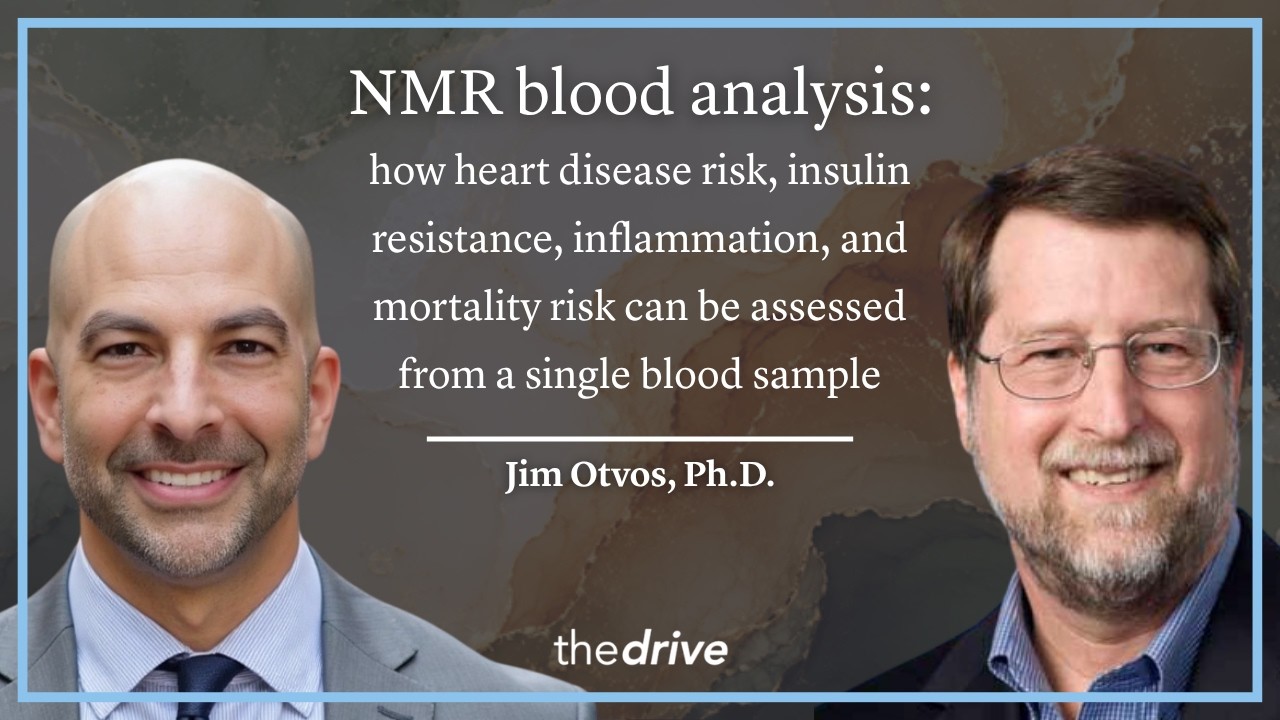
402 ‒ NMR blood analysis: how mortality risk and more can be assessed from a single blood sample
 118 min
Building strength and muscle mass: optimize training & nutrition for longevity (AMA #71 rebroadcast)
Ask anything from this episode.
Save it, chat with it, and connect it to Claude or ChatGPT. Get cited answers from the actual content — and build your own knowledge base of every podcast and video you care about.
Get Started Free