Key Moments
Eric Weinstein: On the Nature of Good and Evil, Genius and Madness | Lex Fridman Podcast #134
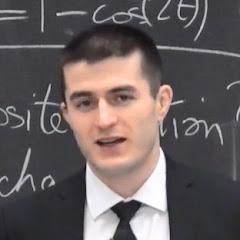 Lex Fridman
Key Moments
Weinstein and Fridman discuss music, genius, madness, politics, and the future of society.
Key Insights
Music, like that of Eddie Van Halen and Leonard Cohen, can deeply connect with listeners on intellectual, emotional, and visceral levels, often revealing complex mathematical structures and profound human experiences.
The concept of genius often coexists with madness, suggesting a blurred line between profound creativity and psychological turmoil, as seen in artists and thinkers throughout history.
The current political climate is highly divisive, with both major parties and leaders being critically assessed, and the media landscape, particularly social media platforms, significantly impacts public discourse and institutional integrity.
The slowing of growth and the lack of a societal plan for this new reality pose significant challenges, necessitating a shift in focus from dividing existing resources to creating new opportunities and innovations, such as in robotics.
The nature of evil is complex, potentially residing in both individuals and systems, and its investigation is hindered by a societal aversion to the word 'conspiracy' and the systematic dismantling of reputations.
The scientific enterprise, particularly in physics, faces challenges from institutional inertia, a lack of risk-taking among funders, and a potential decline in fundamental research, necessitating new approaches to communication and discovery.
THE PROFUNDITY OF MUSIC AND CREATIVITY
The conversation opens with a discussion on the nature of musical greatness, using Eddie Van Halen and Leonard Cohen as primary examples. Eric Weinstein posits that true musicality lies in an artist's ability to perform under adverse conditions, stripping down the music to its essential elements. The discussion delves into how artists like Van Halen innovated beyond mere technical virtuosity, touching listeners intellectually, emotionally, and physically. Leonard Cohen's 'Hallelujah' is dissected, revealing the intricate interplay of musical theory and lyrical depth, exploring themes of love, mystery, and the human condition through the lens of chord progressions and lyrical narratives.
THE INTERTWINED NATURE OF GENIUS AND MADNESS
A recurring theme is the connection between genius and madness. The hosts explore how profound creativity often seems to spring from or coexist with psychological struggles. This is illustrated by referencing artists like Leonard Cohen and Anthony Bourdain, who produced immense beauty while grappling with deep depression. The discussion suggests that this juxtaposition might arise from individuals attempting to reconcile seemingly incompatible perfect systems or grappling with the inherent complexities and limitations of existence, leading to inner turmoil.
THE FRACTURED POLITICAL LANDSCAPE
The current political climate is presented as deeply fractured and concerning. Both the Democratic and Republican party leaderships are criticized for their perceived lack of integrity and divisive rhetoric. Presidential candidates like Joe Biden and Donald Trump are viewed as inappropriate for the current era, with a critique focusing on their age and inability to connect with the nation's needs. The conversation highlights how the media landscape, particularly social media, contributes to this division, often amplifying conflict and hindering nuanced conversation.
THE STALLING OF GROWTH AND THE SEARCH FOR NEW ORCHARDS
The economic and societal concept of growth is examined, with the argument that the United States has benefited from a period of low-growth advantage without a plan. The metaphor of an orchard is used to describe the depletion of 'low-hanging fruit' and the need to explore new 'orchards' or areas of innovation. The potential of fields like robotics is presented as a promising 'orchard,' suggesting that focusing solely on dividing existing resources (the pie) is less productive than creating new wealth and opportunities. This shift requires a focus on innovation and discovery alongside safety and fairness.
THE COMPLEXITY OF EVIL AND THE EROSION OF INSTITUTIONS
The discussion turns to the nature of evil, using the Jeffrey Epstein case and the silence surrounding it at institutions like MIT as a focal point. The hosts explore whether evil is an individual trait or a systemic issue, noting how powerful individuals and systems can operate without investigation, partly due to societal aversion to the word 'conspiracy.' The breakdown of scientific institutions due to a lack of funding and risk-taking is contrasted with the historical model of scientific progress, suggesting that the erosion of these systems can hinder human potential and intellectual integrity.
THE CHALLENGE OF COMMUNICATION AND THE FUTURE OF DISCOURSE
The role of platforms like podcasts in modern discourse is acknowledged as revolutionary, empowering younger voices and enabling longer, more nuanced conversations. However, the challenges of 'trolling,' reputational destruction, and the superficiality of online communication are also highlighted. The conversation touches on the difficulty of communicating complex scientific ideas and the need for more inclusive and supportive environments for innovation. Ultimately, the hosts express concern about the future, emphasizing the importance of earnestness, courage, and finding meaningful battles to fight in a complex and often disappointing world.
Mentioned in This Episode
●Products
●Software & Apps
●Companies
●Organizations
●Books
●Concepts
●People Referenced
Common Questions
Eric Weinstein sees a common capacity for discontinuous innovation in both Eddie Van Halen (guitarist) and Rodney Mullen (skateboarder), achieving entirely new forms in their respective fields.
Topics
Mentioned in this video
An acoustic guitar piece by Eddie Van Halen, highlighted for its pure musicianship without electronic effects.
One of Van Halen's early breakout hits, marking a new force in music.
A song by Warren Zevon, admired by Eric Weinstein.
A song by Leonard Cohen, explored for its themes of mystery, sad-joyous chord changes, and unreliable audience.
A song by Ray Charles with a deeply depressed vibe.
A film written by Ben Affleck and Matt Damon, discussed for its themes of genius and struggle.
A famous classical piece, used to illustrate musical discovery.
A song by Johnny Cash, notable for lyrics and music going in opposing directions.
A dystopian song by Leonard Cohen, containing the line 'I'm the little Jew that wrote the bible'.
A song by Bob Dylan, cited as an example of biblical-like scribing in songwriting.
Host of The Joe Rogan Experience, where David Lee Roth appeared; lauded for allowing guests to speak freely.
Mathematician and physicist who won the Nobel Prize in Physics in 2020, deeply influential on Eric Weinstein's worldview.
Co-founder of Facebook, mentioned as someone who left Harvard.
Comedian and actor, remembered as a 'crazy dysregulated genius' who showed authenticity in his acting despite tremendous pain.
Actress, distinguished from Catherine Hepburn as 'pretty amazing' but not 'next level'.
Father of Ghislaine Maxwell, active in scientific publishing, whose missing fortune is linked to Jeffrey Epstein's mysterious wealth.
A funder who supported science through different grant structures than traditional federal funding.
Physicist, mentioned as a deserving Nobel laureate whose prize was diluted by being shared.
Physicist, who along with Max Planck, left more work to be done in quantum theory compared to Einstein's initial completeness in general relativity.
Eric Weinstein's wife and intellectual collaborator, with whom he developed 'Geometric Marginalism'.
Songwriter mentioned as one of the few who deeply moved Bob Dylan.
Boxer, mentioned as a rival who helped define Muhammad Ali's legacy.
US presidential candidate, discussed in terms of his age, competence, and ability to communicate effectively.
Physicist, mentioned as a genius and deserving Nobel laureate, whose prize was diluted by being shared.
A guitarist, contrasted with Eddie Van Halen, noting that while brilliant, he didn't spark a revolution that others could follow.
A skateboarder, mentioned as an innovator comparable to Eddie Van Halen.
Musician mentioned for his song 'Lonely Avenue' in contrast to Nina Simone's 'Feeling Good'.
An important songwriter, largely forgotten by the current generation, admired by Bob Dylan.
A highly intelligent individual described as having multiple internal minds, making his views complex and often contradictory.
Controversial media personality, mentioned as a guest on Joe Rogan's podcast who drew criticism.
Legendary actress admired for her independence and defiance of Hollywood norms.
Physicist who effectively solved many problems in general relativity, leaving less for subsequent generations. Mentioned as a deserving Nobel laureate.
Physicist, who along with Niels Bohr, left more work to be done in quantum theory compared to Einstein's initial completeness in general relativity.
Musician and poet whose song 'Hallelujah' is analyzed for its emotional and musical depth, despite his personal struggles with depression.
Musician, cited for his songwriting and for being moved by Warren Zevon's work.
CEO of Tesla and SpaceX, discussed as a modern innovator who faces considerable criticism despite his achievements.
Scientist, grouped with other 'difficult people' who are innovators.
Boxer, mentioned in context of rivalry and opponent respect.
US presidential candidate, discussed in terms of his public perception and potential for division.
Pioneers of powered flight, used to illustrate rapid technological advancement.
Mathematician at the University of Pennsylvania, whose paper featuring a Hopf fibration diagram deeply influenced Eric Weinstein.
The founder of the Nobel Prize, whose legacy is secondary to the quality of the prize winners.
Physicist, whose Nobel Prize was unnecessarily diluted.
A rock musician who saw music as an infinitely extensible medium, contrasted with Van Halen's precision.
Co-founder of Microsoft, mentioned as someone who voluntarilly left Harvard.
Actor, referenced in an analogy about entering a dangerous situation (like Spotify for Rogan) and emerging stronger.
Financier involved in a deeply disturbing scandal, discussed in terms of institutional silence, conspiracy, and the role of money in science.
A funder who supported science through different grant structures than traditional federal funding.
Physicist, mentioned as someone in the class of scientific brilliance.
Physicist whose discovery of P-symmetry violation (that left and right are not symmetric) revolutionized physics, an egregious Nobel omission.
Physicist, mentioned as deserving a posthumous Nobel Prize for significant contributions.
Musician whose song 'Ring of Fire' is used to illustrate music playing against its lyrics (head fake).
Songwriter mentioned as one of the few who deeply moved Bob Dylan.
Actor and writer, whose story of creating 'Good Will Hunting' is admired for its genius and risk-taking. Later, his struggle to speak freely is noted.
Co-founder of Apple, mentioned for dropping out of Reed College, and as being a 'very difficult guy'.
Comedian, mentioned as an associate of Joe Rogan who faced backlash during cancel culture incidents.
Daughter of Robert Maxwell, mentioned in passing.
A prominent figure in aviation and film, and later a recluse, discussed as a large scale unique funder.
Physicist, mentioned as a genius whose impact on physics could have been greater. Cited for his comments on Tartaglia's solution to the cubic.
Scientist, mentioned as deserving a posthumous Nobel Prize for significant contributions.
Physicist, mentioned as deserving a posthumous Nobel Prize for significant contributions.
Physicist who shared the Nobel Prize with Feynman and Schwinger, possibly included to represent post-war collaboration across the Pacific, although Eric views this as a dilution.
A wise turtle master from Kung Fu Panda, referenced as Eric Weinstein's counterpart.
The original frontman of Van Halen, described as a 'hot mess' yet very smart and dysregulated.
A singer whose rendition of 'Feeling Good' is described as having a funereal, oppressive feel despite seemingly joyous lyrics.
Scientist, grouped with other 'difficult people' who are innovators.
Comedian, mentioned as an associate of Joe Rogan who faced backlash during cancel culture incidents.
Mentioned in the context of his 'wisdom project', contrasting with Eric Weinstein's more off-planet solution.
A legendary guitarist revered for his capacity for innovation and unique sounds, especially in 'Spanish Fly'.
Frontman of The Modern Lovers, cited for his quote about being prepared to play music under any circumstances.
Legendary boxer, used as an example of how opponents (like Frazier and Liston) help build a legend.
MMA fighter, mentioned in context of rivalry and opponent respect.
Comedian known for his routine criticizing marketing and authenticity.
Biologist and podcaster, whose 'Articles of Unity' project was shut down on Twitter, fueling Eric's concerns about censorship.
CEO of Twitter, whose actions regarding censorship (specifically Articles of Unity) are seen as contradictory to his "next level mind".
Scientist, whose story is invoked to represent religious commitment to science and willingness to stand for truth.
Physicist who won a Fields Medal in mathematics, representing the reverse journey of Penrose.
Mathematician whose theorem is fundamental to physics, an egregious Nobel omission.
Physicist, mentioned as deserving a posthumous Nobel Prize for significant contributions.
Physicist, whose Nobel Prize was unnecessarily diluted.
A composer whose song 'Every Time We Say Goodbye' is cited for its poignant lyrical musical harmony.
Composer who voluntarily left Harvard, mentioned as an example of making a choice 'bigger than Harvard'.
Boxer, mentioned as a rival who helped define Muhammad Ali's legacy.
A song by Nina Simone, analyzed as a case of an unreliable narrator where the music contrasts the lyrical claim of joy.
An animated film franchise, used as an analogy for the relationship between Lex Fridman and Eric Weinstein.
A book about Mumbai, referenced for its insightful portrayal of the underworld and human psychology.
A famous instrumental piece by Van Halen, showcasing Eddie Van Halen's virtuosity.
A university where Lex Fridman observes pockets of genius despite bureaucracy, also discussed in context of Jeffrey Epstein.
Described as a 'weirdest, craziest college' that Steve Jobs dropped out of.
The Federal Bureau of Investigation, mentioned in the context of historical conspiracies and the Citizens' Committee.
Traditional federal grant-making body contrasted with private funding sources for science.
A group that broke into FBI offices to expose covert operations, revealing a major conspiracy.
Where Hermann Gluck worked.
A group of scientists whose collaborative environment led to abundant Nobel Prizes.
A classified exercise and readiness drill, mentioned as another historical example of government conspiracy.
A compact between the federal government and universities for science funding, whose failure is blamed for creating an environment where Jeffrey Epstein's funding became attractive.
A social media platform, criticized for its negative environment, impact on free speech, and potential for 'meta violence'.
Example of an organization that engaged in conspiracies and hid its strategies.
A VPN service used for many years to protect privacy on the internet.
A band fronted by Jonathan Richman.
A streaming platform that hosts Joe Rogan's podcast, discussed as a Silicon Valley entity that could threaten independent voices.
A probe that sent back images from the surface of Titan, demonstrating rapid scientific progress.
Eddie Van Halen's custom-built guitar, assembled from various pieces.
A meal delivery service used to add healthy variety into culinary life.
A spacecraft that conducted a study of Saturn and its system, including the Huygens probe.
A brand of vodka, used as a wager for a bet between Lex and Eric.
One of Saturn's moons, where images were sent back from its surface by the Huygens probe.
One of two genius intellectual concepts behind music, referring to the fundamental mathematical structures governing sound.
A project by Brett Weinstein that was removed from Twitter, demonstrating the power of platforms to censor.
A theory developed by Eric Weinstein and his wife Pia that combines geometry and economics, described as an intellectual tango.
A system of musical tuning that allows instruments to play in all keys, arising from a mathematical approximation.
A cognitive bias in which people with low ability at a task overestimate their ability, referenced in a self-deprecating manner.
Mentioned as an organization that 'destroys people' and will not tolerate opposition.
A visual mathematical diagram that profoundly impacted Eric Weinstein at age 16.
More from Lex Fridman
View all 549 summaries 259 min
FFmpeg: The Incredible Technology Behind Video on the Internet | Lex Fridman Podcast #496
 124 min
Vikings, Ragnar, Berserkers, Valhalla & the Warriors of the Viking Age | Lex Fridman Podcast #495
 146 min
Jensen Huang: NVIDIA - The $4 Trillion Company & the AI Revolution | Lex Fridman Podcast #494
 311 min
Jeff Kaplan: World of Warcraft, Overwatch, Blizzard, and Future of Gaming | Lex Fridman Podcast #493
Ask anything from this episode.
Save it, chat with it, and connect it to Claude or ChatGPT. Get cited answers from the actual content — and build your own knowledge base of every podcast and video you care about.
Get Started Free