
Galileo Galilei
Pioneer astronomer who used telescopes to falsify geocentric models and observe moons of Jupiter.
Build a pod of every appearance and mention of Galileo Galilei.
31 videos discussing or featuring Galileo Galilei. Save them to your own pod, ask any question across them, and connect it to Claude or ChatGPT.
Common Themes
Videos Mentioning Galileo Galilei
Peterson Academy | Dr. Brian Keating | Intro to Cosmology | Lecture 1 (Official)
Peterson Academy
Pioneer astronomer who used telescopes to falsify geocentric models and observe moons of Jupiter.

197 - The science of obesity & how to improve nutritional epidemiology | David Allison, Ph.D
Peter Attia MD
Astronomer mentioned as conducting an experiment from house arrest to determine the speed of light, which led to a normative error given the limitations of his time.
#130 - Carol Tavris, Ph.D. & Elliot Aronson, Ph.D.: Recognizing and overcoming cognitive dissonance
Peter Attia MD
An astronomer mentioned as a historical example of a scientist whose discoveries were met with resistance, similar to Semmelweis, due to challenges to established beliefs.
Ryan Hall: Solving Martial Arts from First Principles | Lex Fridman Podcast #169
Lex Fridman
A historical scientist, quoted by Ryan Hall: 'You can't teach a man anything; you can only help him find it within himself', in the context of self-discovery in learning.

Brian Keating: Cosmology, Astrophysics, Aliens & Losing the Nobel Prize | Lex Fridman Podcast #257
Lex Fridman
Italian astronomer and physicist who significantly improved the telescope and made groundbreaking observations, though sometimes with incorrect interpretations.

John Preskill on Quantum Computing
Y Combinator
Italian astronomer and physicist mentioned for his experiments rolling balls down ramps, which helped in understanding motion.

Cal Newport and Tim Ferriss Revisit “The 4-Hour Workweek” Plus Much More! | The Tim Ferriss Show
Tim Ferriss
Cited by Cal Newport as an example of a highly productive scientist who was rarely busy, aligning with the 'Four-Hour Workweek' philosophy.
Michio Kaku: Future of Humans, Aliens, Space Travel & Physics | Lex Fridman Podcast #45
Lex Fridman
Astronomer and physicist who distinguished between the purpose of science (natural law) and religion (ethics).

#35 – Nir Barzilai, M.D.: How to tame aging
Peter Attia MD
A historical figure whose conflict with the Vatican serves as a cautionary tale for the institution regarding resistance to scientific advancement, prompting their interest in modern science like aging research.

Edward Frenkel: Reality is a Paradox - Mathematics, Physics, Truth & Love | Lex Fridman Podcast #370
Lex Fridman
Italian astronomer and physicist credited with the quote that the book of nature is written in the language of mathematics, which Edward Frenkel paraphrases.
Jed Buchwald: Isaac Newton and the Philosophy of Science | Lex Fridman Podcast #214
Lex Fridman
An Italian astronomer and physicist whose work on motion was discussed, noting that his ideas evolved and convinced people by enabling new discoveries.

Barry Barish: Gravitational Waves and the Most Precise Device Ever Built | Lex Fridman Podcast #213
Lex Fridman
Italian astronomer and physicist who significantly advanced astronomy by using improved telescopes to make observations like the moons of Neptune, pioneering the field beyond naked-eye observation.
Max Tegmark: AI and Physics | Lex Fridman Podcast #155
Lex Fridman
His ability to distill the parabolic orbit of thrown apples into a formula after years of experience is used as an analogy for AI's potential to extract symbolic knowledge from neural network-like intuition.

Avi Loeb: Aliens, Black Holes, and the Mystery of the Oumuamua | Lex Fridman Podcast #154
Lex Fridman
Scientist known for using a telescope to observe the universe, whose open-mindedness is contrasted with resistance to new ideas in modern science.
Dr. Michio Kaku — Exploring Time Travel, the Beauty of Physics, and More | The Tim Ferriss Show
Tim Ferriss
An astronomer mentioned for his view that science determines 'how the heavens go,' while religion determines 'how to go to heaven,' advocating for separation of domains.

Henry Shukman — Zen, Ayahuasca vs. Meditation, and an Intro to Koans | The Tim Ferriss Show
Tim Ferriss
An Italian astronomer, physicist, and engineer whose work led to a shift to a heliocentric worldview, compared to the paradigm shift of awakening.

Frank Wilczek: Physics of Quarks, Dark Matter, Complexity, Life & Aliens | Lex Fridman Podcast #187
Lex Fridman
Astrophysicist mentioned as a historical master whose works provide insight into wrestling with difficult ideas.
Yaron Brook: Ayn Rand and the Philosophy of Objectivism | Lex Fridman Podcast #138
Lex Fridman
His persecution by the Catholic Church is used as an example of how force and coercion restrict freedom of thought and reason, hindering discovery of truth.
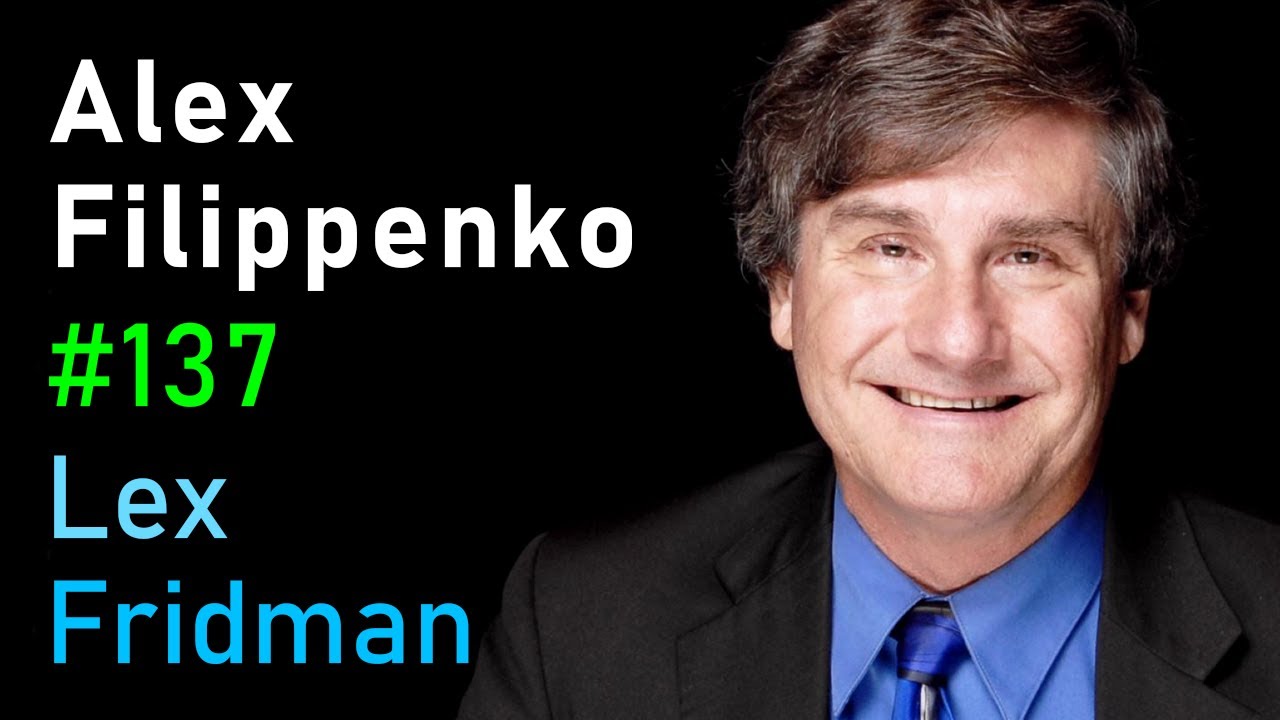
Alex Filippenko: Supernovae, Dark Energy, Aliens & the Expanding Universe | Lex Fridman Podcast #137
Lex Fridman
Italian astronomer and physicist who provided definitive observational evidence for the heliocentric model through his observations of Venus's phases and Jupiter's moons, later placed under house arrest.
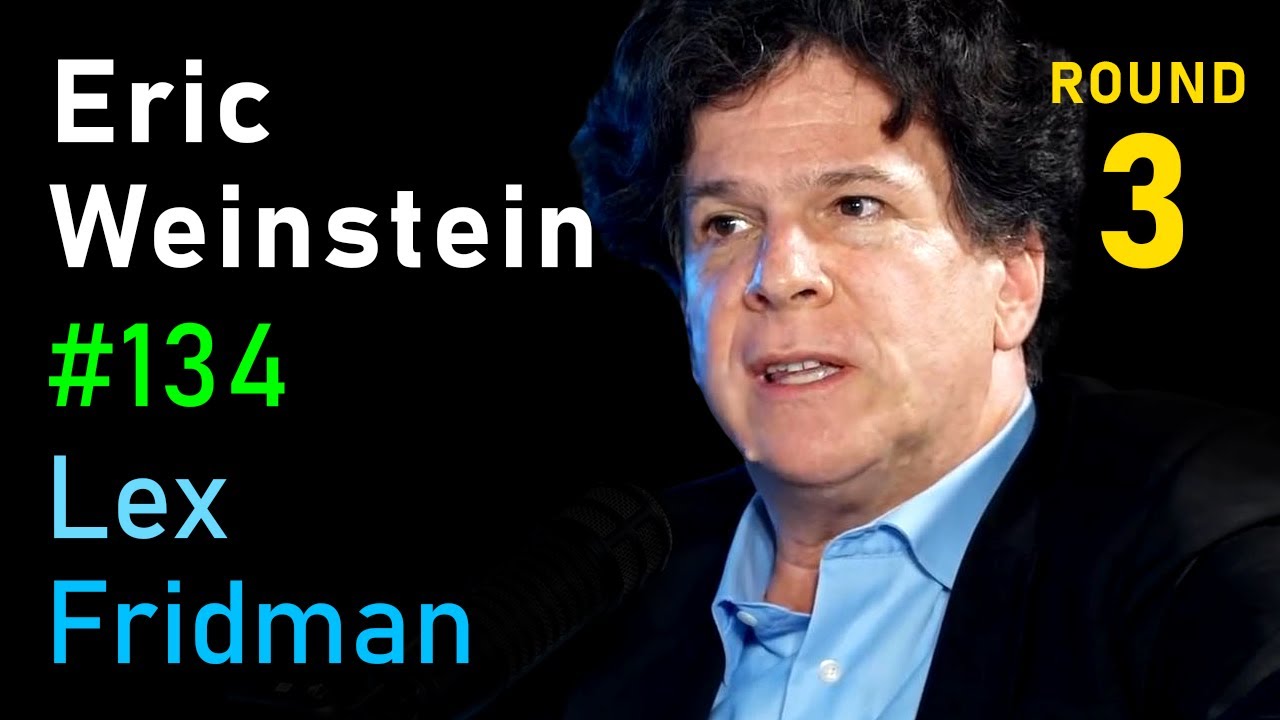
Eric Weinstein: On the Nature of Good and Evil, Genius and Madness | Lex Fridman Podcast #134
Lex Fridman
Scientist, whose story is invoked to represent religious commitment to science and willingness to stand for truth.

Neil deGrasse Tyson — How to Dream Big | The Tim Ferriss Show
Tim Ferriss
An astronomer and physicist, quoted by Neil deGrasse Tyson with an analogy about the sun's ability to keep planets in orbit and ripen grapes.

Lee Smolin: Quantum Gravity and Einstein's Unfinished Revolution | Lex Fridman Podcast #79
Lex Fridman
An Italian astronomer and physicist whose experiments, including dropping balls from towers, helped challenge Aristotelian physics and lay groundwork for classical mechanics.

Ann Druyan: Cosmos, Carl Sagan, Voyager, and the Beauty of Science | Lex Fridman Podcast #78
Lex Fridman
His early telescopic observations are cited as a starting point for rapid scientific advancement in human history.

Russ Tedrake: Underactuated Robotics, Control, Dynamics and Touch | Lex Fridman Podcast #114
Lex Fridman
Cited alongside Newton as an example of a scientist whose rigorous thinking and simple models were crucial for scientific progress.