Key Moments
Jed Buchwald: Isaac Newton and the Philosophy of Science | Lex Fridman Podcast #214
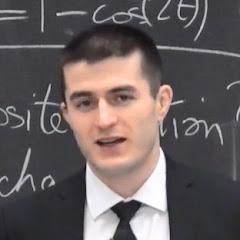 Lex Fridman
Want to know something specific about what's covered?
We've already dissected every moment. Ask and we will deliver (with timestamps).
Key Moments
Jed Buchwald discusses Isaac Newton, the philosophy of science, and historical progress, contrasting Kuhn's paradigm shifts with gradual development.
Key Insights
Science progresses through a complex interplay of paradigm shifts and gradual development, not always neatly fitting Thomas Kuhn's model.
Historical scientific breakthroughs, like Newton's in optics, often arise from individuals who can both theorize mathematically and conduct experimental manipulations, even with rudimentary tools.
The perception of scientific progress is influenced by the development of novel experimental and mathematical structures that enable new investigations and device creation, rather than solely by the failure of existing theories.
Isaac Newton was a complex figure whose scientific endeavors, including calculus and optics, were deeply intertwined with his alchemical investigations and profound religious beliefs.
The concept of a 'Theory of Everything' has historical roots in alchemy and continues in modern physics, representing a deep human drive to understand the fundamental workings of the universe.
Human perception is a construct, and scientific investigation relies on tools and methods that extend beyond our senses to probe reality objectively.
SCIENCE PROGRESSION: PARADIGM SHIFTS VERSUS GRADUALISM
Jed Buchwald, a historian and philosopher of science, discusses the nature of scientific progress, drawing on his experience as Thomas Kuhn's research assistant. While Kuhn's "Structure of Scientific Revolutions" proposed paradigm shifts driven by anomalies, Buchwald believes progress is more nuanced. He argues that scientific work is often akin to craftsmanship, adaptable within frameworks. He uses the wave theory of light as an example, noting that it didn't solely arise from the failure of the Newtonian particle theory but offered new opportunities for experimental and mathematical innovation.
NEWTONIAN OPTICS AND EXPERIMENTAL INNOVATION
Buchwald elaborates on the historical development of the wave theory of light, contrasting it with Newton's particle theory. Newton's work on diffraction, for instance, couldn't generate new insights, whereas the wave theory, particularly through the advanced mathematics deployed by Fresnel, allowed for the generation of new devices and understanding, especially with phenomena like polarization. This highlights how a prevailing view might not necessarily fail to explain something but might not offer opportunities for novel research and development.
THE ROLE OF GENIUS AND COLLABORATION
The conversation touches on whether science progresses through lone geniuses or collective efforts. Buchwald suggests it's a blend, with central individuals often driving shifts, but their work builds on a broader context. He references Galileo and Huygens as examples. The idea of scientific advancement being inevitable with or without specific geniuses is explored, positing that the historical context and available knowledge would likely lead to similar developments eventually, though perhaps in different forms.
THE QUEST FOR A THEORY OF EVERYTHING
Buchwald connects the historical pursuit of a unifying theory, tracing it from alchemy to modern physics. He explains that early alchemists, through their manipulative experiments, laid groundwork for understanding chemical transformations and particle rearrangement. The modern 'Theory of Everything' in physics aims to unify fundamental laws but faces challenges in experimental verification, with string theory being a prominent, though unproven, candidate. The cyclical nature of scientific inquiry and the limits of our perception are also discussed.
NEWTON'S LIFE AND CONTRIBUTIONS
Detailing Isaac Newton's life, Buchwald highlights his difficult childhood, his intellectual awakening at Cambridge, and his groundbreaking work. Newton developed the foundations of calculus, explored optics and gravity, and engaged extensively in alchemical research. His life was marked by scientific brilliance but also by significant controversies, notably with Robert Hooke and Gottfried Wilhelm Leibniz over priority and ideas. Newton's deep religious convictions, including his anti-Trinitarian beliefs, significantly influenced his worldview.
THE NATURE OF DATA AND SCIENTIFIC METHOD
Buchwald questions the modern emphasis on a singular 'scientific method,' proposing instead a focus on systematic manipulation of artificial structures for predictable results. He discusses Newton's approach to data – how, unlike modern statistical averaging, Newton and others of his era often relied on single, trusted measurements. This historical perspective reveals evolving standards for empirical evidence and measurement within scientific practice.
ALCHEMY AND ITS SCIENTIFIC LEGACY
Buchwald discusses alchemy not just as a mystical pursuit but as a precursor to modern chemistry. Alchemists, through their attempts at chrysopoeia (transforming base metals into valuable ones), developed complex apparatuses and learned to produce and decompose substances. Many alchemical texts, he notes, are now understood as coded formulas for chemical processes, contributing to the material knowledge that underpinned later scientific advancements. Newton himself was deeply involved in alchemical experiments.
NEWTON'S RELIGIOUS BELIEFS AND WORLDVIEW
Newton's profound religiosity is explored, particularly his anti-Trinitarian stance and his belief in a rational, non-arbitrary deity. This conviction that the universe followed exacting rules likely fueled his pursuit of understanding its workings. Buchwald notes Newton's belief in creation approximately 6,000 years ago, placing it within the historical context of biblical chronology and Newton's theological interpretations of a divinely ordered cosmos.
THE LEAP FROM NEWTON TO EINSTEIN
Buchwald contemplates a hypothetical discussion between Newton and Einstein, suggesting Newton would initially be bewildered by concepts like spacetime and general relativity. He posits that a gradual acclimatization to modern scientific and technological advancements would be necessary for Newton to comprehend Einstein's theories. This highlights the immense conceptual and empirical leaps science has made since Newton's time, impacting our fundamental understanding of the universe.
GENIUS AND THE NATURE OF INNOVATION
Reflecting on Einstein's 'miracle year' of 1905 and Newton's 'annus mirabilis,' Buchwald acknowledges the extraordinary capacity for creative output within certain individuals during specific periods. He touches on the enduring mystery of how human minds achieve such profound insights, suggesting it involves a complex interplay of intrinsic talent, experience, and perhaps unique ways of perceiving and processing reality, while noting the lack of visibly unusual physical traits in figures like Einstein.
Mentioned in This Episode
●Products
●Software & Apps
●Organizations
●Books
●Concepts
●People Referenced
Common Questions
Buchwald, Kuhn's former research assistant, agrees that paradigm shifts exist but believes the changes are more complex than Kuhn's model, not reacting so neatly to novel experimental observations. He views scientific work as a craft, where practitioners adapt and find opportunities to deploy novel structures, rather than solely reacting to anomalies. (Timestamp: 126)
Topics
Mentioned in this video
A German polymath who independently developed a form of calculus, which is the notation used today, leading to a long-standing controversy with Newton.
A French scientist and politician, involved in expeditions for the metric system, who later became a major administrator of science and was a rival of Jean-Baptiste Biot.
A leading analyst of Newton's optics, who recently completed full annotations and analysis of Newton's work.
A theoretical physicist famous for his theories of relativity, whose 'miraculous year' of scientific publications in 1905 is discussed.
A professor of history and a philosopher of science at Caltech, specializing in the development of scientific concepts and instruments.
An English mathematician, physicist, astronomer, alchemist, and theologian who is considered one of the most influential scientists of all time. His work on optics, motion, and calculus is extensively discussed.
An astronomer whose laws of planetary motion were used by Newton in his work on the solar system, particularly in reverse-engineering techniques.
A French scientist who deployed advanced calculus forms of mathematics to develop the wave theory of light, enabling new computations and observations.
A theoretical physicist at Caltech, known for his contributions in gravitation physics and astrophysics.
Medieval theologian who reformulated Aristotle's ideas, influencing scholastic ways of thinking about the world.
Isaac Newton's niece who came to run his household when he moved to London and later married John Conduitt, who managed Newton's legacy.
An Irish archbishop, scholar, and chronologist, best known for his chronology that dated the creation of the world to 4004 BCE.
A philosopher whose work 'The Structure of Scientific Revolutions' introduced the concept of paradigm shifts in science. Buchwald was his research assistant.
An English scientist credited with introducing the wave theory of light, though it primarily took off in France with Augustin-Jean Fresnel.
An Italian astronomer and physicist whose work on motion was discussed, noting that his ideas evolved and convinced people by enabling new discoveries.
French military leader and emperor whose defeat at Waterloo in 1815 led to Augustin-Jean Fresnel returning home from the army.
A famous theoretical physicist and cosmologist who also held the Lucasian Professorship of Mathematics until his death.
A professor at Indiana who has reproduced alchemical experiments described by Newton, including the shiny 'star regulus'.
A talented English experimental scientist, architect, and philosopher who often conflicted with Isaac Newton, known for his work in microscopy and early theories of light.
A young astronomer sent by the Royal Society to Danzig to verify Hevelius's astronomical observations, confirming their accuracy.
A French chemist and politician. Lex Fridman misidentifies him as Jean-Baptiste Biot, though the correct name mentioned by Jed Buchwald is Jean-Baptiste Biot.
A chemist and scientist who worked on heat, whose discoveries were somewhat independent of the development of the steam engine.
The host of the podcast, who engages in a conversation with Jed Buchwald.
A French mathematician and philosopher who was a mechanical philosopher, believing the world was matter in motion and initially thought little of Galileo's work.
A physicist and Nobel laureate, co-founder of the Standard Model, with whom Buchwald disagrees on the extent to which science has probed the depths of reality.
A scholar who found a Leibniz manuscript, the 'Tentamen,' suggesting Leibniz reverse-engineered Newton's Principia for his mechanics.
A French physicist and astronomer who investigated polarization in optics and had a significant rivalry with François Arago.
A Dutch scientist, older than Newton, who developed the first pendulum-governed clock and is known for Huygens' Principle in optics.
18th-century philosopher whose ideas about the limits of human knowledge regarding unknowable reality are referenced.
A wealthy brewer in Danzig who built a large observatory and published a highly accurate new catalog of stars using only his eyes.
An architect and mathematician who, along with Hooke, contributed to early ideas about gravity as a magnetic relationship.
A French mathematician and astronomer, leader of French science, who was pressured by Arago to acknowledge his work.
Newton's relative by marriage (husband of Catherine Barton) who played a role in controlling Newton's legacy after his death.
The first Lucasian Professor of Mathematics at Cambridge who recognized Newton's genius and stepped down to allow Newton to take the position.
A foundational work by Thomas Kuhn, published in 1962, outlining the idea of paradigmatic shifts in scientific progress.
A book by Robert Hooke which featured the first depictions of magnified objects, influencing early scientific observation.
Isaac Newton's monumental work detailing his laws of motion, universal gravitation, and a derivation of Kepler's laws of planetary motion.
A relativistic quantum field theory of electrodynamics, forming the basis of the Standard Model.
A long-standing belief in physics about a hypothetical, single, all-encompassing theoretical framework of physics.
An early modern chemical structure, similar to alchemy, that Isaac Newton extensively worked on.
A prestigious professorship at the University of Cambridge, held by both Isaac Newton and Stephen Hawking.
A destructive weapon mentioned in the context of large-scale, elaborate equipment needed for 20th-century scientific endeavors, contrasting with earlier experimental methods.
Newton's theory that light is a stream of particles, primarily held in the 17th-18th centuries before the broader acceptance of the wave theory of light.
The cosmological model that describes the early development of the Universe, discussed in relation to the origins of physical laws.
An expansion formula that Newton generalized, leading him to develop concepts foundational to calculus.
Newton's book on light and color, focusing on his experimental discoveries and theories, with a largely geometric approach.
A theoretical framework in physics proposing that point-like particles are actually one-dimensional 'strings,' but lacks direct experimental evidence.
A fundamental theorem of probability theory stating that the average of a large number of independent, identically distributed random variables will be approximately normally distributed, regardless of the underlying distribution.
A theory in particle physics that describes the fundamental forces and particles, acknowledged as highly accurate but not necessarily a complete description of reality.
An invention, particularly the Watt engine, that arose somewhat independently of scientific theories but greatly impacted manufacturing and device construction.
A scientific society in London where Robert Hooke demonstrated new findings and where Newton later became president.
The institution where Jed Buchwald teaches and where he consults with friends like Kip Thorne on physics concepts.
The university where Isaac Newton studied, became a fellow, and was the second Lucasian Professor of Mathematics.
The institution where Jed Buchwald previously ran an institute, and where Thomas Kuhn was in the philosophy department.
The first polytechnic school, founded in France during the French Revolution, analogous to MIT or Caltech.
An ancient practice considered a precursor to modern chemistry, involving the manipulation of materials in artificially constructed ways to understand nature.
A mode of transport mentioned as an example of an invention that would need to be introduced to Newton for him to grasp later scientific concepts.
More from Lex Fridman
View all 553 summaries 193 min
Khabib Nurmagomedov: Dagestan, MMA, UFC, Islam, Conor, Fedor & Football | Lex Fridman Podcast #500
 227 min
Gary Gallagher: American Civil War, Slavery, Lincoln, Grant & Lee | Lex Fridman Podcast #499
 232 min
The Rise and Fall of the Roman Empire and the Byzantine Empire | Lex Fridman Podcast #498
 174 min
Biggest Mysteries in Physics: Antimatter, Dark Energy & ToE - Don Lincoln | Lex Fridman Podcast #497
Ask anything from this episode.
Save it, chat with it, and connect it to Claude or ChatGPT. Get cited answers from the actual content — and build your own knowledge base of every podcast and video you care about.
Get Started Free