Key Moments
Frank Wilczek: Physics of Quarks, Dark Matter, Complexity, Life & Aliens | Lex Fridman Podcast #187
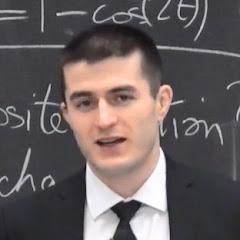 Lex Fridman
Key Moments
Physicist Frank Wilczek discusses the beauty of physics, complexity, quantum mechanics, dark matter, and the nature of consciousness.
Key Insights
The comprehensibility of the universe is a profound gift, with symmetry playing a crucial role in both fundamental physics and emergent complexity.
While fundamental physical laws are elegant, complex phenomena like life and consciousness arise from these laws in ways that require different conceptual frameworks.
Space and time are vastly larger than human perception, yet within this scale, human consciousness allows for billions of meaningful thoughts.
The universe's complexity likely arises from simple rules applied repeatedly, seen in physics, biology, and even the structure of the brain.
The nature of consciousness remains a frontier, with potential insights emerging from studying self-awareness, information processing, and artificial intelligence.
Complementarity, the idea that different, even seemingly contradictory, descriptions can be valid for the same system, is a crucial concept in understanding reality.
THE BEAUTY OF COMPREHENSIBILITY AND SYMMETRY
Frank Wilczek highlights that the most beautiful idea in physics is the universe's comprehensibility, a surprise confirmed since Newton. This comprehensibility is often described by elegant equations characterized by high degrees of symmetry. This mathematical beauty, which humans find appealing, also appears to govern the fundamental workings of the universe. Wilczek suggests our evolved capacity to appreciate beauty, particularly symmetry, resonates with the universe's structure, making it not an accident but a reflection of nature's principles.
BOUNDARIES OF COMPREHENSIBILITY AND EMERGENCE
While the fundamental laws are comprehensible, understanding extends to specific areas. Progress has been extraordinary in fundamental physical processes, yielding precise equations that enable profound control over matter. However, mysteries like dark matter persist. Furthermore, solving these fundamental equations in complex scenarios, like predicting molecular behavior or understanding the emergence of life and societies, proves challenging. These complex systems evolve historically and require concepts beyond basic physical laws, even if grounded in them.
SPACE, TIME, AND THE SCALE OF HUMAN THOUGHT
The universe's vastness in space and time is immense, with the universe being 13.8 billion years old and spanning 13.8 billion light-years. While this scale dwarfs human existence, it doesn't diminish the significance of human thought. Calculations suggest humans can have billions of meaningful thoughts in a lifetime, a testament to our capacity for processing information. This capacity for abstract thought allows us to grasp concepts far beyond our immediate sensory experience, even if the universe's sheer scale requires exponential notation and abstract reasoning.
THE ORIGIN OF COMPLEXITY AND LIFE
Complexity arises from simple rules applied repeatedly, a principle seen from cellular automata to biological structures. The infant universe, though initially homogeneous, contained tiny density fluctuations. Gravitational instability amplified these variations, leading to the clumping of matter. This process, governed by physics and chemistry, eventually formed stars, planets, and the conditions necessary for life. The emergence of intelligence and complex life, however, appears contingent and a more recent development in cosmic history.
THE SEARCH FOR EXTRATERRESTRIAL LIFE AND CONSCIOUSNESS
The conditions for life may be common in the universe, but the emergence of intelligent, technological civilizations seems more contingent and rare, possibly making humanity unique in our galaxy. The definition of life itself is a profound scientific question, leading to discussions about states of matter and dynamic organizations. Consciousness remains a deepest mystery, with potential links to self-awareness, information processing, and complex systems. Studying these phenomena through engineering and computational approaches might yield more concrete insights than abstract philosophical musings.
COMPLEMENTARITY AS A FRAMEWORK FOR UNDERSTANDING
Complementarity, originating in quantum mechanics, suggests that different, even mutually exclusive, descriptions can be valid for the same system, depending on the question asked. This principle extends beyond physics, offering a way to reconcile seemingly contradictory ideas like free will and determinism. It encourages tolerance and a broader perspective, acknowledging that reality is multifaceted and can be understood through various lenses, each offering unique insights. This approach is also crucial for understanding complex systems like the human mind and society.
QUANTUM MECHANICS, PARTICLES, AND ASYMPTOTIC FREEDOM
Our fundamental description of nature uses point-like particles, but their existence is defined by the equations they obey. Quantum mechanics, combined with relativity, explains phenomena like asymptotic freedom – the weak interaction between quarks at short distances or high energies. This concept, for which Wilczek won the Nobel Prize, reveals that the strong nuclear force, which binds quarks into protons and neutrons, behaves counter-intuitively: the closer quarks are, the weaker the force, making them behave as free particles. This simplicity at high energies was crucial for understanding the early universe.
THE STRONG CP PROBLEM AND THE AXION HYPOTHESIS
The 'strong CP problem' questions why the strong interaction, governing quarks and gluons, appears to conserve CP symmetry (charge conjugation and parity) while other interactions violate it. This near-perfect symmetry is an embarrassment, as life itself exhibits time-asymmetry. A promising solution involves a hypothetical field, the axion, which evolved in the early universe and settled into a state that nearly, but not perfectly, enforces CP symmetry. Excitingly, this theory also suggests axions could be the elusive dark matter.
TIME CRYSTALS AND THE LIMITS OF THERMODYNAMICS
Time crystals represent a novel state of matter with spontaneous, repeating structures in time, analogous to spatial crystals. While they exhibit ordered behavior indefinitely, they do not violate thermodynamics or offer a 'free lunch' because they represent a lowest energy state, from which useful energy cannot be extracted. Their existence challenges straightforward applications of thermodynamic laws, highlighting that these laws are emergent rather than fundamental, and can have edge cases and limitations.
THE QUEST FOR A THEORY OF EVERYTHING AND FUTURE EXPLORATION
A unified 'theory of everything' capable of reconciling general relativity and quantum mechanics, especially for phenomena like black holes or the Big Bang's earliest moments, remains a distant goal. While current theories suffice for technology and most astrophysics, the extreme conditions of the early universe and quantum gravity pose significant challenges. The future of space exploration might emphasize advanced robotics and consciousness-extended intelligences rather than human bodies, requiring insights from the physics of life, intelligence, and information rather than just new fundamental laws.
ADVICE FOR YOUNG MINDS AND THE JOY OF LIFE
Wilczek advises young people to cast a wide net, explore diverse and promising ideas, read the masters of ideas (like Einstein, Feynman, Darwin) to learn how great minds grapple with concepts, and master fundamental skills early. He views life itself as an unearned gift, finding joy in interaction, creating institutions, and the creative process. He embraces the uncertainty and humility that comes from deep scientific understanding, seeing complementarity as a liberating concept that expands the mind and offers opportunities for deeper understanding and tolerance.
Mentioned in This Episode
●Software & Apps
●Companies
●Organizations
●Books
●Concepts
●People Referenced
Common Questions
Asymptotic freedom is a concept where quarks behave like free particles when they are very close to one another, despite the strong interaction force. This happens at very high energies and was a co-discovery by Frank Wilczek, David Gross, and David Politzer.
Topics
Mentioned in this video
Co-discoverer of asymptotic freedom along with Frank Wilczek and David Politzer.
Russian novelist whose quote 'Beauty will save the world' is discussed in the context of physics providing insight.
Scientist mentioned by Lex as having discussed the fundamental question of defining life from a physics perspective and expressing concerns about limits to understanding systems from within.
Biologist and author whose theory of evolution is cited as another lesson in humility, showing humans are not the pinnacle of creation. Wilczek recommends reading Darwin to learn how great minds wrestle with difficult ideas.
Mathematician and podcaster mentioned for his intuition about solving physics problems to achieve space exploration and multi-planetary living.
Physicist and mathematician whose advice to Wilczek at age 50—that no one expects much of theoretical physicists at that age, granting liberation—is recounted.
Great neuroanatomist whose drawings of cellular patterns in the brain (like the hippocampus) illustrate intricate symmetry in biology.
Physicist who, along with Val Fitch, discovered that time reversal symmetry is not quite accurate, leading to insights about fundamental interactions.
Nobel Prize-winning theoretical physicist at MIT, co-discoverer of asymptotic freedom in the theory of strong interaction, and author of 'A Beautiful Question' and 'Fundamentals'.
Physicist known for the discovery of Hawking radiation, a tiny effect predicted for black holes that is currently unobservable for astronomical black holes.
Science fiction writer mentioned as a source of inspiration for Frank Wilczek.
Physicist whose work exemplified the scientific revolution's aspiration for completeness, precision, and concise descriptions of the world.
Biologist and author whose idea of memes is mentioned in the context of the evolution of ideas within human minds.
Physicist whose principle of complementarity is adopted by Wilczek, advocating for different ways of thinking about the same things.
English writer and lexicographer, whose quote 'he damn well better' when discussing acceptance of the universe, illustrates a joyful embrace of reality.
Physicist who, along with James Cronin, discovered that time reversal symmetry is not quite accurate, leading to insights about fundamental interactions.
Philosopher and mathematician mentioned as a source of inspiration for Frank Wilczek.
Co-discoverer of asymptotic freedom along with Frank Wilczek and David Gross.
Physicist whose quote about the comprehensibility of the universe is cited as a beautiful surprise in the scientific revolution.
Physicist whose lectures are recommended as essential reading for learning how great minds wrestle with difficult ideas.
Scottish biographer, friend, and literary companion of Samuel Johnson, mentioned in an anecdote about accepting the universe.
Astrophysicist mentioned as a historical master whose works provide insight into wrestling with difficult ideas.
A puzzling aspect of the strong interaction related to the near-but-not-exact symmetry under time reversal, for which axions are proposed as a solution.
Discussed as objects whose collisions are sensed through tiny vibrations, indicating profound understanding of nature. Also mentioned as phenomena whose earliest moments are yet to be fully understood by current physics.
An unidentified source of mass in the universe, a significant physics mystery that axions might explain.
New states of matter that have characteristic patterns not only in space but in time, displaying structure in time spontaneously without violating thermodynamics.
A foundational concept in quantum mechanics, stating that the more precisely one measures the position of a particle, the less precisely one can measure its momentum, and vice versa. It's the physical correlate of complementarity in quantum mechanics.
Fundamental particles that compose protons and neutrons, interacting weakly when close together due to asymptotic freedom, and always existing in bound states.
A fundamental theory in physics that describes the physical properties of nature at the scale of atoms and subatomic particles, fundamental to understanding physical processes and controlling matter.
The cosmological model for the observable universe's earliest known periods, where the universe was much hotter, denser, and more uniform.
Its ability to form backbones and elaborate branchings is highlighted as crucial for complex biochemistry and the emergence of life.
The property of the strong interaction where quarks behave like free particles when very close to one another, requiring immense energy, and simplifying interactions at high energies like in the early universe.
A type of neural network mentioned as a frontier in understanding self-awareness and consciousness, as they look into their own internal state and make choices.
Fundamental particles, units of light that can be individually studied, and mediators of electrical forces, similar to gluons in the strong force.
A fundamental symmetry in physics stating that physical laws are invariant under combined charge conjugation (C), parity transformation (P), and time reversal (T).
A state of matter mentioned as important ingredients of life, specifically in cell membranes, contributing to their function.
Fundamental particles, mediators of the strong interaction, with special properties that enable asymptotic freedom, similar to photons for electric forces but with three 'color' charges.
Book by Frank Wilczek that explores the connection between the beauty of the world and physics, particularly focusing on mathematical symmetry.
Book by Frank Wilczek, recommended by the host for its insights into profound understanding of the physical world.
More from Lex Fridman
View all 549 summaries 259 min
FFmpeg: The Incredible Technology Behind Video on the Internet | Lex Fridman Podcast #496
 124 min
Vikings, Ragnar, Berserkers, Valhalla & the Warriors of the Viking Age | Lex Fridman Podcast #495
 146 min
Jensen Huang: NVIDIA - The $4 Trillion Company & the AI Revolution | Lex Fridman Podcast #494
 311 min
Jeff Kaplan: World of Warcraft, Overwatch, Blizzard, and Future of Gaming | Lex Fridman Podcast #493
Ask anything from this episode.
Save it, chat with it, and connect it to Claude or ChatGPT. Get cited answers from the actual content — and build your own knowledge base of every podcast and video you care about.
Get Started Free