Key Moments
Edward Frenkel: Reality is a Paradox - Mathematics, Physics, Truth & Love | Lex Fridman Podcast #370
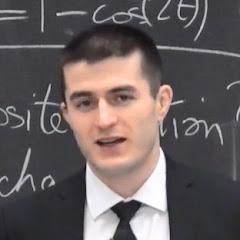 Lex Fridman
Want to know something specific about what's covered?
We've already dissected every moment. Ask and we will deliver (with timestamps).
Key Moments
Edward Frenkel discusses the interface of math and physics, his journey to mathematics, and the role of paradox, love, and human experience in understanding reality, including AI.
Key Insights
Mathematics reveals universal truths that transcend cultural and ideological differences, offering an antidote to divisiveness.
The process of scientific and mathematical discovery often involves childlike wonder, intuition, and a willingness to embrace the unknown or seemingly 'crazy' ideas.
Modern science, particularly quantum mechanics and Gödel's incompleteness theorems, demonstrates the fundamental involvement of the observer in reality and the inherent limitations of purely logical systems.
Edward Frenkel argues that a balanced perspective between logic (Apollo) and intuition/love (Dionysus) is crucial for a harmonious understanding of the world, contrasting with purely computational views of AI.
Traumatic early life experiences, such as the anti-Semitism Edward faced in the Soviet Union, can become powerful motivators for growth and unique insights, if later processed with self-awareness and compassion.
Love, in its broadest sense, is presented as the essential 'glue' of the human condition, an experience that transcends scientific explanation and is fully realized in moments of profound connection and loss.
A CHILDLIKE PATH TO MATHEMATICS
Edward Frenkel's journey into mathematics began unexpectedly. Growing up in the Soviet Union, he initially found school math boring, drawn instead to theoretical physics, particularly quantum mechanics and elementary particles. A pivotal encounter at age 15 with a mathematician named Evgeny Evgenievich Petrov, who challenged his understanding of quarks with concepts like representation theory of the SU(3) group, ignited his passion. Frenkel realized that beneath the descriptive narratives of physics lay a profound, beautiful mathematical structure, offering a deeper understanding of the universe he craved.
THE ALLURE OF DEEPER TRUTHS AND MATHEMATICS' UNIVERSALITY
Frenkel reflects on the enduring joy of discovery and the pursuit of the universe's deepest secrets. He observes a widespread public curiosity about quantum physics and relativity, noting that mathematicians are only now catching up to physicists in popularizing their field. Mathematics, he argues, offers a unique stability compared to constantly updating physical theories; Pythagoras's theorem, for instance, remains universally true across cultures and time, serving as an antidote to societal divisiveness. This objective yet accessible nature of mathematical truth hints at a profound human connection.
THE DISTINCTIVE LENSES OF PHYSICS AND MATHEMATICS
Frenkel defines a key difference: physicists aim to describe *this* universe, while mathematicians explore *all possible* mathematical universes. While physics focuses on observable dimensions, mathematics freely investigates spaces of myriad dimensions, including infinite ones. However, mathematicians lack the experimental validation that physicists enjoy, relying instead on rigorous logical proofs. Despite this, mathematics serves as the fundamental language of nature, with Galileo famously stating, 'The book of nature is written in the language of mathematics'—a truth increasingly evident in theoretical physics.
BEYOND PURE COMPUTATION: THE ROLE OF LOVE AND INTUITION
Challenging the notion that the universe is solely mathematical, Frenkel introduces 'love' as the other half of core reality. Mathematics provides tools and clarity, discerning patterns in both physical and mental realms, and sharpening our perception of beauty. However, it cannot explain beauty or provide a harmonious life alone. He expresses suspicion towards theories that reduce everything to computation, arguing that such perspectives limit our understanding of a universe potentially richer than what we've 'mastered.' This leads to a crucial discussion about the limitations of purely logical frameworks, especially in understanding human experience.
THE PARADOXICAL NATURE OF TIME AND CONSCIOUSNESS
The conversation delves into the philosophical implications of Einstein's relativity, where space-time curvature explains gravity. Time, often perceived as linear, can 'stand still' during moments of deep absorption or love, suggesting a more fundamental 'eternity.' This challenges our narrative-driven understanding of sequential memories and free will, hinting that these might be useful illusions our minds construct. Frenkel muses that we might crave the drama and complexities of these subjective truths, suggesting an evolutionary preference for playing with these aspects of reality.
THE INNOCENCE OF DISCOVERY AND THE CHALLENGE OF PRESERVATION
Great scientists like Isaac Newton and Alexander Grothendieck viewed discovery as the privilege of a child—fearless, uninhibited by the fear of being wrong or appearing foolish. Picasso similarly noted that every child is an artist, the challenge being to preserve that state into adulthood. Frenkel acknowledges the difficulty of maintaining this childlike wonder within societal and educational systems that often punish deviation. He links this to the ongoing AI debate, questioning whether purely computational models, lacking a child's inherent creativity unburdened by 'training data,' can truly replicate human consciousness and inspiration.
THE DANGER OF SELF-IMPOSED LIMITATIONS AND THE VALUE OF MYSTERY
Frenkel critiques the human tendency to limit understanding to what is already known, often due to an 'addiction to knowledge' rooted in ego. He likens this to an author who, having written a book without the letter 'e,' then proclaims the letter doesn't exist. This self-imposed limitation prevents us from realizing that reality often contains paradoxes—truths that seem contradictory from a limited perspective. Niels Bohr's dictum, 'The opposite of a simple truth is a falsity, but the opposite of a great truth is another great truth,' highlights the inherent ambiguity and multi-faceted nature of profound realities, like light being both a particle and a wave.
QUANTUM MECHANICS AND THE OBSERVER'S FUNDAMENTAL ROLE
Quantum mechanics fundamentally challenges classical deterministic views, asserting that the observer is inextricably linked to the observed. Heisenberg's quote, 'What we observe is not reality itself, but reality subjected to our method of questioning,' profoundly illustrates this. Frenkel uses the double-slit experiment—where electrons behave as waves or particles depending on observation—as a concrete example. He criticizes the societal lag in accepting these scientific advancements, leading to outdated conclusions like the denial of free will based on 19th-century physics. This, he argues, is a self-imposed limitation propagated by an inadequate education system and scientists who fail to relate physical discoveries to human implications.
THE POWER OF IMAGINATION IN SCIENTIFIC BREAKTHROUGHS
Einstein believed imagination was more important than knowledge, as it embraces the entire world and drives evolution. Frenkel resonates with this, describing mathematical discovery as a 'jump' or 'leap,' never a linear accumulation of data. He illustrates this with the historical development of complex numbers and the square root of negative one. Initially deemed impossible by existing knowledge, an Italian mathematician, Gerolamo Cardano, dared to 'play' with this 'mental torture,' leading to formulas that unexpectedly worked. This act of imaginative courage, defying established wisdom, reveals mathematics as an endless, limitless pursuit that constantly uncovers new mysteries.
THE PARADOX OF MATHEMATICAL REALITY: INVENTED OR DISCOVERED?
Frenkel's views on whether mathematics is invented or discovered have evolved. Previously a Platonist, believing in a divine world of pure forms existing outside space and time, he now sees it as paradoxical. While the feeling of 'diving into' a pre-existing mathematical reality is pervasive among mathematicians, it's undeniable that only humans (so far) have discovered new mathematics. He concludes that both perspectives hold truth; mathematics is a human activity that reveals pre-existing structures. This inherent paradox reflects his broader view of reality itself, where seemingly contradictory truths coexist, much like art's ability to evoke non-intellectual, profound experiences.
GÖDEL'S INCOMPLETENESS THEOREMS: LIMITS OF FORMAL REASONING
Kurt Gödel's incompleteness theorems fundamentally demonstrate inherent limitations of mathematical reasoning. Mathematics is built upon a system of axioms—statements taken as granted (like Euclid's postulates)—and rules of logical inference. Gödel proved that any sufficiently sophisticated formal system (one that can describe whole numbers) that is consistent will contain true statements that cannot be proven within that system. This shattered the early 20th-century belief that all mathematics could be algorithmically derived, suggesting that truth extends beyond what can be computationally verified. Far from depressing, Frenkel sees this as an opportunity for new discoveries beyond current computational frameworks, asserting that the definition of 'computation' itself may evolve.
THE LANGUAGE PROGRAM: UNIFYING MATHEMATICS AND PHYSICS
The Langlands Program, initiated by Robert Langlands in the late 1960s, is a grand unified theory of mathematics that connects seemingly disparate fields like number theory and harmonic analysis. Langlands found surprising regularities that allowed difficult questions in number theory to be translated into more tractable problems in harmonic analysis, then extended to geometry and quantum physics. Edward Witten, a theoretical physicist, was instrumental in bridging these patterns to physics. Frenkel, who collaborated with Witten, sees this program as revealing hidden principles beneath the surface of known mathematical structures, like finding the 'quarks of mathematics' and constantly pushing frontiers of understanding.
THE CHALLENGES AND ETHICS OF ACADEMIA
Frenkel contrasts academic and extra-academic life for intellectual flourishing. While academia offers security and access to brilliant minds, its community can sometimes be resistant to radically new ideas. He acknowledges the human element within academia: the pursuit of truth intertwined with ego, fame, and status. He emphasizes the need for humility and self-awareness to counteract potentially destructive tendencies, drawing parallels to historical ideological dogmas. He advocates for greater ethical guidelines and transparency in mathematics, a field he believes is more insulated and less regulated than sciences like biology or chemistry, which deal with greater financial stakes and public scrutiny.
THE HEALING POWER OF RECONNECTING WITH CHILDHOOD TRAUMA
Frenkel shares a profoundly personal experience facing anti-Semitism during his Moscow University application in 1984. Denied admission to their mathematics department due to his Jewish background, he was deeply crushed. For 30 years, he suppressed the trauma, telling himself it 'wasn't so bad,' working relentlessly to prove himself. A pivotal moment came when he reconnected with that 16-year-old self, realizing the crushing blow and despair he'd felt. This emotional reconnection, akin to a 'tsunami,' liberated him, opening him to intuition and imagination, and enabling him to forgive his examiners whom he saw as victims of their own circumstances. This transformative experience underscored the importance of confronting and integrating past pain for personal growth.
LESSONS FROM LOSS: LOVE, GRATITUDE, AND THE PARADOX OF LIFE
The death of his father four years prior was Edward's first experience with the death of a close loved one and profoundly changed his perspective. He describes the raw, naked, and intensely painful experience of facing pure, unfiltered love in the absence of the loved one. This ordeal taught him about the true nature of love and life, revealing dimensions beyond conceptualization. He believes that his father's prior trauma and unfulfilled dreams motivated Edward's own drive, suggesting a filial inheritance of purpose. This experience instilled in him a profound sense of gratitude for every moment—even difficult ones—and a rejection of dwelling in negativity, advocating for action and embracing the 'rollercoaster' of human existence with joy.
Mentioned in This Episode
●Software & Apps
●Tools
●Organizations
●Books
●Studies Cited
●Concepts
●People Referenced
Common Questions
Edward Frenkel grew up in the Soviet Union interested in quantum physics, thinking school math was boring. At 15, a family friend and mathematician, Evgeny Evgenievich Petrov, introduced him to deeper mathematical concepts like representation theory of the SU(3) group, which underpinned physical theories. This revelation of math as the language beneath physics instantly converted him.
Topics
Mentioned in this video
A book by Girolamo Cardano on algebra, where he detailed methods for solving cubic and quartic equations and encountered the square root of negative numbers, leading to their discovery.
A book by Cal Newport advocating for focused, uninterrupted work periods, which the host mentions in the context of the intense concentration required for advanced mathematical research.
A German-born theoretical physicist who developed the theory of relativity. The speaker references his views on intuition, imagination, and the mysterious as fundamental to life and scientific discovery.
British mathematical physicist, whose quote (possibly misattributed) about physics being 'basically finished' is used to illustrate the danger of scientific complacency and 'confirmation bias.'
American theoretical physicist, Edward Frenkel mentions his choice of Euler's Identity as one of the most beautiful equations in mathematics.
British mathematician and former student of Andrew Wiles, who assisted Wiles in closing the crucial gap in his initial proof of Fermat's Last Theorem, making the proof complete.
Spanish painter and sculptor, mentioned for his quote 'Every child is an artist,' which parallels the idea of preserving childlike creativity in scientific pursuit.
French mathematician, physicist, inventor, and philosopher. Edward quotes him saying, 'The heart has its reasons of which the reason knows nothing,' and 'The last step of reason is to grasp that there are infinitely many things Beyond Reason,' highlighting the limits of pure logic.
Swiss psychiatrist and psychoanalyst, student of Freud, who founded analytical psychology, Edward Frenkel cites his concept of the 'personal unconscious' and 'collective unconscious' to highlight aspects of the psyche that are below conscious awareness, influencing actions despite the belief in fully conscious, rational decision-making.
Theoretical computer scientist and author of 'Deep Work,' mentioned for his seriousness about allocating time for deep thinking, drawing a parallel to the intense focus required in high-level mathematics.
German theoretical physicist, a key figure in the development of quantum mechanics, quoted as saying, 'What we observe is not reality itself but reality subjected to our method of questioning,' highlighting the observer's role in quantum mechanics.
American futurist, author, inventor, and prominent advocate for AI and technological singularity. Edward Frenkel initially viewed him as an adversary due to his fears of AI, but later, after understanding Kurzweil's personal motivation (desire to reunite with his deceased father in the cloud), developed compassion and gratitude for his contributions.
Italian astronomer and physicist credited with the quote that the book of nature is written in the language of mathematics, which Edward Frenkel paraphrases.
English physicist and mathematician referred to by Edward as a great scientist who described his discoveries with child-like wonder, comparing himself to a child playing on the seashore.
Danish physicist and a key figure in quantum mechanics, who posited the complementarity principle. Edward Frenkel references his idea that the opposite of a great truth is another great truth, embracing ambiguity and paradox.
One of the most prolific and influential theoretical physicists, a professor at the Institute for Advanced Study. Frenkel collaborated with him and describes him as having a unique vision, connecting quantum physics and mathematics almost unparalleled, consistently proving his conjectures right.
American mathematician and podcaster, described as a dear friend and brother. Praised for his unique vision, integrity, ability to straddle disciplines as a 'renaissance man,' and for embodying the balance of mathematical rigor and humanity.
British mathematician from Princeton University who proved Fermat's Last Theorem in 1993, after working on it in isolation for seven years. His process is highlighted as a model of perseverance through intense, lonely mathematical pursuit, even after a gap was found in his initial proof.
Italian mathematician, physician, biologist, physicist, chemist, astrologer, astronomer. Discussed for his discovery of square roots of negative numbers while solving cubic equations, enduring 'mental tortures' to accept these 'impossible' numbers, leading to complex numbers.
Austrian-born British philosopher, who dedicated several pages in his book to the 'Duck-Rabbit' picture, illustrating how perception can lead to different interpretations without a single 'correct' answer.
French mathematician who conjectured Fermat's Last Theorem in the 17th century, famously claiming to have a proof but that the margin of his book was too small to contain it, sparking 350 years of mathematical quest.
Considered the father of modern computing, his work on the halting problem and algorithmic unsolvability parallels Gödel's incompleteness theorems in demonstrating the limits of computation.
Physicist and author of 'Our Mathematical Universe,' whose work explores the idea that objective reality might fundamentally be mathematical.
English poet and artist. Edward recalls his quote 'eternity loves time's productions' to describe a perspective where eternity is fundamental and time is a conceptualization.
Danish philosopher, quoted as saying, 'A thinker without paradox is like a lover without passion: a paltry mediocrity,' underscoring the importance of paradoxes for deeper truth.
Irish mathematician who discovered quaternions in the 19th century, mentioned in the context of extending number systems beyond real and complex numbers.
German philosopher whose book 'The Birth of Tragedy' introduced the concepts of Apollonian (logic, reason) and Dionysian (intuition, imagination, love) aspects of human nature, which Frenkel connects to math and love.
Actress who voiced the AI 'Siri-like' operating system in the movie 'Her,' adding a 'sexy voice' element to the AI's persona.
A movie cited for predicting the future presence of Androids, further exploring the themes of human-AI interaction and the nature of humanity.
A movie mentioned by Edward Frenkel that anticipated themes of AI relationships and human loneliness, where a man falls in love with an AI operating system (voiced by Scarlett Johansson).
John Conway's cellular automaton, mentioned as an example of emergence where complex behavior arises from simple rules, illustrating the mystery of why complexity emerges from simple systems.
A famous theorem in number theory, first conjectured by Pierre de Fermat in the 17th century, stating that no three positive integers a, b, and c can satisfy the equation aⁿ + bⁿ = cⁿ for any integer value of n greater than 2. It remained unproven for 350 years until Andrew Wiles proved it in 1994.
A theoretical framework in physics where point-like particles are replaced by one-dimensional 'strings.' Edward Frenkel finds its mathematical elegance beautiful but notes its current form operates in 10 dimensions, not the observed 4, raising questions about its accuracy for our reality.
The current theory describing fundamental particles and forces (electromagnetic, strong, weak) in the 4-dimensional universe, which is in contradiction with Einstein's relativity (gravity), presenting a crisis in physics that string theory attempts to resolve.
A fundamental particle discovered by the Large Hadron Collider, mentioned as an example of a physical discovery.
An eight-dimensional non-associative algebra over the real numbers, similar to quaternions, representing another mathematical structure in higher dimensions, existing in dimensions 1, 2, 4, and 8.
Eric Weinstein's attempt at a theory of everything, which Edward Frenkel describes as having a very original idea at its core involving a 14-dimensional space, and while promising, requiring more work to be a complete theory.
More from Lex Fridman
View all 551 summaries 232 min
The Rise and Fall of the Roman Empire and the Byzantine Empire | Lex Fridman Podcast #498
 174 min
Biggest Mysteries in Physics: Antimatter, Dark Energy & ToE - Don Lincoln | Lex Fridman Podcast #497
 259 min
FFmpeg: The Incredible Technology Behind Video on the Internet | Lex Fridman Podcast #496
 124 min
Vikings, Ragnar, Berserkers, Valhalla & the Warriors of the Viking Age | Lex Fridman Podcast #495
Ask anything from this episode.
Save it, chat with it, and connect it to Claude or ChatGPT. Get cited answers from the actual content — and build your own knowledge base of every podcast and video you care about.
Get Started Free