Key Moments
253 ‒ Hormone replacement therapy and the Women’s Health Initiative: re-examining the results
 Peter Attia MD
Want to know something specific about what's covered?
We've already dissected every moment. Ask and we will deliver (with timestamps).
Key Moments
WHI study re-examined: HRT's risks/benefits nuanced, not all HRT is bad, and timing matters.
Key Insights
The Women's Health Initiative (WHI) study's initial interpretation was flawed, leading to widespread fear of hormone replacement therapy (HRT).
The WHI primarily tested older formulations (conjugated equine estrogens and medroxyprogesterone acetate) which may not reflect the risks/benefits of modern bioidentical HRT.
The increased breast cancer risk observed in the WHI was largely attributed to the progestin component (MPA), not estrogen alone, and absolute risks were small.
HRT is beneficial for treating bothersome menopausal symptoms (hot flashes, night sweats) in women in early menopause, with benefits likely outweighing risks.
Timing is crucial: HRT in early menopause (50s) shows more favorable outcomes, including potential cardiovascular benefits and reduced mortality signals, compared to later menopause.
While HRT can reduce hip fracture risk, its long-term benefits for bone health diminish after discontinuation, suggesting a limited window for this benefit.
The WHI's findings should not deter women experiencing significant menopausal symptoms from seeking HRT, and individualized decision-making with a knowledgeable clinician is key.
THE HISTORICAL CONTEXT AND THE NEED FOR THE WHI
In the 1980s and 1990s, observational studies suggested hormone replacement therapy (HRT) offered benefits like reduced heart disease, cognitive decline, and mortality. However, these studies were prone to confounding factors such as 'healthy user bias,' meaning women on HRT might have been healthier overall due to lifestyle or socioeconomic reasons, not solely the therapy itself. To establish causality, the Women's Health Initiative (WHI), a large-scale randomized clinical trial, was designed in the early 1990s. This study aimed to test the prevailing hypothesis that HRT could prevent chronic diseases, particularly in women post-menopause.
STUDY DESIGN AND PARTICIPANT CHARACTERISTICS
The WHI enrolled nearly 30,000 women aged 50-79, with an average age of 63, into two primary trials: one testing estrogen plus progestin (for women with a uterus) and another testing estrogen alone (for women without a uterus). The specific formulations used were conjugated equine estrogens (CEE) and medroxyprogesterone acetate (MPA), which were common at the time. While women with severe hot flashes often self-selected out, the study did not exclude women based on vasomotor symptoms; about 45-50% had mild to moderate hot flashes at enrollment. Key exclusion criteria included a history of estrogen-sensitive cancers or recent cardiovascular events, though many women had common conditions like hypertension or diabetes.
PRIMARY OUTCOMES AND INITIAL INTERPRETATION
The trial's primary outcome was coronary heart disease (CHD), with breast cancer as a key safety outcome. The WHI was powered to detect a 20% reduction in CHD. When the CEE plus MPA arm was stopped early after 5.6 years due to an unfavorable risk-benefit ratio, the headline was a 24% relative increase in breast cancer incidence. However, the absolute increase was tiny – just one extra case per 1,000 women per year. Crucially, this increase was linked to the MPA component, as the estrogen-alone arm showed no increased breast cancer risk and even a trend towards reduced mortality. The initial interpretation, widely disseminated by the media, incorrectly led to the belief that 'estrogen causes breast cancer'.
THE IMPACT OF THE WHI FINDINGS ON CLINICAL PRACTICE
The WHI results caused a dramatic shift in clinical practice, reducing HRT use by 70-80%. While this reduction was appropriate for preventing chronic diseases in women in later menopause (where risks outweighed benefits), it had an adverse effect on women in early menopause suffering from bothersome hot flashes and night sweats. These women were often denied HRT, negatively impacting their quality of life. The study's findings were inappropriately extrapolated to younger, symptomatic women who had much lower absolute risks and stood to gain significant quality-of-life benefits from treatment.
NUANCES OF FORMULATIONS AND TIMING
It is critical to distinguish between the formulations tested in the WHI (CEE and MPA) and modern HRT options, such as transdermal estradiol and micronized progesterone. These bioidentical formulations appear to have different risk-benefit profiles, potentially affecting clotting and biomarkers more favorably. Furthermore, 'timing is everything' in HRT. The WHI data suggest that women initiating HRT in their 50s (early menopause) experienced more favorable outcomes, including signals of reduced cardiovascular events and mortality, compared to older women. Women in later menopause (70s) showed some concerning signals with estrogen alone.
INDIVIDUALIZED DECISION-MAKING AND MODERN PERSPECTIVES
The complexity of HRT's effects necessitates an individualized approach. While the WHI highlighted risks, it also showed benefits like reduced endometrial and colorectal cancer with CEE+MPA, and hip fracture reduction overall. However, the bone benefits are not sustained long-term after discontinuation. The focus should be on absolute risks, not just relative risks. For women in early menopause experiencing significant symptoms, the benefits of HRT for quality of life are likely to outweigh the small absolute risks, especially with modern formulations. Both patients and clinicians need to engage in shared decision-making, considering a woman's age, time since menopause, health status, and personal preferences. Resources like the North American Menopause Society (menopause.org) can help women find knowledgeable healthcare providers.
Mentioned in This Episode
●Products
●Software & Apps
●Tools
●Organizations
●Books
●Drugs & Medications
●Studies Cited
●Concepts
●People Referenced
Common Questions
The primary goal of the WHI was to test through randomized clinical trials whether hormone therapy, particularly estrogen plus progestin and estrogen alone, could prevent chronic diseases like heart disease and breast cancer. This was motivated by promising results from observational studies.
Topics
Mentioned in this video
The Vitamin D and Omega-3 Trial, mentioned as another research study Dr. Manson is involved in.
A large-scale randomized controlled trial investigating the effects of hormone replacement therapy and diet on chronic diseases in postmenopausal women.
An observational study mentioned as a precursor to the WHI, which provided initial hypotheses about hormone therapy's effects.
Provides resources for finding qualified healthcare professionals specializing in menopause management, via their website menopause.org.
Organization that has awarded Dr. Joanne Manson several prestigious prizes and awards for her research.
The Journal of the American Medical Association, where key WHI findings and mortality results were published.
Featured Dr. Joanne Manson in their exhibition 'History of American Women Physicians'.
The U.S. Food and Drug Administration, which may approve new medications for hot flashes.
Dr. Joanne Manson is a member of this association.
Institution where Dr. Joanne Manson holds a professorship in medicine and women's health.
Hospital where Dr. Joanne Manson is Chief of the Division of Prevention Medicine.
A fracture of the hip due to osteoporosis, a significant cause of mortality in older adults that estrogen therapy may help prevent.
A controversial medical treatment for menopausal symptoms, extensively discussed in the context of the Women's Health Initiative.
Blood clots in deep veins, a risk understood to be associated with oral estrogen and oral contraceptives.
The practice of using mammograms to detect breast cancer, which could have influenced detection rates in observational studies of HRT.
A condition that was not an exclusion criterion for the WHI.
A composite measure used in the WHI to assess the overall benefit-risk ratio of hormone therapy by considering multiple chronic conditions.
A blood clot that travels to the lungs, a risk associated with oral estrogen and oral contraceptives.
A metric used to measure the productivity and citation impact of a researcher's publications. Dr. Manson's H-index is noted to be exceptionally high (305).
A factor known to be a risk for breast cancer, observed to increase with estrogen plus progestin use in the WHI mammogram study.
A bioidentical progesterone formulation increasingly used today, contrasted with synthetic progestins like MPA.
Serotonin-Norepinephrine Reuptake Inhibitors, another class of antidepressants used for hot flashes.
Mentioned as having properties similar to conjugated estrogen, potentially acting as both an estrogen and an anti-estrogen.
A common formulation of estrogen used in early HRT, derived from pregnant mare's urine. It was a key component tested in the WHI.
An anticonvulsant medication also used for treating hot flashes.
A synthetic progestin commonly used with estrogen in HRT (CEE + MPA) for women with a uterus. It was a key component tested in the WHI and implicated in increased breast cancer risk in that arm.
Lipid-lowering medications. 7% of WHI participants were taking statins at the start, increasing to over 25% during the trial.
Selective Serotonin Reuptake Inhibitors, a class of antidepressant medications that can be used as non-hormonal treatments for hot flashes.
The WHI showed borderline reduced incidence of colorectal cancer with estrogen plus progestin.
A subtype of breast cancer that tends to have a more favorable outcome and is influenced by estrogen levels.
High blood pressure, which was not an exclusion criterion for the WHI.
A chronic health condition that was not an exclusion criterion for the WHI.
A type of cancer affecting the lining of the uterus, risk of which is increased by estrogen alone in women with a uterus, hence the need for progestin.
The website and weekly newsletter of the podcast host, offering membership programs for in-depth content.
Host of The Drive podcast, focusing on the science of longevity and translating it for accessibility.
Professor of Medicine and Michael and Lee Bell Professor of Women's Health at Harvard Medical School, principal investigator of the Women's Health Initiative.
More from Peter Attia MD
View all 347 summaries 125 min
412 ‒ The evolving science of cancer: emerging approaches to prevention and early detection, & more
 122 min
410 ‒ The biology of pregnancy: physiologic adaptation, childbirth, and long-term maternal health
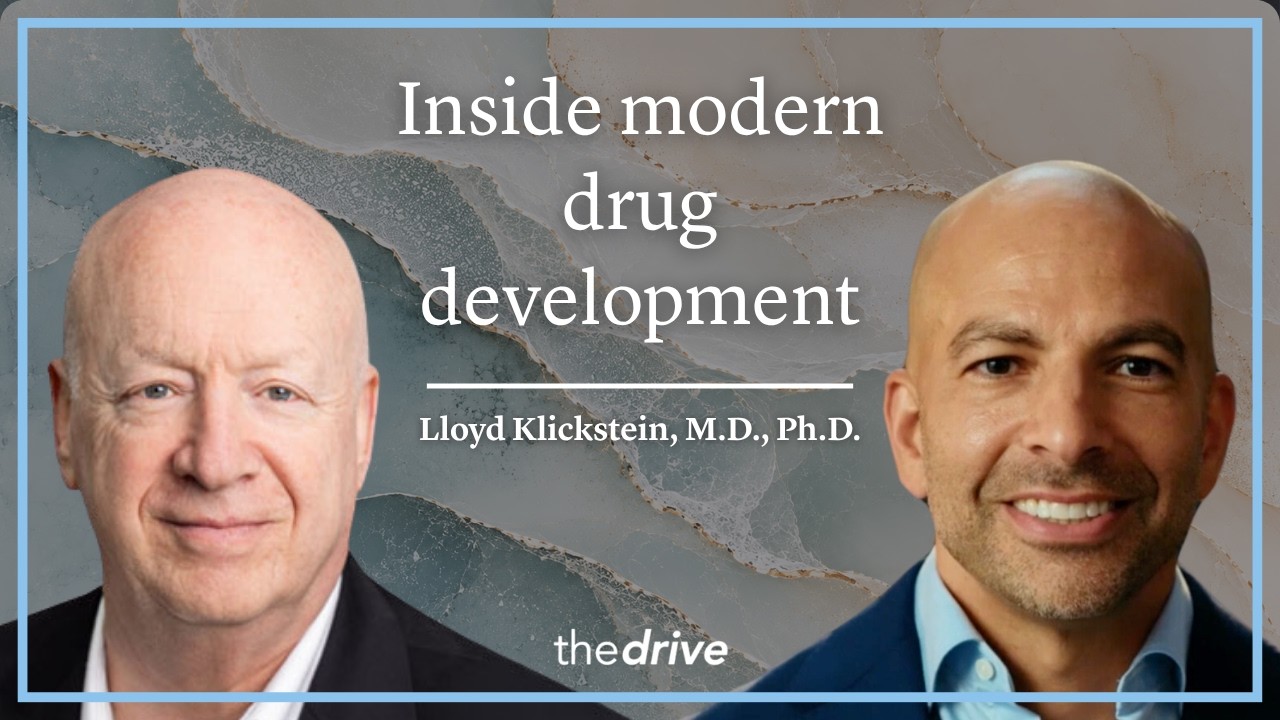 156 min
409 ‒ Inside modern drug development: the science, economics, and regulatory hurdles
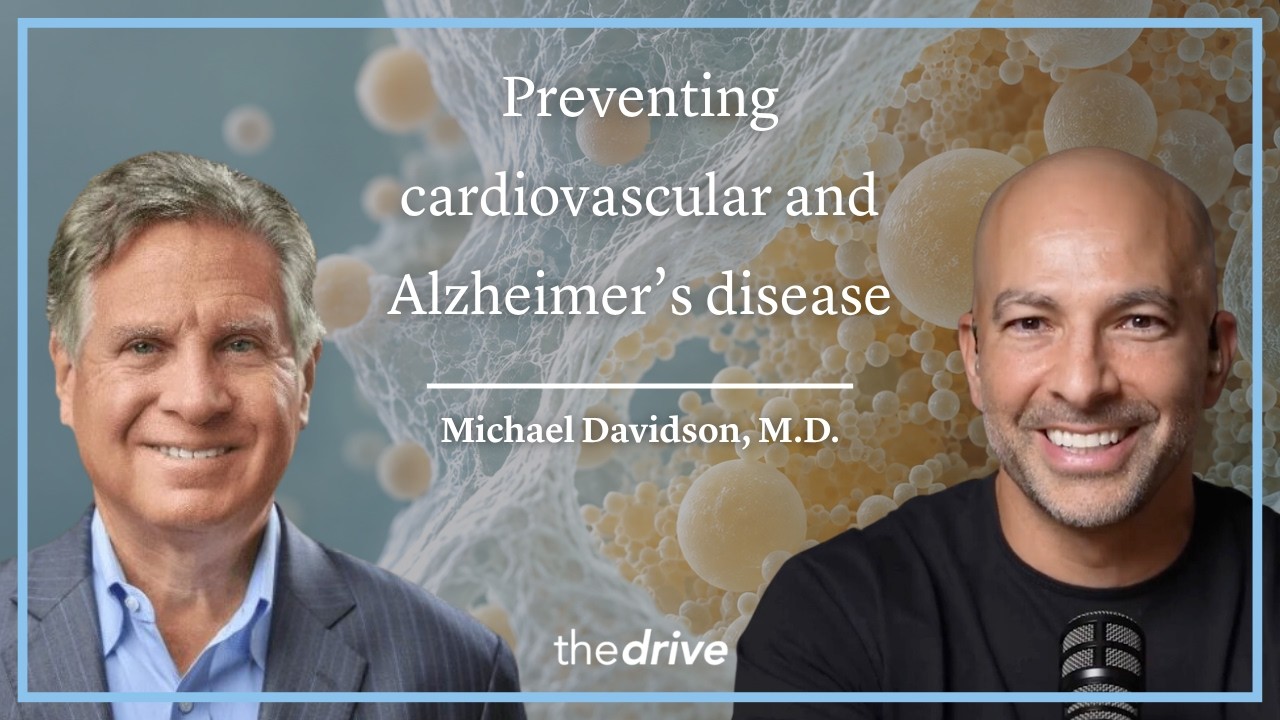 140 min
407 ‒ Preventing cardiovascular and Alzheimer’s disease: lowering LDL early, APOE4, and more
Ask anything from this episode.
Save it, chat with it, and connect it to Claude or ChatGPT. Get cited answers from the actual content — and build your own knowledge base of every podcast and video you care about.
Get Started Free