Key Moments
The Science of Emotions & Relationships
 Andrew Huberman
Want to know something specific about what's covered?
We've already dissected every moment. Ask and we will deliver (with timestamps).
Key Moments
Understanding emotions involves infancy, puberty, and adult attachment, focusing on arousal, valence, and attention direction.
Key Insights
Emotions are complex and unique to individuals, influenced by early life experiences and developmental stages like infancy and puberty.
The experience of emotions can be understood through three core dimensions: autonomic arousal (alertness vs. calm), valence (good vs. bad feelings), and attentional focus (internal vs. external).
Early infant-caregiver attachment patterns significantly shape adult attachment styles, influencing how individuals form and maintain social bonds.
Puberty is a critical biological period marked by hormonal and brain changes that shift focus from caregivers to social exploration and autonomy.
The 'right brain' vs. 'left brain' dichotomy as commonly understood (emotional vs. logical) is a myth; specific functional differences exist, but are not so simplistic.
Neurotransmitters like oxytocin and vasopressin play crucial roles in social bonding, trust, and relationship behaviors, influencing pair bonding and social distance.
THE DEVELOPMENTAL ROOTS OF EMOTIONS
Emotions are fundamental to human experience, shaping our perception of life. Understanding their origins requires looking at early development, particularly infancy and puberty. A baby's initial world is primarily interoceptive, focused on internal states. Caregiver responses to these needs begin to shape the infant's understanding of the external world and build foundational frameworks for emotional regulation and bond formation. This early interaction sets the stage for how individuals will later navigate their emotional landscapes and relationships.
CORE ELEMENTS OF EMOTIONAL EXPERIENCE
While emotions are subjective, they can be understood through three primary dimensions: autonomic arousal (the spectrum from alert to calm), valence (whether the feeling is pleasant or unpleasant), and attentional focus (whether attention is directed inward or outward). These three axes interact dynamically, influencing our moment-to-moment emotional states. For instance, high arousal combined with a negative valence and an external focus might signal threat, while low arousal, positive valence, and internal focus could indicate a state of relaxed contentment.
INFANT ATTACHMENT AND ADULT RELATIONSHIPS
The quality of early infant-caregiver attachment, famously studied by Bowlby and Ainsworth, profoundly impacts adult relationship patterns. Secure attachment, characterized by comfort and trust upon reunion, sets a foundation for healthy adult bonds. Insecure attachment patterns, such as avoidant or ambivalent, developed when caregivers are inconsistent or unresponsive, can lead to difficulties in forming and maintaining close relationships later in life. These early experiences shape internal working models of attachment.
THE BIOLOGICAL REVOLUTION OF PUBERTY
Puberty marks a significant biological transition driven by hormonal changes, initiated by factors like body fat and neuropeptides such as leptin and kisspeptin. This period fundamentally alters brain structure and function, shifting an adolescent's focus. It's characterized by increased autonomy, a drive for dispersal from primary caregivers, and the testing of social and physical boundaries. This biological imperative prepares individuals for reproductive maturity and the formation of adult social structures.
NEUROCHEMICAL INFLUENCES ON SOCIAL BONDING
Neurochemicals like oxytocin and vasopressin are pivotal in shaping social bonds and emotionality. Oxytocin, often called the 'trust hormone,' facilitates positive communication, enhances feelings of connection, and may promote monogamous behavior by increasing awareness of a partner's emotional state. Vasopressin also plays a role in pair bonding and can influence monogamous or non-monogamous tendencies. The interplay of these molecules is crucial for the establishment and maintenance of intimate relationships.
THE MISUNDERSTOOD BRAIN LATERALIZATION
The popular notion of a 'right brain' being solely emotional and artistic, while the 'left brain' is logical and analytical, is a scientific myth. While there are hemispheric differences, such as language processing predominantly occurring in the left hemisphere for most right-handed individuals, the brain functions as an integrated system. The right brain is more involved in spatial processing and prosody (the rhythm and intonation of speech), but neither hemisphere operates in isolation for complex emotional experiences.
THE VAGUS NERVE AND EMOTIONAL REGULATION
The vagus nerve acts as a critical communication pathway between the body's organs and the brain, influencing internal states. Contrary to a common misconception, stimulating the vagus nerve does not always induce calmness; it can also lead to behavioral and cortical activation, increasing alertness and dopamine release. This highlights that emotional states are not solely about calmness but also involve arousal levels, further emphasizing the complex interplay of physiological processes in shaping our emotional experience.
UNDERSTANDING EMOTIONS THROUGH FOCUS AND PERCEPTION
Perceiving emotions through a structured lens, focusing on arousal, valence, and attention (internal versus external focus), offers a powerful tool for understanding and regulation. This framework helps differentiate between externally triggered reactions and internal states. By consciously directing attentional focus, individuals can better manage their emotional responses, fostering richer emotional experiences and a deeper understanding of themselves and others, rather than relying solely on simplistic emotional labels.
Mentioned in This Episode
●Supplements
●Products
●Software & Apps
●Companies
●Organizations
●Books
●Drugs & Medications
●Concepts
●People Referenced
Navigating Emotional Awareness & Development
Practical takeaways from this episode
Do This
Avoid This
Common Questions
Emotions are built during infancy, adolescence, and puberty. As an infant, you mainly experienced needs as anxiety (interoception). Caregivers' responses to cries and agitation helped you begin to predict the outside world (exteroception) and form bonds.
Topics
Mentioned in this video
A pheromone effect observed in animal models where the introduction of a novel sexually competent male can trigger the onset of puberty in a pre-pubertal female.
An infamous pheromone effect where the introduction of a novel male to a pregnant female animal causes spontaneous miscarriage, (named after Hilda Bruce).
A scientific journal where a study on oxytocin modulating social distance between males and females was published.
A model of cooperation used in experiments to study how individuals make predictions about the behavior of others.
A form of non-sleep deep rest that typically contains intentions and specific language, from which the new NSDR script is distinct.
A collection of brain structures often linked to emotions but is only one component of emotional inputs, not the sole location of emotions.
A theory of brain evolution (primitive and involved brain) that is considered shaky in terms of its scientific grounding today.
Neurons that respond both when an action is performed and when someone observes the action, but whose role in empathy and emotion is highly controversial.
A major nerve connecting the brain to the gut, heart, lungs, and immune system, whose stimulation increases alertness and dopamine release, contrary to the myth that it solely promotes calmness.
A dissociative anesthetic used for PTSD treatment and recreationally, mentioned in the context of a marketed nasal spray combining it with oxytocin, which Huberman finds puzzling and potentially dangerous.
A psychedelic compound mentioned as clearly affecting emotionality and related axes, to be discussed in a future episode.
A recreational drug that Ketamine is similar to, and which seems quite dangerous.
A psychedelic compound mentioned as clearly affecting emotionality, calmness, alertness, valence, and interoceptive/exteroceptive positioning, to be discussed in a future episode.
Proposed the idea of universal expressions of emotions, which is an influential but debated concept.
Co-author of the Nature review article on the biology of adolescence and puberty.
Lead researcher from the University of Oregon whose lab published a paper in Current Biology showing vagus nerve stimulation induces widespread cortical and behavioral activation.
A researcher who has challenged the idea of specific brain circuits for individual emotions, arguing that emotions are contextual and have a social component.
Known for her work on the brain circuits involved in different types of love and long-term bonds.
Host of the Huberman Lab Podcast and a professor of neurobiology and ophthalmology at Stanford School of Medicine.
Researchers famous for their 'strange situation task' experiments on infant attachment styles.
A psychiatrist and colleague at Stanford who developed tools to adjust neuron activity and uses vagus nerve stimulation therapeutically for conditions like severe depression.
A researcher at UC Berkeley who replicated and expanded upon the 'strange situation task' experiments on attachment.
The lab where Keren Haroush conducted her research on neurons involved in predicting behavior in primate species.
A clinical psychologist and psychoanalyst at UCLA whose theory of emotional development emphasizes the seesawing between dopaminergic and serotonergic states in bond formation.
The scientist credited with discovering the Bruce effect, a pheromone effect leading to spontaneous miscarriage in pregnant animals.
First author of the Nature review article on the biology of adolescence and puberty, from the School of Public Health at University of California, Berkeley.
Co-author of the Nature review article on the biology of adolescence and puberty.
A well-known researcher and co-author of the Nature review article, recognized for her work on dispersal during adolescence and puberty.
A colleague of Huberman at Stanford who discovered neurons in primate species involved in predicting the behavior of other members of their species, related to the prisoner's dilemma.
A publication that featured an article about Karl Deisseroth's work with vagus nerve stimulation in depressed patients.
The institution where Andrew Huberman is a professor of neurobiology and ophthalmology.
A company that previously sponsored the podcast and provided the new NSDR script as a free YouTube video.
An excellent scientific journal where a paper on leptin's ability to accelerate puberty was published in the mid-1990s.
A premier scientific journal that published a review article on the biology of adolescence and puberty and the core needs for successful emotional maturation during that time.
Institution of David McCormick's lab, which published research on vagus nerve stimulation.
Platform where Huberman Lab episodes are captioned in multiple languages and where NSDR scripts are available.
A supplement company partnered with Huberman Lab due to their high stringency in purity and accuracy of supplement contents.
A personalized nutrition platform that analyzes blood and DNA data to inform health goals, recommended by Huberman for understanding metabolic factors and hormones.
A virtual private network (VPN) that keeps data safe, secure, and private by encrypting internet activity, used by Huberman due to a past banking hack.
A vitamin that is required for proper production of oxytocin and can, in some cases, increase oxytocin levels when supplemented.
A hormone often used as a sleep supplement, which in some cases can prime the system for slightly increased oxytocin release, though Huberman typically pushes back against its use for sleep due to side effects.
Mentioned as potentially increasing oxytocin release at low doses, but Huberman notes the evidence for this effect is not strong.
More from Andrew Huberman
View all 405 summaries 33 min
Essentials: How to Access Your Creativity | Rick Rubin
 130 min
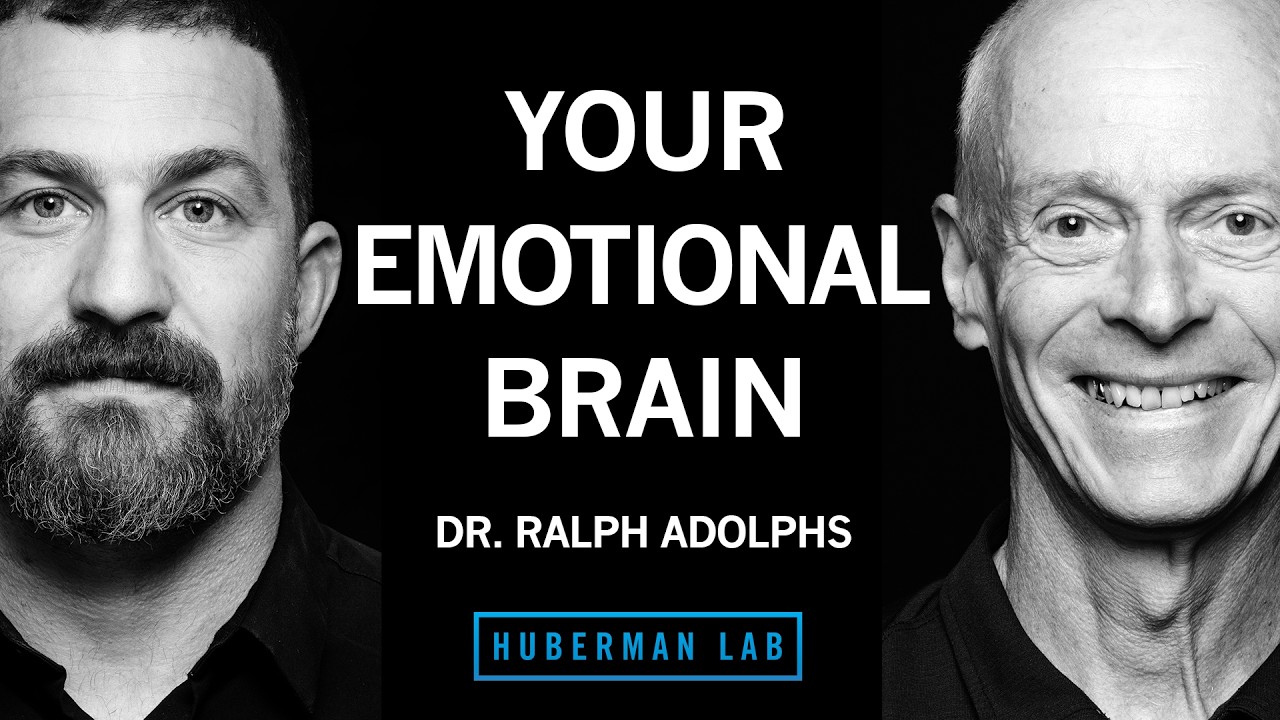
Episode 294 Ralph Adolphs
 35 min
Essentials: How to Optimize Female Hormone Health for Vitality & Longevity | Dr. Sara Gottfried
 129 min
Using AI to Increase Your Intelligence & Enrich Humanity | Dr. Fei-Fei Li
Ask anything from this episode.
Save it, chat with it, and connect it to Claude or ChatGPT. Get cited answers from the actual content — and build your own knowledge base of every podcast and video you care about.
Get Started Free