Key Moments
The Kingdom of Sleep: A Conversation with Matthew Walker
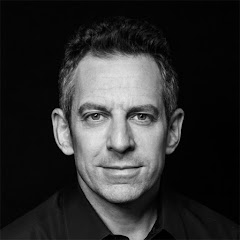 Sam Harris
Key Moments
Sleep is vital for brain and body health, impacting everything from memory to mortality.
Key Insights
Sleep is functionally the most effective daily action for resetting brain and body health.
Sleep architecture consists of Non-REM (light and deep stages) and REM sleep, each serving distinct functions.
During sleep, the balance between Non-REM and REM sleep shifts across the night, with more deep Non-REM early on and more REM later.
Evolutionarily, sleep is deeply ingrained, suggesting a fundamental biological necessity rather than an evolutionary mistake.
Chronic sleep deprivation is linked to increased all-cause mortality and significant health risks, including Alzheimer's, cardiovascular disease, and mental health issues.
While practical tips for sleep hygiene exist, excessive worry about sleep can be counterproductive; seeking professional help for chronic insomnia is recommended.
INTRODUCTION TO THE IMPORTANCE OF SLEEP
Matthew Walker, a professor of neuroscience and psychology, emphasizes that sleep is arguably the single most effective daily action for resetting brain and body health. Despite initial skepticism about studying sleep, Walker's research has revealed its profound impact on physical and mental well-being. He acknowledges that the public's awareness of sleep's importance has grown, partly due to his work, but stresses that sleep specialists stand on the shoulders of many colleagues. The conversation aims to demystify sleep, addressing concerns about sleep deprivation while offering practical advice.
THE MYSTERY AND NATURE OF CONSCIOUSNESS DURING SLEEP
The nature of consciousness during sleep remains elusive, complicated by the reliance on subjective reports and memory failures. While dreams can be conscious experiences, the lack of recall does not necessarily mean no dreaming occurred. Behavioral definitions of sleep in animals, based on unresponsiveness to stimuli, suggest a shift away from external perception. However, the brain continues to process external information to some degree, as seen in studies with new mothers responding to their infant's cry. This suggests sleep involves a substantially altered, yet not entirely absent, form of consciousness.
THE ARCHITECTURE OF HUMAN SLEEP
Human sleep is broadly divided into two main types: Non-Rapid Eye Movement (Non-REM) sleep and Rapid Eye Movement (REM) sleep. Non-REM sleep is further categorized into four stages, progressing from light (stages 1 and 2) to deep sleep (stages 3 and 4). REM sleep is predominantly associated with vivid dreaming. These two types of sleep cycle throughout the night, occurring in approximately 90-minute cycles that shift in proportion; the first half of the night contains more deep Non-REM sleep, while the second half features more REM sleep. All stages are considered important for different restorative functions.
REGULARITY, ENVIRONMENT, AND WAKING UP
Consistency in sleep and wake times is crucial for regulating the body's circadian rhythm. While alarms can be necessary, especially for a consistent schedule, natural waking, ideally with sunlight, is preferred. Natural waking is often influenced more by internal and ambient temperature changes than light. Waking abruptly from deep sleep, particularly via an alarm, can lead to sleep inertia, a state of grogginess and cognitive impairment. For those who struggle with early wake-up times, using light to signal the morning can be beneficial, while dim light and darkness in the evening can promote earlier sleep onset.
THE EVOLUTIONARY IMPERATIVE OF SLEEP
From an evolutionary standpoint, sleep appears to be a fundamental biological necessity, as evidenced by its presence across diverse species, including simple organisms like earthworms. If sleep offered no vital function, evolution would likely have selected against it, given that it renders organisms vulnerable, non-productive (in terms of foraging, mating, or reproduction), and unable to care for offspring. The fact that sleep has persisted suggests it is absolutely critical for survival and optimal functioning. The idea that humans can significantly reduce their need for sleep through training is considered unlikely given its deep evolutionary roots.
SLEEP DEFICIENCY AND LONG-TERM HEALTH CONSEQUENCES
Chronic sleep deficiency is strongly linked to increased all-cause mortality. Shorter sleep duration correlates with a shorter lifespan. There is a well-established connection between insufficient sleep and a heightened risk of developing serious health conditions, including Alzheimer's disease, diabetes, obesity, cardiovascular disease, and mental health disorders such as depression and anxiety. While the correlation between poor sleep and these conditions is evident, the conversation touches upon the complexity of establishing direct causation, particularly in cases like Alzheimer's disease, where sleep disruption might be both a cause and an early symptom.
ADDRESSING SLEEP ANXIETY AND PRACTICAL APPROACHES
While the scientific evidence linking poor sleep to various health issues is significant, an excessive focus on sleep optimization can lead to sleep anxiety, which is counterproductive to falling asleep. It's important to acknowledge that everyone experiences occasional bad nights of sleep, and this is not a cause for panic. For those with persistent sleep difficulties, effective non-pharmacological treatments are available. The conversation emphasizes a balanced approach: presenting the science truthfully without inducing undue worry, recognizing that solutions and improvements in sleep quality are achievable with the right strategies and, if necessary, professional guidance.
Mentioned in This Episode
●Organizations
●Books
●Concepts
●People Referenced
Common Questions
Sleep is the single most effective thing we can do daily to reset the health of our brain and body, offering more demonstrable benefits than abstaining from food, water, or activity for 24 hours.
Topics
Mentioned in this video
Professor of Neuroscience and Psychology at UC Berkeley, author of 'Why We Sleep', and host of The Matt Walker Podcast.
Host of the Making Sense podcast, initiating the conversation on sleep with Matthew Walker.
Mentioned as a historical figure who claimed to need very little sleep and later succumbed to Alzheimer's disease.
Mentioned as a historical figure who claimed to need very little sleep.
Historical figure mentioned as a short sleeper who used naps creatively.
Mentioned as a historical figure who claimed to need very little sleep and later succumbed to Alzheimer's disease.
More from Sam Harris
View all 298 summaries 28 min
Michael Pollan on Consciousness, Psychedelics, and the Limits of Neuroscience
 22 min
Why the Stock Market Has Become a Casino
 61 min
UNRAVELING THE DREAM (A New Documentary Executive Produced by Sam Harris)
 20 min
Francis Fukuyama: The End of History Was Never What You Think
Ask anything from this episode.
Save it, chat with it, and connect it to Claude or ChatGPT. Get cited answers from the actual content — and build your own knowledge base of every podcast and video you care about.
Get Started Free