Key Moments
Why the Stock Market Has Become a Casino
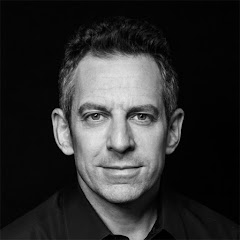 Sam Harris
Key Moments
Extreme market valuations are driven by AI bets, but this growth is unsustainable and widens the wealth gap—unless AI drastically transforms productivity.
Key Insights
Goldman Sachs acts as a wholesale financial institution, bridging capital seekers with those who have excess capital and managing risk by taking on unwanted risk until a counterparty is found.
During the 2007-2008 financial crisis, the near collapse was due to a loss of confidence and liquidity freeze, not necessarily the solvency of all institutions, requiring central banks to act as lenders of last resort.
Post-crisis regulations stiffened capital requirements, which, while intended to prevent future risks, may have limited financial institutions' ability to lend and could make future crisis interventions harder.
While the macro economy shows tailwinds like high equity markets and potential interest rate cuts, the distribution of wealth created is less effective, widening the gap between asset owners and non-asset owners.
Market valuations, particularly with 300x price-to-earnings ratios, are based on extrapolating future growth (e.g., 100% annual growth for several years), not current earnings, reflecting a focus on future potential rather than present reality.
The disconnect between market movements and real economic indicators is amplified by factors like political tweets, suggesting the market can become detached from rational financial fundamentals, resembling a casino.
Goldman Sachs' role as a financial intermediary and risk manager
Lloyd Blankfein explains Goldman Sachs' function as a wholesale financial institution that connects entities needing capital with those possessing excess capital. This involves facilitating various financial transactions, including financing businesses, managing initial public offerings (IPOs), and issuing stocks and bonds. Crucially, Goldman Sachs also acts as a principal in managing risk. When a client wants to offload certain risks, Goldman Sachs may take them on, acting as a market maker, until they can find another party willing to assume that risk. This process relies heavily on mathematical models and algorithms to hedge and replicate risks. Blankfein highlighted that during the 2007-2008 crisis, transactions like the John Paulson trade, which involved shorting mortgage securities, were standard market-making operations. He emphasized that at the time, while hindsight shows the risks, the market participants were sophisticated institutions, and it wasn't a situation of defrauding naive clients.
The brink of collapse during the 2007-2008 financial crisis
Blankfein detailed how the 2007-2008 financial crisis pushed institutions to the brink, not solely due to their direct exposure to toxic assets, but because of a systemic loss of confidence and liquidity. When credit becomes suspect, counterparties demand payment upfront, creating a daisy chain effect that can freeze entire economies. Even solvent companies could face collapse if they couldn't meet obligations due to a lack of incoming payments. Central banks, acting as lenders of last resort, were essential in preventing a complete breakdown by injecting liquidity and restoring confidence, akin to what is depicted in 'It's a Wonderful Life' during bank runs. The situation was characterized by a high probability of systemic failure, underscoring the fragility of financial systems when sentiment erodes trust and cash flow.
Government response and lessons learned from financial crises
Reflecting on the government's response to the financial crisis, Blankfein acknowledged that decisions were made under immense pressure and with incomplete information. He used the COVID-19 stimulus as an analogy: a rapid, broad response might be less targeted than an ideal, well-thought-out plan, but necessary given the time constraints. He suggested that, in hindsight, specific actions could have been different, but the decision-makers performed adequately given the circumstances. Regarding lessons learned, Blankfein noted that increased regulation and capital requirements for financial institutions, while aimed at preventing future crises, might inadvertently restrict their ability to lend and operate effectively. He also cautioned that over-regulation could stymie the 'animal spirits' necessary for economic growth and risk-taking, leading to a potential trade-off between stability and dynamism.
The widening wealth gap and its societal implications
A significant concern discussed is the escalating wealth inequality. Blankfein observed that asset values are inflating, disproportionately benefiting those who own assets, while those without are not seeing similar gains. This is creating a substantial gap between the rich and the poor. He clarified that while the macroeconomy may show positive indicators like GDP growth and employment, the distribution of this created wealth is a critical societal issue that financial institutions alone cannot solve; it falls primarily under the purview of the political sector. This suggests that even a seemingly healthy economy can mask deep-seated problems of fairness and opportunity for a large portion of the population.
The stock market's detachment from the real economy
The conversation highlights a growing disconnect between stock market movements and the underlying real economy. Blankfein points out how market behavior can be swayed by unpredictable factors, such as political tweets, leading to significant daily fluctuations that don't necessarily reflect fundamental economic shifts. He explains that the market attempts to discount the future, extrapolating earnings and potential growth from infinity back to the present. This means small changes in assumptions can cause large market swings, even if the immediate economic impact is minor. This focus on future projections, particularly in chasing high-growth narratives, can lead to valuations detached from current earnings, such as companies trading at 300 times their earnings.
AI investment bubble and the casino-like market
The current market environment, especially concerning AI investments, is characterized by extreme valuations based on anticipated future growth, not present performance. Blankfein implies that these high price-to-earnings ratios reflect an expectation of rapid, sustained growth (e.g., 100% year-over-year). He likens the market's behavior to a casino, where irrational behavior and speculative gambling can influence even respectable investment strategies. The emergence of potential 'trillionaires' further fuels concerns about political instability stemming from such extreme wealth concentration and the potential for a 'post-truth' environment where rational economic principles are overridden by speculative fervor or misinformation.
Mentioned in This Episode
●Software & Apps
●Companies
●Books
●People Referenced
Common Questions
Goldman Sachs is a wholesale financial institution that connects those needing capital (businesses, governments) with those who have capital to invest (high-net-worth individuals, institutions, sovereign wealth funds). They also act as a bridge for risk transfer.
Topics
Mentioned in this video
Former CEO of Goldman Sachs, interviewed about his career, the financial crisis, and the current market environment.
Associated with a trade involving shorting mortgage securities during the financial crisis, which generated significant profits.
Mentioned in the context of potential future trillionaires and the political ramifications of extreme wealth accumulation.
More from Sam Harris
View all 298 summaries 28 min
Michael Pollan on Consciousness, Psychedelics, and the Limits of Neuroscience
 61 min
UNRAVELING THE DREAM (A New Documentary Executive Produced by Sam Harris)
 20 min
Francis Fukuyama: The End of History Was Never What You Think
 24 min
The Democratic Party Has a Reckoning Coming
Ask anything from this episode.
Save it, chat with it, and connect it to Claude or ChatGPT. Get cited answers from the actual content — and build your own knowledge base of every podcast and video you care about.
Get Started Free