Key Moments
Nick Norris — Navy SEAL and Athlete on Training | The Tim Ferriss Show (Podcast)
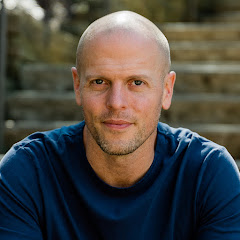 Tim Ferriss
Key Moments
Navy SEAL Nick Norris discusses elite training, mental health, and post-traumatic growth.
Key Insights
Elite athletes and SEALs share traits like discipline, tenacity, and teamwork.
Mental health challenges like depression and PTSD are common, especially post-service.
Emerging treatments like PR TMS can offer effective relief for mental health conditions.
Prioritizing sleep, sunlight exposure, and mindful caffeine intake are crucial for well-being.
Loss of community and purpose can significantly impact mental health after service.
Expressing grief and connecting with others are vital for healing and growth.
THE DISCIPLINE OF ELITE PERFORMANCE: FROM WIND TUNNELS TO MOUNTAIN CLIMBING
Nick Norris, a distinguished Navy SEAL and accomplished athlete, draws parallels between seemingly disparate disciplines like dynamic wind tunnel flying and rock climbing. He highlights shared traits among elite performers, such as constant movement, unwavering trust in teammates, and the ability to read body language, all honed through relentless practice and time spent together. Norris also details his experience building Moon Boards in combat zones, showcasing his adaptability and resourcefulness.
PUSHING LIMITS: THE PSYCHOLOGY OF TENACITY AND GRIT
Norris emphasizes that true exceptionalism in fields like climbing and wind tunnel flying stems from an innate ability to 'try hard.' This grit, he explains, is not just about physical strength but a relentless pursuit of perfection, often requiring mental fortitude to overcome perceived limitations. He advocates for practicing this tenacity in all training, ensuring that performance under pressure becomes a conditioned response, rather than a hopeful expectation.
FACING THE SILENT CRISIS: PTSD AND THE PATH TO GROWTH
The conversation delves into the critical issue of veteran suicide, highlighting the profound impact of PTSD and the importance of distinguishing it from post-traumatic growth. Norris shares his personal experience transitioning from active duty, facing unexpected challenges with depression, agitation, and apathy. This section underscores that mental health struggles are not a sign of weakness but a common consequence of intense experiences and significant life changes.
INNOVATIVE TREATMENTS AND THE FOUNDATION OF WELL-BEING
Norris recounts his journey through various potential solutions, ultimately finding significant relief through Personalized Repetitive Transcranial Magnetic Stimulation (PR TMS). He emphasizes basic pillars of well-being: prioritizing sleep, ensuring adequate morning sunlight exposure, and managing caffeine intake. These foundational habits, bolstered by treatments like TMS, create a more stable window for making healthier decisions.
THE POWER OF COMMUNITY AND RECLAIMING IDENTITY
A significant theme is the profound loss of community and brotherhood experienced after leaving military service. Norris asserts that this loss of identity and purpose is a major contributor to mental health challenges. He highlights the effectiveness of reconnecting with fellow veterans and cultivating new strong communities, whether through entrepreneurship or shared passions, as a vital countermeasure to feelings of isolation.
EMBRACING VULNERABILITY AND THE THERAPY OF GRIEF
Norris candidly discusses how expressing grief, particularly for fallen comrades and family members, has been a powerful healing mechanism. He advocates for vulnerability and open communication, noting that sharing these experiences, even when difficult, can unlock greater happiness and resilience. This process of confronting and expressing suppressed emotions is presented as a crucial step toward personal growth.
ADVERSITY AS CURRENCY: POST-TRAUMATIC GROWTH AND LESSONS LEARNED
Norris frames his experiences, including struggles with mental health, as 'currency' paid for significant personal growth. He suggests that adversity, much like injuries for professional athletes, tempers individuals and can lead to a better version of themselves. He encourages viewing challenging experiences not as liabilities, but as opportunities to learn, develop resilience, and ultimately, positively impact others.
PRACTICAL TOOLS AND THE IMPORTANCE OF SEEKING SUPPORT
Beyond PR TMS, Norris recommends practical tools and approaches such as engaging in passionate hobbies (like climbing or archery), building strong social connections, and utilizing support systems. He stresses the importance of seeking help, whether from friends, family, or professional resources, and encourages men and women to view these challenges not as weaknesses but as part of the human condition that can be addressed.
Mentioned in This Episode
●Supplements
●Software & Apps
●Companies
●Organizations
●Drugs & Medications
●Concepts
●People Referenced
Common Questions
Dynamic four-way is a wind tunnel flying discipline where teams of four perform predetermined speed rounds or artistic rounds, moving at high speeds like synchronized swimming in a glass cylinder of air. High-speed means winds between 150-170 mph, with flyers moving at 20-30 mph relative to the tunnel.
Topics
Mentioned in this video
A content management system whose lead developer and CEO of Automattic, Matt Mullenweg, utilized LegalZoom for business needs.
A templated climbing board created by Ben Moon with unchanging holds and problems, allowing climbers worldwide to replicate specific boulder problems for training. Nick Norris built three of these while on active duty.
A very focused form of TMS that involves an EEG and magnetic pulses to the frontal lobe to help re-tune brainwave activity, which Nick Norris found immediately effective for depression and apathy.
The Navy SEAL unit where Nick Norris served alongside and under Jocko Willink.
The institution from which Nick Norris graduated before completing Basic Underwater Demolition/SEAL (BUDS) training.
The city where Nick Norris competed in a dynamic four-way wind tunnel competition, the Sakura Cup.
Combat construction guys who helped Nick Norris build climbing walls in combat zones.
The employer for whom Nick Norris worked as a lifeguard on the lakefront of Lake Michigan, despite being a self-proclaimed terrible swimmer.
An organization where people can learn more about phase 3 trials related to MDMA-assisted psychotherapy.
A new foundation of which Nick Norris is a board member, focusing on supporting active-duty SEAL families.
The command within which Nick Norris assumed progressively higher leadership positions after completing SEAL training.
An organization mentioned as a resource for supporting military personnel and their families.
An organization in Hawaii, described as the 'special operations of the lifeguard world,' which endorses and partners with Amavara sunscreen due to its high performance and water resistance.
A 'four-star nonprofit on Charity Navigator' that provides benevolent support to the SEAL community and its families.
The baseball team for whom David Wells, Nick Norris's friend, pitched a perfect game.
One of the combat operation locations where Nick Norris served as a combat advisor and Ground Force Commander.
A province where Nick Norris built a Moon Board at a firebase called Na Bihar.
A location in the Philippines where Nick Norris built one of his three Moon Boards while on active duty.
One of the combat operation locations where Nick Norris served as a combat advisor and Ground Force Commander.
The location of the 2007 Adventure Racing World Championships, where Nick Norris raced as a member of the US team.
Ben Moon's famous training gym in the UK, where the original Moon Board problems were set.
A location in Iraq where Nick Norris built one of his Moon Boards and where Jocko Willink's troop was deployed.
A company started by Ben Moon, known for the Moon Board and the Schoolroom training gym.
A company used by entrepreneurs like Matt Mullenweg for legal services from business formation to managing tax laws and reviewing contracts, offering upfront pricing.
The company led by Matt Mullenweg, valued at over a billion dollars, who used LegalZoom for business formation.
Nick Norris's sunscreen company that invented a new mineral sunscreen technology using zinc oxide to protect consumer health and the environment, known for its dry, clear, and water-resistant application.
A mattress company offering a sleep quiz to match body type and sleep preferences to the perfect mattress, with a 10-year warranty and 100-night risk-free trial.
A former Navy SEAL and Tim Ferriss Show podcast guest, with whom Nick Norris served at SEAL Team 3 and later oversaw Nick's training detachment.
An 11-year Navy SEAL officer, world-class athlete, startup CEO, and board member of the C4 Foundation, known for his understated demeanor and physical prowess.
A legendary music producer mentioned for his similar practice of getting 20-30 minutes of direct sunlight every morning, a habit that helped him lose over 100 pounds.
A former pitcher for the New York Yankees, nicknamed 'Boomer,' who threw a perfect game and is a close friend and mentor to Nick Norris, introducing him to bow hunting.
A Navy SEAL and Naval Academy officer killed in a Black Hawk helicopter crash in Afghanistan in 2010, whose death profoundly impacted Nick Norris.
A very famous and inspirational rock climber from the UK who created the 'Moon Board' training system.
CEO of Automattic and lead developer of WordPress, who used LegalZoom to form his company and is valued at over a billion dollars.
Considered arguably the most talented or strongest rock climber in the world, known for his tenacity and relentless pursuit of perfection.
The individual who made the Eco Challenge race famous.
A therapy for PTSD that is currently going through phase 3 trials, covered in the documentary 'Trip of Compassion'.
The basic training course for Navy SEALs, class 247, which Nick Norris completed in 2004.
Naval Special Warfare's basic training command where Nick Norris was assigned as officer in charge prior to transitioning from active duty.
More from Tim Ferriss
View all 694 summaries 71 min
The Most Incredible Transformation I’ve Ever Seen — Jerzy Gregorek on Cerebral Palsy and Coaching
 34 min
PRISONER NO MORE: The True Story of Tae Jin Park
 89 min
From Food Stamps to the Super Bowl War Room — NFL Chief Security Officer Cathy Lanier
 55 min
From Dad’s Basement to Selling Two Companies — 4-Hour Workweek Success Story
Ask anything from this episode.
Save it, chat with it, and connect it to Claude or ChatGPT. Get cited answers from the actual content — and build your own knowledge base of every podcast and video you care about.
Get Started Free