Key Moments
Marc Goodman Interview (Full Episode) | The Tim Ferriss Show (Podcast)
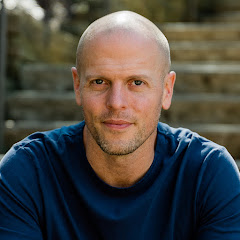 Tim Ferriss
Want to know something specific about what's covered?
We've already dissected every moment. Ask and we will deliver (with timestamps).
Key Moments
Expert discusses future crimes, biohacking, AI threats, and cyber security.
Key Insights
Technology is advancing exponentially, increasing vulnerabilities in physical and digital realms.
Emerging technologies like AI, synthetic biology, and advanced robotics are creating new avenues for crime and terrorism.
Individuals and organizations must proactively adopt robust cyber hygiene practices to mitigate risks.
The lines between physical and digital security are blurring, requiring integrated protection strategies.
Law enforcement faces significant challenges in addressing global cyber threats due to their localized nature.
Public safety requires individual responsibility and engagement beyond relying solely on professionals.
THE EXPONENTIAL RISE OF TECHNOLOGY AND VULNERABILITY
Marc Goodman highlights that technological advancement, driven by Moore's Law, is occurring at an exponential rate. This rapid progress means an increasing number of everyday objects are becoming connected devices, transforming them into potential security risks. Every networked system is hackable, and the projected increase in internet-connected devices from 50 to 200 billion by 2020 signifies a massive expansion of the 'Internet of Things' and, consequently, the attack surface available to criminals.
THE CONVERGENCE OF TECHNOLOGY AND CRIME
The discussion delves into how emerging technologies are being weaponized. For instance, 3D printers can create firearms, bioterrorists might exploit readily available genetic data for bioweapons, and drones are used for drug smuggling. Goodman emphasizes that the drop in DNA sequencing costs, outpacing Moore's Law, makes advanced biological tools accessible to a wider range of actors, including those with malicious intent, raising concerns about personalized biological threats and the potential for 'bio-homicide'.
THE EVOLVING NATURE OF TERRORISM AND ORGANISED CRIME
Terrorist groups and organized crime syndicates are demonstrating increasing sophistication by leveraging technology. Examples include the use of sophisticated communication and surveillance during the 2008 Mumbai attacks, where terrorists used technology to gain tactical advantages over law enforcement. Furthermore, groups are actively recruiting individuals with scientific and technological backgrounds, and exploiting social media for active coordination and psychological warfare, blurring the traditional lines between physical and digital operations.
THE CHALLENGES FOR LAW ENFORCEMENT AND PUBLIC SAFETY
Goodman posits that traditional law enforcement models are ill-equipped to handle the global and pervasive nature of cybercrime. He argues that 'public safety is too important to leave to the professionals' in cyberspace, as nation-state solutions are insufficient for transnational digital threats. This necessitates a shift towards individual responsibility and the development of novel defense strategies, including the concept of a national cyber reserve corps composed of ordinary citizens.
SAFEGUARDING INDIVIDUALS IN THE DIGITAL AGE
For individuals, Goodman stresses the importance of fundamental 'cyber hygiene.' This includes avoiding suspicious links and attachments, consistently updating software across all devices, and using strong, unique passwords for different online accounts, ideally managed through password managers. He also advises against using administrative accounts for daily computer use and advocates for Virtual Private Networks (VPNs) in public Wi-Fi spaces to encrypt data transmission.
PROTECTING BUSINESSES AND MITIGATING FUTURE RISKS
For startups and corporations, security needs to be a top priority, not an afterthought. Goodman recommends implementing open-source intelligence (OSINT) programs to monitor competitive landscapes and potential threats. He also suggests 'red teaming' – actively testing systems for vulnerabilities – and highlights the importance of securing highly sensitive information by keeping it 'air-gapped' from digital networks. The increasing ubiquity of connected cameras also poses risks, as many are unsecured and can be hacked for surveillance or even exploited in physical crimes, like the casino heist example.
THE IMPLICATIONS OF ARTIFICIAL INTELLIGENCE AND AUTOMATED CRIME
The conversation touches upon the potential threats posed by Artificial Intelligence (AI), with figures like Elon Musk and Stephen Hawking expressing concerns. While narrow AI is already widespread, the development of Artificial General Intelligence (AGI) raises questions about control and potential misuse. Goodman notes that AI can be leveraged to scale criminal activities exponentially, transforming crime into a 'crime as a service' model where algorithms carry out attacks like identity theft or denial-of-service, mirroring efficiency principles found in legitimate businesses but applied to illicit ends.
THE BLURRING LINES BETWEEN PHYSICAL AND DIGITAL SECURITY
The interview emphasizes that the distinction between physical and digital security is rapidly diminishing. Examples like the hacking of casino security cameras to cheat at poker or the use of smartphones to facilitate kidnappings at airports demonstrate how digital vulnerabilities can have direct, severe physical consequences. This convergence necessitates a holistic approach to security, where awareness of online threats is as crucial as physical safety.
EMERGING TRENDS IN DRUG PRODUCTION AND DISTRIBUTION
Synthetic biology is poised to disrupt the traditional drug trade. Goodman explains that advancements in genetic engineering could allow for the synthesis of substances like cocaine or heroin using yeast, bypassing the need for large-scale cultivation and making detection by traditional methods incredibly difficult. This technological shift presents a major challenge to existing global security models focused on interdicting physical drug production and transport.
TOWARDS A MORE RESILIENT SOCIETY
Goodman advocates for a proactive stance where individuals and organizations are better educated about evolving threats. While acknowledging the potential for extreme preparedness measures, he stresses common-sense actions like maintaining updated software, using strong passwords, and enabling two-factor authentication. This individual empowerment, combined with strategic corporate security measures and potentially innovative public-private partnerships, is crucial for building resilience against the complex threats of the future.
Mentioned in This Episode
●Products
●Software & Apps
●Companies
●Organizations
●Books
●Drugs & Medications
●Concepts
●People Referenced
Essential Cybersecurity for Individuals & Businesses
Practical takeaways from this episode
Do This
Avoid This
Common Questions
Emerging technologies allow for new forms of crime, from 3D printers producing AK-47s to bioterrorists downloading Spanish Flu recipes. Cars and elevators are now essentially hackable computers, and the Internet of Things is expected to rapidly expand, creating billions of new vulnerabilities. Every computer system is hackable, leading to profound consequences for society.
Topics
Mentioned in this video
An 80s hacking movie that Marc Goodman is a fan of.
An 80s hacking movie which Marc Goodman considers surprisingly realistic for its time because it depicted computers, modems, and hacking the Department of Defense before these concepts were mainstream.
A dystopian movie mentioned for its portrayal of a future where social status and opportunities are determined by an individual's DNA.
A stupid 80s comedy film that Marc Goodman enjoys.
A hacker movie starring Sandra Bullock, which Marc Goodman describes as not particularly realistic but containing elements of truth.
A news publication often reporting on cybercrime incidents like company hacks.
A television game show where IBM's Watson computer competed against and beat human champions, demonstrating narrow AI capabilities.
A news publication often reporting on cybercrime incidents like company hacks.
The Federal Bureau of Investigation, which Marc Goodman served as a resident futurist for.
An organization founded by Marc Goodman, focused on the intersection of science, technology, and crime.
A federal agency that provides guidance on emergency preparedness, offering checklists for essential supplies.
A think tank that, along with McAfee, estimated the global cyber economy at $400 billion a year.
The International Criminal Police Organization, where Marc Goodman worked as a senior adviser.
An educational institution where Marc Goodman is the chair for policy, law, and ethics. The hosts recommends it for expanding one's mind about exponentially growing technologies.
A state agency that provides guidance on emergency preparedness, offering checklists for essential supplies.
A US government agency whose study stated that at one point, 20% of all narcotics purchased in the United States transited the Silk Road.
A Mexican drug cartel led by El Chapo, cited for its immense wealth and sophistication in operations, including an R&D budget for robotics.
A London newspaper where Stephen Hawking published an op-ed expressing caution about AI.
A language school in Berlin, Germany, where Marc Goodman enrolled for foreign languages, inspired by Tim Ferriss's advice.
A magazine that published an article co-authored by Marc Goodman called 'Hacking the President's DNA'.
A militant Islamist organization, discussed for its use of technology, particularly with a 'CIO' by the name of Erhaab007.
A Japanese cult that carried out the 1995 Tokyo subway sarin attack. Mentioned for their previous, unsuccessful bioweapons project, highlighting the increasing ease of bioweapon development today.
An organization that provides advice on emergency preparedness, similar to the prepper movement but with a focus on common sense tools.
A terrorist organization mentioned for mimicking al-Shabaab's sophisticated use of social media to further their agenda.
A competition focusing on synthetic biology for high school and college students, demonstrating increasing accessibility of genetic tools.
A company mentioned as having been hacked, illustrating the pervasive nature of cybercrime.
An online marketplace, used as an analogy to describe how Silk Road operated by taking a cut of sales.
A company mentioned as having been hacked, illustrating the pervasive nature of cybercrime.
A company mentioned as having been hacked, illustrating the pervasive nature of cybercrime.
A technology company cited for its prediction of 200 billion IoT devices by 2020.
A militant group discussed for their sophisticated use of social media and Twitter during the Westgate Mall attack in Nairobi.
A search engine used by terrorists in the 2008 Mumbai attacks to identify and target hostages, illustrating the weaponization of open-source information.
A streaming service that uses narrow AI to provide recommendations.
A web browser for which Firesheep was an extension, highlighting a past vulnerability where session cookies could be stolen.
A technology conglomerate cited for its prediction of 50 billion IoT devices by 2020.
A genomics and biotechnology company offering genetic sequencing, with concerns raised about the privacy and security of shared genetic data.
An e-commerce platform that uses narrow AI to provide recommendations.
A company mentioned for keeping its secret recipe air-gapped (not stored in any electronic system) as a security measure.
A social media platform mentioned as a source of open information that can be exploited by terrorists or organized criminals.
An airline whose customer service may involve AI, illustrating narrow AI's ubiquitous presence.
A cybersecurity company that, along with CSIS, estimated the global cyber economy at $400 billion a year.
A recommended password manager, offering a solution to the complexity of using unique, strong passwords for multiple accounts.
A company whose executive lost a multi-billion dollar deal with a Chinese beverage company due to a spear-phishing email.
A bank mentioned as a target for hackers who obtain credentials from other compromised sites.
A company (formerly Reputation Defender) focused on online reputation management, mentioned in the context of gathering open-source intelligence on oneself.
A bank mentioned as a target for hackers who obtain credentials from other compromised sites.
A casino in Melbourne, Australia, that was defrauded of $33 million by a hacker team who hijacked its security cameras to gain an unfair advantage in poker.
An unpredictable event that is beyond what is normally expected of a situation and has potentially severe consequences. Discussed in the context of terrorist attacks and other unexpected security breaches.
The observation that the number of transistors in an integrated circuit doubles approximately every two years, leading to exponential technological growth. Discussed as a driver of both technological advancement and the increasing complexity of cyber threats.
A military term referring to a group that acts as an adversary to test the effectiveness of an organization's security systems, recommended for startups and corporations.
The network of physical objects embedded with sensors, software, and other technologies for connecting and exchanging data over the internet. Discussed as exponentially expanding and presenting new vulnerabilities.
A scientific research project mentioned for its initial allocation of $3 billion to sequence the first human genome, highlighting the dramatic decrease in sequencing costs over time.
A feature of the Tor network that allows users to host anonymous websites and services, forming the 'Digital Underground' where various illicit activities occur.
An operating system used as an analogy to describe how modern cars are essentially complex computer systems.
A reverse image search engine, mentioned by Tim Ferriss as a tool for collecting open-source information, similar to Google's capabilities.
A program mentioned as an example of 'crime as a service,' which can be purchased to commit various cybercrimes, including remote camera access.
An operating system that frequently releases security updates, emphasizing the need for regular software maintenance.
A recommended password manager, offering a solution to the complexity of using unique, strong passwords for multiple accounts.
A Firefox browser extension that allowed users to easily steal Facebook session cookies, demonstrating how simple hacking tools can be.
An operating system mentioned in a quote by Cory Doctorow, likening airplanes to complex computer systems.
An operating system for Apple mobile devices that frequently releases security updates, emphasizing the need for regular software maintenance.
A networking tool recommended for encrypting internet traffic when in public spaces, protecting against data interception.
An online black market and the largest drug website in the world, which operated on Tor hidden services and facilitated transactions worth $1.2 billion in 30 months.
VoIP communication software used by terrorists during the 2008 Mumbai attacks for communication.
The Onion Router, a specialized software originally produced by the US Navy to help activists bypass national firewalls, now widely used to access the 'Digital Underground' for various purposes, including illicit ones.
A medical site where individuals shared confidential medical information but, according to its terms of service, released that data to insurance companies, highlighting privacy concerns.
An AI computer that won Jeopardy! against human champions, sparking questions about its potential for committing crimes like healthcare fraud or identity theft.
An open-source password manager, offering an alternative to commercial options.
A gaming platform that suffered a hack affecting 100 million people, used as an example of a paradigm shift in crime where a single individual can victimize millions.
A gaming console implicitly mentioned as having been subject to widespread hacks targeting users.
A brand of microprocessors designed by Intel; designs for a new chip were stolen from Andy Grove in China.
Encrypted communication devices used by terrorists during the 2008 Mumbai attacks.
Advanced equipment used by terrorists during the 2008 Mumbai attacks, contributing to their tactical advantage.
Communication devices used by terrorists during the 2008 Mumbai attacks, enabling real-time coordination.
Miss Teen America who was blackmailed after a classmate hacked her laptop camera and filmed her without her knowledge.
Tim Ferriss's guest, a resident futurist with the FBI, senior adviser to Interpol, founder of the Future Crimes Institute, and chair for policy, law, and ethics at Singularity University. Author of 'Future Crimes.'
An entrepreneur mentioned as an example of success.
Author of the book 'One Police Plaza,' which Marc Goodman highly recommends.
Cited by Mark Goodman as a successful historical figure.
Futurist and author, whose work 'The Singularity is Near' is mentioned to support the concept of exponential technological pace.
The former chairman of Intel, whose laptop was stolen in Beijing, compromising designs for a Pentium chip, illustrating the risks of intellectual property theft during international travel.
Mentioned as a prominent wealthy individual, who was ranked below El Chapo on the Forbes wealthiest list at one point.
The individual Marc Goodman credits for the original 'WarGames' film, praising his foresight in portraying hacking themes in the early 80s.
Mentioned by Mark Goodman as a successful politician.
Osama bin Laden's number two, who was a trained physician, used as an example of the high intellectual capacity within terrorist organizations.
Whistleblower whose disclosures led to increased chatter on terrorist chat boards about the importance of encryption.
A gentleman who gave a powerful and compelling TED Global talk advocating for the legalization of drugs.
Science fiction author and activist quoted as saying 'an airplane is a flying Solaris box with a bunch of industrial controllers'.
Leader of Al-Qaeda, mentioned in connection with his number two, Ayman al-Zawahiri.
Head of the Sinaloa cartel, whose arrest revealed a cash room with $200 million, highlighting the vast financial power and sophistication of drug cartels.
A physicist who expressed caution about the widespread adoption of AI in an op-ed.
Mentioned in the context of the LA riots, illustrating how public anger can erode police authority.
World-famous biologist who sequenced the first full human genome for approximately $300 million, building on the work of the Human Genome Project.
Co-author with Marc Goodman and Andrew Hessel on 'Hacking the President's DNA' for The Atlantic Monthly.
A synthetic biologist and co-author with Marc Goodman and Steven Kotler on 'Hacking the President's DNA'.
Cited for his opinion that the threat from Artificial Intelligence is greater than nuclear weapons.
The alleged operator of the Silk Road, who amassed a personal fortune of $110 million from drug and contraband sales, now facing life imprisonment.
Former French President, mentioned as a prominent figure, who was ranked below El Chapo on the Forbes wealthiest list at one point.
Tim Ferriss's book, which Marc Goodman is a huge fan of and has given as a gift to many people, also mentioning he implemented some of its entrepreneurship suggestions in law enforcement.
A street crime drama by William Caunitz that Marc Goodman found 'awesome' and accurately captured the essence of policing.
A ranking of the wealthiest individuals in the world, on which El Chapo was once listed at number one, ahead of Oprah and French President Sarkozy.
Marc Goodman's forthcoming book, with the subtitle 'Everything is connected, everyone is vulnerable and what we can do about it,' discussed as a key resource.
Ray Kurzweil's book, mentioned in the context of persistent exponential technological advancements.
More from Tim Ferriss
View all 700 summaries 88 min
The Legendary Hollywood Power Broker — Guy Oseary on 36 Years of Managing Madonna, 26 IPOs, and More
 77 min
The Many Benefits of Coca — The “Divine Leaf” with 8,000+ Years of Use
 100 min
Inside The AI Race: DeepMind, OpenAI, Anthropic, China, and The Race to Superintelligence
 108 min
The Path from The Soviet Union to Building Multi-Billion Dollar Companies — Max Levchin
Ask anything from this episode.
Save it, chat with it, and connect it to Claude or ChatGPT. Get cited answers from the actual content — and build your own knowledge base of every podcast and video you care about.
Get Started Free