Key Moments
Joscha Bach: Nature of Reality, Dreams, and Consciousness | Lex Fridman Podcast #212
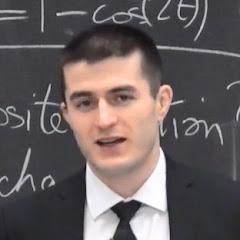 Lex Fridman
Key Moments
Joscha Bach discusses reality, consciousness as a dream, AI, free will, suffering, and societal ethics.
Key Insights
Consciousness is a 'dream world' or 'game engine' simulation generated by our brains, not direct physical reality, serving as a data compression and predictive model.
Free will is an illusion in the sense that our decisions are deterministic but appear unpredictable to us, functioning as a control model for attention rather than true agency.
Agents are models used to interpret the universe, with hierarchies existing from individual cells to nation-states, emphasizing self-organization and emergent complexity.
Suffering is a reinforcement signal from one part of the mind to another, indicating a need for behavioral improvement; chronic suffering arises when these signals cannot be resolved.
AI, like GPT-3, is rapidly advancing in areas like language and code synthesis by creating sophisticated predictive models, but current systems lack human-like unified world models and enduring memory.
Ethical considerations in AI and society require transparent incentives, a focus on long-term well-being, and a shared 'love' or commitment to a greater, transcendent purpose for human civilization.
THE ILLUSION OF PERSPECTIVE AND THE DREAM WORLD
Joscha Bach, a cognitive scientist and philosopher, posits that our subjective experience of reality is fundamentally a 'dream world' or 'game engine' simulated by our brains. This simulation acts as a complex data compression mechanism, allowing us to interpret the overwhelming dynamics of the physical universe, which itself is incomprehensible and devoid of inherent 'realness' or sensory qualities like colors and sounds. The consistency and predictive power of this internal model are crucial for our survival, enabling us to interact effectively with an external world to which we have no direct access. The feeling of 'realness' is simply our brain's assessment that its current model is the best available approximation of reality.
FREE WILL: A CONSTRUCT OF THE MIND
Bach likens consciousness to a 'monkey' riding an 'elephant,' where the monkey is the attentional system and the elephant represents the underlying motivational and perceptual systems that drive our actions. In this metaphor, the monkey can prod the elephant, giving us an illusion of control. Free will, in this context, is not a truly indeterministic choice but a model our mind generates of its own decision-making process. It appears unpredictable to us because we often operate under uncertainty, making 'informed bets' without fully understanding the underlying algorithms. This 'story' the system tells itself about being in control guides its behavior, yet it remains a deterministic process, much like cellular automata create emergent agency from simple rules.
THE NATURE OF AGENCY AND LIFE
An 'agent' is defined as a controller with a set-point generator, a concept derived from cybernetics, and it's a class of models we use to interpret both ourselves and aspects of the universe. This perspective reveals hierarchies of agents, from individual cells to complex nation-states, each emerging through self-organization. Bach suggests that 'life' itself fundamentally begins at the cellular level, characterized by a membrane, internal chemical disequilibrium, and a robust information-processing (DNA) system that can harvest 'neg-entropy' from its environment. While this definition is somewhat Earth-centric, it effectively distinguishes animate from inanimate, emphasizing the capacity to perform arbitrary state transitions and make representations.
COMPLEXITY, DECLINE, AND SUSTAINABILITY
Life, according to Bach, is a primary source of complexity, where order builds into chaos by processing information and harvesting neg-entropy that simpler systems cannot. This often leads to an 'exponential rise' in complexity, but he cautions that such growth typically follows an S-curve, eventually reaching saturation and potential decline. Applying this lens to human civilization, he suggests we might be at a 'peak,' akin to 'locusts' experiencing a rapid population and interaction complexity surge, raising questions of sustainability. Historical examples like the Roman Empire's gradual decline illustrate that societal complexity can decrease over time, emphasizing that progress isn't an assured linear upward trajectory.
SUFFERING AS A REINFORCEMENT SIGNAL
Suffering, in Bach's framework, is a powerful reinforcement signal within our internal 'dream world,' indicating that current behavior needs improvement. When this signal becomes chronic and unresolved, it manifests as suffering, pushing consciousness to generate 'new layers of modeling' to understand and overcome dysregulation. This often leads to 'higher-level consciousness' or personal growth, enabling individuals to deal with deeply ingrained issues. The ethical implications of suffering extend to our responsibility towards other potentially conscious beings, like insects, highlighting the urgency of defining consciousness to understand who or what deserves our empathy and protection from harm.
THE HARD PROBLEM AND MACHINE CONSCIOUSNESS
Bach believes the 'hard problem of consciousness' disappears once we accept that we exist within a simulated reality generated by our brains, making our experience a 'story' rather than a direct interaction with physical reality. He argues that physical systems cannot be conscious; only the narrative generated within a simulation can be. Engineering consciousness in machines would involve creating a highly predictive perceptual system that minimizes contradictions and reduces uncertainty, alongside a motivational system that assigns value to observations. An 'attention agent' would then select what to focus on, forming 'index memories' that constitute the stream of consciousness, allowing the system to achieve coherence and plan future actions.
LANGUAGE MODELS AND THE FUTURE OF AI
Discussing GPT-3 and similar language models, Bach highlights the revolutionary impact of transformers, which learn dependencies between distant words in vast text contexts. He notes that while current models like GPT-3 achieve impressive feats in generating semantically rich text and even basic math on trained data, they lack a unified world model and suffer from 'amnesia' beyond their limited context windows. Future advancements like GPT-4 and beyond will need to overcome these by architecting more complex, recurrent systems that can construct and edit their own working memory, allowing for more comprehensive modeling, causal closure, and the ability to perform program synthesis from broader contexts.
THE ETHICS OF AI AND HUMAN AGENCY
Bach argues that the ethical concerns surrounding AI, particularly in applications like autonomous weapons, often misplace blame. He asserts that the key issue isn't the AI itself, which is a tool for better modeling, but the human command hierarchies that use technology irresponsibly or with misaligned incentives. He suggests that if properly designed and integrated, AI could create systems far more reliable and less harmful than human-controlled ones. However, he warns against 'shoddy work' driven by a desire to cut costs and the danger of giving AI control without robust social systems to ensure responsible use and transparent incentives. The real challenge is designing governance structures that foster wise AI deployment.
POSTMODERNISM, IDEOLOGY, AND THE SEARCH FOR TRUTH
Bach criticizes postmodernism for its relativistic view of truth, which he believes has become an ideology used to dismiss opposing viewpoints rather than foster pluralism or serve scientific progress. He defines ideology as a 'viral memplex' that warps reality, cutting individuals off from alternative thoughts and promoting dogmatic certainty. He advocates for a more 'boring' and statistically rigorous approach to AI ethics, devoid of partisan or ideological biases, to focus on objective societal well-being. He also suggests that a societal shift towards a 'postmodernist mode' – where appearances and performance outweigh ground truth – is a dangerous path, exemplified by the politicization of issues like the pandemic response.
LOVE, SOCIETY, AND THE TRANSCENDENT
Bach defines love as 'the discovery of shared purpose' and 'the recognition of the sacred in the other,' enabling non-transactional interactions. He highlights that this love should ideally extend to the widest possible 'other,' maximizing 'intelligent complexity' in the universe. This commitment to a 'next level agency' (a 'transcendent principle,' or 'soul') provides a framework for discerning good from evil. He suggests that human societies, driven by this ability to organize and program each other with shared ideas and purposes, outcompeted other hominins, albeit sometimes through violent displacement. This collective drive, when focused through a shared, sacred vision, gives meaning and purpose, even if it has a destructive historical component.
THE MEANING OF LIFE AND INDIVIDUAL INTEGRITY
Echoing Camus's question, Bach states that the meaning of life is not inherently given but must be 'projected' by the individual. Meaning can be found in small acts like observing squirrels, raising children, or serving an aesthetic vision of the future. He advises young people to cultivate 'integrity' by striving for 'moral autonomy' – making decisions based on what feels right, independent of external validation. This path, while not guaranteeing an easy life, fosters trustworthiness and the ability to connect with others who also act with integrity, creating a sense of belonging and safety. Ultimately, he stresses gratitude for life itself, acknowledging its inherent uncertainty and the possibility of both triumph and failure.
Mentioned in This Episode
●Software & Apps
●Companies
●Organizations
●Drugs & Medications
●Concepts
●People Referenced
Common Questions
Joscha Bach refers to consciousness as a 'software state' acting within a suitable substrate (the brain of an ape). Consciousness is seen as a control model for attention, a tool that directs the system's focus, and the index memories retained from manipulating perceptual representations to maximize value and minimize conflicts.
Topics
Mentioned in this video
A sponsor of the podcast.
A sponsor of the podcast.
Their robots are discussed regarding how much they are hard-coded or remote-controlled versus having true intelligence or agency, and how humans project agency onto them.
A developer Q&A website, referenced in the context of AI automating repetitive coding tasks like copying and pasting solutions from the site.
Mentioned as a platform where political drama and partisan discourse unfold, influencing societal decisions.
Used as an example of a successful company that can form a monopoly over populations, similar to concerns about government scale.
A sponsor mentioned at the beginning and end of the podcast.
The creator of GPT-3 and Codex, scaled up the transformer idea, and its future plans for GPT-4 are pondered.
Used as an example of a successful company that can form a monopoly over populations, similar to concerns about government scale.
An AI system based on OpenAI's Codex that generates code from natural language prompts, discussed for its impressive but imperfect capabilities in program synthesis.
Referenced in the context of robots realizing their memories and desires are just programming.
A video game series of which Skyrim is a part, used to illustrate the feeling of making decisions within a simulated world.
The character from Disney's The Jungle Book, whose simplistic portrayal of being raised by wolves and easily integrating into human society is critiqued.
A video game used to illustrate the feeling of making decisions within a simulated world.
A Miyazaki film discussed as an answer to Disney's romanticized view of nature, depicting complex conflicts between human society and the natural world.
A character from Miyazaki's animations, embodying a spirit of pure service to a greater good, protected by society for her sacred innocence.
Mentioned by Lex with regards to contentious free will discussions, though Joscha Bach denies any direct debate with him.
Mentioned as a physicist who works on digital physics.
His argument that human minds can deal with infinities and perform operations beyond what Turing machines can, implying consciousness is more than computation, is debated.
His idea of the 'consciousness prior' and how our model of the world can be described through an energy function, minimizing contradictions, is referenced.
Used as an example of a figure indifferent to suffering, who used it as a means to an end, highlighting how different societies view morality.
Used as an example of an agent acting on behalf of a nation-state like Germany.
Playfully mocked with the concept of 'brains all the way down,' implying hierarchical agents.
His argument that the 'dream world' interface doesn't have to be consistent with physical reality for evolutionary advantage is discussed and critiqued.
His skepticism of geometric notions and advocacy for discrete physics, like hypergraphs, is mentioned.
Mentioned as a physicist who works on digital physics.
His work and publications on MDMA and its potential as a psychologically safe drug, but with physiological risks, are referenced.
Joscha Bach's professor in New Zealand who assigned him the task of discovering grammatical structure in English, influencing his early research in natural language processing.
Mentioned as a leader under whom even higher numbers of people were killed than under Stalin, further illustrating the scale of state-sponsored mass destruction.
His quote about the line between good and evil running through every man's heart is used to initiate a discussion on individual responsibility and morality.
Lex Fridman's guest, a fascinating mind exploring intelligence, cognition, computation, and consciousness.
His concepts of assimilation and accommodation in the process of making sensory data fit into a model structure are invoked.
Used as an example of someone who 'overfit' reality due to extensive psychedelic use, believing science and art should only be done on LSD.
Mentioned as a researcher who became 'loopy' from psychedelics, studying dolphin languages and aliens.
Used as an example of a tech entrepreneur whose motivations and the algorithms he oversees are subject to public distrust due to lack of transparency.
Discussed as an example of unique evil, whose aesthetic of the world conflicts with a desire to preserve innocence, and whose rise was enabled by specific societal conditions.
Referenced generally as a historical figure whose actions caused a substantial dent in the existing population, alongside other destructive leaders.
His espousal of anarchism, viewing government as destructive to human collaboration, is discussed and contrasted with Joscha Bach's view on the necessary role of government.
His quote about people avoiding their souls and enlightenment coming from making the darkness conscious is read at the end of the podcast.
Cited as a leader who killed more people than Hitler, often randomly, highlighting different forms of evil and state terror.
Praised as the 'most relevant protestant philosopher today' for his ability to capture spirituality, particularly the preservation of innocence, in films like Princess Mononoke.
His assertion that capitalism is prone to crises and systematically misallocates resources is cited, leading to a discussion of societal inequality.
His quote about the meaning of life being the most urgent question, related to why people live and die, concludes the podcast.
Mentioned as one of the theories of everything physicists are trying to propose, focusing on the very small.
A condition that anecdotal evidence suggests LSD has cured for some individuals, possibly by resetting the serotonergic system.
Mentioned as another theory of everything, focusing on a particular unification.
A theoretical model of computation used in discussions about the limits of what computers can do compared to the human mind.
An AI architecture, invented in 2017 for natural language processing, that GPT-3 and its successors use, enabling them to learn relationships between distant words in a large context.
A sponsor of the podcast.
A sponsor of the podcast.
A Google-developed AI model mentioned as overcoming some transformer limitations by learning topology of different modalities, enabling video input processing.
OpenAI's language model, capabilities, limitations (amnesia, coherence issues), and its use of the transformer architecture are discussed extensively.
A symbolic computation program mentioned in discussions about AI's ability to perform differentiation and integration, potentially achieving better results than human use of Mathematica in some experiments.
Mentioned as a placeholder for GPT-4, indicating the ongoing development of advanced AI systems.
The hypothetical next generation of OpenAI's language model, discussed for its expected advanced capabilities and the playful notion that it's 'listening to us now'.
The AI model upon which GitHub Copilot is based, capable of generating code from natural language.
Mentioned as a substance that can be dangerous in larger doses due to its potential to depress breathing.
A psychedelic substance discussed for its potential to help with PTSD in clinical settings, but also its neurotoxicity and hepatotoxicity risks.
A psychedelic substance discussed in the context of inducing lucid dreaming states, 'overfitting' reality, and anecdotally curing migraines.
A psychedelic substance (magic mushrooms) that is being studied for its therapeutic effects, noted for its low toxicity even at heroic doses in clinical settings.
Criticized for not protecting people from healthcare malpractice but rather protecting healthcare providers from competition, highlighting system design flaws.
A traditional media outlet mentioned as a contrast to individual content creators on social media who can gain more listeners without gatekeeping.
More from Lex Fridman
View all 549 summaries 259 min
FFmpeg: The Incredible Technology Behind Video on the Internet | Lex Fridman Podcast #496
 124 min
Vikings, Ragnar, Berserkers, Valhalla & the Warriors of the Viking Age | Lex Fridman Podcast #495
 146 min
Jensen Huang: NVIDIA - The $4 Trillion Company & the AI Revolution | Lex Fridman Podcast #494
 311 min
Jeff Kaplan: World of Warcraft, Overwatch, Blizzard, and Future of Gaming | Lex Fridman Podcast #493
Ask anything from this episode.
Save it, chat with it, and connect it to Claude or ChatGPT. Get cited answers from the actual content — and build your own knowledge base of every podcast and video you care about.
Get Started Free