Key Moments
How to Optimize Cognitive Function & Brain Health | Dr. Mark D'Esposito
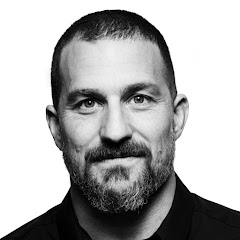 Andrew Huberman
Want to know something specific about what's covered?
We've already dissected every moment. Ask and we will deliver (with timestamps).
Key Moments
Revolutionary insights into optimizing brain health and cognitive function, especially working memory and executive function.
Key Insights
The prefrontal cortex, the brain's "CEO," is crucial for executive function, goal-directed behavior, and decision-making, taking until the mid-20s to fully develop.
Working memory, our "superpower," involves holding and manipulating information, primarily supported by persistent neural activity in the frontal lobes modulated by dopamine.
Dopamine exhibits an inverted U-shape function, meaning optimal levels are crucial; too little or too much can impair working memory, highlighting the need for personalized interventions.
Traumatic Brain Injury (TBI) and concussion, even without loss of consciousness, cause axonal tearing, predominantly in the frontal lobes, leading to persistent post-concussion syndrome and cognitive deficits.
Strategies like cognitive training (e.g., Goal Management Training, Brain HQ), optimized sleep, nutrition, aerobic exercise, and mindfulness practices can significantly improve executive function and working memory.
Future advancements in brain health rely on developing comprehensive "brain health indexes" and real-time brain state metrics (like modularity) to guide personalized interventions, rather than disease-centric approaches.
THE PREFRONTAL CORTEX: THE BRAIN'S CEO
Dr. Mark D'Esposito, a neurologist and neuroscientist, highlights the prefrontal cortex as the brain's "CEO," responsible for executive function, cognitive control, planning, and goal-directed behavior. Occupying about a third of the cortex, it matures slowly, often not fully developing until the mid-20s, a process that allows for exploration and flexible problem-solving, yet can lead to impulsive behaviors in adolescence. This region orchestrates the brain's overall function, guiding attention, decision-making, and the application of learned rules to various contexts, effectively mediating the gap between knowledge and action.
FRONTLOBE DYSFUNCTION: SUBTLE TO SEVERE IMPAIRMENTS
Damage or dysfunction in the frontal lobes, whether due to neurological disorders (stroke, TBI, Alzheimer's), psychiatric conditions (OCD, schizophrenia), or everyday factors like stress, sleep deprivation, and normal aging, can manifest in various ways. Symptoms range from subtle difficulties in setting priorities, maintaining focus, and adapting to new situations, to severe impairments where individuals struggle to follow social rules or inhibit inappropriate impulses, even when they intellectually understand them. This spectrum underscores the frontal lobe's critical role in behavioral appropriateness and overall daily function.
WORKING MEMORY: THE FOUNDATION OF COGNITION
Working memory is defined as the ability to temporarily hold and manipulate information in mind that is no longer perceptually accessible. It is crucial for complex cognitive processes such as reading comprehension, planning, and problem-solving, acting as a "superpower" that bridges knowledge and action. Unlike long-term memory, working memory is short-lived and primarily relies on persistent neural activity within the frontal lobes, which actively maintain relevant information by communicating with other brain regions, turning the entire brain into a dynamic information buffer.
DOPAMINE'S CRITICAL ROLE IN WORKING MEMORY
Dopamine is a key neuromodulator for working memory. Studies show that depleting dopamine significantly impairs working memory, while its replacement improves it. The effect of dopamine is subject to an "inverted U-shape" function: there is an optimal level, and both too little or too much dopamine can be detrimental. This indicates that interventions should aim for optimization, not just increased levels. Dopamine's influence is circuit-specific; it aids movement in the basal ganglia and mental processing (like keeping information online) in the prefrontal cortex, highlighting the importance of understanding specific circuit balance.
PERSONALIZED DOPAMINE OPTIMIZATION AND PHARMACOLOGY
Assessing an individual's baseline dopamine levels, which can predict working memory capacity, is challenging as there's no simple blood test. Neuroimaging techniques like PET scans or genetic testing for enzymes like COMT (which breaks down dopamine in the prefrontal cortex) are used. Pharmacological interventions with dopamine agonists like bromocriptine or norepinephrine boosters (e.g., guanfacine, Wellbutrin) can enhance working memory, especially in individuals with lower baseline dopamine. However, these drugs should be used cautiously, aiming for an optimal level rather than simply increasing dosage, as over-stimulation can impair function. The field is moving towards a "cocktail" approach, combining neuromodulators and considering individual neurochemistry and hormonal influences.
TECHNOLOGY'S IMPACT ON FRONTLOBE FUNCTION
The pervasive use of smartphones and social media presents a new challenge to frontal lobe function. While they offer knowledge access, they may not foster the type of cognitive control and sustained attention essential for executive function. Constant task-switching, exposure to fragmented content, and reliance on navigation apps can diminish intrinsic problem-solving skills and the ability to maintain long-term goals. While technology can be leveraged for cognitive training (e.g., Brain HQ), it's crucial to evaluate whether learned digital algorithms generalize to adaptive behaviors in real-world contexts or if they contribute to a decline in nuanced cognitive abilities.
TRAUMATIC BRAIN INJURY (TBI) AND CONCUSSION
Concussions and mild TBI are more common and under-recognized than generally assumed, often resulting from everyday accidents and not just sports. Even without loss of consciousness, these injuries involve the tearing of axons, predominantly in the frontal lobes, leading to persistent post-concussion syndrome in a significant percentage of people. Symptoms like mental fog, light sensitivity, and dizziness can linger for a year or more, yet often lack effective interventions due to a historical underestimation of brain injuries compared to orthopedic ones. This underscores the need for better diagnosis and rehabilitation strategies.
HOLISTIC STRATEGIES FOR COGNITIVE RECOVERY AND OPTIMIZATION
For individuals with TBI or those seeking to optimize cognitive function, a holistic approach is crucial. Optimized sleep, nutrition, and aerobic exercise are foundational, as sleep disruption is a common sequela of brain injury. Behaviorally, practices like Goal Management Training, which teaches structured goal-setting, focus, and monitoring, have shown success in generalizing to real-world improvements. Cognitive training platforms (e.g., Brain HQ) offer accessible, science-backed exercises. Mindfulness and meditation, by enhancing focus and emotional regulation, also significantly boost executive function, complementing cognitive therapies and promoting overall brain health.
NEURODEGENERATIVE DISEASES: ALZHEIMER'S AND PARKINSON'S
Alzheimer's disease, a neurodegenerative disorder with complex pathology (plaques and tangles), remains challenging with limited effective treatments beyond symptomatic relief with acetylcholinesterase inhibitors. The lack of a single, primary neurotransmitter deficit, unlike Parkinson's (dopamine), complicates drug development. Treatment largely focuses on supportive care, behavioral management, and maximizing social engagement. Parkinson's, characterized by dopaminergic neuron degeneration, has more effective treatments like L-DOPA, which boosts dopamine, illustrating the potential of targeted neuromodulatory therapies when the underlying mechanisms are clearer.
HORMONAL INFLUENCES ON COGNITION
Hormones, particularly estrogen, play a significant role in cognitive function for both men and women. The frontal lobes are rich in estrogen receptors, and higher estrogen levels correlate with increased dopamine, positively impacting working memory. Studies have shown that fluctuations in estrogen during the menstrual cycle influence frontal lobe function and working memory. This highlights the importance of considering hormonal balance in personalized cognitive optimization strategies, emphasizing that a "cocktail" of interventions may need to include hormonal modulation alongside neurotransmitter modulation to achieve optimal brain health.
FROM DISEASE TO BRAIN HEALTH: A PARADIGM SHIFT
Neurology, traditionally disease-centric, is shifting towards "preventative neurology" and a focus on overall brain health. The goal is no longer just to prevent dementia but to optimize healthy brain function throughout the lifespan. A significant challenge remains the lack of clear metrics for brain health, akin to physical health markers. Initiatives like the Brain Health Project are developing comprehensive "brain health indexes" that encompass cognition, social interaction, lifestyle (sleep, nutrition), and well-being. Such metrics are crucial for tracking progress and validating interventions, fostering a proactive approach to brain health.
NETWORK NEUROSCIENCE: BEYOND INDIVIDUAL BRAIN REGIONS
The most exciting frontier in neuroscience involves understanding the brain as a complex network, moving beyond a sole focus on individual regions like the prefrontal cortex. This view conceptualizes specific brain areas as "hubs" within an interconnected system, much like an airline network. Damage to a crucial hub, like the prefrontal cortex, can significantly impact the entire network. Research in network neuroscience is exploring how the brain's overall organization and the dynamic communication between its different modules (modularity) predict cognitive function, well-being, and responsiveness to interventions.
MODULARITY AS A NEUROBIOMARKER
Modularity, a measure of how segregated and independent brain networks are at baseline, emerges as a promising neurobiomarker. Studies indicate that higher brain modularity correlates with better response to cognitive training and predicts outcomes in conditions like TBI, coma, and cognitive decline. While modularity can be measured with functional MRI, efforts are underway to develop simpler, real-time physiological proxies (e.g., from heart rate variability or oxygen levels) that could provide actionable insights into an individual's moment-to-moment brain state. This would enable personalized interventions and real-time monitoring of cognitive performance.
Mentioned in This Episode
●Supplements
●Products
●Software & Apps
●Companies
●Organizations
●Drugs & Medications
●Studies Cited
●Concepts
●People Referenced
Common Questions
The frontal lobes, specifically the prefrontal cortex, are considered the highest level of the brain's cortex and are responsible for executive functions like planning, organizing, cognitive control, and guiding behavior by goals and intentions. They act as the 'CEO of the brain,' controlling other brain regions.
Topics
Mentioned in this video
Academic institution where Andrew Huberman is a professor.
Academic institution where Dr. D'Esposito is a professor and where he brought functional imaging of the human brain and a clinical emphasis to neuroscience studies.
Institution where Brian Levine and colleagues developed Goal Management Training.
University where Emily Jacobs is a professor, having studied the role of estrogen on cognitive function.
A project at UT Dallas aiming to enroll 100,000 people to develop a comprehensive 'brain health index' that tracks cognition, social interactions, lifestyle, and well-being.
University where Eddie Chang is chair of neurosurgery, and where Robin Carhart-Harris conducts research on psilocybin.
University where Arthur Kramer's group conducts research on cognitive therapies, including the effectiveness of aerobic exercise.
An norepinephrine and dopamine agonist discussed for its potential to improve working memory, though specific modulation is questioned by Dr. D'Esposito.
A decarboxylase inhibitor that blocks the breakdown of dopamine, allowing more L-DOPA to reach the brain for Parkinson's patients.
An acetylcholinesterase inhibitor that boosts acetylcholine levels, used as an approved treatment for Alzheimer's disease, but its effectiveness is often limited.
A dopamine agonist that improves working memory in individuals with low baseline dopamine levels but can worsen it in those with already high levels, illustrating the inverted U-shaped function of dopamine.
A blood pressure medication gaining traction for its norepinephrine-boosting effects and potential to improve working memory, with ongoing trials, including for COVID-related brain fog.
A drug thought to be a 'true cognitive enhancer' rather than just an alertness stimulator, but its specific mechanisms of action for cognition require more research.
A precursor to dopamine used in Parkinson's disease treatment to increase dopamine levels in the brain.
A compound with some interest as a cognitive enhancer, potentially impacting the cholinergic system. While its use in smoking, vaping, or dipping is discouraged, its potential benefits as a cognitive enhancer are discussed.
Discussed as an emerging therapy for depression, with neuroimaging studies showing increased resting state connectivity, which raises questions in the context of modularity.
A nicotine gum product used by a Nobel Prize-winning neuroscientist who claimed nicotine was protective against Parkinson's and Alzheimer's and kept his brain sharp.
A sponsor making medical-grade red light therapy devices that use clinically proven wavelengths to improve cellular and organ health.
A sponsor of the podcast, offering nutrient-dense venison products with a high protein-to-calorie ratio, recommended for protein intake.
A navigation software that makes people less reliant on traditional map-reading skills, potentially leading to a detrimental effect on problem-solving.
A technique that can be used to stimulate the prefrontal cortex, with approved use for depression and anecdotal evidence for improving working memory, though more robust studies are needed.
A brain training game developed by Mike Merzenich and Posit Science that helps improve specific cognitive functions and is accessible online, offering a potential intervention for TBI patients.
A structured relaxation practice that Huberman uses for non-sleep deep rest, involving a body scan and long exhale breathing, leading to increased mental and physical vigor.
An invasive imaging procedure that can measure dopamine levels in the brain by injecting a radioisotope that tags dopamine.
An enzyme that breaks down dopamine in the prefrontal cortex; genetic variations can lead to overactive or underactive forms, affecting baseline dopamine levels and working memory capacity.
A therapy developed by Brian Levine and colleagues at the Rotman Research Institute for improving executive function in patients by teaching them strategies for planning, monitoring, and adapting to achieve goals.
A company co-founded by Westley Clapp that aims to develop simpler methods (e.g., using oxygen, heart rate variability) to measure brain modularity as a proxy for brain state.
A sponsor providing smart mattress covers with cooling, heating, and sleep tracking capabilities to optimize sleep quality.
Company founded by Mike Merzenich that developed brain training games like Brain HQ to improve cognitive functions through targeted mechanisms.
Neurosurgeon and chair of neurosurgery at UCSF, known for his advocacy of mindfulness meditation.
A former postdoc of Adam Gazzaley and co-founder of Neuroscouting, working on measuring brain modularity through physiological data.
Host of the Huberman Lab podcast and professor of neurobiology and ophthalmology at Stanford School of Medicine.
Neurologist and professor of neuroscience and psychology at the University of California Berkeley, an expert in executive function and memory.
Nobel Prize-winning neuroscientist who contributed to the understanding of neuroplasticity and critical periods in brain development.
Professor at UC Santa Barbara who studied the role of estrogen on working memory and dopaminergic function while a graduate student in Dr. D'Esposito's lab.
Researcher from the University of Illinois at Champaign-Urbana whose group has successfully used aerobic exercise as a cognitive therapy to improve executive function.
A researcher under whom Westley Clapp was a postdoc, discussed in the context of Neuroscouting.
Researcher from UCSF mentioned for his work on psilocybin for the treatment of depression.
Developed Goal Management Training with colleagues at the Rotman Research Institute of Toronto.
Neuroscientist who co-founded Posit Science and developed Brain HQ, a pioneer in demonstrating adult neuroplasticity and the potential for cognitive training.
Nobel Prize-winning neuroscientist who contributed to the understanding of neuroplasticity and critical periods in brain development.
A scientist mentioned by Huberman for teaching him a particular questioning style related to excitement in research.
A former student of Adam Gazzaley and colleague working on Neuroscouting, a company developing proxies for brain modularity from physiological data.
An electrolyte drink providing sodium, magnesium, and potassium in appropriate ratios, crucial for proper cell function, especially neurons, improving mental and physical functioning.
An over-the-counter supplement containing L-DOPA, which the speaker tried and found to cause agitation and visual disturbance, rather than a benefit.
A vitamin, mineral, probiotic drink containing adaptogens, recommended for overall health, gut health, and cognitive function.
More from Andrew Huberman
View all 395 summaries 32 min
The Science & Treatment of Obsessive Compulsive Disorder (OCD) | Huberman Lab Essentials
 159 min
Raising a Dog & Mastering Calm Assertive Energy | Cesar Millan
 37 min
Essentials: Tools for Hormone Optimization in Males | Dr. Kyle Gillett
 33 min
Essentials: The Science of Eating for Health, Fat Loss & Lean Muscle | Dr. Layne Norton
Ask anything from this episode.
Save it, chat with it, and connect it to Claude or ChatGPT. Get cited answers from the actual content — and build your own knowledge base of every podcast and video you care about.
Get Started Free