Key Moments
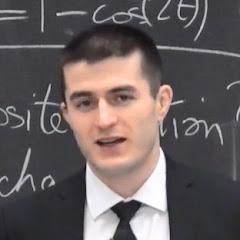
Eric Weinstein: Geometric Unity and the Call for New Ideas & Institutions | Lex Fridman Podcast #88
 Lex Fridman
Key Moments
Eric Weinstein discusses Geometric Unity, institutional failures, and the need for new ideas and leadership.
Key Insights
The COVID-19 pandemic serves as a stark reminder of humanity's interconnectedness and the failure of individualistic abstractions during global crises.
The "Great Nap" of the last 75 years, characterized by a lack of global tragedy, has paradoxically increased our fragility and destructive potential.
Current institutions are failing due to weak, elderly, and kleptocratic leadership, hindering progress and the emergence of new ideas.
Geometric Unity is a proposed theory aiming to unify fundamental laws of physics by starting from a minimalist mathematical framework, replacing spacetime with a more fundamental geometric structure.
Individual brilliance, exemplified by figures like Elon Musk, is stifled by institutional inertia and a fear of failure; new approaches are needed to foster and integrate such minds.
Institutional betrayal, a concept of being let down by systems that should offer support, is widespread and has eroded public trust, necessitating a re-evaluation of how institutions operate and select leaders.
THE POST-"GREAT NAP" WORLD AND THE PANDEMIC'S REVELATIONS
Eric Weinstein posits that the post-World War II era has been a "Great Nap," marked by a lack of profound global disruption, allowing destructive potential to accumulate as potential energy rather than kinetic. The COVID-19 pandemic shatters this illusion, highlighting the fragility of modern society and exposing the inadequacy of individualistic ideologies in the face of collective crises. This period serves as a critical juncture, forcing a re-evaluation of our interconnectedness and the need for collective action, echoing lessons from past global conflicts.
CRITIQUE OF CURRENT INSTITUTIONS AND LEADERSHIP
Weinstein launches a sharp critique of contemporary institutions, particularly in academia and government, labeling their leadership as elderly, centrist, and kleptocratic. He argues these leaders are "looting the family mansion," prioritizing self-preservation and maintaining the status quo over genuine progress. This stagnation, coupled with a culture of fear and a lack of accountability, prevents new ideas from flourishing and stifles the emergence of capable, risk-taking leaders.
GEOMETRIC UNITY: A THEORY OF EVERYTHING
At the core of Weinstein's lifelong work is Geometric Unity, a theoretical framework aiming to unify quantum mechanics and general relativity. The theory proposes starting with a minimalist mathematical foundation, suggesting that the universe's fundamental laws emerge from geometry itself. It seeks to replace the current dualistic model of spacetime and quantum particles with a unified, geometrically derived structure, offering a potential "source code" for reality.
THE STRUGGLE FOR NEW IDEAS AND INSTITUTIONAL REFORM
Weinstein details his personal struggle to bring Geometric Unity to light, encountering resistance and insularity within academic and scientific communities. He argues that the current academic system, with its emphasis on incremental progress and publication, actively suppresses radical new ideas. This fosters a climate of "institutional betrayal," where promising minds are sidelined or discouraged, leading to a loss of potential and innovation.
THE ROLE OF INDIVIDUALITY AND THE "ELON MUSK" PHENOMENON
The conversation touches upon figures like Elon Musk as anomalies—individuals who achieve significant breakthroughs despite, or perhaps because of, their ability to operate outside conventional institutional constraints. Weinstein suggests that current systems are designed to eliminate such mavericks, leading to a scarcity of truly innovative thinkers. He advocates for fostering environments where such individuals can thrive, not by conforming, but by challenging the status quo.
RETHINKING FUNDAMENTAL CONCEPTS AND FUTURE DIRECTIONS
Weinstein elaborates on the mathematical underpinnings of Geometric Unity, discussing concepts like spinners, tensors, and higher dimensions, while striving for accessibility. He emphasizes the need for new ways of thinking, illustrating how even basic concepts in physics are often inaccessible. The ultimate hope is that Geometric Unity will not only provide a unified theory of physics but also inspire a broader transformation in how humanity approaches problem-solving, institutional design, and our collective future.
Mentioned in This Episode
●Products
●Software & Apps
●Companies
●Organizations
●Books
●Concepts
●People Referenced
Common Questions
Geometric Unity is Eric Weinstein's proposed theory aiming to unify general relativity and the standard model of particle physics. It seeks to derive all fundamental particles and forces from a 'blank canvas' of proto-spacetime and higher dimensions, resolving the 'double origin story' problem of current physics.
Topics
Mentioned in this video
Mentioned in the context of the Soviet-American link-up, representing a significant positive global moment where nations connected in orbit.
A protein whose discovery by Douglas Prasher led to a Nobel Prize for others after Prasher's funding ran out, used as an example of academic exploitation.
Mentioned as an example of destructive potential that developed during the 'Great Nap' period, indicating growing fragility despite perceived peace.
Mentioned in the context of the Soviet-American link-up, representing a significant positive global moment where nations connected in orbit.
Host of The Joe Rogan Experience podcast, where Eric Weinstein has been a guest multiple times. Rogan is admired for his ability to inspire people and his directness.
A songwriter whose recent death from COVID-19 is cited as an example of a 'shocking death' that may contribute to people waking up from the 'Great Nap'.
Physicist mentioned by Dirac as an example of someone whose beautiful equations should be explored even if they don't immediately agree with experiment.
Criticized for his optimism about declining violence, with Weinstein arguing that while kinetic variables improved, potential for destruction skyrocketed.
Author of 'The Plague', mentioned by Lex Fridman as a frame of reference for understanding the current crisis.
Physicist who, along with Howard Georgi, proposed the SU(5) Grand Unified Theory.
Physicist and author of 'The Road to Reality', a comprehensive but difficult-to-read book that serves as the 'owner's manual' for the fundamental equations, central to the 'Graph Wall Tome' project.
Businessman and engineer, co-founder of SpaceX, discussed for his efforts to get humanity off Earth. Weinstein views him as an anomaly and an example of what society has forgotten about its capabilities, but also suggests he is 'playing it safe' by focusing only on Mars.
MIT professor known for high-speed photography, invoked as a representation of MIT's historical creative and rebellious spirit that should be rekindled.
Academic with a theory of 'institutional betrayal', which suggests that trauma from betrayal by a fiduciary institution (like a therapist or university) is more profound than betrayal by a peer.
Mathematician, host of The Portal podcast, and developer of the Geometric Unity theory.
A foundational figure in physics, whose general relativity theory is discussed as one of the two main theories describing our world, akin to setting the 'canvas' of the universe.
A brilliant physicist whose prose paragraph outlining the deepest knowledge of the universe, including the Einstein, Dirac, and Yang-Mills-Maxwell equations, is central to Weinstein's 'Graph Wall Tome' project.
Linguist, philosopher, and political activist who has been a faculty member at MIT, cited as an example of an intellectually courageous individual who has not been muzzled by institutions.
Author of 'Harrison Bergeron', which is used as a metaphor for institutions handicapping smart individuals.
Nobel laureate whose lab at MIT was involved in a scientific fraud controversy with Margot O'Toole, cited by Weinstein as an example of needing courageous people to address injustices in institutions.
Physicist who emphasized beauty in physics and discovered spinors through the Dirac equation. His work is highlighted as a profound aspect of existence that even science reporters don't know.
Futurist and author, mentioned by Eric Weinstein in the context of other brilliant thinkers, but Weinstein expresses hesitancy to 'betray' Kurzweil by praising others too highly.
An internet activist and programmer who faced legal prosecution for downloading academic journal articles. Weinstein highlights him as an example of a brilliant mind killed by the system, whom MIT should have defended.
Host of Real Time with Bill Maher, mentioned as an example of traditional media with a larger platform than Eric Weinstein's podcast, yet still part of the 'gated institutional narrative'.
Physicist who incorrectly told Dirac his model was wrong regarding the mass of protons and electrons, illustrating how the community can dismiss profound ideas.
Scientist known for co-discovering the structure of DNA, mentioned as another individual who 'makes sense' to Eric Weinstein for his sensible approach to incredible things.
Pioneering computer scientist and mathematician, mentioned as a historical figure whose past injustices should be righted, paralleling the need to address modern injustices like Aaron Swartz's case.
Formally listed as Eric Weinstein's PhD advisor on Wikipedia and the Math Genealogy Project, though Weinstein states this is not true, highlighting how institutions impose 'proxy BS'.
Physicist who, along with Sheldon Glashow, proposed the SU(5) Grand Unified Theory.
World's greatest hedge fund manager who funded a wall in Stonybrook, NY, memorializing the three fundamental equations of physics mentioned by Edward Witten, part of Weinstein's 'Graph Wall Tome' project.
Convicted sex offender, whose case triggered Eric Weinstein's personal terror by recapitulating past institutional betrayals and failures to address sexual misbehavior.
Scientist who exposed scientific fraud in David Baltimore's lab, cited by Weinstein as someone who was 'right' in calling out institutional issues.
Scientist known for his work on the Human Genome Project, mentioned as another individual who 'makes sense' to Eric Weinstein for his sensible approach to incredible things.
Mathematician and satirist, remembered for his 'naughty' genius and ability to make serious points with irreverent humor, an example of the kind of intellectual freedom Weinstein champions.
Chess grandmaster and political activist, mentioned by Lex Fridman as a guest Eric Weinstein has had on his podcast, and for whom Fridman would like to hear more conversations.
German philosopher whose quote about fighting monsters and gazing into the abyss is brought up to ask if Weinstein's focus on institutional flaws has damaged his own perception of beauty.
Scientist who discovered Green Fluorescent Protein but lost his funding and had to drive a shuttle bus, while others received a Nobel Prize for his research, illustrating the 'interference competition' in academia that can destroy careers.
A publication that sent a reporter to Eric Weinstein's Oxford talk, who surprisingly had no knowledge of the Dirac equation, highlighting a lack of basic scientific understanding even in science journalism.
Criticized for its handling of the COVID-19 pandemic, particularly regarding mask recommendations and perceived lack of honesty with the public.
Lex Fridman lived in Harvard Square; Eric Weinstein discusses his negative experiences with the 'secret seminar' and 'parallel department' at Harvard's math department, indicating institutional betrayal.
Criticized for poor communication and lack of honesty during the COVID-19 pandemic, particularly regarding mask recommendations.
Both Eric Weinstein and Lex Fridman have connections to MIT; discussed as an institution that should foster innovation and defend its "Aaron Schwartzes" instead of stifling them.
Mentioned as the location where Eric Weinstein first presented his Geometric Unity lecture in 2013 and again seven years later.
A database that tracks academic relationships between mathematicians, which required Eric Weinstein to claim a formal advisor (Rahul Bhatt) even though he considered himself his own advisor.
One of the two main physics theories describing our world, focusing on gravity and defining the 'canvas' of spacetime. Eric Weinstein argues its inception was in 1913 with Einstein and Grossman, not later.
Discussed as a parallel to the 'theory of everything' pursuit, where many in AI research build 'toys' instead of genuinely trying to understand intelligence. Weinstein speculates that humans could be the AGI in a simulation.
Eric Weinstein's term for the current state of governance in the US, where mainstream politicians (the 'looting party') treat the country as a trough to benefit themselves, undermining productivity.
The other main physics theory, focusing on the three non-gravitational forces and matter, likened to the 'paint, brushes, and artists' in the universe's creation, exhibiting a 'double origin story' problem.
The AI from The Terminator franchise, used as a reference for the potential dangers of AI becoming self-aware. Weinstein links it to the idea of humans waking up to their own source code if we are AGI.
A relativistic wave equation introduced by Paul Dirac, fundamental to quantum mechanics and the subject of Weinstein's critique of scientific literacy.
A field theory fundamental to the Standard Model of particle physics, which Eric Weinstein explains through an accessible analogy involving measuring slopes from custom reference levels.
Biological structures at the ends of chromosomes, the theory of which Eric Weinstein claims was not reported properly, an example of academic information distortion.
A bibliometric measure of a scientist's productivity and citation impact, which Eric Weinstein dismisses as 'proxy BS' and hopes to revolutionize fields without relying on such metrics.
Eric Weinstein's term for the 75-year period of relative peace and prosperity after WWII, characterized by a lack of profound global disruption but also a growing fragility and destructive potential.
One of the three equations Edward Witten refers to as the deepest knowledge of the universe, fundamental to quantum field theory and part of the Standard Model.
Eric Weinstein's theory of everything aiming to unify the fundamental laws of physics by starting from a bland mathematical 'nothing' and replacing spacetime with a more fundamental structure called 'the observers', building up to our universe's particles and forces.
An early attempt to unify general relativity and the standard model by deriving one from the other through higher dimensions, which 'didn't work out'.
A Grand Unified Theory (GUT) proposed by Georgi and Glashow, initially exciting but considered 'born lifeless' after experiments failed to find proton decay.
Mythological figure who stole fire from the gods for humanity, invoked by Eric Weinstein as he endeavors to make complex physics accessible to a broader audience.
One of the three equations Edward Witten refers to as the deepest knowledge of the universe, foundational to General Relativity.
Eric Weinstein's concept describing how institutional systems suppress novel and disruptive ideas, leading to a lack of innovation and quality leaders, making individuals like Elon Musk rare.
Eric Weinstein's podcast, where he explores big questions in the universe and society, including releasing his Oxford lecture on Geometric Unity.
A digital library for academic journals, famously targeted by Aaron Swartz. Weinstein calls it an 'abomination'.
A platform where Eric Weinstein's community is working on the 'Graph Wall Tome' project to make fundamental physics more accessible.
A novel by Albert Camus, read by Lex Fridman as a narrative framework to understand the current crisis, contrasting with Eric Weinstein's historical parallels.
A book by Roger Penrose described as an 'owner's manual' for fundamental physics, but written in a way that is challenging to anyone not already a professional, hindering accessibility.
A book mentioned by Eric Weinstein with a mysterious line that, when discussed with an entire department, revealed that nobody was thinking properly about fundamental physics.
Elon Musk's aerospace manufacturer, mentioned in the context of efforts to get humanity off Earth, which Weinstein views as positive but perhaps not ambitious enough.
A major academic publisher criticized for its business model, which Aaron Swartz fought against. Weinstein argues MIT should not pay them.
Automotive and clean energy company co-founded by Elon Musk, mentioned in the context of research studies and the 'low-level' criticism received that avoided addressing content.
More from Lex Fridman
View all 549 summaries 259 min
FFmpeg: The Incredible Technology Behind Video on the Internet | Lex Fridman Podcast #496
 124 min
Vikings, Ragnar, Berserkers, Valhalla & the Warriors of the Viking Age | Lex Fridman Podcast #495
 146 min
Jensen Huang: NVIDIA - The $4 Trillion Company & the AI Revolution | Lex Fridman Podcast #494
 311 min
Jeff Kaplan: World of Warcraft, Overwatch, Blizzard, and Future of Gaming | Lex Fridman Podcast #493
Ask anything from this episode.
Save it, chat with it, and connect it to Claude or ChatGPT. Get cited answers from the actual content — and build your own knowledge base of every podcast and video you care about.
Get Started Free